

We’ve been visiting museums. Last Friday we went to the Sewage Science Museum of Osaka. Very interesting. It seemed fitting to go there when we realised they had a museum with all the excitement about the toilets. I had hoped we’d be able to get a tour of the sewers but this was not to be.
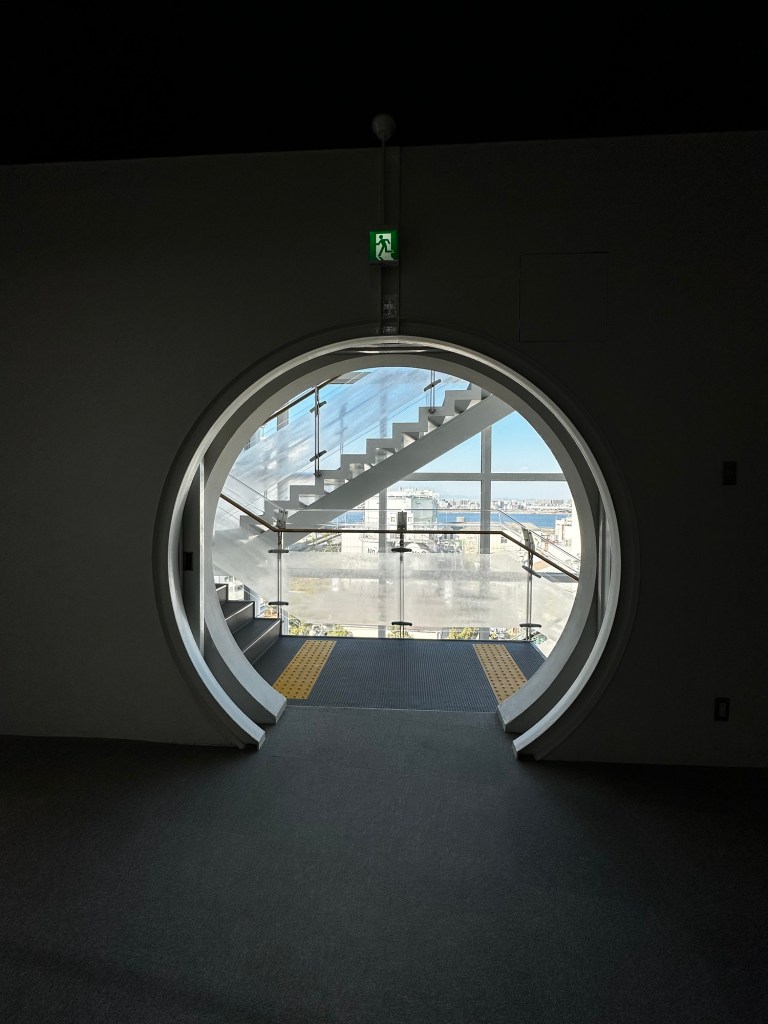
Then today we went to see the Earthquake memorial near Kobe. There was a huge earthquake (7.3 magnitude) in this area in 1995 and more than 6,400 people died. Doesn’t seem that long ago to me. I had small children in primary school I was on the parents association and trying to survive life. I think that’s why this museum and the movies and sets affected me. I didn’t take many photos.

It was on January 17th at 5.46am 1995. (There was a grandfather clock in the exhibition that had fallen over and stopped working at the exact time.) We heard first hand stories from people who were children at the time. About how family members died beside them and how their homes were destroyed and all their possessions lost. About how they were living in a gym with food provided by emergency services. Eventually emergency cabins were set up but not in their own communities and the older people found this the hardest.

Volunteers came from all over Japan to help and eventually the area was rebuilt and people went back to their own neighbourhoods.
That was one part of the exhibition and the next part was manned mainly by volunteers, possibly retired people who could speak different languages. We met a lovely man full of energy for his topic who was guiding us through what happens when the earth’s plates collide. I think he said there’s only 11 plates in all the earth and when they don’t slide harmlessly over each other the earth quakes happen. Did you ever play trains crashing with your brother? If he’s stronger then his train can carry on forward while yours tips upward or falls over… something like that is happening with the plates.

Being near the edge of a plate is unlucky, Japan is near the edge of three plates! (Ireland isn’t near any plate edges, no harm in mentioning here, Ireland is the best place to live as far as natural disasters are concerned.) He showed us a fault line off the coast of Japan that they have predicted (70%-80% chance) that there will be a major earthquake causing numerous huge tsunamis all over Japan within the next 30 years. Gulp.

Then he went on to tell us about typhoons with the aid of a video game – which I won by diverting the typhoon with my high pressure… you had to be there. And finally he sent us into an earthquake simulator. Wearing VR (virtual reality) glasses we were in a house when the earthquake started and furniture started moving around. The most surprising thing was how long the shaking lasted. Maybe because all we’ve ever seen are clips on tv or the internet of actual footage that we somehow thought it was just a short experience. It’s longer than a clip and even thought I knew it was a simulation I still wanted it to end.
The whole experience was both disturbing and inspiring. Disturbing because no one wants a high percentage chance of disaster and hearing real human stories of what happened was disturbing. But inspiring because our guide was an older man but full of energy and passion for the subject of weather and natural disasters and how we can learn from them and make things a bit better next time. And each volunteer asked where we came from and recognized Ireland and were delighted we had come so far to visit.

And the recent earthquake on New Year’s Day on the Noto Peninsula? At the moment the toll is 168 fatalities and 103 still missing. There are 31,800 people in shelters in the Ishikawa Prefecture. You read about these things on the internet or see them in the news but seeing this exhibition today brings these people and their experiences closer. Can you imagine, your home is gone and you’re living in an evacuation center?
We’ll be going to Hiroshima next week and I thought that would be a major emotional experience and it probably will be but I wasn’t expecting this museum to be so emotional. It’s hard to ignore pain and suffering when you see it clearly and even harder when there’s no one to blame. Bad things happen.

I wanted to experience the things that made this culture different. I’ve seen the smiles, the dedication to work, the politeness, the kindness, the not-stolen bicycles and in this museum I see resilience. Last night in a local cafe an old man came up to us and nodded and smiled and looked so happy as he said, “Welcome”. He didn’t have any other English except the word, American. He asked, “American?” and we said no we were from Ireland. He nodded, smiled and went off. Knowing the history between these two countries how can he be so kind and welcoming to us whom he thought were American?
 Travel stories