
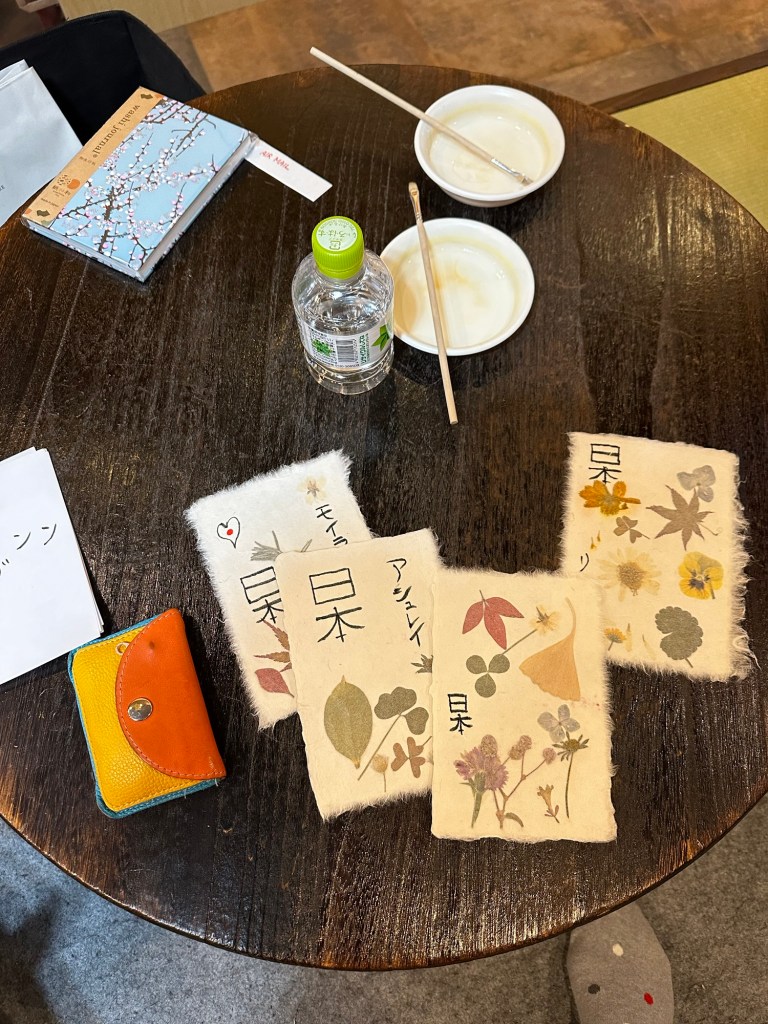
On Sunday I had the best time. I found my own way (using the maps app, granted)I to a paper making workshop in the middle of Kyoto. Washi paper is a particular kind of paper brought to Japan from China by a monk more than a thousand years ago. He was looking to introduce Buddha to Japan and needed to record the teachings but there was no paper, he introduced washi paper. I always thought washi paper was just the pretty colourful paper tape you see in stationery shops at home. It is that but it’s more than just tape.
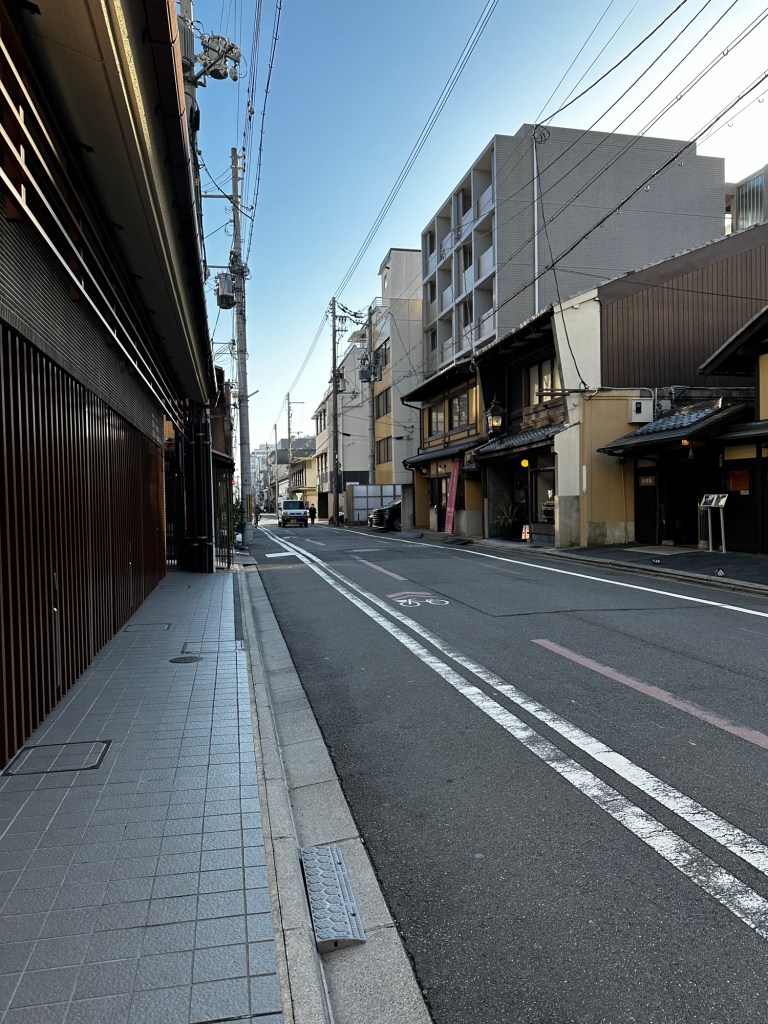
So at the short workshop (that I found in Airbnb experiences ([link to workshop])we watched a video about the tradition of making this paper from the bark of the paper mulberry tree. It’s a very long process that starts in November when the farmer cuts the branches. I wasn’t taking notes so I may have misremembered the steps and order but here goes… The branches are then steamed until the bark lifts away a little so it’s possible to strip it from the branch. Then the outer part of the bark is scraped off and the inner white part is washed and beaten. And eventually it’s ready to be turned into paper.
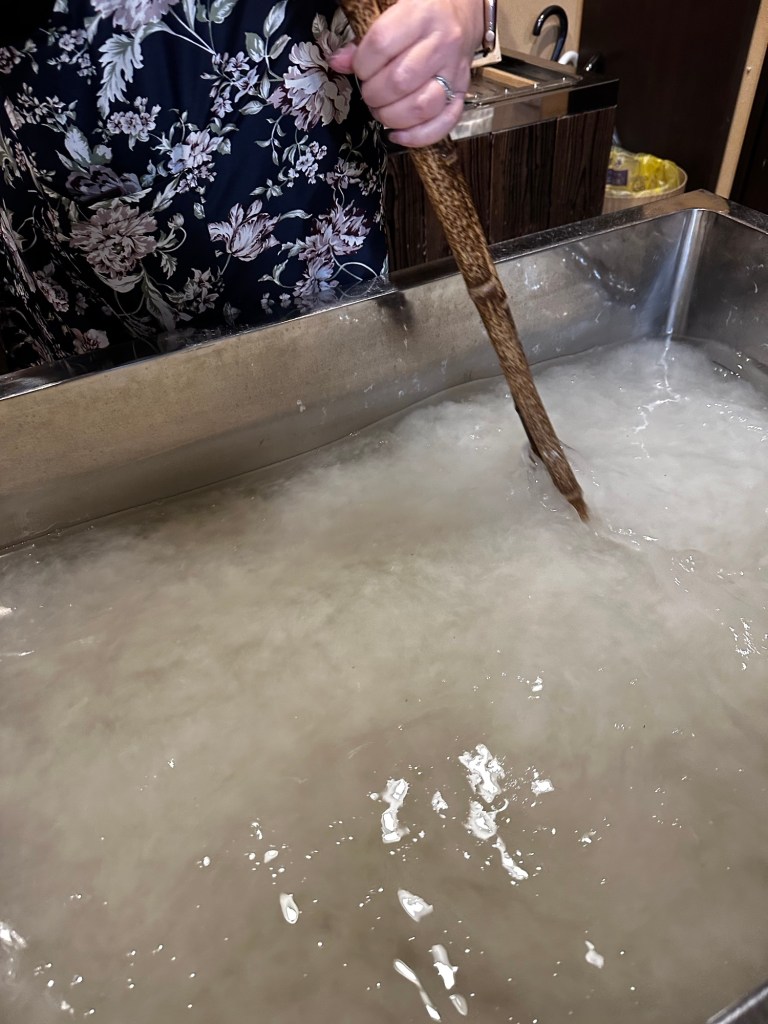
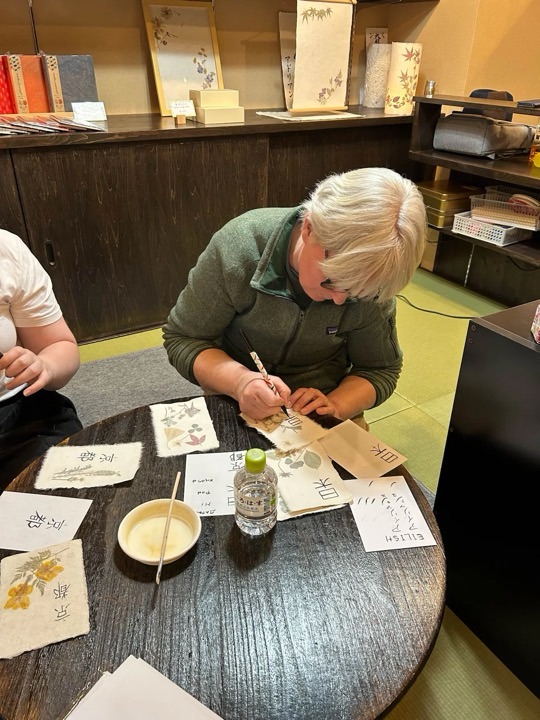
At the workshop we got to use this pulp to make our own sheet of paper! I’m not really getting across my excitement at this but believe me I was really excited. I still feel a little emotional that I got to participate in something so old in the Japanese tradition. I also think crafting is very curative for the weary human and I am weary.
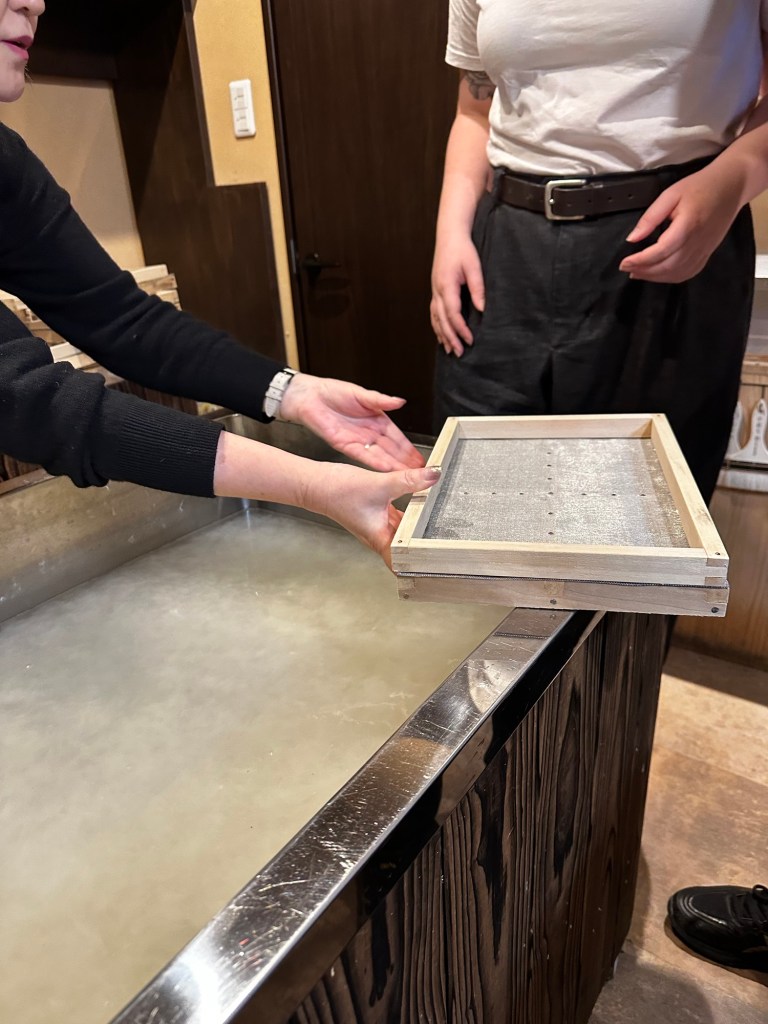
So our teacher had filled a huge vat with water and fiber and she added a glue (whose name I cannot remember) and stirred the whole thing up with bamboo sticks. Then it was our turn to dip the paper frame into the fiber/glue/water and scoop up some of that solution into the frame while moving it all the time to keep the frame level. If it’s not level the paper will be thicker at one side or in one corner and no one wants that. The biggest shock to me was the water was cold when I dipped my frame in. You dip your frame in three times and then move to the drier.
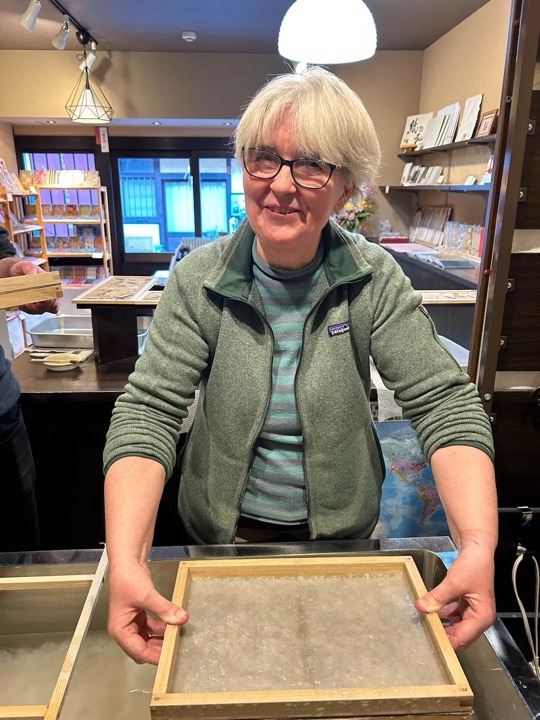
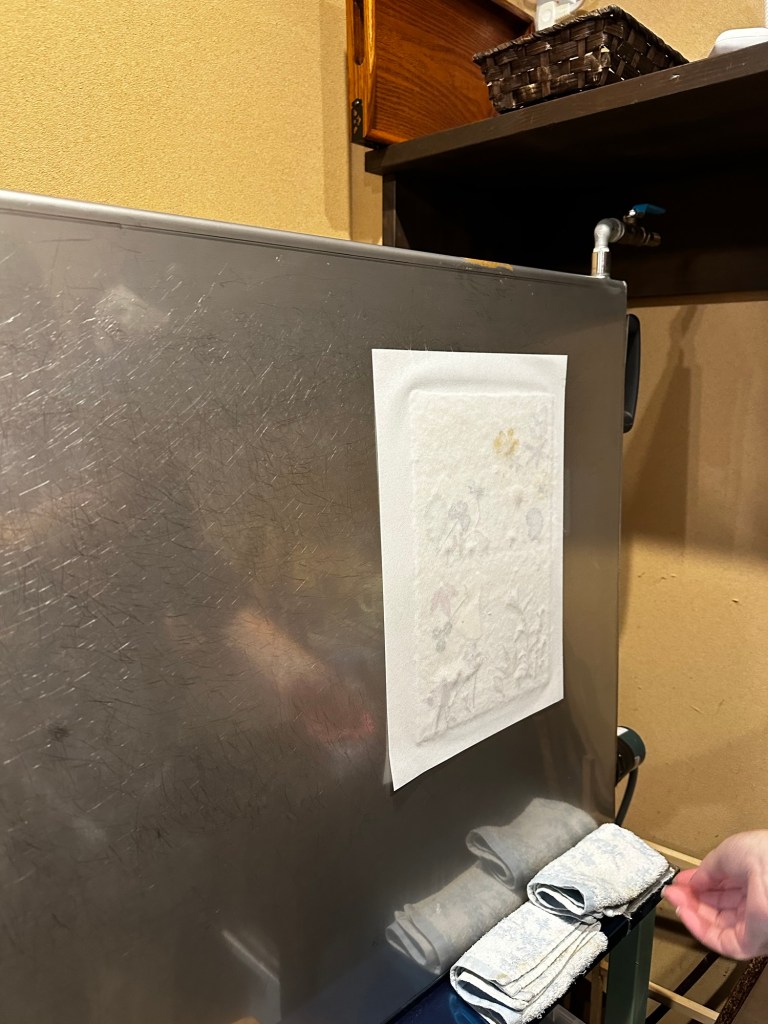
Our teacher’s husband made the drier for her. I was very impressed. I made paper a few times (not entirely successfully) in the past from shredded paper… so not exactly making paper more like recycling paper. I bought a kit and used my food processor to mulch the paper with water. I added more water and put the solution in a big basin. The kit had a small frame and I dipped that in the solution and again it had to be kept level. I didn’t have a drier but now I know husbands can make them… I used loads of j-cloths and old towels to press all the water out. It still took days for my paper to dry. So I was wondering how we would be able to complete our washi paper in the 90 minute workshop. The drier. It sucked the water out of the solution on the frame. But that still wasn’t enough.
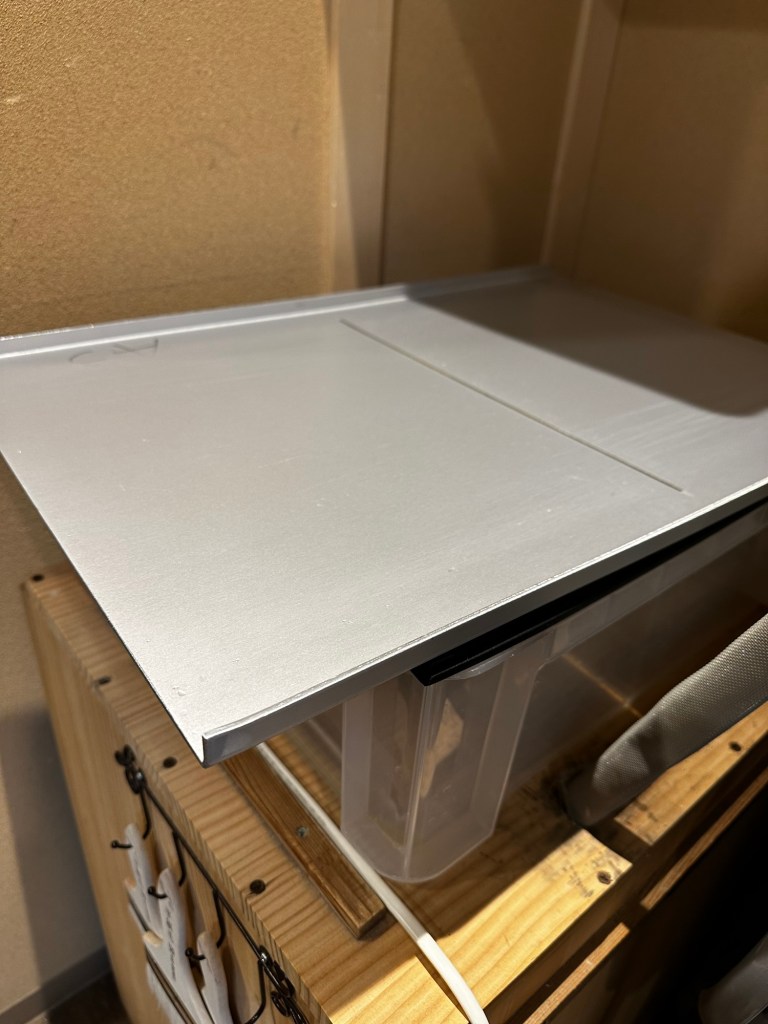
Behind the vat of pulp/water/glue solution there was a heated metal sheet, the size of a white board. (I don’t know if her husband made this one because in the video the farmer making the paper had one too, a bigger one so I’m going to assume this is a normal tool of the trade and she had to buy it.) You place (without touching the hot metal) your damp new paper up onto the surface and using an authentically old looking brush, you brush your paper gently against the hot metal. And then leave it for a bit…
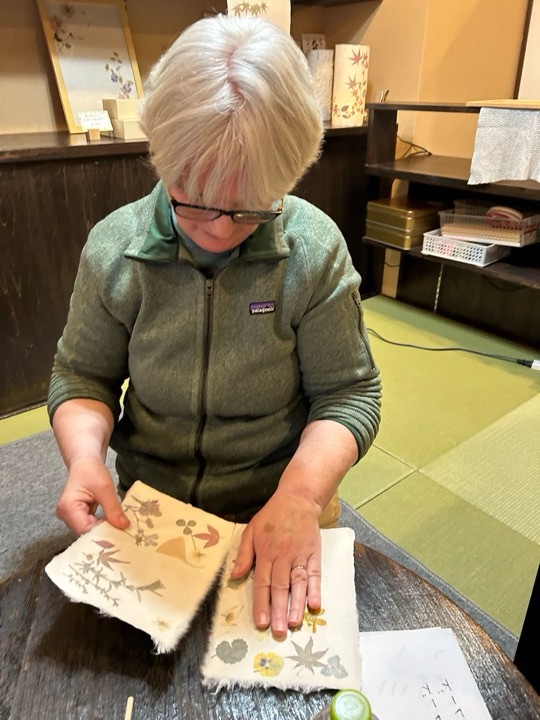
I’ve already left out the bit where I put pressed flowers on my frame to decorate my paper. I used up every flower and leaf telling a story of them in my head and then laid paper on top… I think that paper kept the decoration in place.
There used to be thousands of paper mulberry tree farmers and now there are about four hundred. I was surprised there were even that many needed to produce some pretty paper but again I had missed the many things the Japanese do with this particular paper.
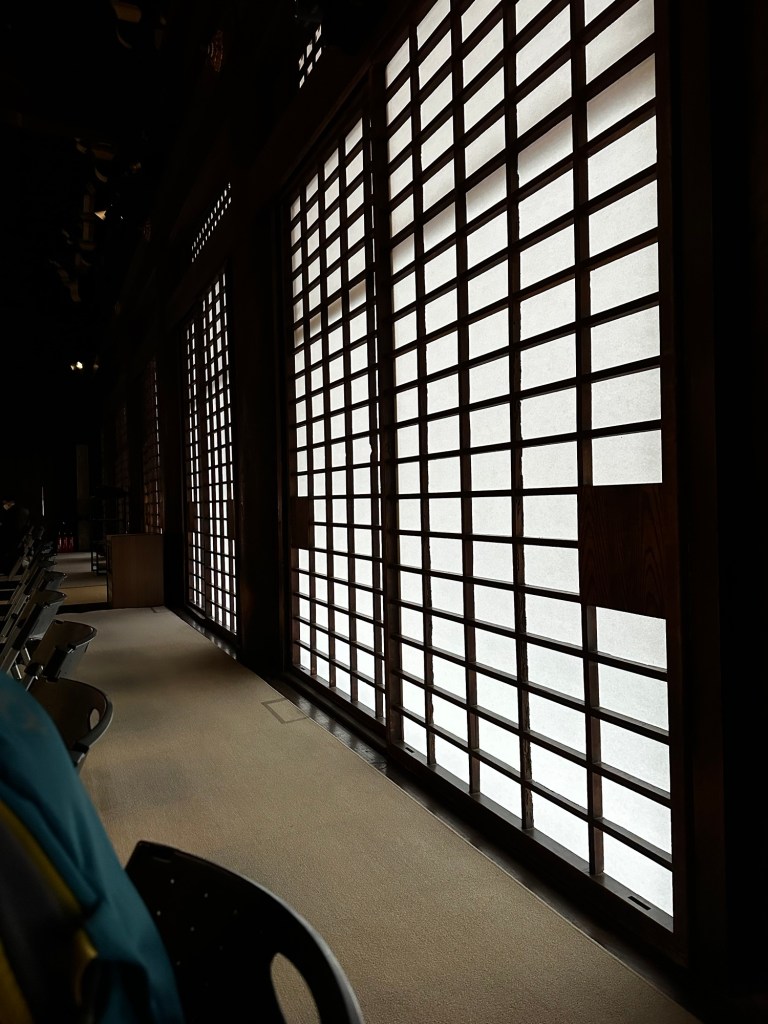
We visited a temple today, the Nishi Hongwanji and saw how they used washi paper in their doors to let the light in and keep out the breeze… not double glazing but these monks seem to be a hardy bunch. Also washi paper is used for lanterns.
For mats, the stringy quality of the pulp used to weave the mats. (Don’t make the mistake I did of walking on these mats in your shoes, they last so long because they are only walked on in bare feet.)
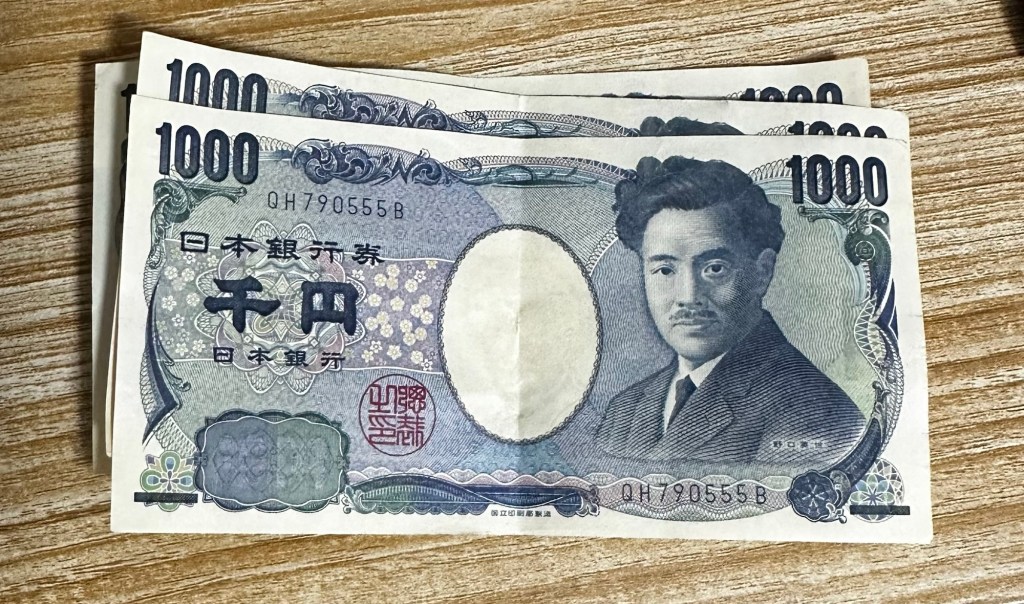
But the biggest use of washi paper is money! The Japanese Yen notes are made of washi paper. I was thinking… if I get a bit better at the scooping and my Japanese characters and Denis makes the drier and the heated metal sheet and I can get the paper mulberry fiber I’ll have to give the money a go…
 Travel stories