We only have a certain amount of energy

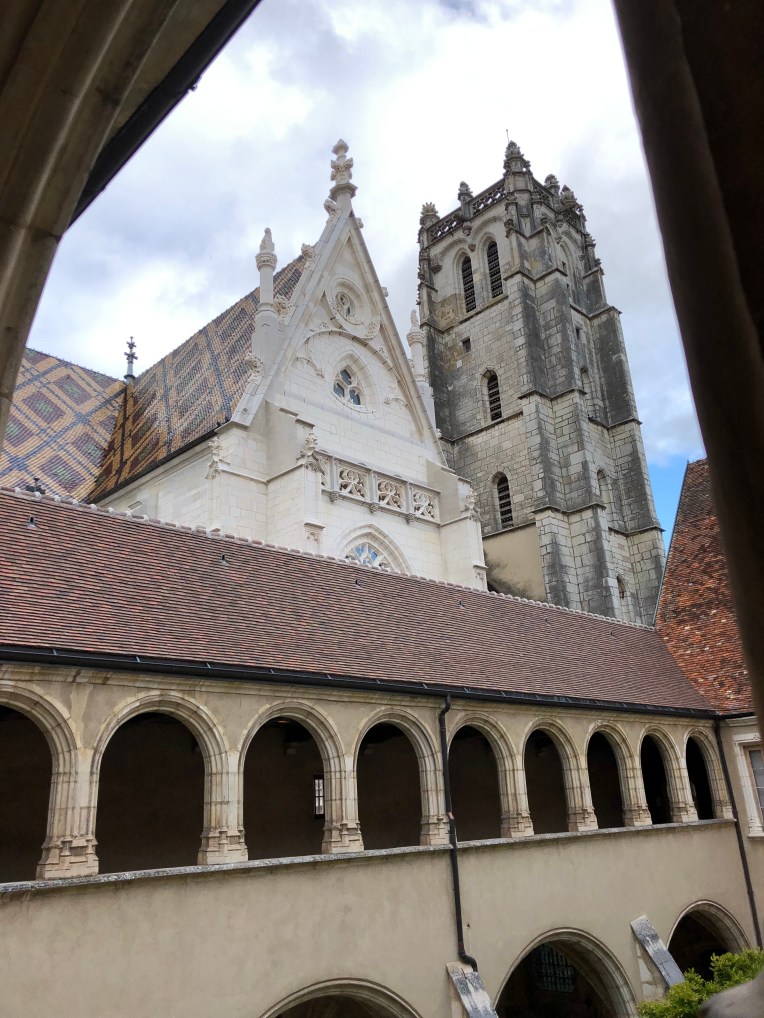
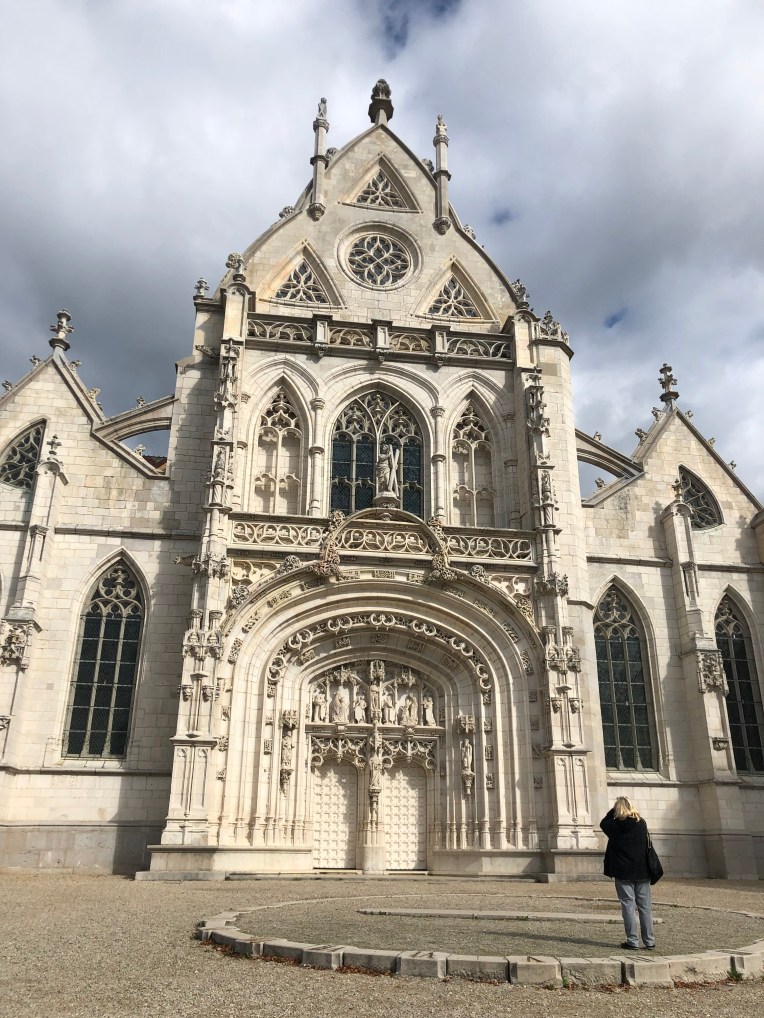
(The front of the Monastère Royal De Brou)

We ran out of electric power last night. The clouds were grey and the sun didn’t come out and during the day our solar panels didn’t generate much electricity. By 3pm we were using more energy than they were generating.
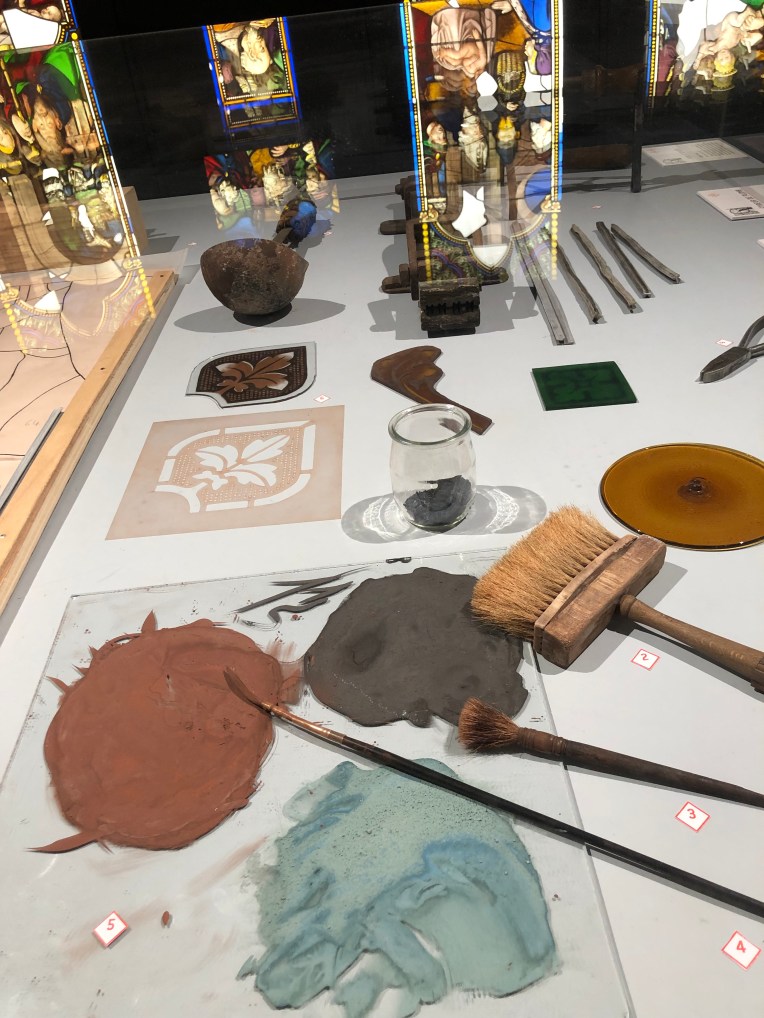
(Exhibition of old techniques for painting)

We use up energy when we turn on the lights, so we turned them off. We use energy when we charge our laptops, so we took turns charging. First one of us charged until their laptop was over 50% then plugged out and the other one could plug in.
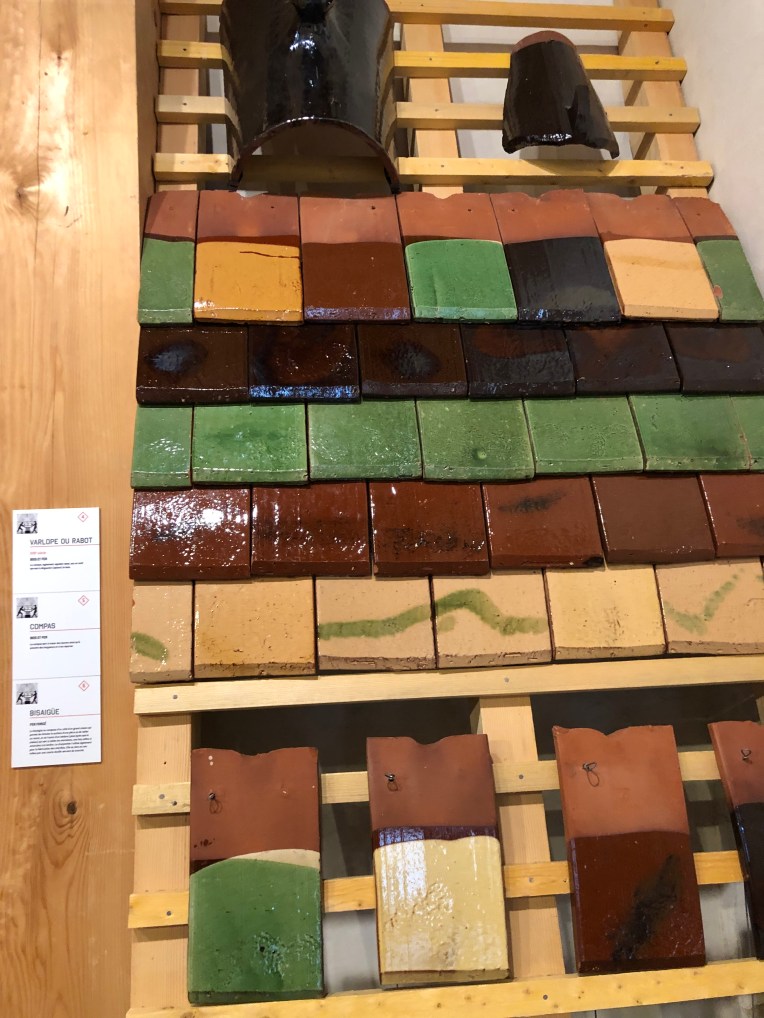
(Reproduction of roof tiles)

We use energy when we charge our phones but we had an extra battery for that so we took turns charging our phones. We use energy when we turn on the heating – just to turn it on, gas heats the water. Fortunately, it wasn’t cold. We use energy when we shower – again only to turn it on. Fortunately, we don’t get too close to people who might notice. Dogs do seem friendlier, though, which might be a sign.
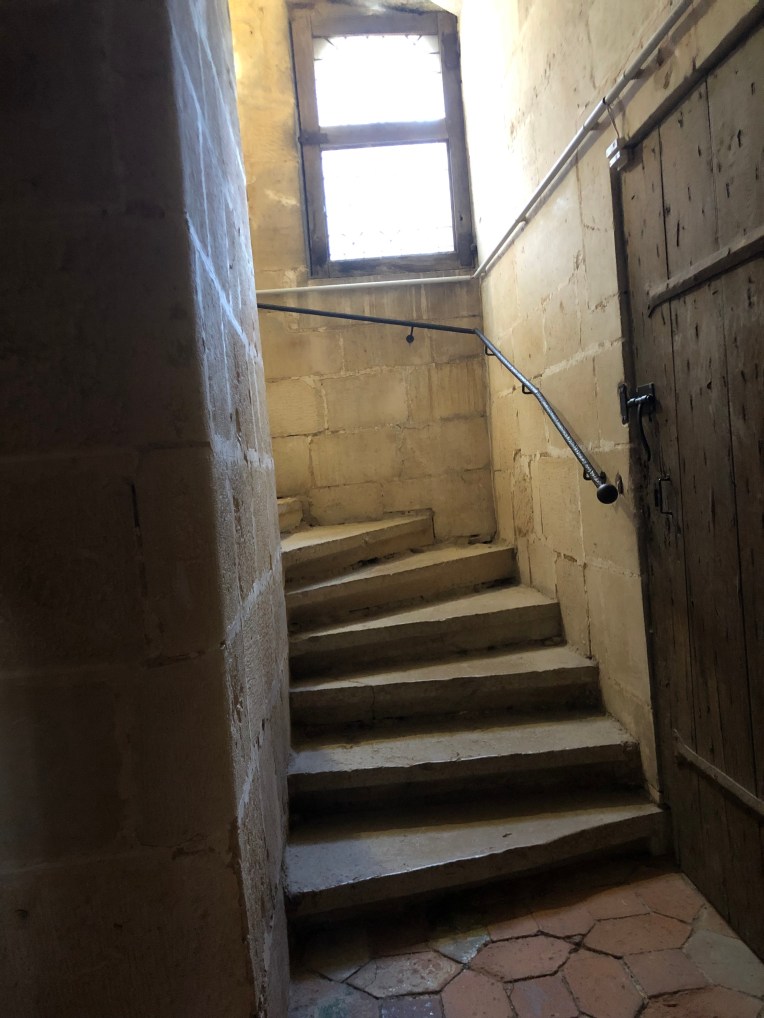
(Stairs to Apartments of Princess Margaret) We make energy when we drive and we have been driving for 90 minutes today. We also make energy when the sun shines and although it is much colder today (7 degrees Celsius this morning) the dark clouds are gone and the sun is shining on our solar panels.
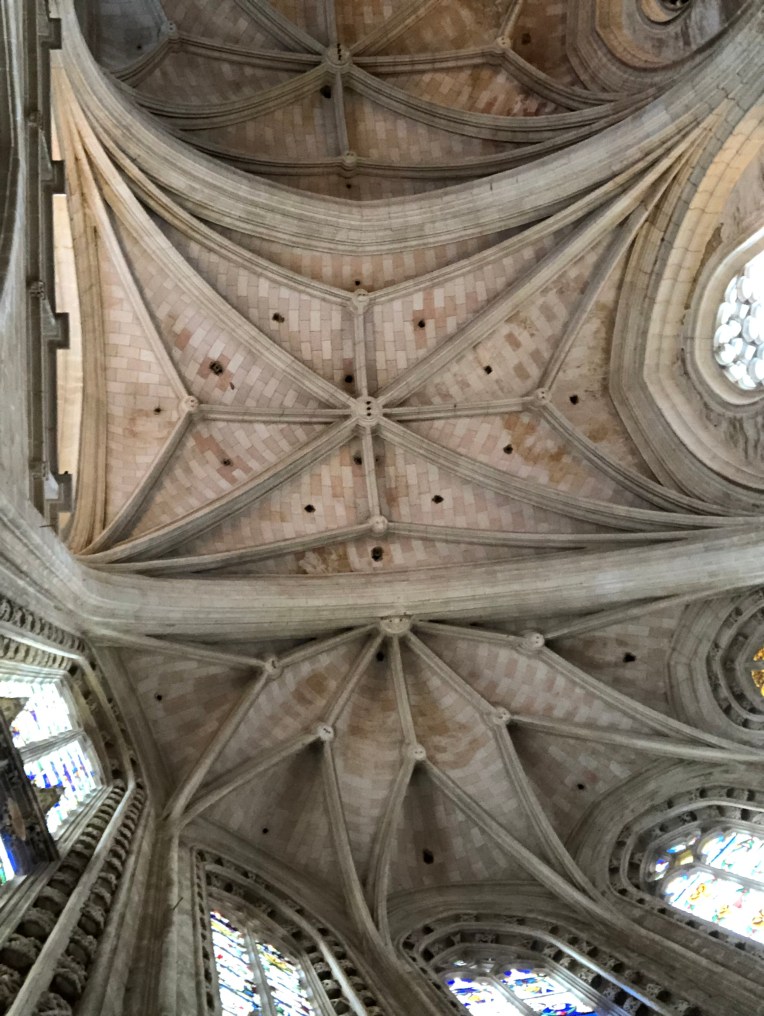
(Ceiling over her tomb)

Each time we run low on one of our resources I am reminded of my resources. My energy. We tend to be careful of our water usage in the van because we have a finite amount. Of course we can get more. We also keep gas usage to a minimum by putting the water heater on for only ten minutes at a time. Of course we can also get more gas.
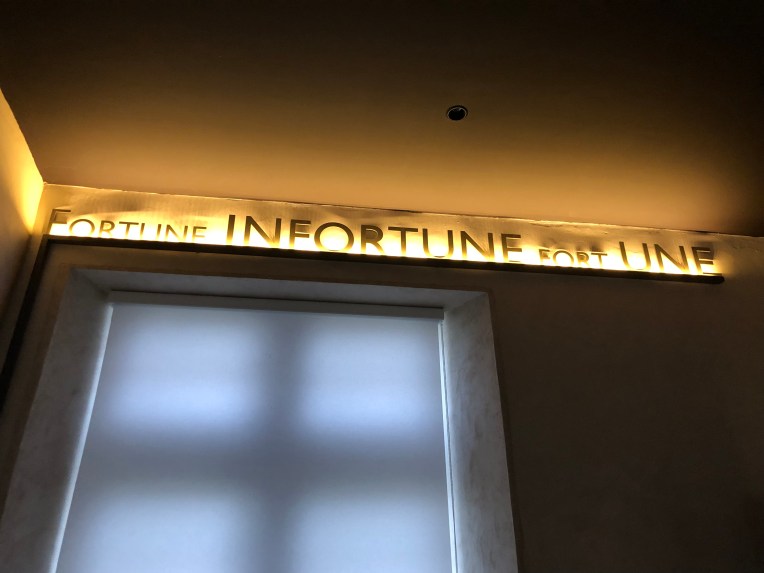
(Her motto… Both fortune and misfortune make a woman stronger)

I have a finite amount energy. Every day I generate more, through the food I eat, the exercise or rest I take and the mental health I nurture. Some days I waste some of my finite energy on worry or drama. Some days I restrict the amount of energy I can generate by eating zero energy generating foods, like processed sugar or by my sleeping habits.

Human energy conservation. Mairead.
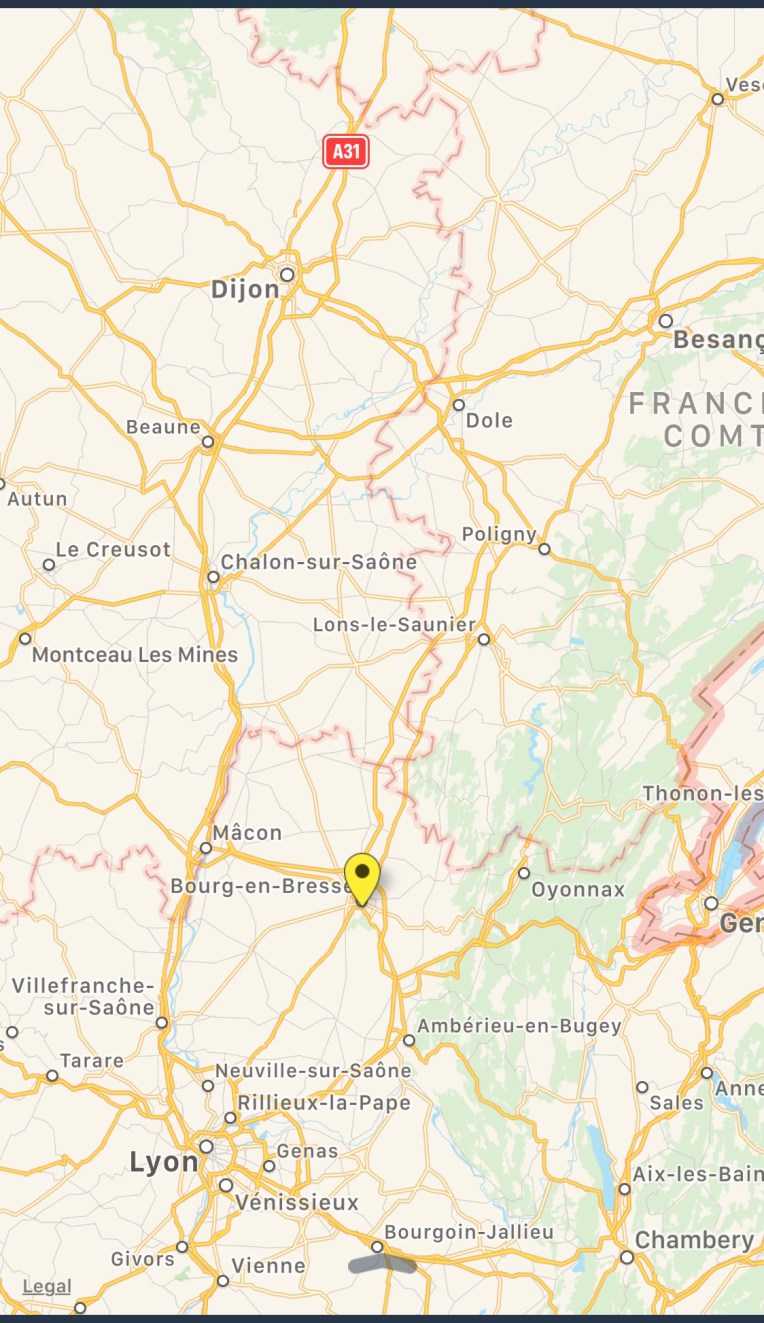
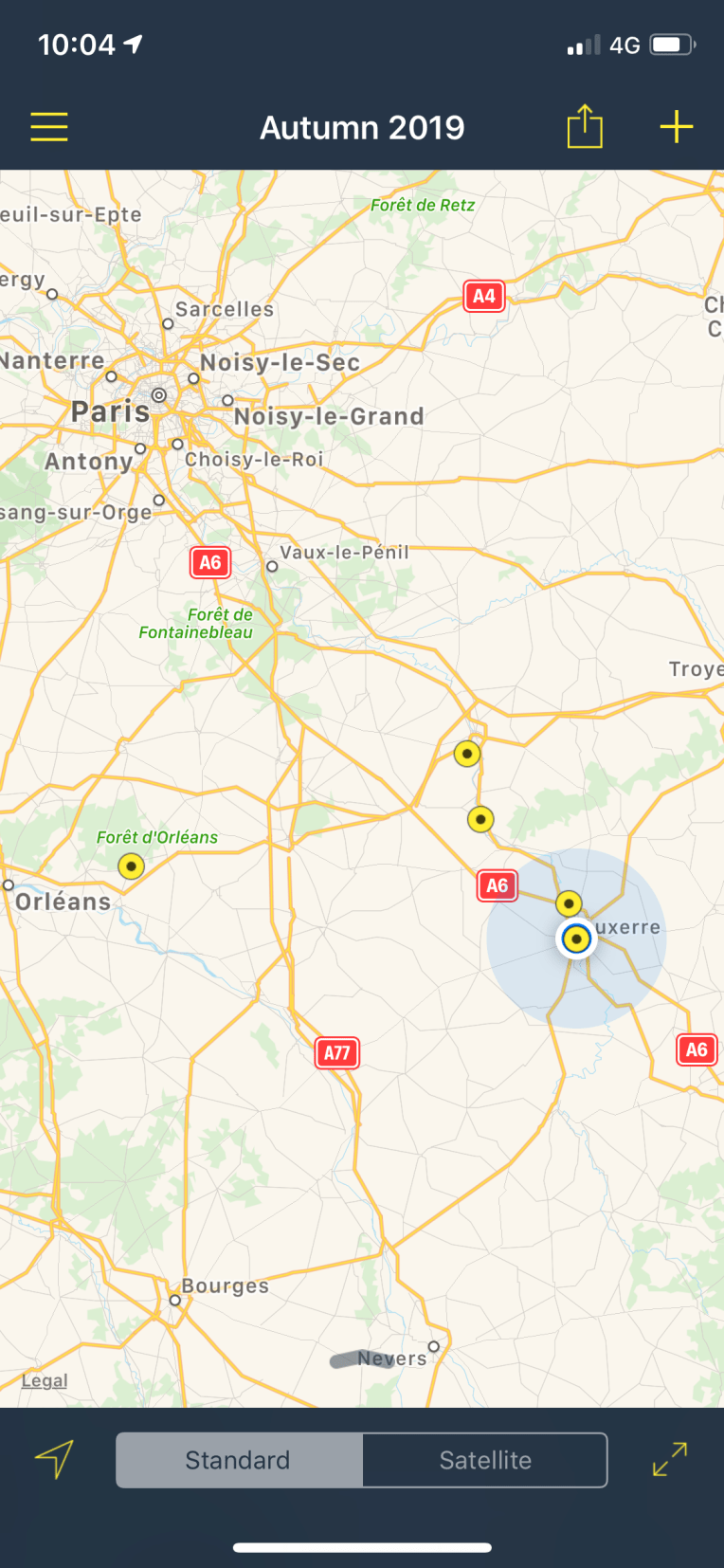
(There we are between Dijon and Lyon in Bourg-en-Bresse)

You think you have problems…

(Princess Margaret of Austria)

We are in the town of Bourg-en-Bresse. We arrived at lunchtime in front of a huge abbey, called The Royal Monastery of Brou. It was commissioned by Princess Margaret of Austria who was from the Netherlands (or at least ruled the Netherlands for a time) in 1506.

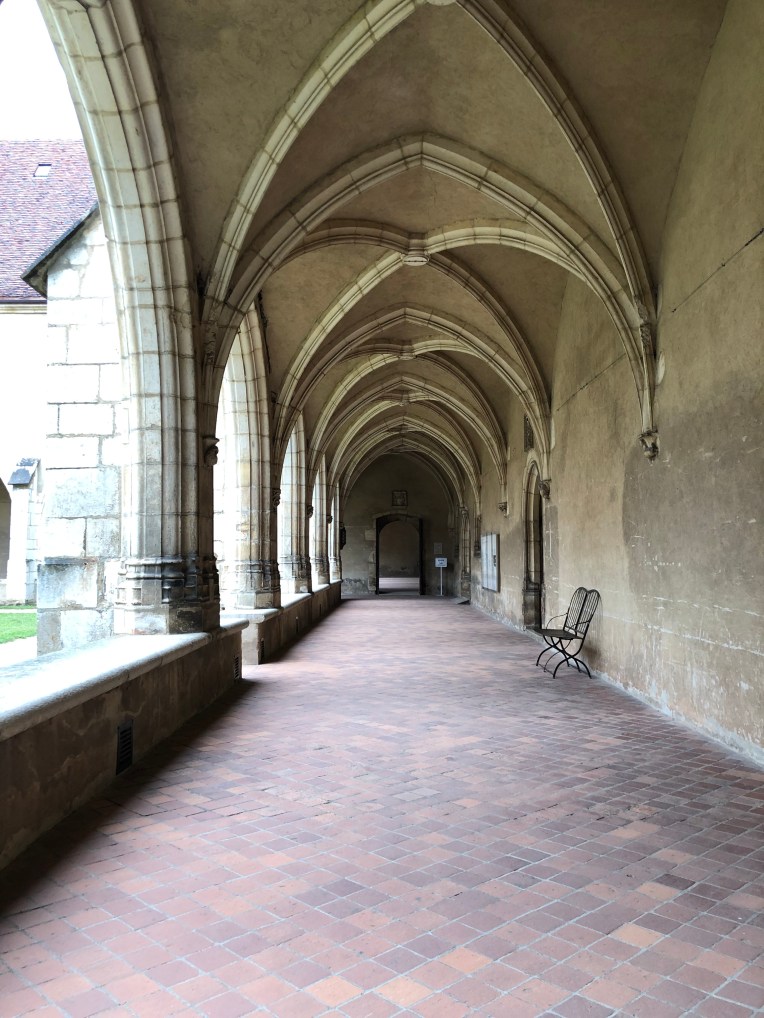
(I love the cloisters)

She had a tough life. When she was little her mother died. Then her father promised her to a future king and she had to go live in Amboise to become trained for her new role. She was only 8. She was great friends with her fiancé until they were both 17 and he broke it off with her to marry a different princess. She was very hurt. But her father found her another king (can’t remember where he was from) and they got married. Unfortunately, he died.

(Can you see the fancy tile mosaic on the roof of the church?)

Margaret didn’t throw in the towel yet, no she found, or maybe it was her father who found, another suitor. Philibert the Handsome. He was very handsome. They were both very much in love. She was 24 when he died… can it get any worse?

(It started raining while I was inside)

She decided not to get married again. Then her brother died. She was given the job of ruling the Netherlands which she did very well. She was very rich and she decided to become a patron of the arts and started work on the Monastery. She had a plan for spending the rest of her life here with the tomb of her Philibert.

(Tomb of Philibert the Handsome…)

She hired master builder, Louis van Boghem from Brussels who in turn hired Flemish skilled stone masons and wood carvers. It was nearly finished when she died. Yes Princess Margaret died before she even set foot in her creation. She was fifty years of age.

(…and just a few feet away, the tomb of Princess Margaret of Austria)

She’s here now, though, in a tomb in the church with her husband (the handsome one) and her mother-in-law (who gave her the idea for building.)

Things could be worse, Mairead.

Wash Day at the Supermarket

(46 minutes at 60 degrees)

And the high point for today – washing our clothes. We’re parked at a supermarket in Prissé, which is a small town outside Mâcon. There’s a fine launderette with parking in one corner of the shopping center and I’m waiting here for the dryer to finish.

(There they go…)

The sun is shining and it would be so nice to hang the clothes out instead of putting them in a dryer. Can you imagine arriving at the supermarket at home and noticing clothes lines strung between the trees? Covered in pegged-up clothes? Actually, maybe that would be lovely! As an art project, I mean! No one wants to see our underwear strung around Tesco…

(You can tell a lot about a place by what they put in their supermarket foyer…. Charolais cattle originate in the Charolais area which is near here!)
I can see it now, colourful baby clothes, pretty children’s ballet dresses, worn dungarees, sparkly teenage dresses, white shirts, T-shirt’s with band logos, dark trousers, frilly bed-shawls. All the items grouped by age, like a life timeline. It could be called Life Line. Who’ll ring Tesco head office for me? Maybe Fairy Non-bio would sponsor us?

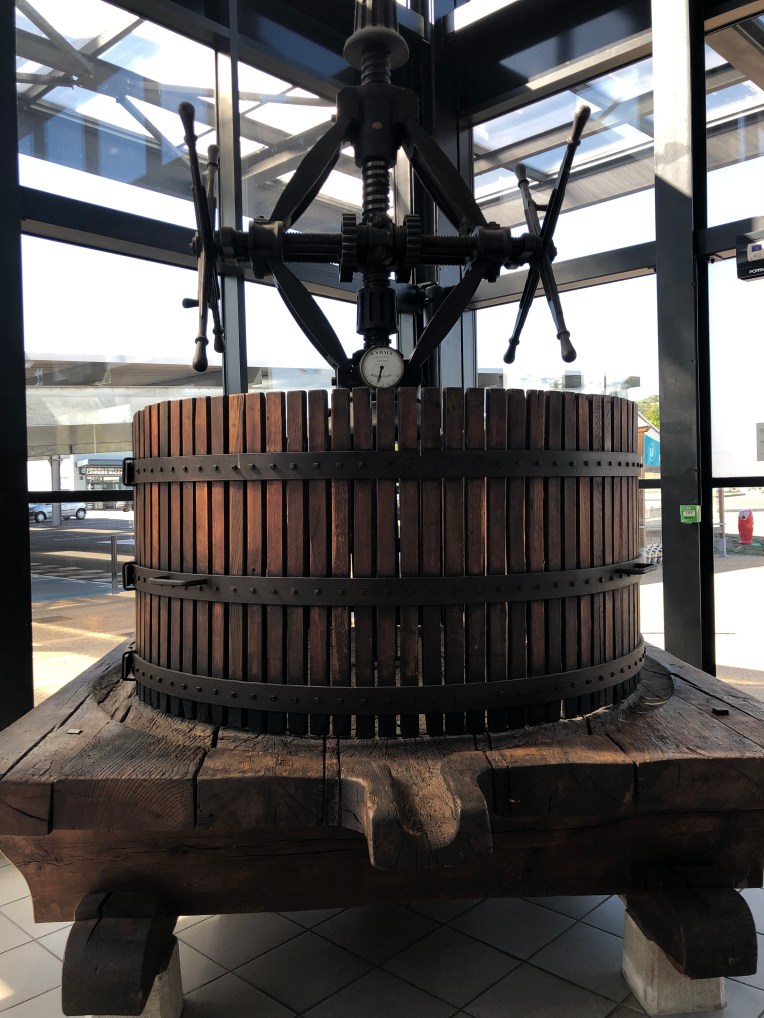
(This old wooden wine press was also in the foyer – wine production is big here too)

This is what happens when you don’t do ten other things while the clothes are being washed by the machine. If I was at home I’d be cutting something, making something, cleaning something or meeting someone while the clothes washed. Here I’m not a bit concerned with multi-tasking. The dishes are done, the floor is grand, there’s nothing I need to cut down or to make up and there’s no one to meet. I have an opportunity to let my imagination run wild, just for the fun of it.

Seriously, does anyone know the CEO of Tesco Ireland? Mairead.

(There we are in Prissé)

The town of Buxy

(An old tin sign on the former train station wall)

We arrived in Buxy this morning and went for a walk to the town to get our bearings. We’d stopped off here briefly last year but never got as far as the town. It’s very pretty and very old.

(This tower reminded me of Reginald’s tower in Waterford)
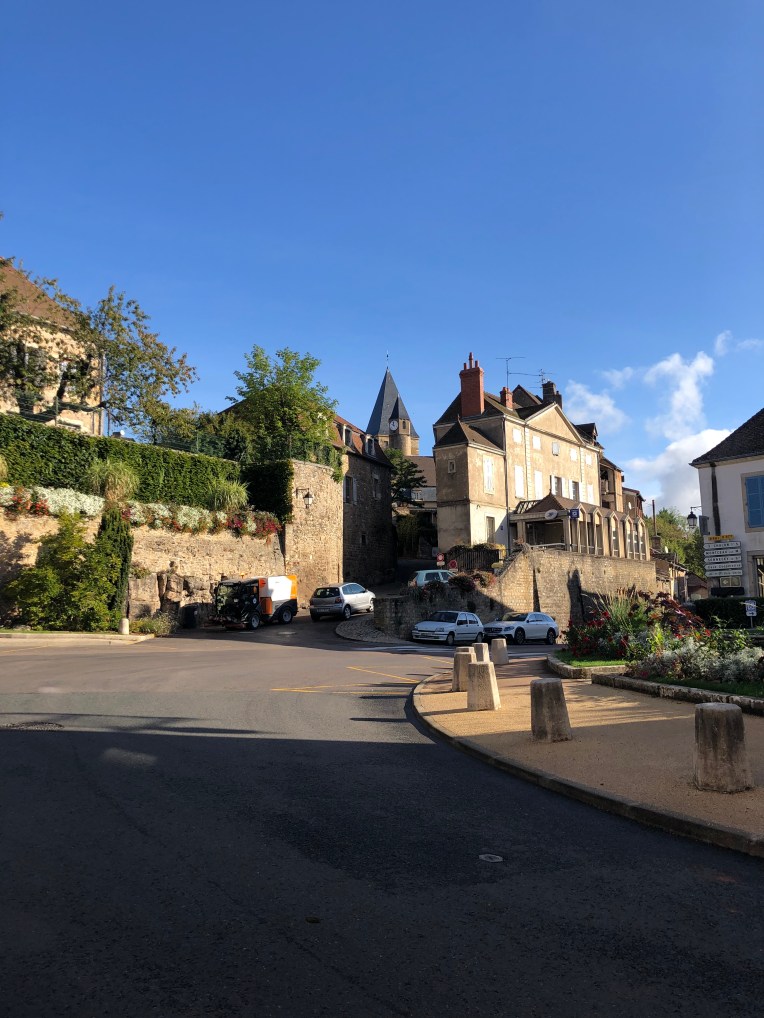
Delivery trucks were competing with buses and pedestrians on the narrow streets and the locals were buying their baguettes by the armful.

(That’s the post office clinging to the edge of the hill and that second tower belongs to the church)

We spotted the butcher delivering meat so you might need to avert your eyes for the next photo… That’s the butcher and the baker covered, I’m on the lookout for a candlestick maker. It was uphill all the way to town which meant it was a grand downhill walk back. We are parked near the old station on the Voie Verte and when we got back I headed out for a walk. The weather was cool with some sunshine, with plenty of shade on the path – optimum.

(Just in case you were wondering where meat comes from…)
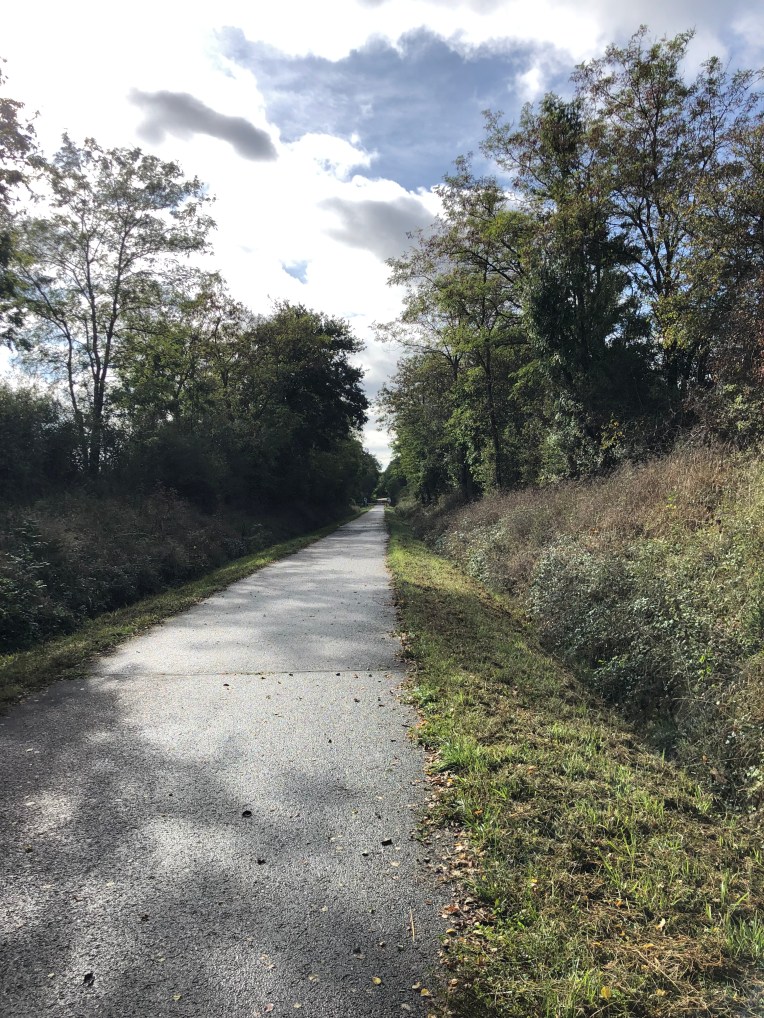
I’ve been reading a book on Audible (well, listening to the author read his book on the Audible app, might be more accurate) called Effortless Success by Michael Neill, did I already tell you? Maybe I did. Anyway, he’s lovely and he tells nice little stories to make you feel like you could really do things. He’s all about flowing, not pushing. There’s a bit in the book I was thinking about this morning, on my walk along the greenway: Where there’s a way, there’s a will.

(The long road)

We all know the other version, where there’s a will there’s a way but he says that’s a bit pushy and often invokes resistance. The other one is more flowy. I got an example of it this morning, as I rounded a bend and could see a long straight path ahead of me. The thought came to me, gosh that’s long. A moment later, I shouldn’t go too far. Then, I wonder how long I’ve been walking? I checked my phone… ten minutes. No way! I thought I’d been walking for at least 35 minutes, maybe even 45… but no.

(There would have been a barrier across the road here, when the greenway was a train track)
And didn’t my friend, Michael (you know, the guy from the book? He does feel like my friend) pop into my head and his idea about where’s there a way, there’s a will. I really had no idea where I was going and that was making it feel longer. How could I make it feel doable.

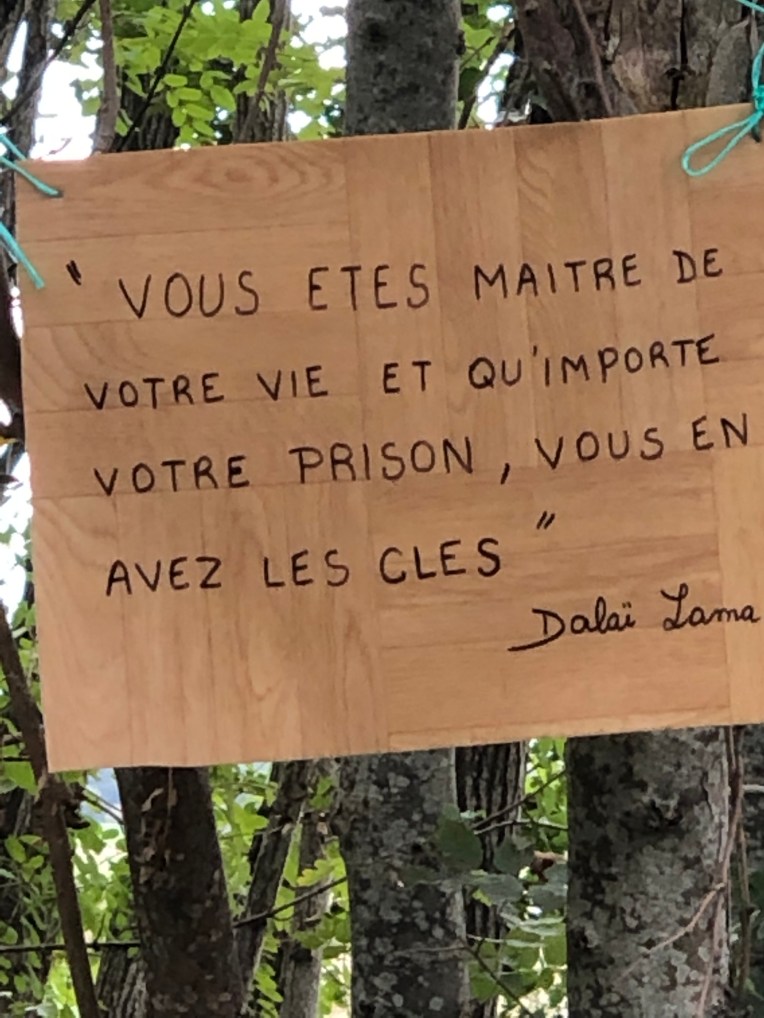
(Noticed this hanging on a tree on my way back. You are the master of your life and whatever the prison you have the keys. The Dalai Lama)
I had noticed there were benches every 500 meters or so. I could use them as a way to keep myself going. I’d just go to the next bench. So I went to the next bench and the next bench. I walked for an hour and it was so much easier and the return journey felt like ten minutes!

Even more interesting, this works with projects, Mairead.

The Baker, Le Boulanger

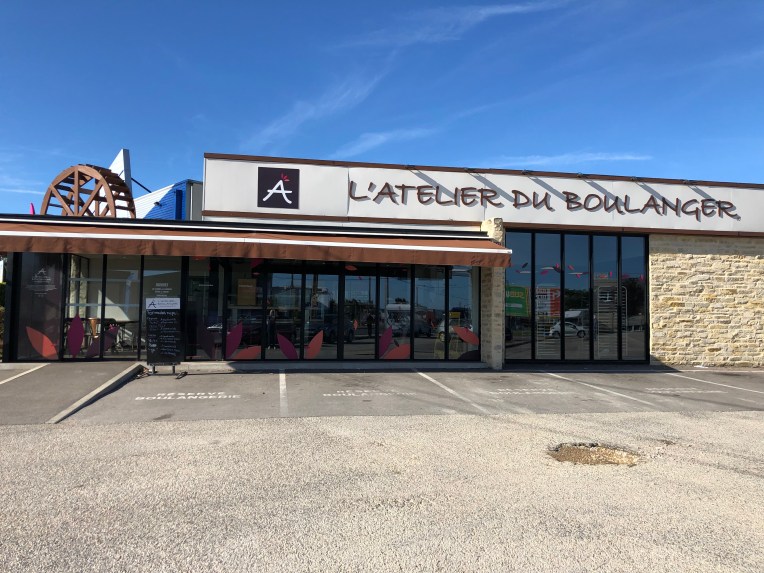
(La boulangerie)

I slept really well last night after our long walk yesterday. Now we’re on the road again heading for the Voie Verte – the greenway that used to be a train line. It’s a path for walkers and cyclists, we found it last year. First though, we needed to stop off at the bakery, la boulangerie.

(Not Brennan’s but sure we’ll be grand…)
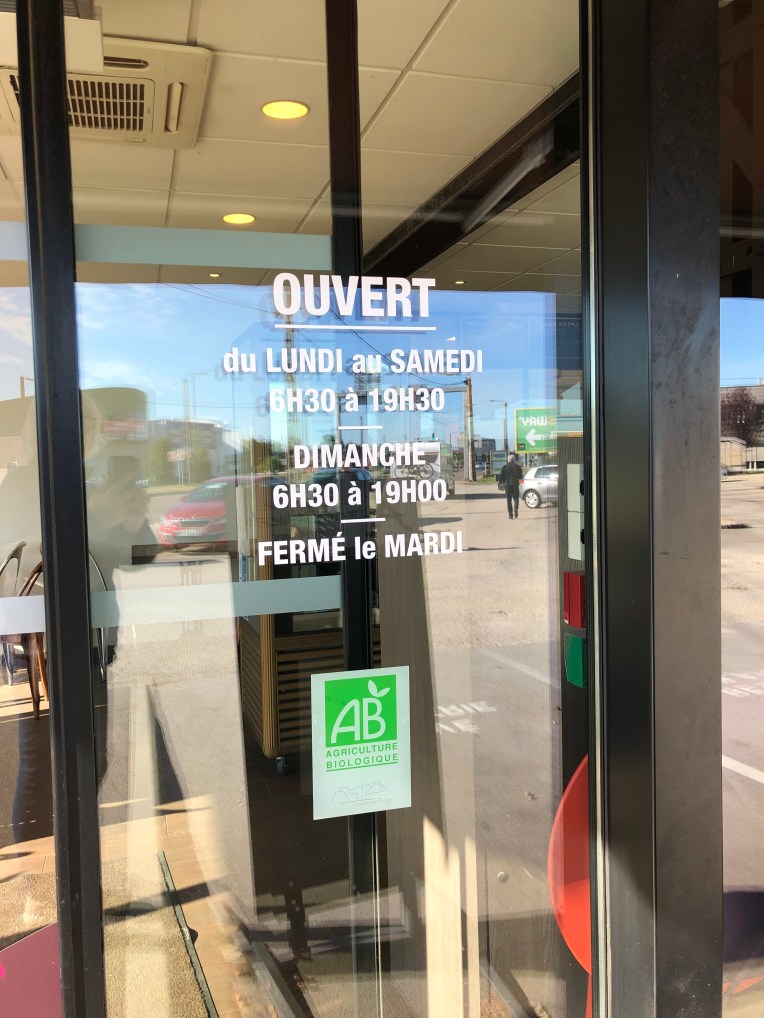
Our Brennan’s Wholemeal Chia, Pumpkin and Poppyseed bread has run out so from now on we will be eating French bread. I think we’ll manage. We spotted the bakery as we were leaving Dijon. It was open, not a given as today is Sunday and opening times are very restricted. Not this bakery, they open from early until late.

(Can you make out their opening times? 6.30am to 7.30pm every day, exceptions: closed all day Tuesday and closed thirty minutes early on Sunday)
We decided to have a coffee since we were here and that’s when I spotted the baker preparing his bread. He had a huge rectangular fabric mat, the size of a narrow single bed. It was laid out on top of a trolley and on top of the mat there was the uncooked dough. When we first walked in he was busy snipping the baguettes with a scissors. Then he rolled the trolley to one of eight ovens and raised the trolley bed (like you see paramedics do when they take a stretcher out of an ambulance?) making it level with one of the upper ovens. Then he opened the oven door and slid the fabric mat and the baguette dough into the oven. And then he went on to the next batch and I saw the way he transferred the soft baguette dough onto the fabric mat with a wooden paddle.

(Can you see the way the trolley might elevate to the height of the upper oven? And that he’s holding the wooden paddle? And that there are 8 ovens!)

I wanted to take a photo to show you but it seemed rude. I should ask, right? So I did, I went up to the lady on the counter and stumbled through the French for, can I take a picture? She understood and gave a wicked grin saying, you want a picture of the baker? Of course! The next customer joined in with something that made her laugh out loud. Probably rude…

I don’t care I got my picture. Mairead

Ten thousand meters to Dijon

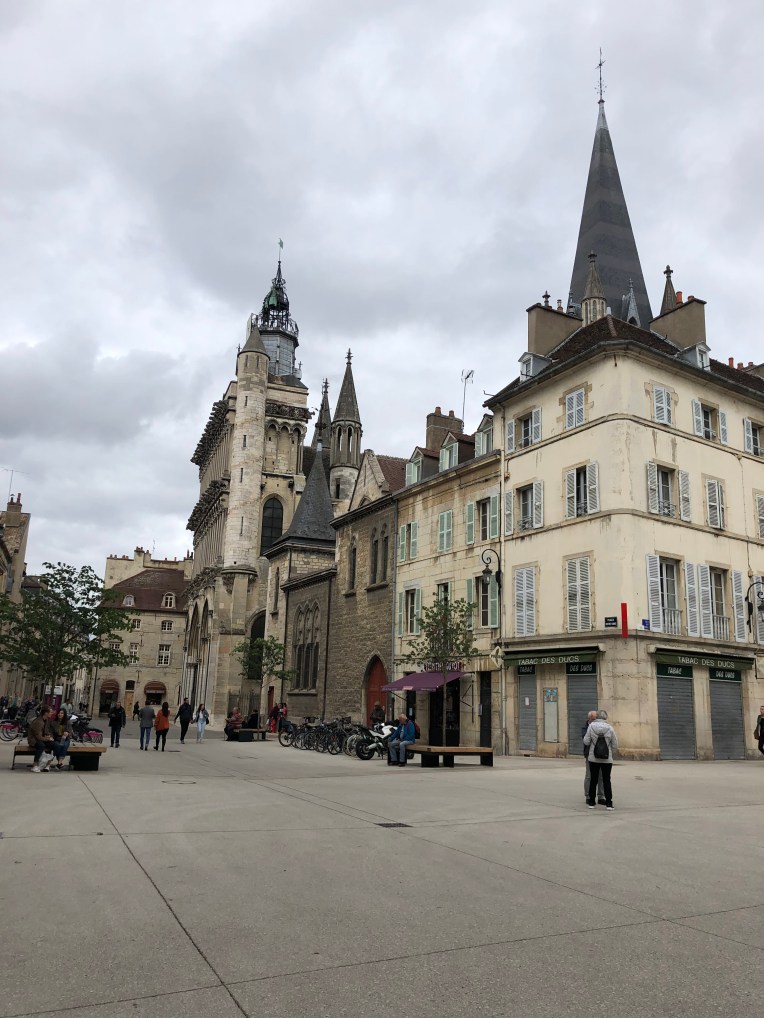
(Place Notre Dame, Dijon. Even in this small section can you see two church towers?)
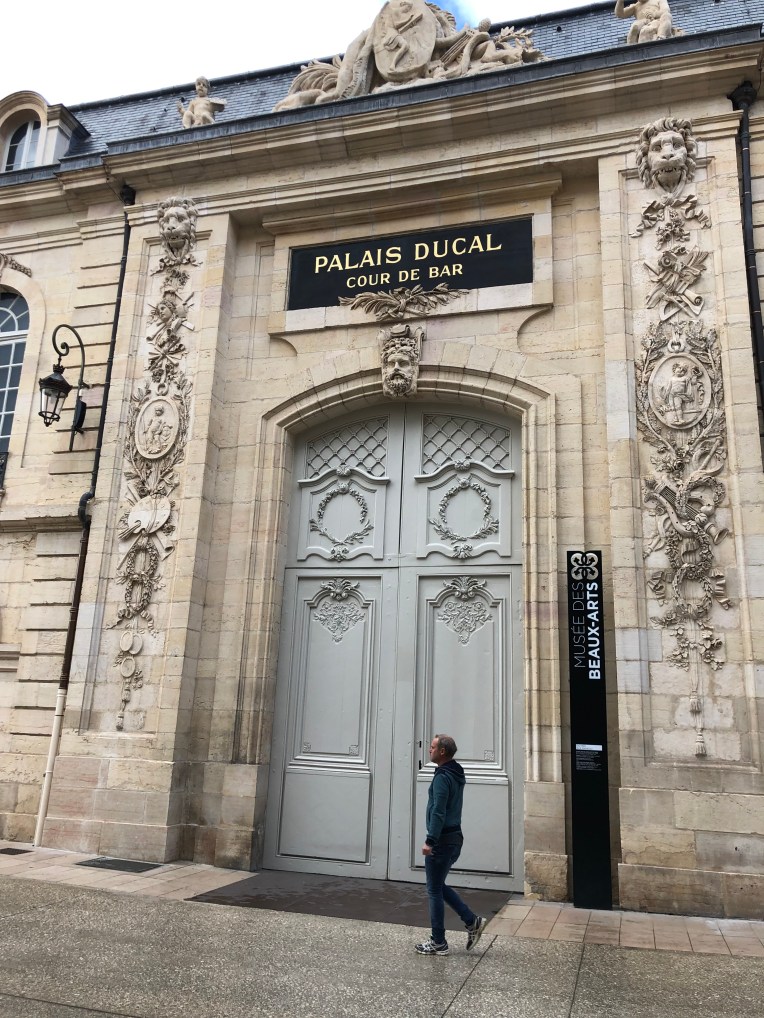
We walked to Dijon today, a ten kilometer round trip. The weather was perfect – overcast with one heavy rain shower but otherwise dry and cool. We remembered the umbrella.

(This was the huge door to the art gallery)
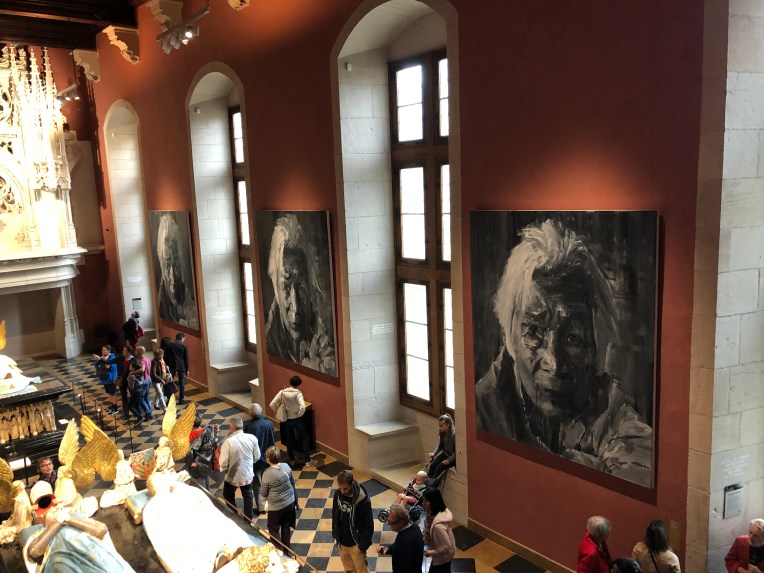
Our plan was to wander into the center of the city, check out a church (there were at least six to choose from) visit a museum and an art gallery, have lunch and fit in a coffee break. We didn’t go to a museum but we did visit the art gallery, a tea shop and a very pretty little park.

(These three were portraits of the artist’s mother, they are huge, he must use scaffolding)

There was a temporary exhibit at the gallery that I really liked. I think it’s because I prefer more modern art. Normally, at this point, I’d tell you who the artist was… but I asked Denis to carry the brochures and he seems to have mislaid them. I will google the gallery and it’s temporary exhibit in a minute but it just won’t be the same. So disappointing.

(The tea shop had cake…)

Ok I googled. His name was Yan Pei-Ming and he was born in Shanghai in 1960 (a contemporary of myself, as it happens…) He came to Dijon to study art in 1981 and this exhibition is called The Man Who Cried. He’d definitely understand my disappointment.

(And another church)

The art gallery stretches over three storeys and around three sides of a courtyard and after an hour I started to wane and began searching for the exit. I have a habit of ignoring signs that I can’t understand and found myself at a locked exit with a security guard asking me what I wanted. Exit, please, didn’t make sense to her. Meanwhile Denis who had not ignored the sign was mouthing Sortie at me from behind the barrier while trying to keep a straight face. The guard escorted both of us to a different door and let us out with her secret code. I said, Merci! and gave her a big smile. She didn’t smile. Denis couldn’t stop smiling.

(Don’t go in when it’s windy…)

On the way home we passed a very unusual park called Jardin de L’Arquebuse. Flowers (including wild flowers) and plants were laid out in rows and signs pointed out what soil they were growing in. If only our French was better we would have learned a lot about what plants need for healthy growth. Nonetheless it was very pleasant.

(This bee may have come from the hives they had in the park)

We are staying in the municipal campsite tonight and when we arrived back tired and footsore from the city we were thrilled to see a pizza van beside reception. Yes we had pizza, it was very nice.

I’m over my disappointment now, Mairead.

In the poet’s footsteps…

(The alleyway to a side entrance. Can you see the little door cut into the big door on the left?)
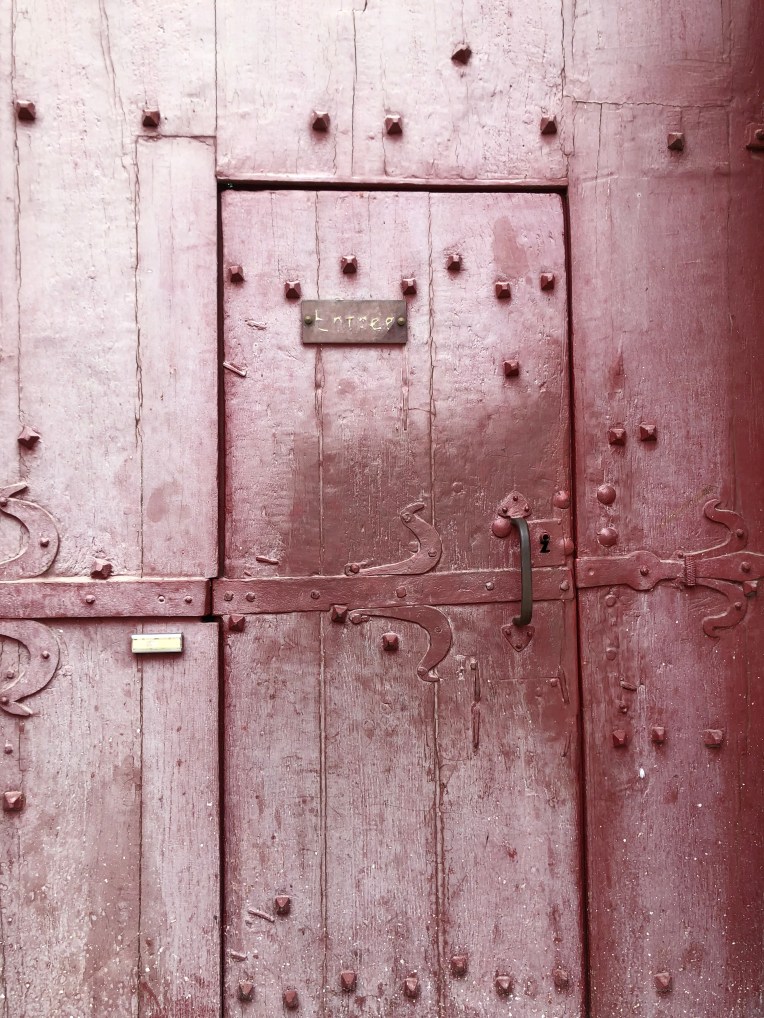
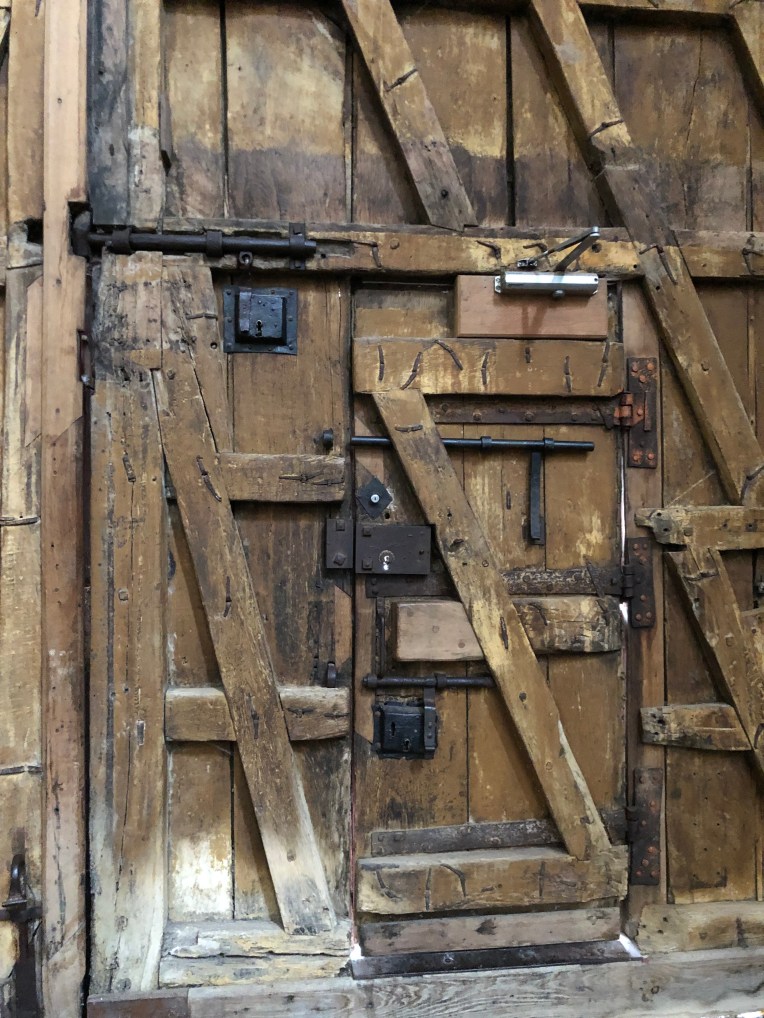
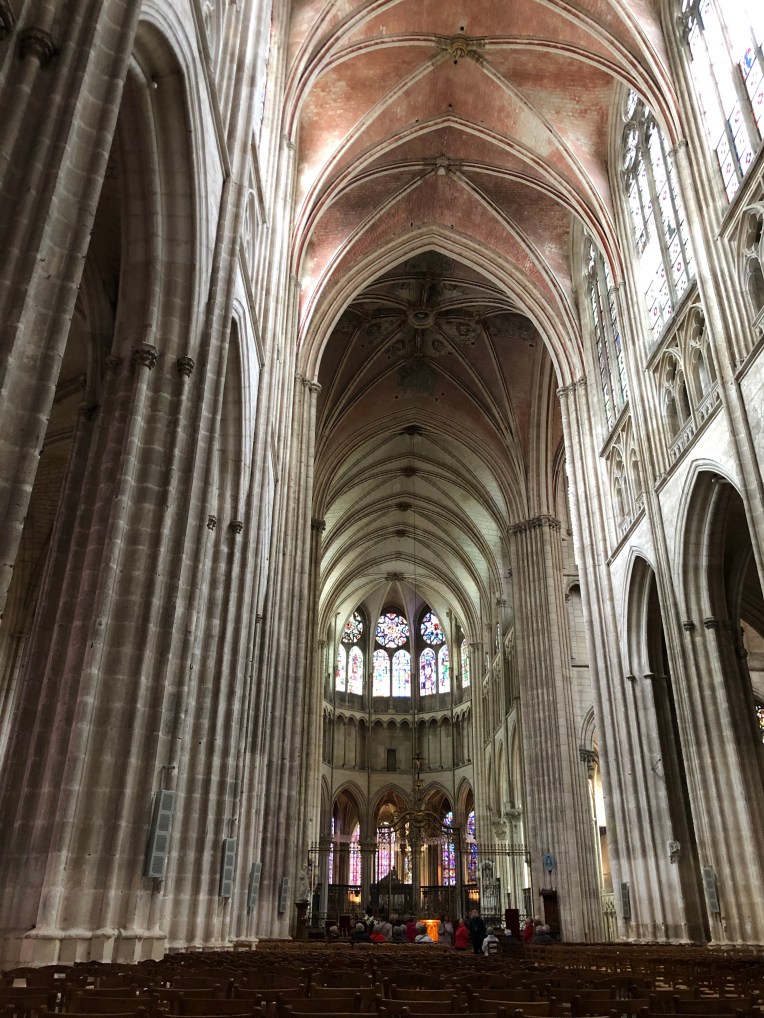
We are on our way to Dijon (thanks to a recommendation from Cormac) but I went to visit one of the cathedrals in Auxerre before we left, Saint-Etienne Cathedrale. Turns out there’s a slight Irish connection. I bought the little guide leaflet to get the details, short as they are.

(Yes, you, come on it!)

The cathedral nestles among houses and gardens built around it. It was definitely here first – the guide says there was a cathedral here in 400AD. Then you might expect a respectable building distance to be observed all around but maybe this is more healthy, everyone snuggled in together. As I rounded the last corner I could see I had come to a dead end but there was a door. I wasn’t sure if I should go on until I noticed a small sign.. Entree, Entrance. Come on in!

(The back of the door)

The surprise after that little door is the internal space is very impressive. It’s still in use on Sundays for mass but today there were groups of French tourists having a guided tour.

(Makes you look up)

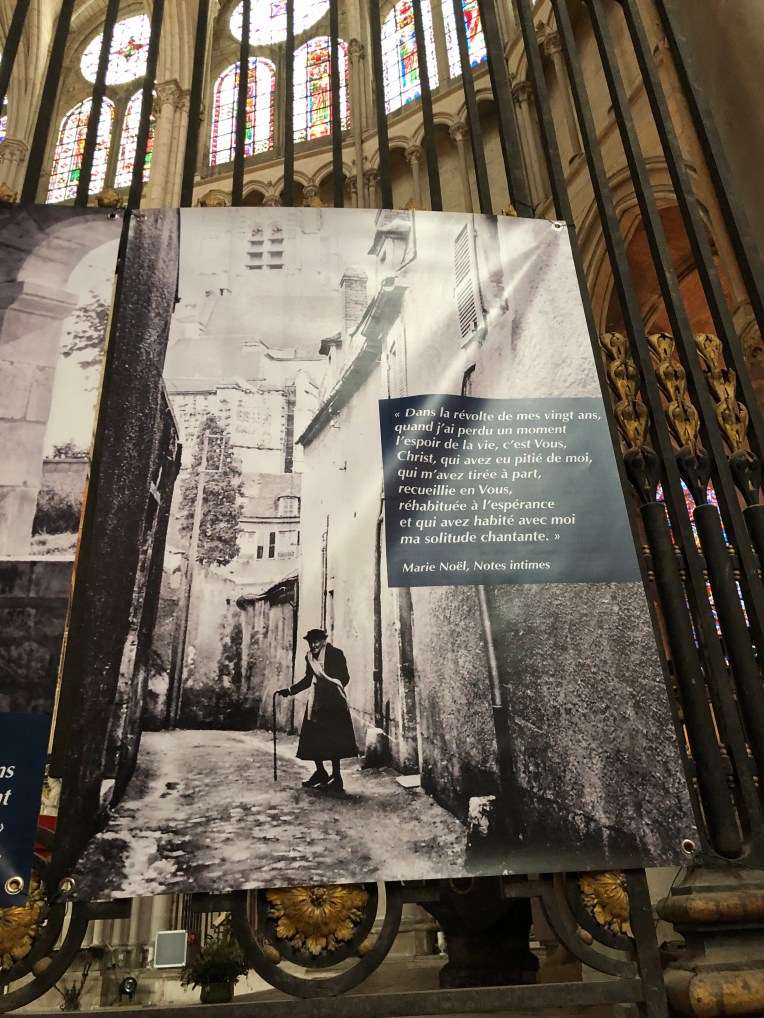
There was a railing running around the back of the altar with posters commemorating a famous French poet who lived in Auxerre. Her name was Marie Noël (1883-1967). There was a lovely picture of her walking up the narrow alleyway outside the cathedral towards the little door. She looks like any little old lady you’d see walking up to mass but now here she was up on a poster inside the cathedral. Very surreal. I bought a booklet about her in the tiny book shop there. Google translate and I are working our way through it.

(That’s one of the Marie Noël posters in the cathedral)

It’s hard going so maybe I’ll just enjoy the pictures of her. I nearly forgot about the connection with Ireland – it’s St. Patrick! It seems he was here and was trained by Saint Germain who was bishop in Auxerre in 418 AD. Hang on, why didn’t St. Patrick bring French to Ireland?

We’d all be fluent, Mairead.

(There we are on our way to Dijon)

Gentle Sewing Warrior

(Here’s the craft shop again)

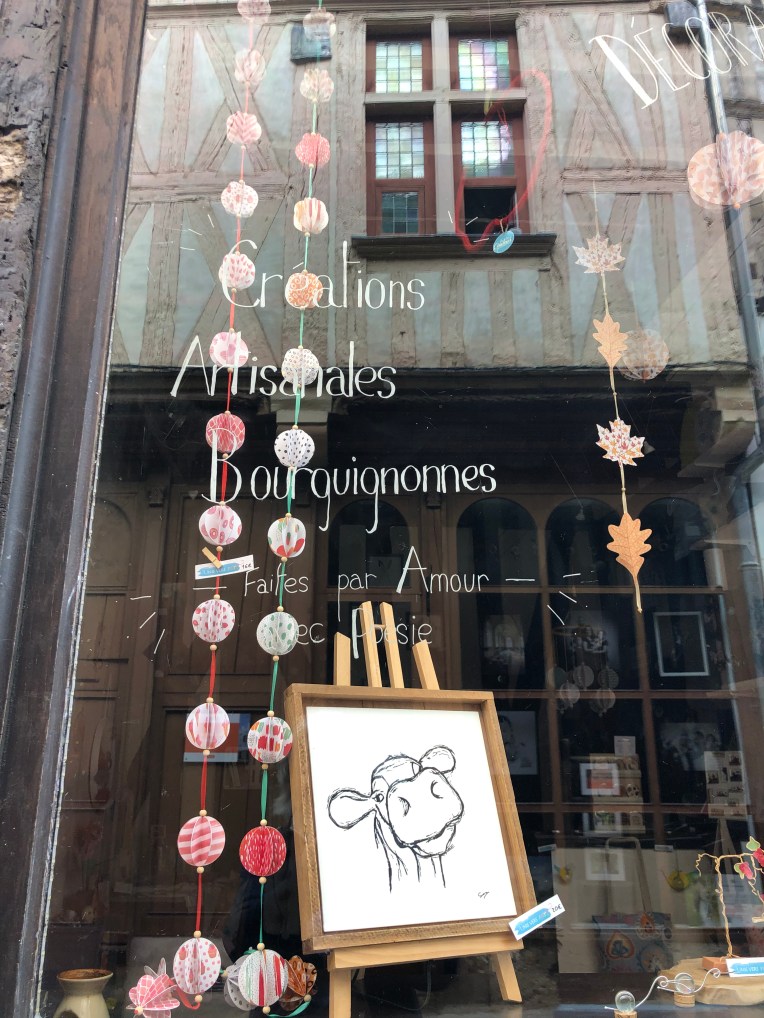
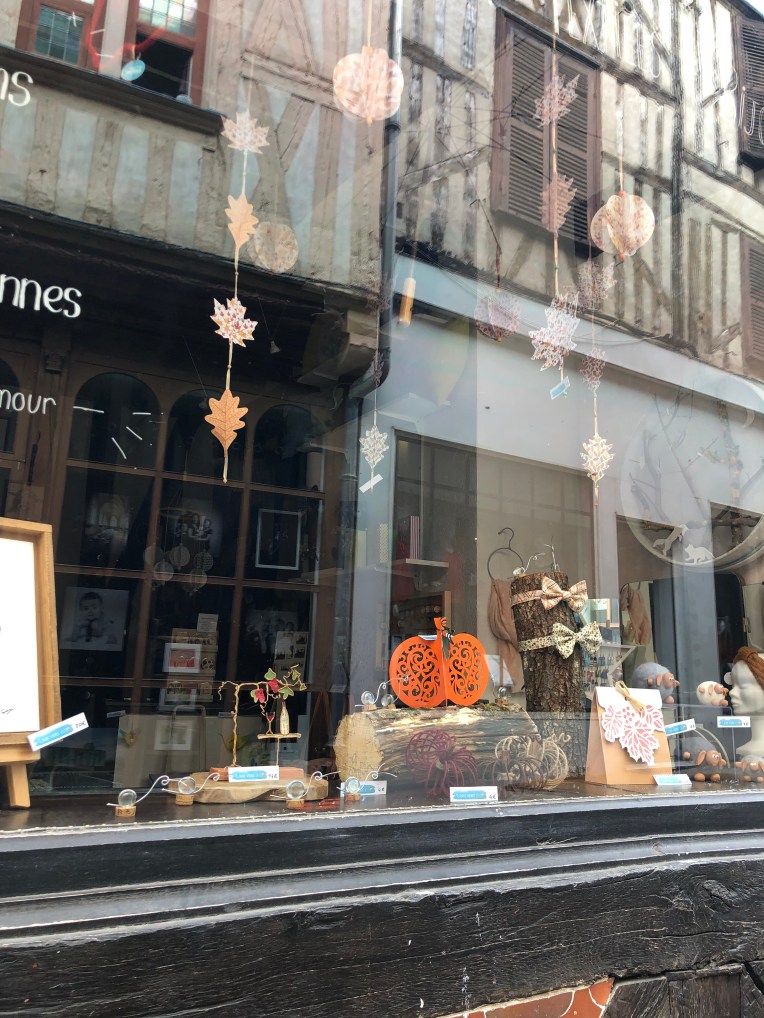
I went back to visit the craft shop yesterday and was really glad I did! I met Julie (pronounced differently, a bit like Shew-lee.) She and two other artist friends opened the shop just three months ago. They make and sell their work and each month they feature a different artist from the area. Julie gives sewing classes on Thursday evenings, hand sewing, machine sewing and pattern making. She also teaches knitting.

(And again)

We chatted for ages, her English is very good, thankfully, because we were covering more than just small talk. Julie talked about the protests last November in France and that although she agrees changes need to be made she has found a different way to protest. A quiet and gentle way.

(Hello, Julie!)

She teaches using her passion for fabric and stitch and her belief that we don’t need to have lots of clothes, just one or two good pieces. If you know how to make changes to the clothes you have then you don’t need to buy more. In that way we cut down on the damage we are doing to the earth and we save money.

(Here’s the shop opening times in case you are in Auxerre)
Things are quiet on the streets of Auxerre. Julie says they may only be able to stay open until Christmas, it is expensive to rent a premises in the city. In my ideal world Julie’s shop would be thriving, people would be queuing out the door to learn these skills. Studies show that making things, crafting, sewing, whatever it is, lowers your cortisol. Stress raises cortisol levels in your body and too much cortisol is bad for you. Julie is like medicine, I felt great in her company.

Loving Auxerre, Mairead.

Ps She’s on Facebook and Instagram. Maybe you could give her a follow?

The ten year old book

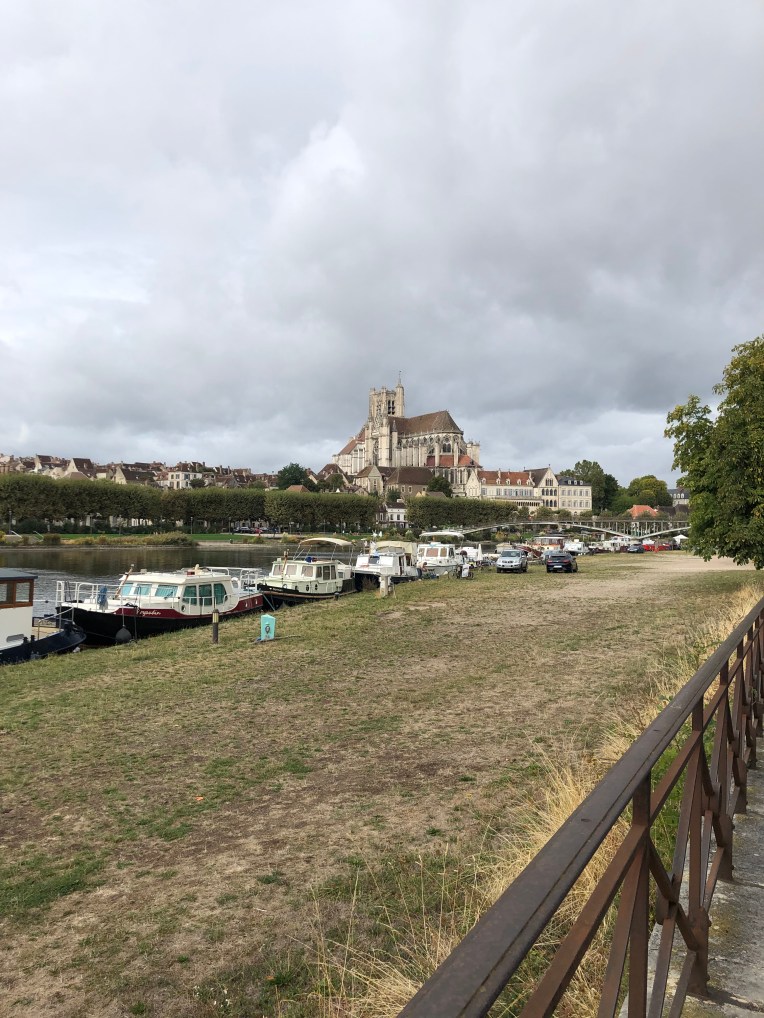
(The boats and one of the cathedrals at Auxerre)
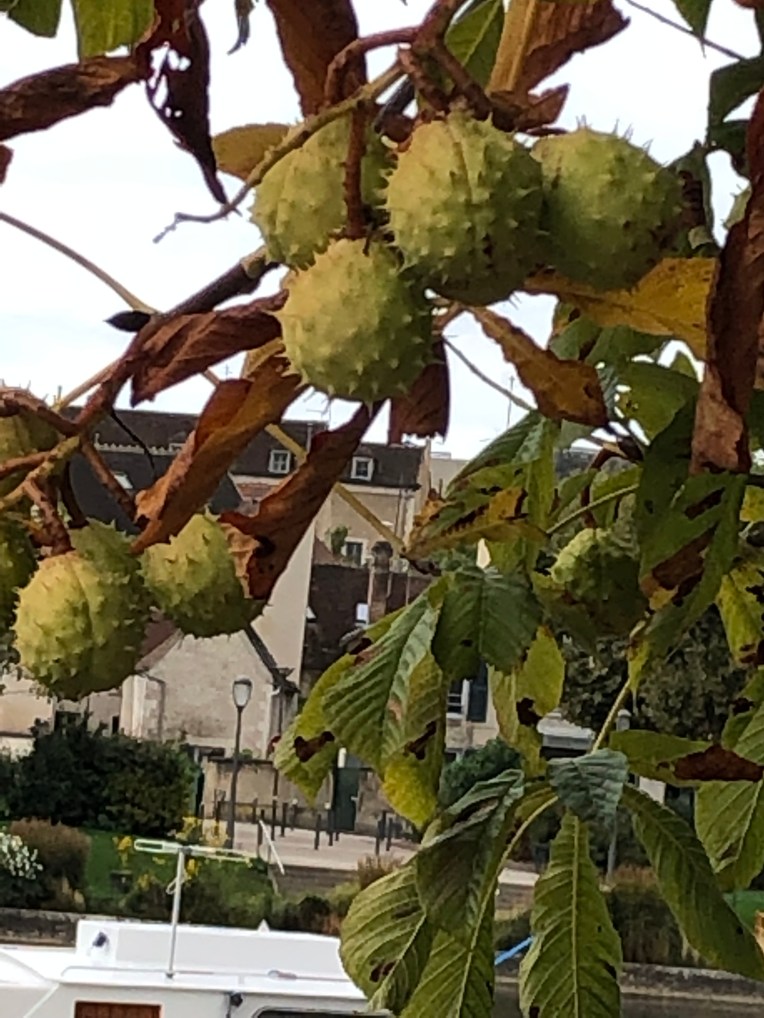
We’re in the town (could be a city) of Auxerre, it’s really lovely. The camper parking is just basic but the location is brilliant! Out the front window at the moment I can see narrowboats on the river. If I step outside I can hear horse chestnuts falling from the trees. Then there’s the cathedrals – four I can see across the river and they’re not small, they look to me like they could rival Notre Dame in Paris. This town must have been very important, maybe it still is.

(Still some left on the tree)

We got here around 10am, we had been on our way to a small village but I had a document to sign and post to the accountant. When I took down the printer I realised someone (that would be me…) hadn’t brought the power lead.. Big town might have a print shop or a library and that’s why we’re here.

(Love this house)

Off I went to the tourist off to inquire, it’s just across the river. There was a very helpful sign in the window saying it was closed, permanently. Right. There was an address for the new location, though. I set off for that.

(The games shop)

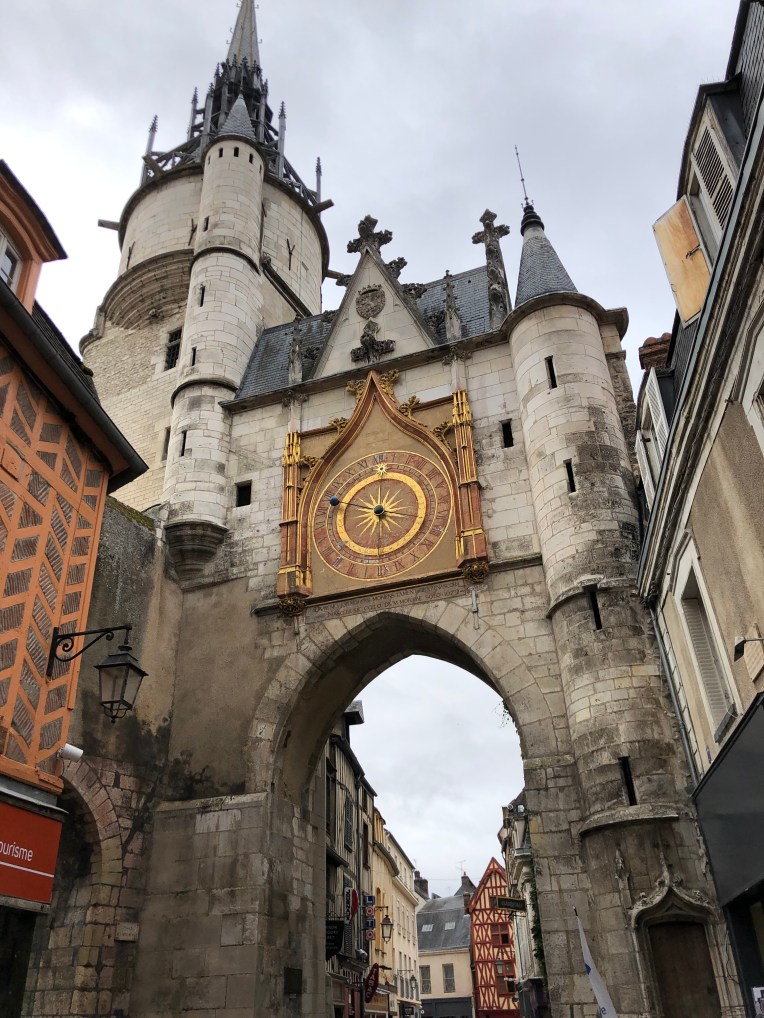
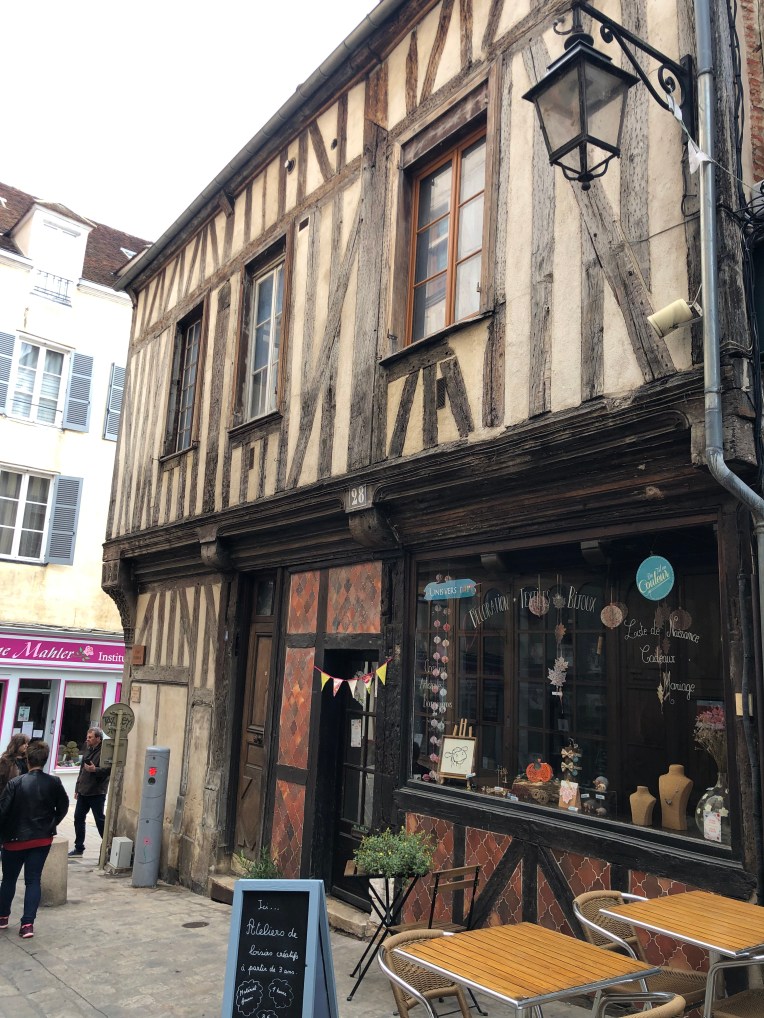
I was busy taking pictures of the beautiful old half-timbered buildings when I noticed a board game shop. I think to myself, Denis will be delighted! But even more amazing right beside it a craft shop with crafting sessions! It was closed… don’t worry it’ll be open later, I’ll be back.

(Very fancy clock tower)

More pictures and I’m now standing outside a book shop. Normally I’d be straight in as I love book shops but as I have the reading ability of a disinterested 4 year old (in French I mean) I resist. But there’s an adorable window display for a children’s book. It’s celebrating the fact that the book is 10 years old. Interesting.

(That’s the craft shop)

Very interesting. Children’s books are very interesting. To me, anyway. There are children’s books that never seem to go out of fashion. I’m thinking of the Hungry Caterpillar written and illustrated by Eric Carle, first published in 1969 and still selling all over the world. And there’s the French Little Prince written and illustrated by Antoine de Saint-Exupéry, first published in 1943. There’s something about those books in their simplicity that makes them popular.

(That’s the book shop, the golden boot must mean something?)
I have to go in. Here’s a chance to see what a child of France in the 21st century cherishes, I feel like David Attenborough. There were a few customers in the shop, mostly under 5, so I fit right in. I spot our section, down low near the window. It takes me a while to locate the correct shelf because now I’m on all fours. Although there a big splash in the window, inside the shop the book is very discreet. And complicated…. there’s other books. It seems the author and the illustrator have published many, many other books about the same character in the ten years since they started but I feel I need to get to the source. To the one that started everything.

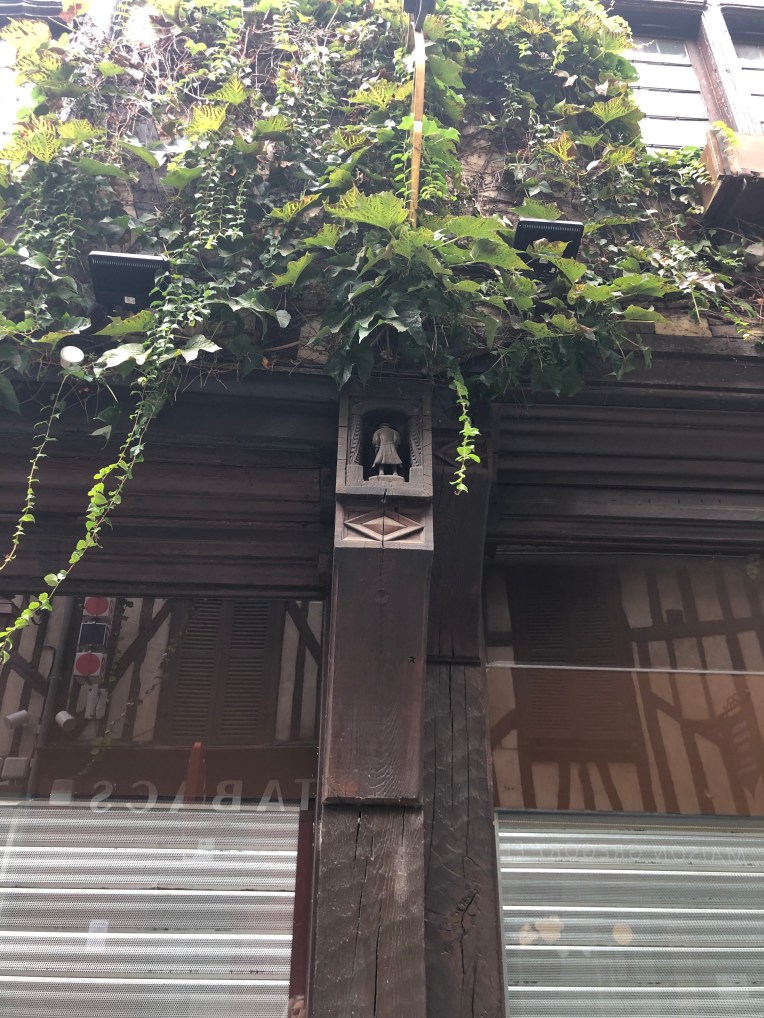
(Strange carving)

There’s no escape I have to find some French words to ask the lady behind the counter what was the first book but even in English that might be hard to explain. I give it a try. At first she seems confused but like all book shopkeepers she can read minds (try asking one for the new book they talked about on the radio about coffee and money – I bet they’ll know) and she searches for the colour change book. Just when it seems she can’t find it and I’ll never know, she takes apart the front window and gives me the shop’s only copy. All book shopkeepers are heroes!

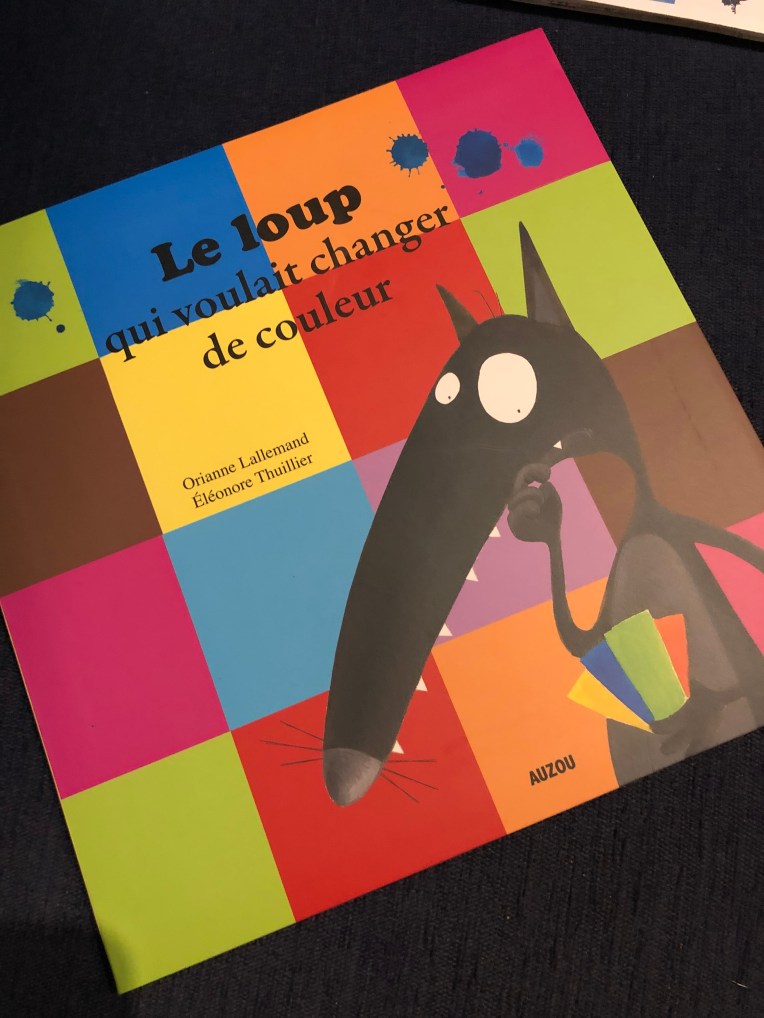
(The 10 year old book!)

The book is called Le Loup qui changer de couleur by Orianne Lallemande and Éléanore Thuillier and it’s about a wolf who didn’t like his colour so he changed it, lots of times but in the end… I don’t want to spoil it for you so I’ll say no more. All I will say is the future of France is in good hands, the children are reading a beautiful book.

From Auxerre, Mairead.

(There’s Auxerre!)