Anglesey Abbey and Gardens, Lode, Cambridgeshire

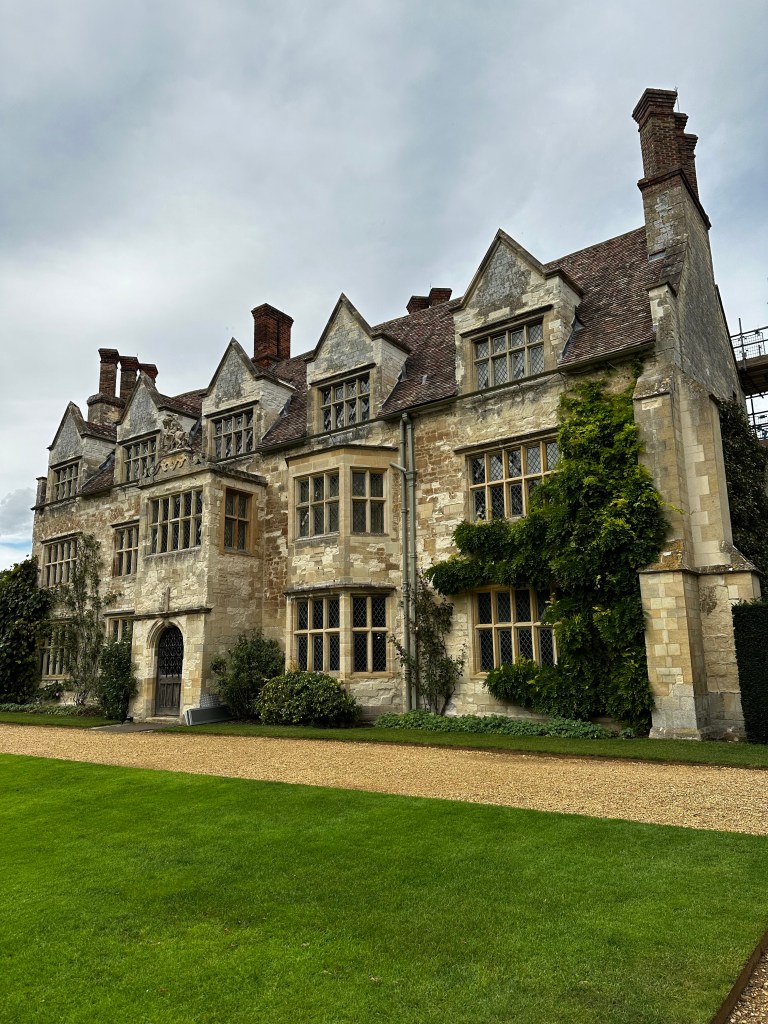
Anglesey Abbey

The house had originally been an Augustinian priory but was closed by Henry VIII (remember the same happened at Bury St. Edmunds?) and a local farmer had kept his cows in what was now the dining room. It’s the oldest part of the house and remained intact even its vaulted ceiling. Awkward place to have a dining table but I can imagine this room would definitely inspire good conversation.

Entrance hall

We arrived in the car park of Anglesey Abbey at lunchtime and I headed off to walk about half a mile down the drive to call at the house first. It was due to close at 2.30pm and I didn’t want to miss it. The car park had been almost full but on the other side of the visitor centre there was little evidence of a crowd as I passed huge lawns on one side and dark paths through the trees on the other. I may have been in a hurry to begin with but nature conspired to slow me down.
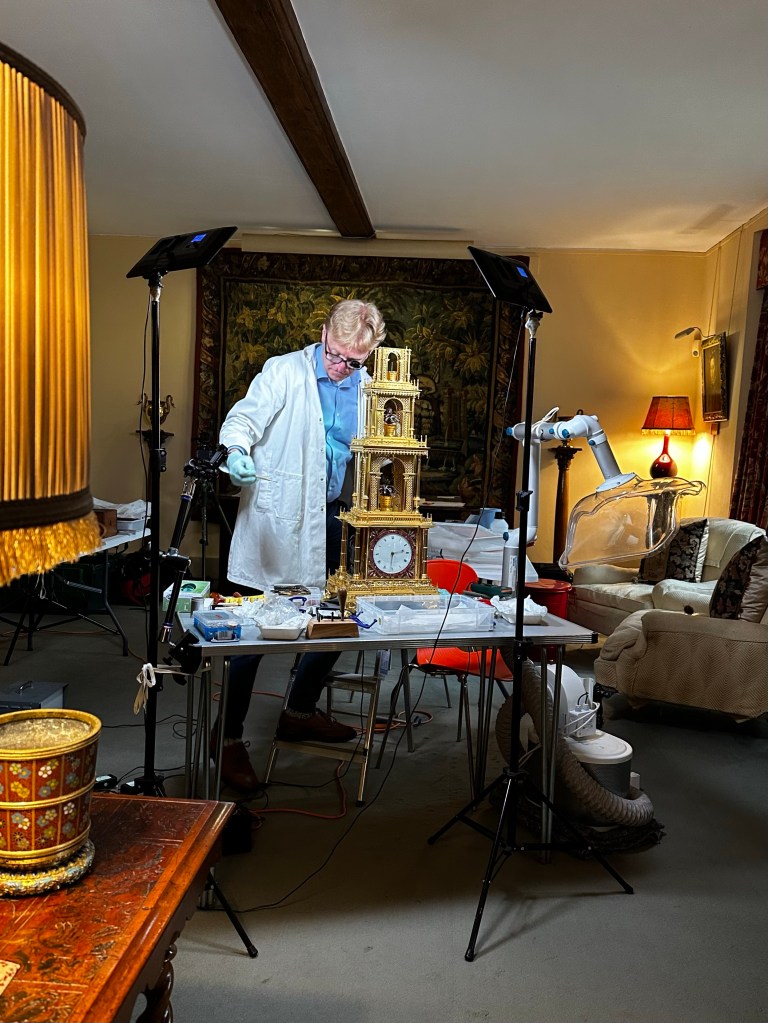
Matthew, the horologist, working on the pineapple clock. Can you see the pineapples?

Have I mentioned that at each house I have visited the first question the volunteer asks at the door is, Have you been round before? The same very specific wording and every time reminds me that this is somewhere people come back to again and again. And I can believe that, particularly about this house. There’s a lot here and it feels very cosy and lived in. My favourite part was the kitchens because they were so familiar. I’ll have to leave them, the Dahlia garden, the library window and the Wardrobe Project for another post.

Next door, the Oak Room, for after dinner drinks and cigars

The first room I walked into was the Living Room where afternoon tea was served at 5pm… unfortunately not today. Mathew, the horologist, was in attendance taking apart and cleaning a huge pineapple twirling clock. He had come all the way from Yorkshire and had already spent hours on this particular piece. I was in time to hear it chiming as he put the last little pineapple section on top. (Note: disappointingly, afternoon tea finished in 1966.)

One of the bathrooms, this one is called Windsor Bathroom.

It was while I was in the Living Room I heard the volunteer mention to another visitor that the family had made their money from sewage. It may not be entirely true but there was sewage involved. It is a love story and a little complicated…
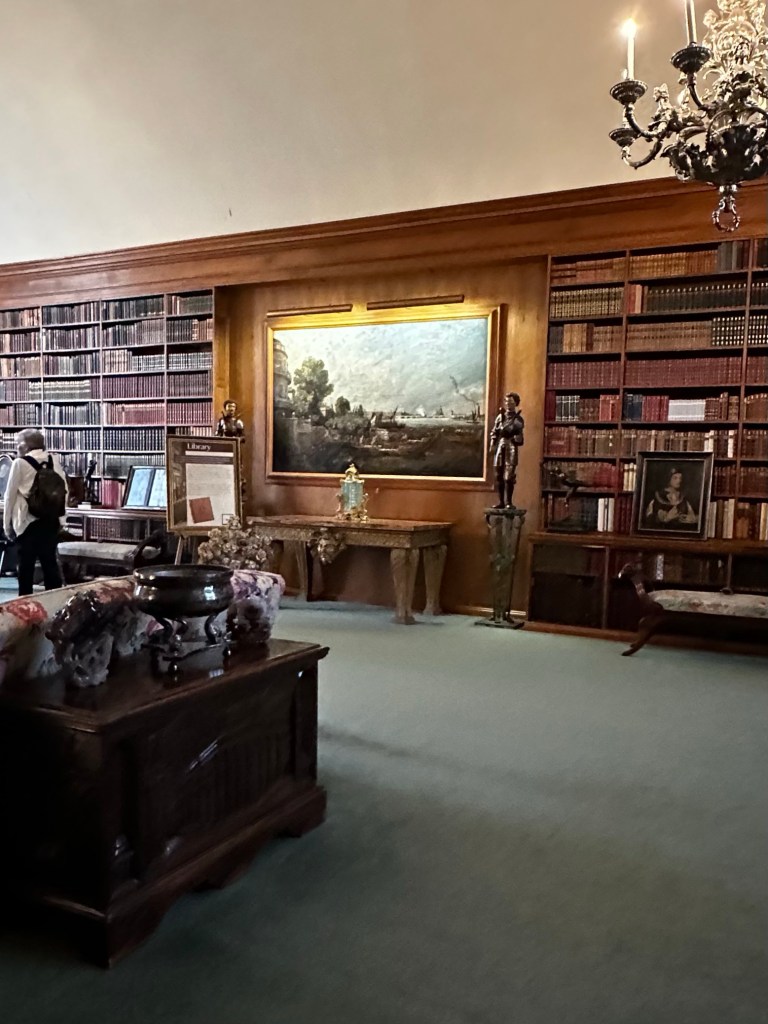
The Library

Urban Huttleston Rodgers Broughton’s father (also called Urban, unfortunately) was a British civil engineer who worked for/with Issac Shone. Issac invented the hydro pneumatic sewage system (installed in the British Houses of Parliament). Urban’s father went over to America to install this same system in the house of the millionaire, Henry Rodgers, who was the Vice President of Standard Oil (remember ESSO?) While there Urban’s dad fell in love with Henry Rodgers’ daughter and they got married. When Urban was 13 his grandfather (the Standard Oil millionaire) died and Urban’s mother inherited $12.5 million and the family moved to the UK.

Ironing Urban’s trousers (the Wardrobe Project)

Urban (the Urban who owned this house) is also know as the 1st Lord Fairhaven and he is responsible for filling Anglesey Abbey and gardens with beauty and interest. In 1926, when he was 30, he and his brother Henry bought the house because it was close to their stud farm and the horse racing track at Newmarket. At the time they made an agreement that when either one of them married the other would buy out his share of the house. And that’s just what they did when Henry married in 1932. Urban remained in the house until he died in 1966. He bequeathed the house and its contents to the National Trust.

Peeping into the dining room, the oldest part of the house

I spent fours hours wandering around listening to stories of visits from the queen who was a friend, reading the information boards and soaking up the gardens. Literally, the moment I got back to the van the heavens opened and the rain lashed down. Such a magical place and I’m so glad I got the opportunity to visit. Thank you, Urban!

Notice board outside the kitchens

Summary: Falling in love with a millionaire’s daughter can make a big difference to the lives of your future children. A guy called Urban who was friends with the late queen and the present King created a beautiful place where anyone can now visit. There’s money in oil and sewage… not sure about the sewage.
Query: Would you give your house and all your treasures for future visitors to wander around in after you’re dead?

Walkway through the Winter Garden

If you enjoyed reading maybe you’ll like my Permission Cards www.permission.cards.
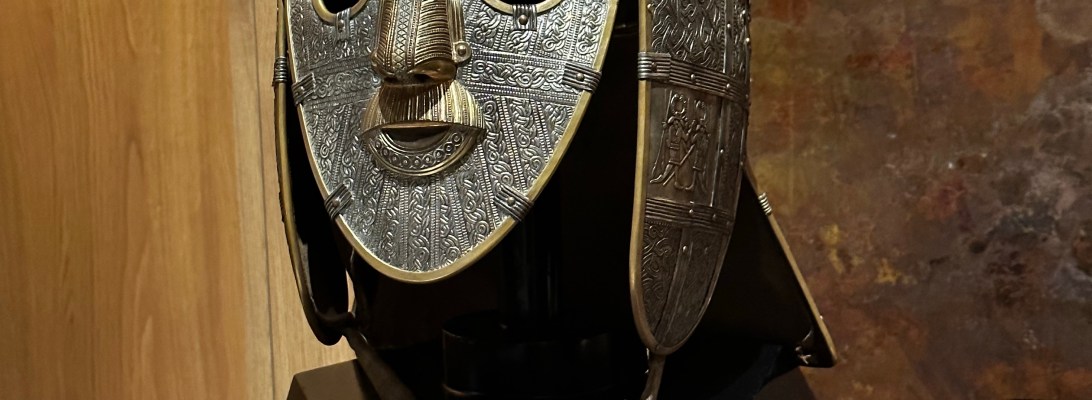
Sutton Hoo?

Edith Pretty’s house at Sutton Hoo

On Tuesday last we went to Sutton Hoo. You may have heard about it in the 2021 movie called The Dig? It might still be on Netflix. It was based on a book with the same name and it tells a story of finding an Anglo-Saxon grave. Not just any grave, either, the grave of a king with his treasure and his ship in this place called Sutton Hoo near the village of Woodbridge in Suffolk.

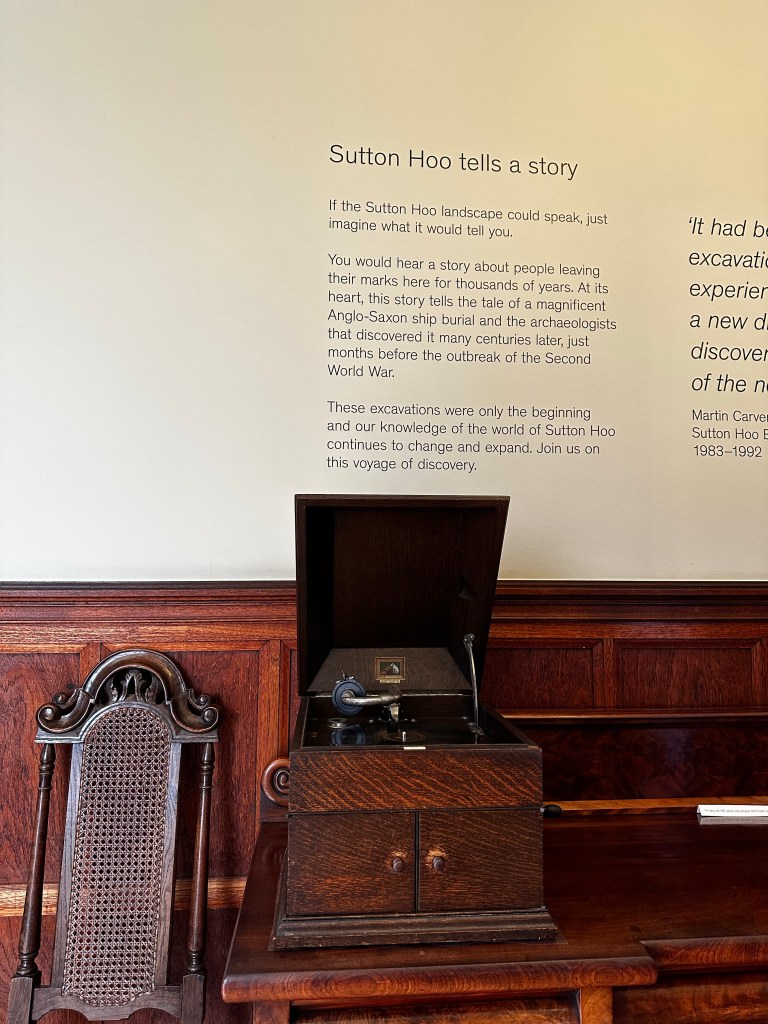
There’s an old record player in the entrance hall

We accidentally drove through the village of Woodbridge (beautiful but narrow) and would not recommend driving through in a motorhome. It was unnecessary as Sutton Hoo is away on its own in the countryside a few miles away. There’s a long drive up to it, parking for motorhomes and even a campsite nearby.

Basil Brown’s measuring tape

Remember I told you I had bought a visitor ticket to the National Trust which meant for the time we are in England (or anywhere within the UK) I can visit any National Trust site for free? This is very cost effective and that’s on purpose I believe. The first question I’m asked at each reception desk is, “Are you a member?” (It’s such a great question because it makes members feel welcome and it tells the unaware non member about the concept of membership!) It seems that most people who live here are members and so they can visit anytime and they do.

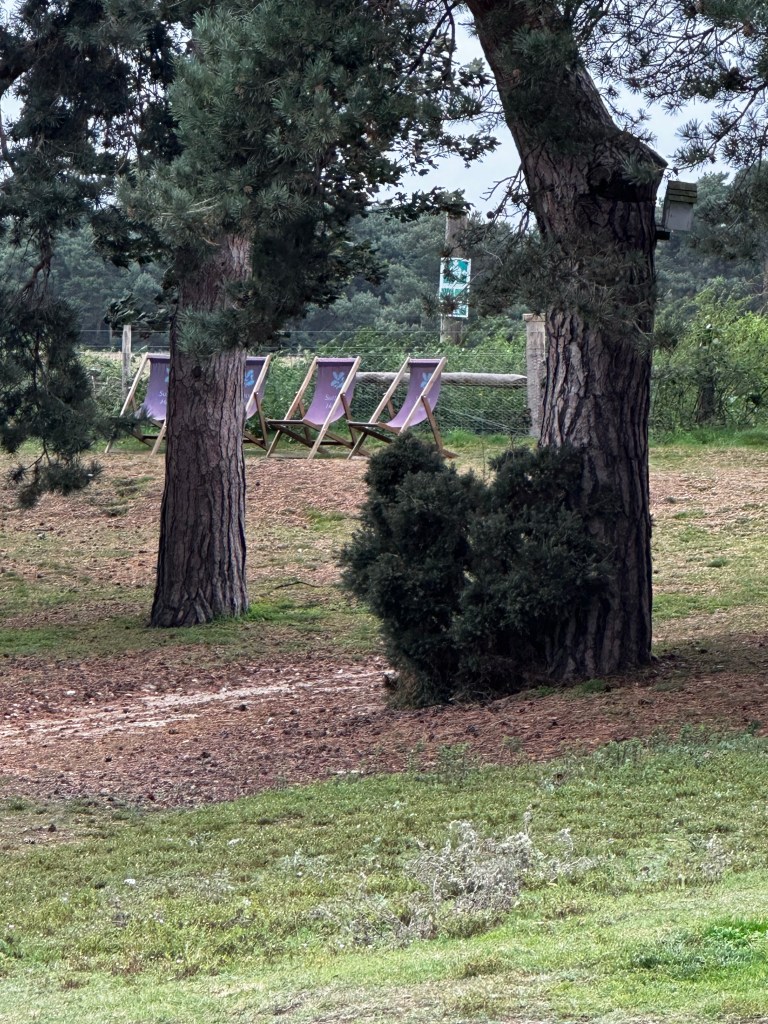
Lonely deck chairs in the wind

Some just walk their dogs or go for a coffee or buy a second hand book – which I did on this occasion. On a less windy day than the day I visited they might sit in the deck chairs and just enjoy the view. Or they might use the services of the many volunteers who are more than happy to answer any questions or tell their favourite story of the place. As most volunteers are here for one day a week you will probably never meet the same volunteer twice so there’s alway a new story to hear.

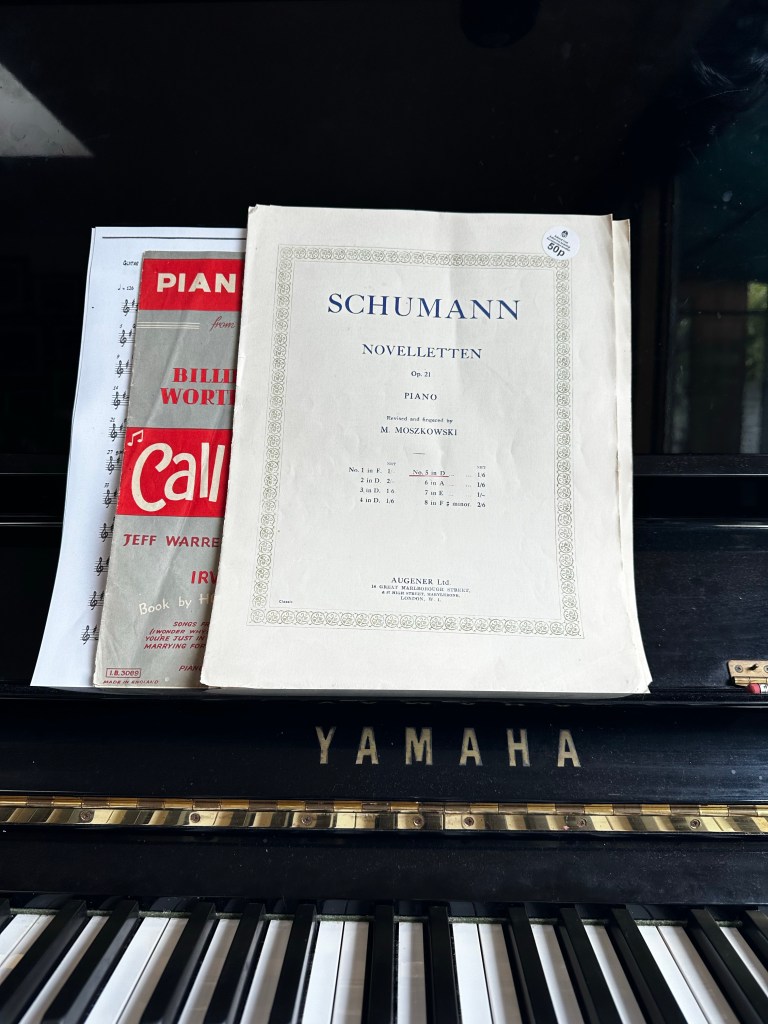
I bought some sheet music in the second hand book shop

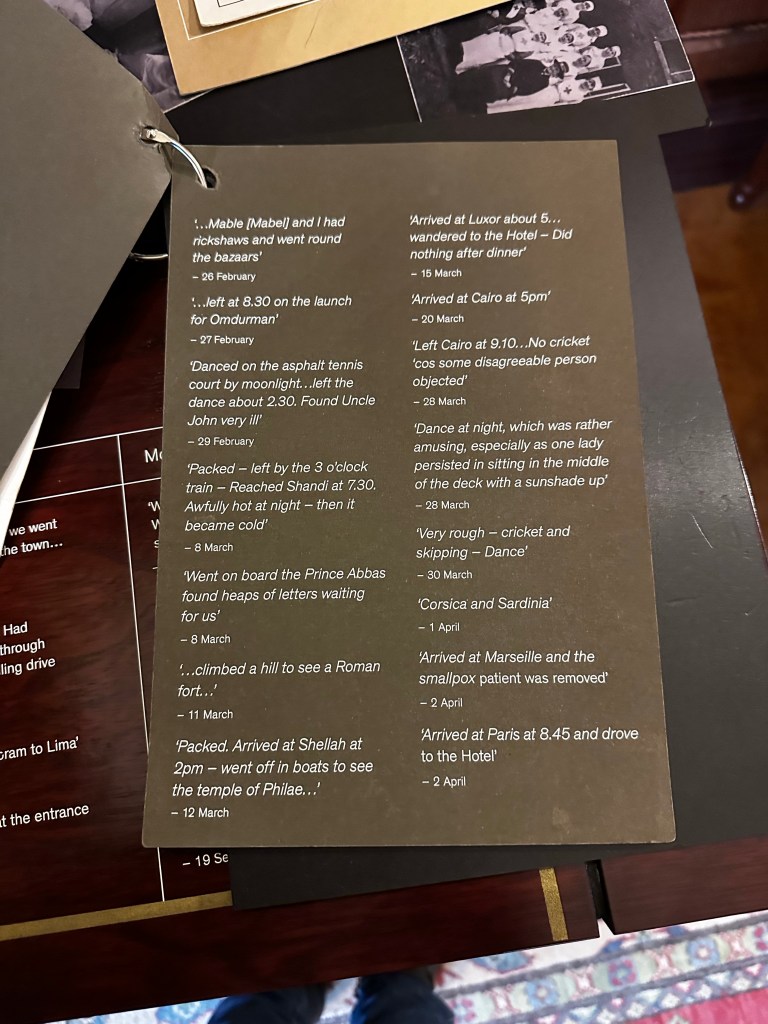
You probably want to hear some of the story of Sutton Hoo, right? Well there’s two big picture stories. The one about the Anglo-Saxons and the one about finding their treasure. We’ll start with finding the treasure. Edith Pretty lived with her family at Sutton Hoo between 1926 and 1942. She loved to travel and as a young woman had travelled to, among other places, Khartoum. She took pictures on her travels and kept a diary… This is important because her interest in archeology was fostered on her travels.

Excerpts from Edith Pretty’s travel diary

In 1937 (only two years before the Second World War) she was at the Woodbridge flower show where she spoke to a local historian about the earth mounds on her land. She wanted to investigate them. She asked for a recommendation of someone who might help her and was given the name of a local self taught archaeologist, Basil Brown. The story gets a bit more complicated when the British Museum realises there was something good here and replaces Basil with one of their not self taught archaeologists. But for me Edith and Basil are the heroes.

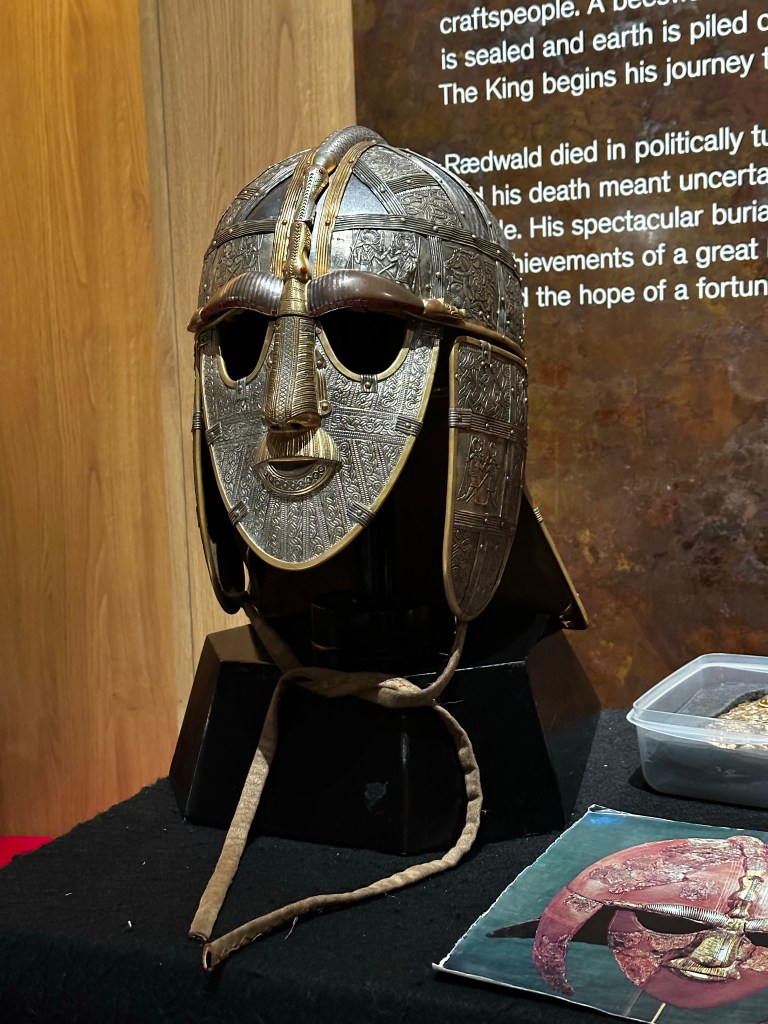
In the museum building this is a replica of King Raedwald’s helmet

And the Anglo-Saxons? Well the history I was missing all along about the Anglo-Saxons – they were in Britain before the Vikings. The information boards and very good at all National Trust sites and Sutton Hoo is no exception.

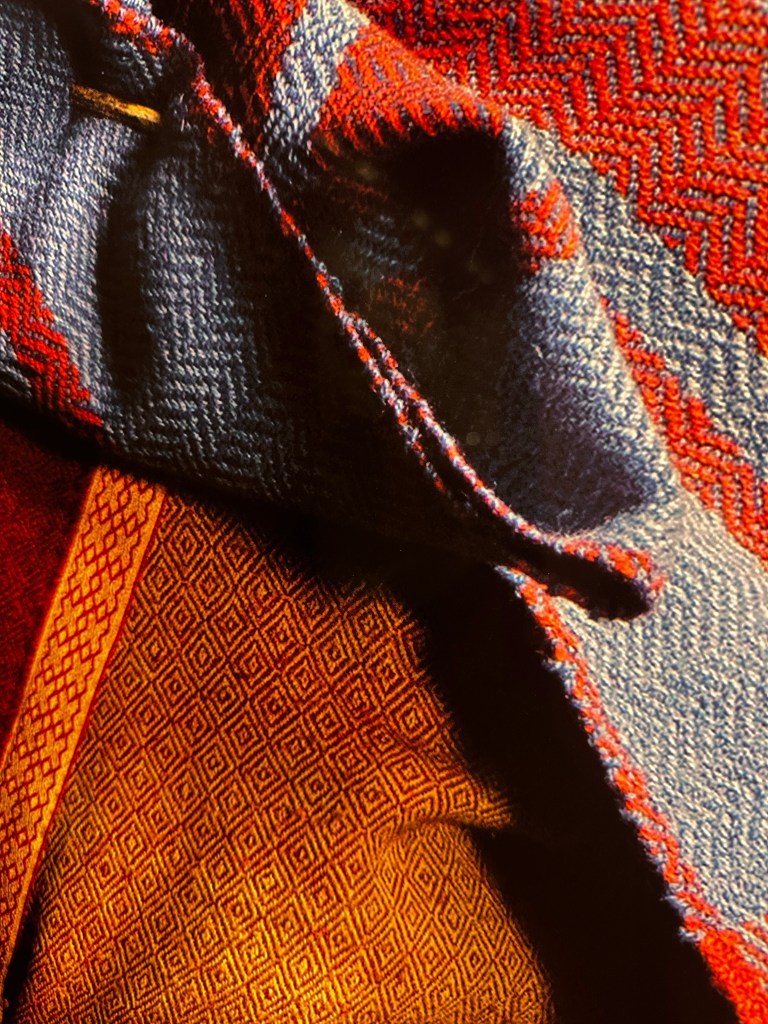
There are beautiful exhibits of what the Anglo-Saxons might have worn

Here’s what I learned: The Romans left Britain in the early 400’s and after that people from Germany (or at least where Germany is now) and the Netherlands and Scandinavia arrived and set up home. They married the locals and they all lived happily. Of course history calls them Anglo-Saxons but they were families who followed traditions and a culture and they belonged. King Raedwald, buried at Sutton Hoo was a member of the Wuffings family and they were rulers of the Kingdom of East Anglia. He died in the early 600’s. The first Viking raid wasn’t until the early 700’s.

East Anglia is the little roundy bit of England that sticks out to the east, north of London. Sutton Hoo is between Ipswich and the sea

Summary: Sutton Hoo is a place where families lived and loved and worked and played and belonged more than one and a half thousand years ago. Two amateurs (from the Latin, to love) self taught in archaeology brought this place to the attention of the world. Query: Do you ever stop yourself from bringing something you are passionate about to the world because you’re “just” an amateur?

King Edmund the Saint

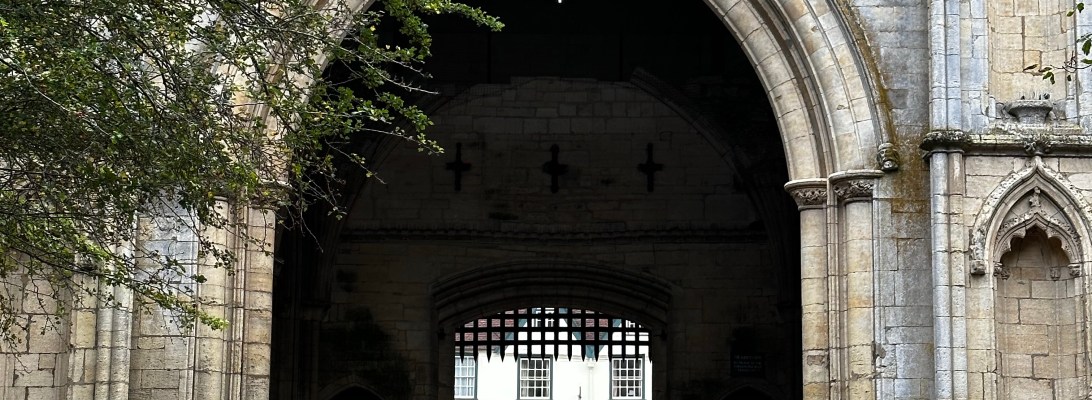
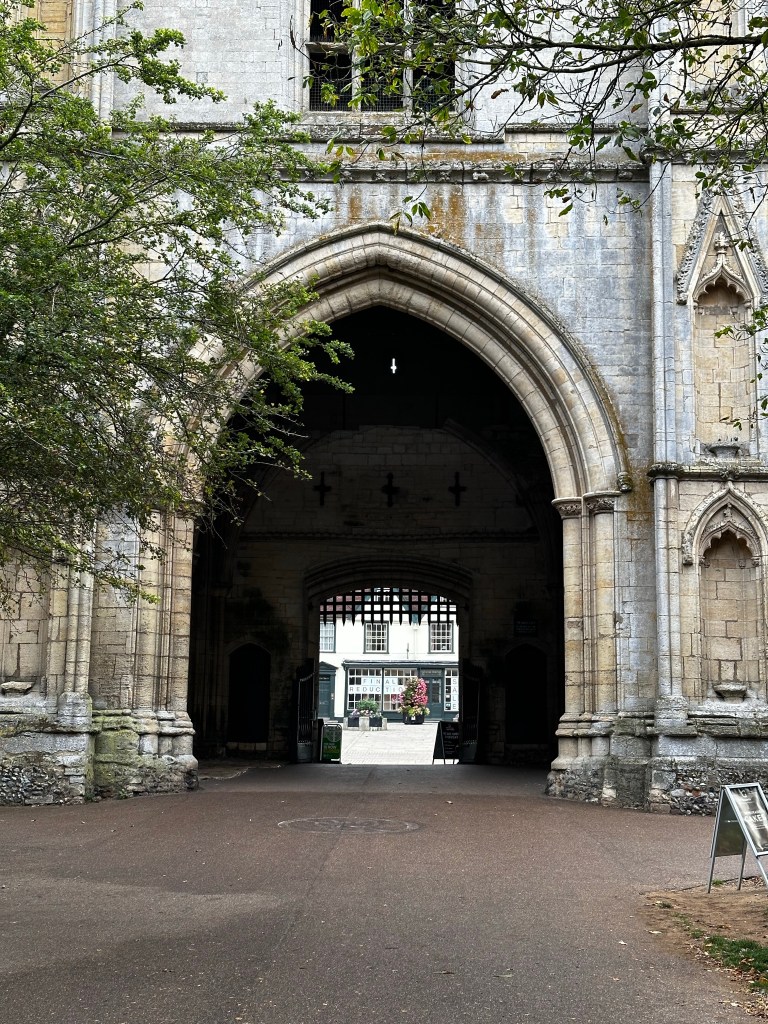
The Abbey Gate (looking towards the town) that led into the monastery which was demolished by King Henry VIII

On Sunday we arrived in the town of Bury St. Edmunds about forty minutes from Cambridge. It’s a very old town that started with a legend about a wolf…

Church Gate leading to the monastery’s church which was also demolished

it was back in 869AD and Edmund was king of East Anglia. He was fighting against the Danish invaders when he was captured and decapitated. When his soldiers came looking for him his head was missing. When they finally found it, it was being protected by a wolf. The wolf allowed the soldiers to take King Edmund’s head and as soon as it came in contact with his body, it fused back on…

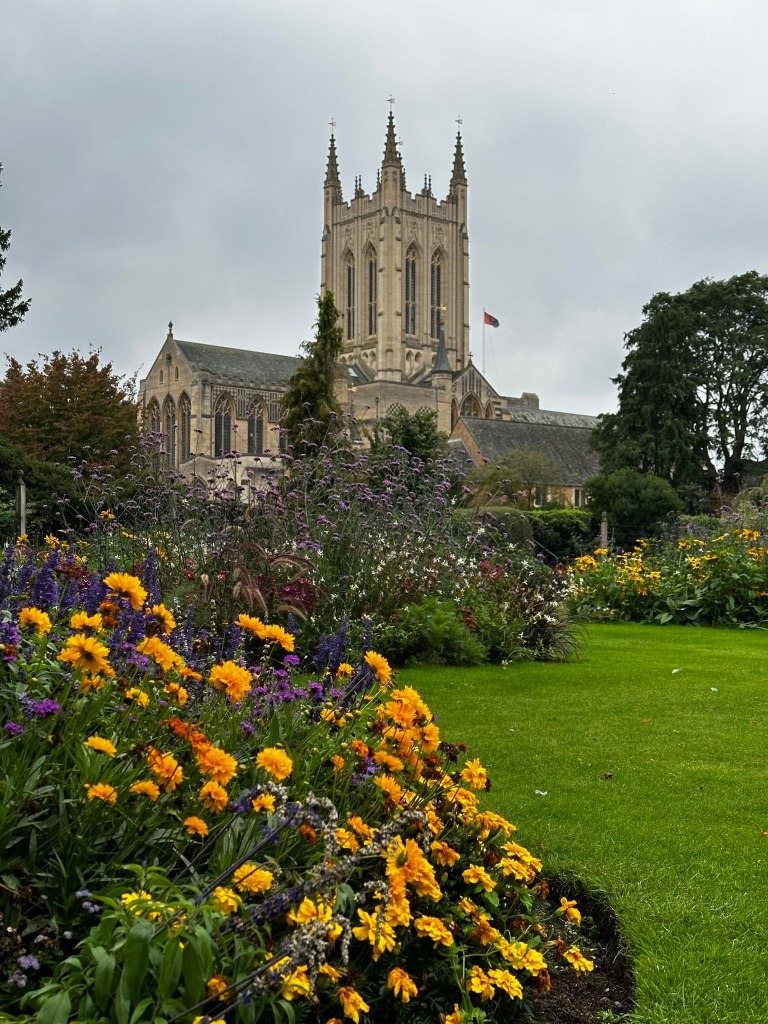
St. Edmundsbury Cathedral, within the walls of the monastery, built in 1964

Well yes of course, that story is hard to believe now but it made a big impression on the people of England back then and was very helpful to the monastery. Monasteries often bought the bones of people who were considered saints so they could promote pilgrimages and special days where they would collect much needed donations on their saint’s behalf.

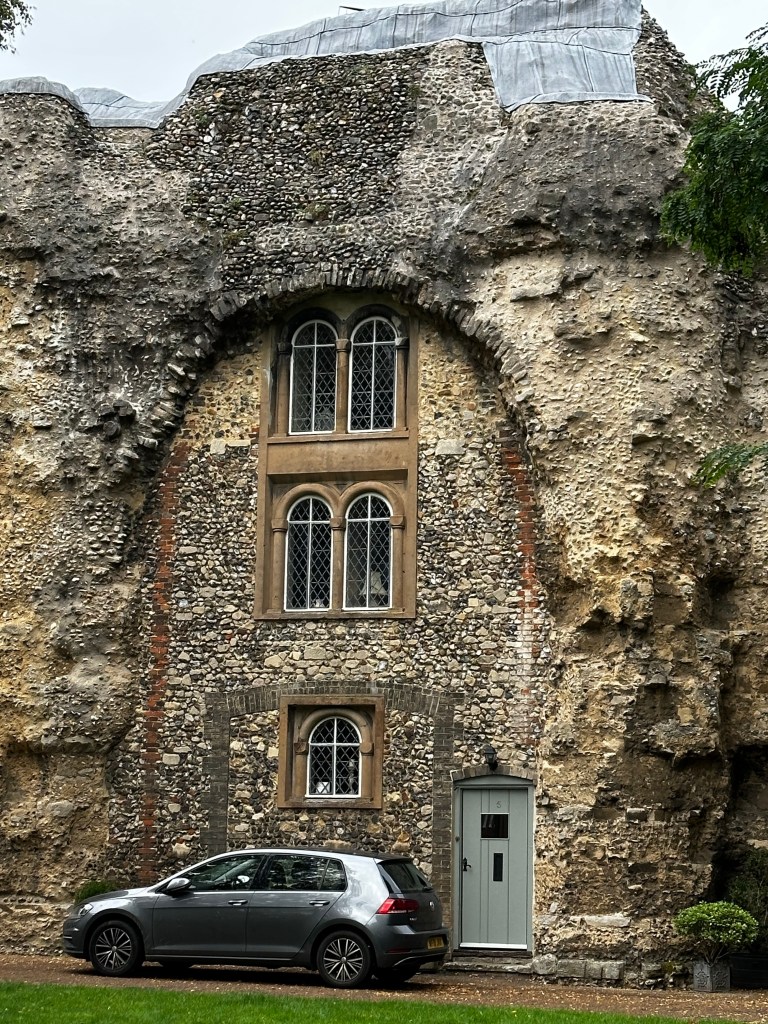
This is one of the houses built with stones from the demolished monastery, the shape is a nod to the original church building

When Bury St. Edmunds Abbey was founded in 1020 they were lucky enough to get King Edmund’s bones. Because of the story of the fusing of his head he was considered a saint and the monastery became one of the most famous and wealthy pilgrimage locations in England. The power of story.

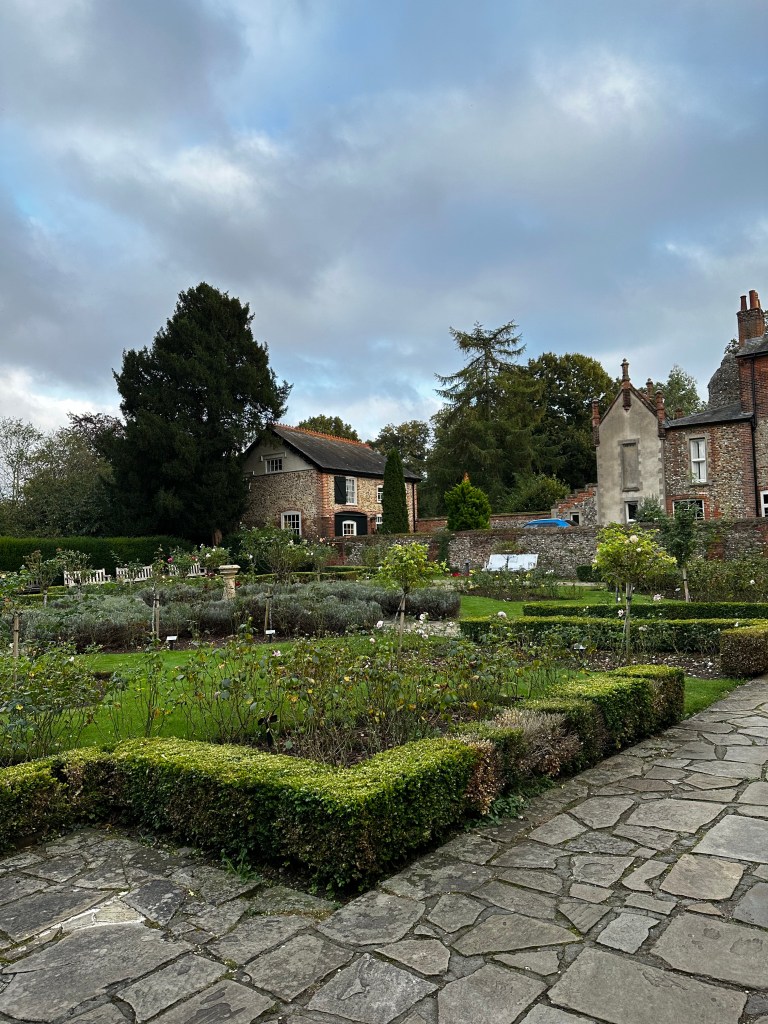
The Rose Garden

The town has very kindly provided overnight parking for motorhomes so we parked up and went on a walk. First stop the Abbey Gardens just minutes away.

Bury St. Edmunds is well used to royalty

You will have heard of King Henry VIII and his six wives but did you also hear about his shutting down the monasteries? All the monasteries, in Ireland too, in the 1500’s. Most of them were demolished and the stone used to construct new buildings. This happened in Bury St. Edmunds and most of the abbey buildings are now just ruins but in spite of that, still beautiful.

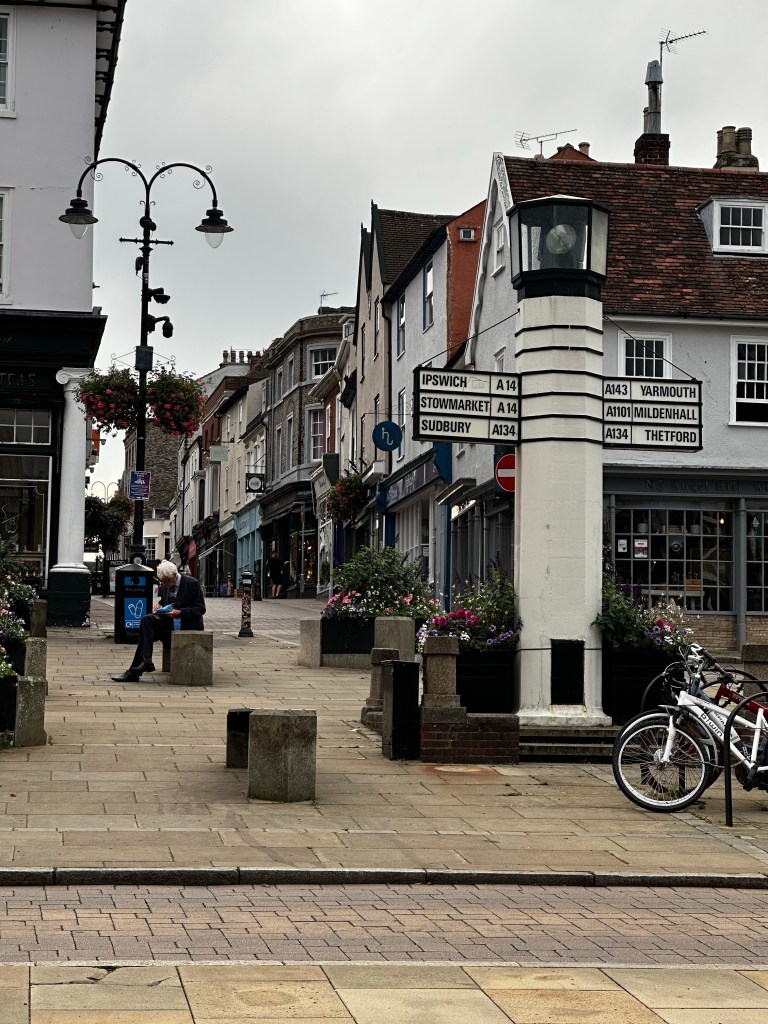
It looks a bit like a lighthouse but this is the first listed road sign in England

There was a contemporary art exhibition in Moyse’s Hall museum in Bury St. Edmund’s this week. Including some original Banksy’s (wall still attached). By the time I walked out the door I was fired up. I would love to have the courage to make some truthful “ugly” art.

Some graffiti from the art exhibition

Summary: A good story can support a monastery. Art doesn’t have to be pretty. Query: What story would you like to tell with your street art?

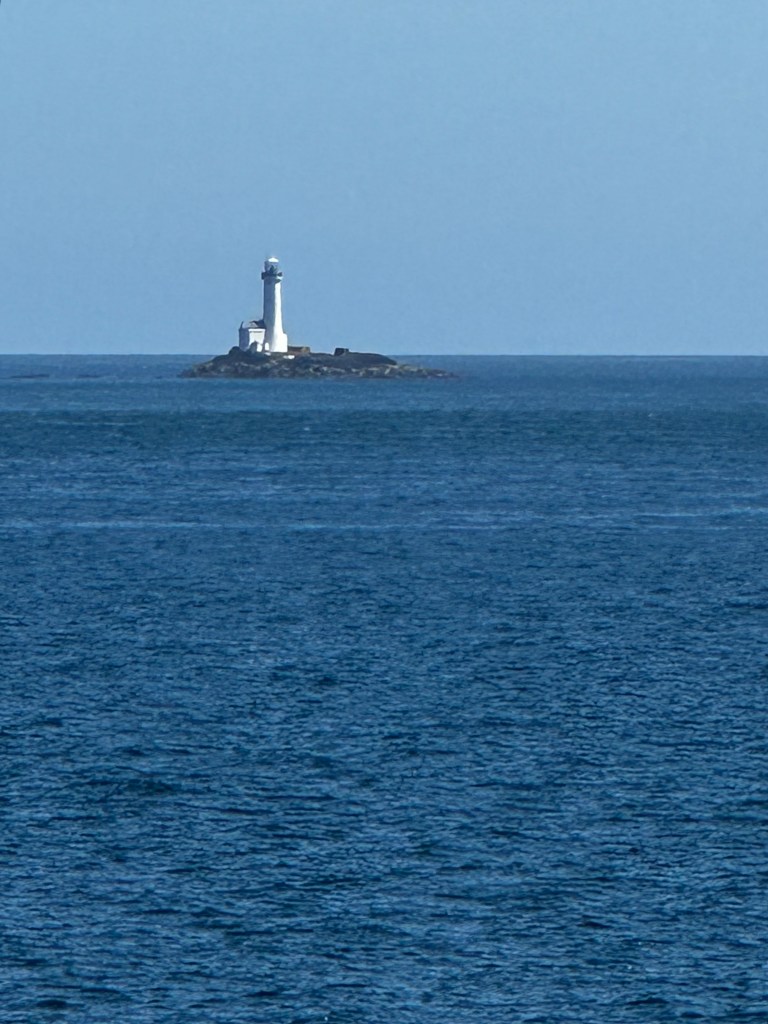
The Lighthouse

Calm seas, plenty sun but can you see the lighthouse?

And now we’re back in Ireland… probably. As I write we’re still on the ferry so I suppose I don’t know for certain that we are back… but it’s probable. It’s the morning after the calmest crossing we’ve ever had. I slept through the night for the first time and am as bright as a button.

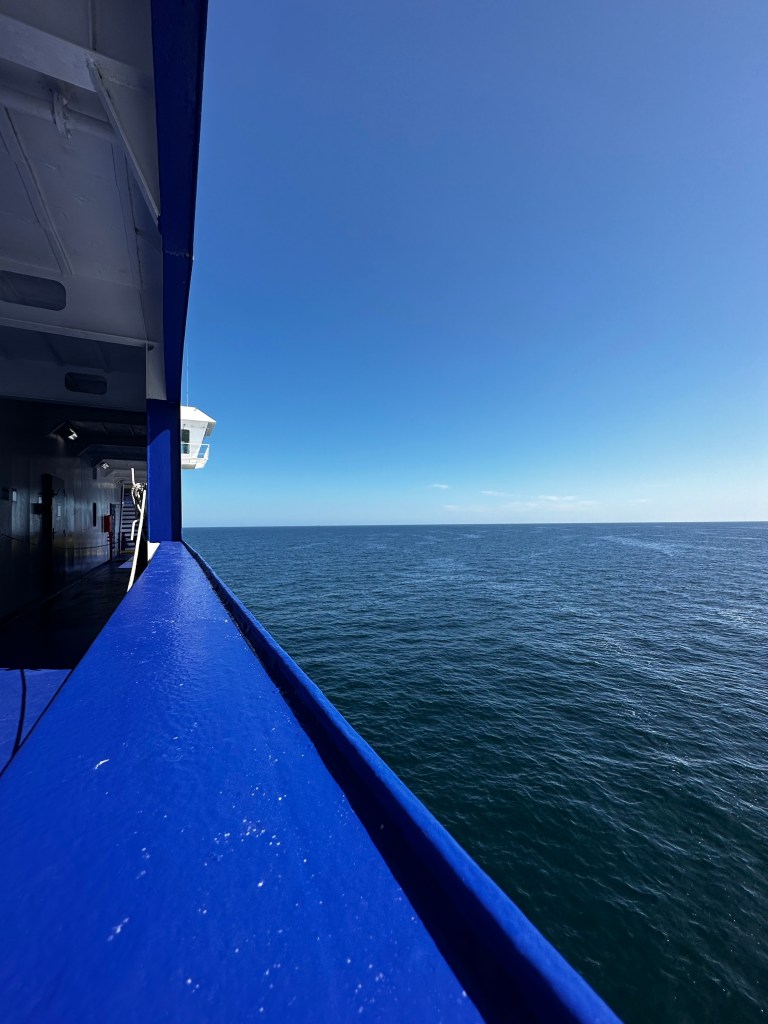
Blue on blue and white and red

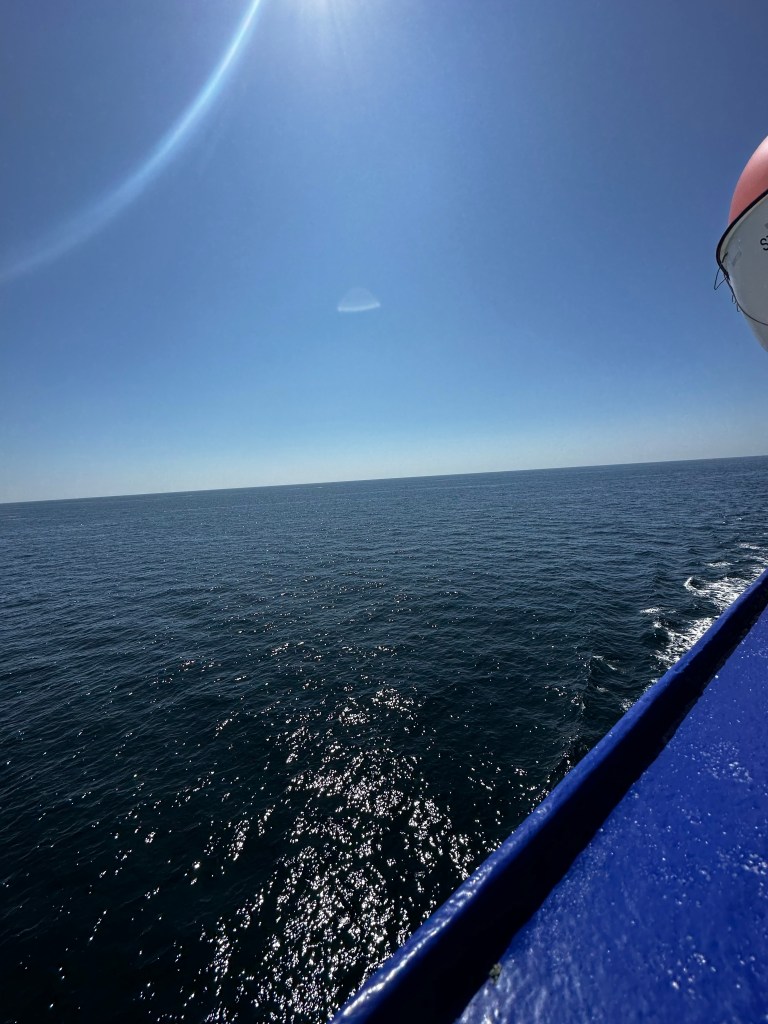
The sun is shining on the seas and we are floating towards the Irish Sea. I’ll go get a photo to show you…

Sparkles

By now you’ll have seen the photos! Hopefully they give some sense of what it was like out there. And the lighthouse! It’s the Tusksr Rock lighthouse. I thought we had three more hours on the ferry. We don’t, we’re in the Irish Sea, we’re nearly home!

Way way way in the distance…

Here again is another example of why I need to write to you… you make me go outside and look at what’s there! My friend Linda, yesterday when she realised the forecast was for lots of wind, gently suggested I take my coat and hat on board so I could go outside for a breath of fresh air (=to calm me down, she knows my anxiety.) Of course, what a good idea.

A bit closer

Do I need to tell you – I didn’t bring my coat and hat. There’s no way I’m going outside, I say to myself. But then when I started writing to you and I saw the sun shining on the waves, I thought I’ll just brave the freezing cold for a quick photo!

Almost warm

One photo later I realised it was not cold, it was positively, almost warm. And the breeze wasn’t bitter, it was very pleasant. I took another photo and another and that’s when I saw something in the distance. Another boat? A buoy? A lighthouse? The lighthouse!

And then it was back to driving on the other side of the road… (We have right hand drive, this picture was of a vintage American army jeep from the museum in Saint Mère Èglise)

A lighthouse to protect us from the rocks, from danger. A lighthouse to keep us safe and on the straight and narrow path home. I just met the Stena hostess who gave each of us muffins on our journey over. Do you remember her? She had to move Denis out of the dining room when it closed and she felt bad for moving him while he was working. She brought each of us a muffin to make it up to him at the time.

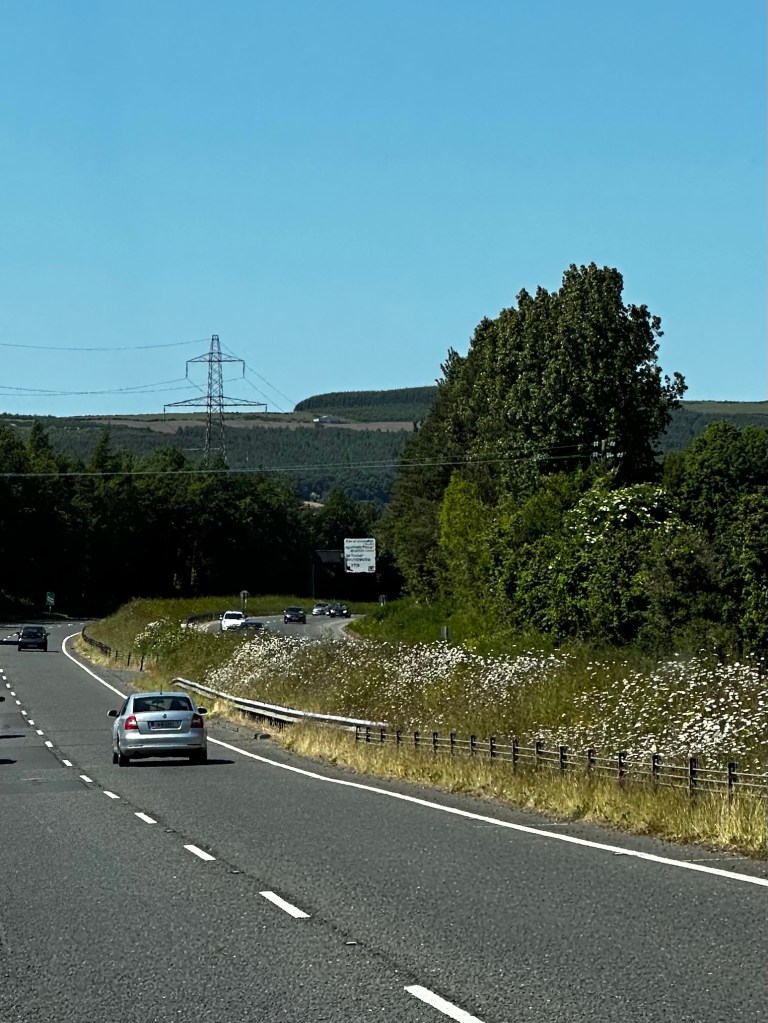
…where the roadsides are covered in daisies…

It struck me that she’s a kindness lighthouse, a kindness lighthouse reminds us of our naturally loving nature, our vibrant connection to others and our absolute necessity in the world. All of us are lighthouses when we do our own thing. Especially when we do it vulnerably, regardless of reward or shame.

…the coffees are ginormous and the skies are blue

I’ll be taking this home with me… Be you. Do you. Give up the shame. Notice the lighthouses. Sending love to you, lighthouse human xxx Mairéad

Calm Down

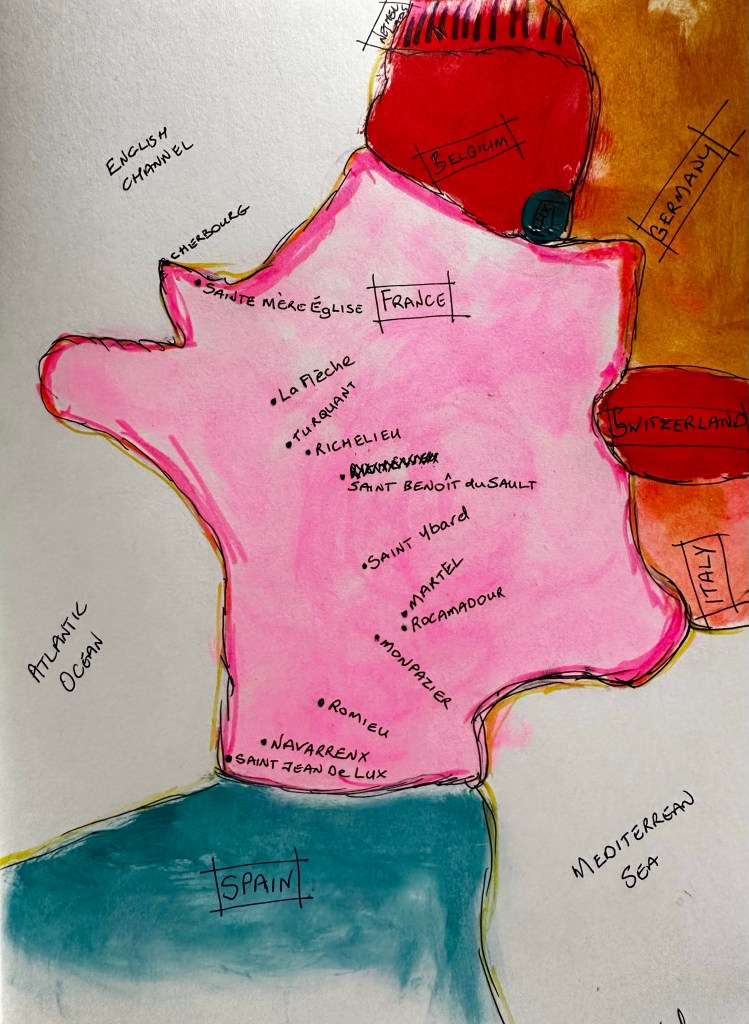
Map 2.1 France and the villages

On Tuesday we left La Flèche on the long drive to the department of Normandy and Saint Mère Èglise. The long drive was made longer by traffic diversions due to a new road or a bridge or something. Suffice to say our sat nav was at a loss to take us anywhere except narrow roads.

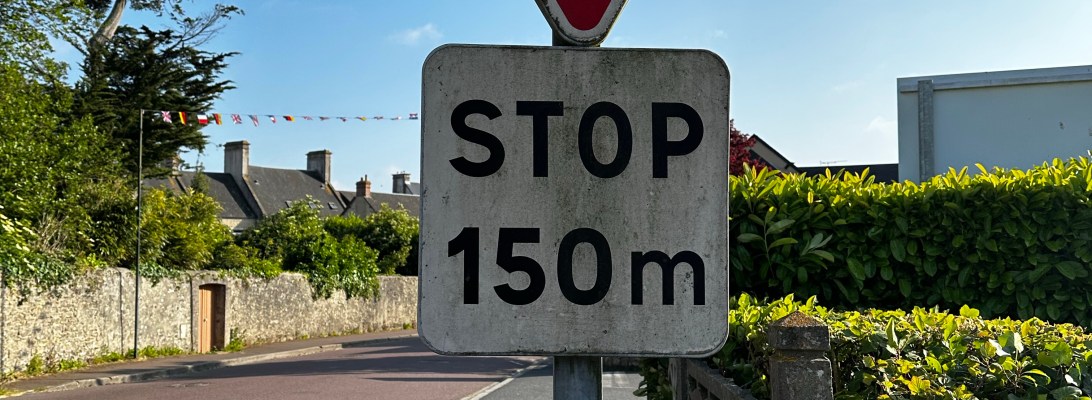
There’s a stop sign up ahead

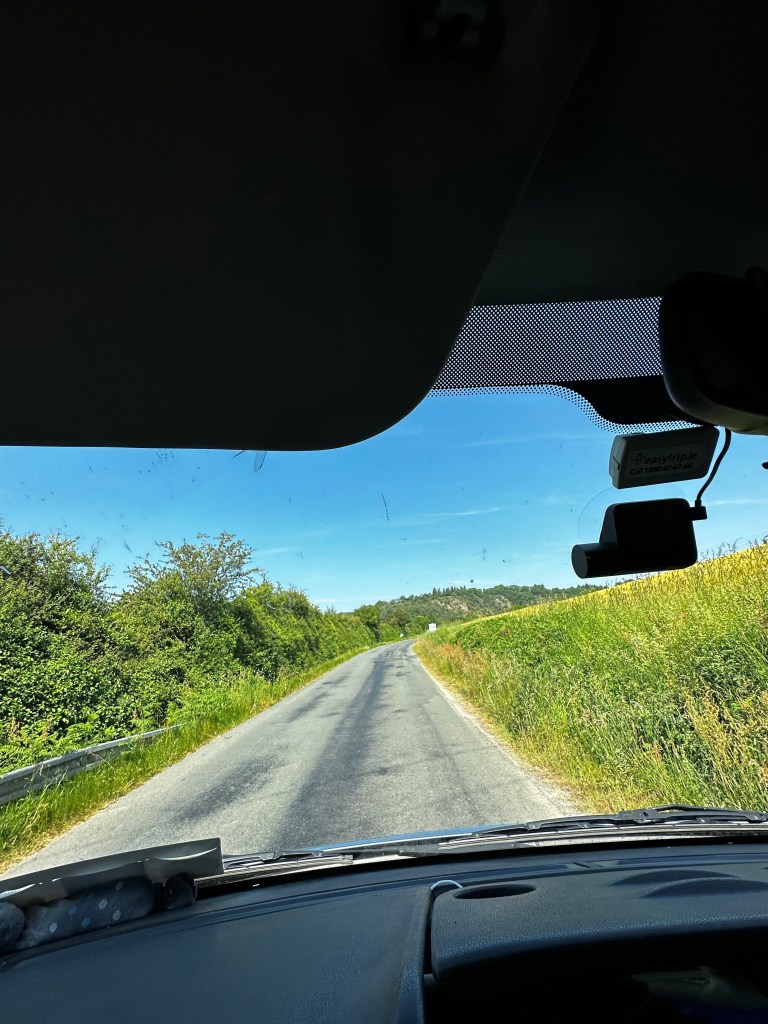
Very lovely narrow roads with lots of wheat and barley growing in the fields either side. With tractors working in those fields. And sometimes a line of grass growing in the middle of the narrow road.
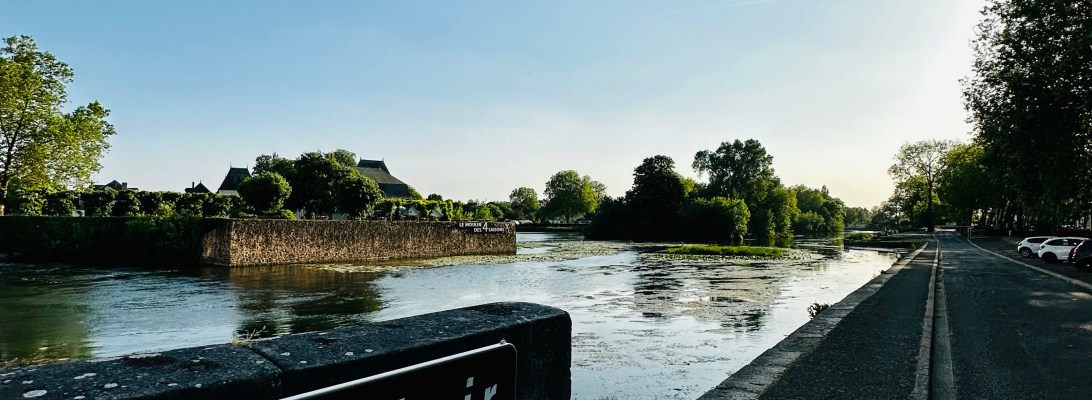
This road seems tilted to me

A road with grass growing down the middle is my definition of a road that is too narrow for Ruby but it is also a road that doesn’t get much traffic. Just as well because by the time we realised we were on said grassy road there were no options for turning back.

Pretty but we are taking up most of it…

We were very lucky, it was lunchtime and as we have found out the French are very strict regarding the time of meals and we met no one. Did not prevent my nervous system going on full alert as we approached every corner.

Waaaay too narrow

I do wonder if I’ll ever completely get rid of the anxiety. But do I want to get rid of it? In the moment it seems the most sane thing to be anxious about moving faster than walking speed down a – lets call it what it is – a farmers laneway when at any moment another vehicle could be travelling as fast or faster towards us. Surely, anxiety is the sanest response? Right?

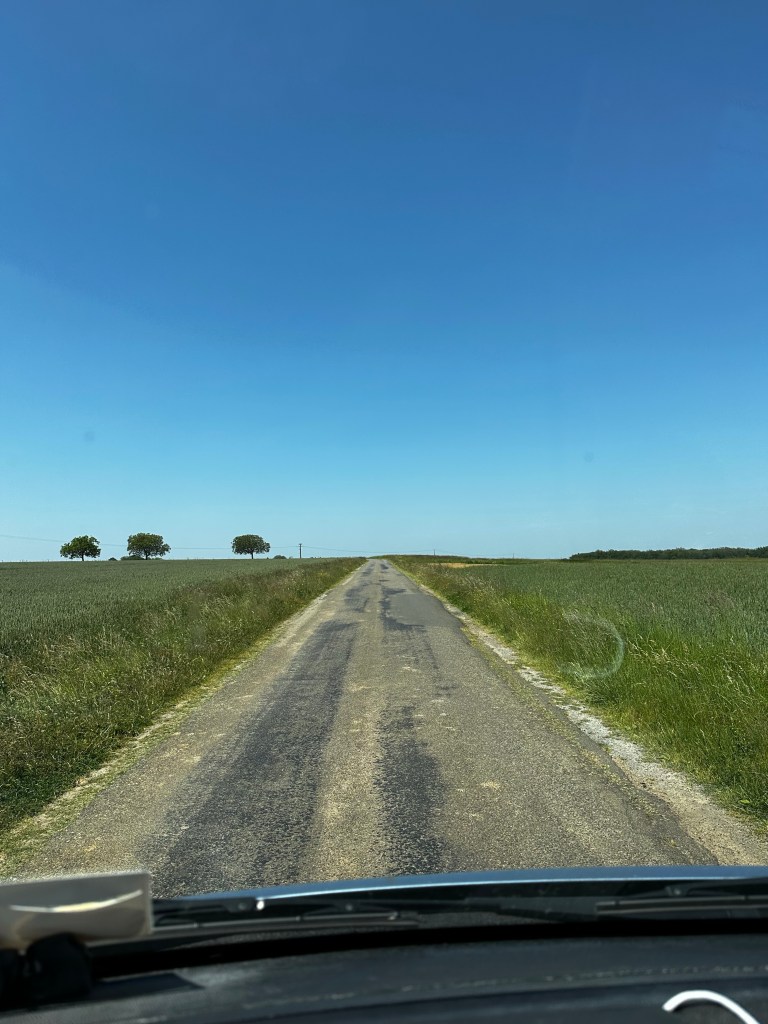
Still too narrow but look at the three trees…

And yet, when I apply logic to my challenge, I do realise the danger from my habit of repeated self-dosing with adrenaline is probably more dangerous to me than the possibility of meeting a car on a country lane.

Much better…

And now here I am packing a bag for our night on the ferry. The road to the ferry is wide. What could I possibility be anxious about? The forecast. The forecast says there will be wind, in fact it’s already been blowing all day yesterday and again today.

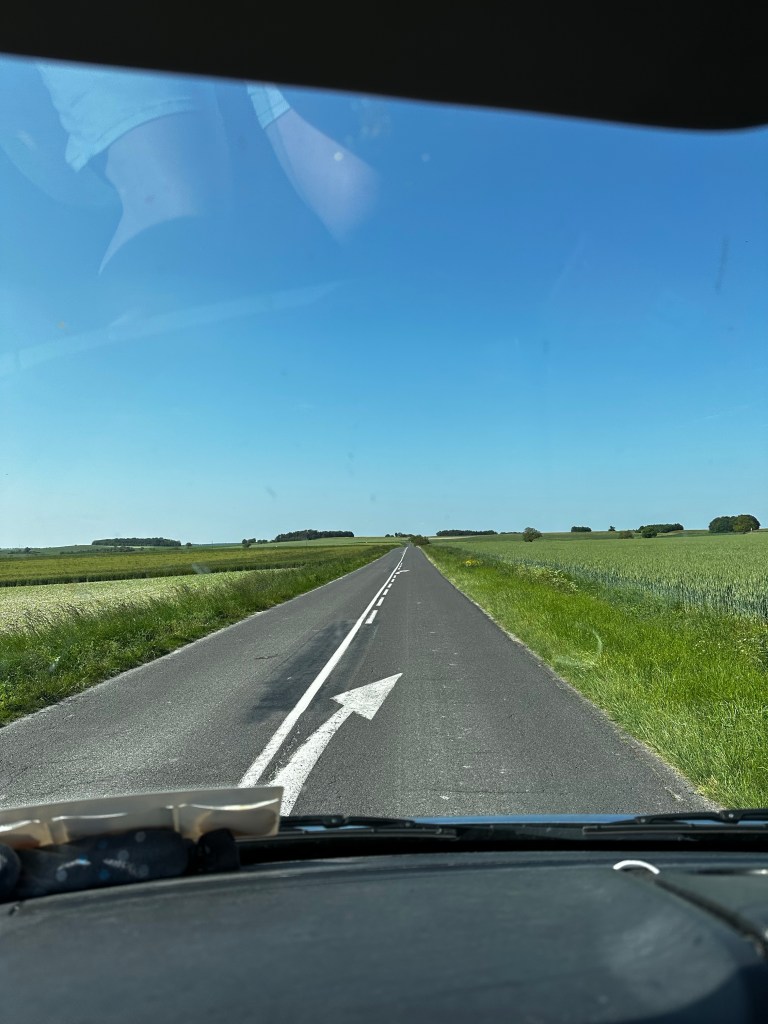
Perfectly straight road off into the distance…

This would be a good time for me to download a book that cures anxiety automatically and without having to read it as I won’t be able to read if the ship is pitching…

On the river

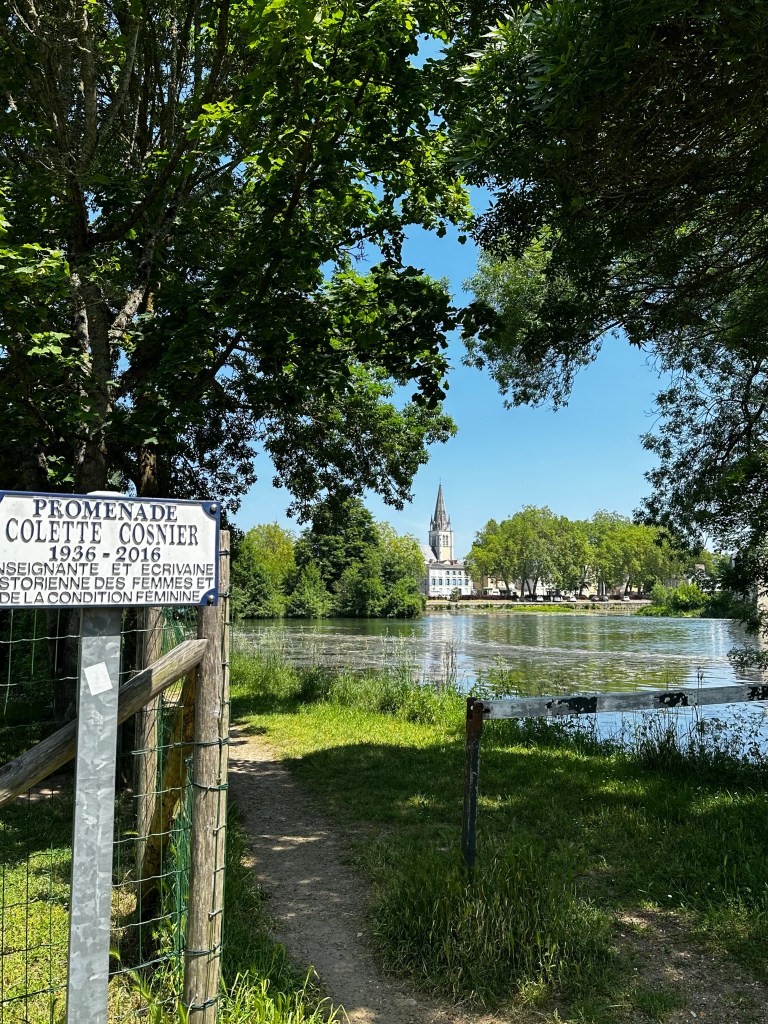
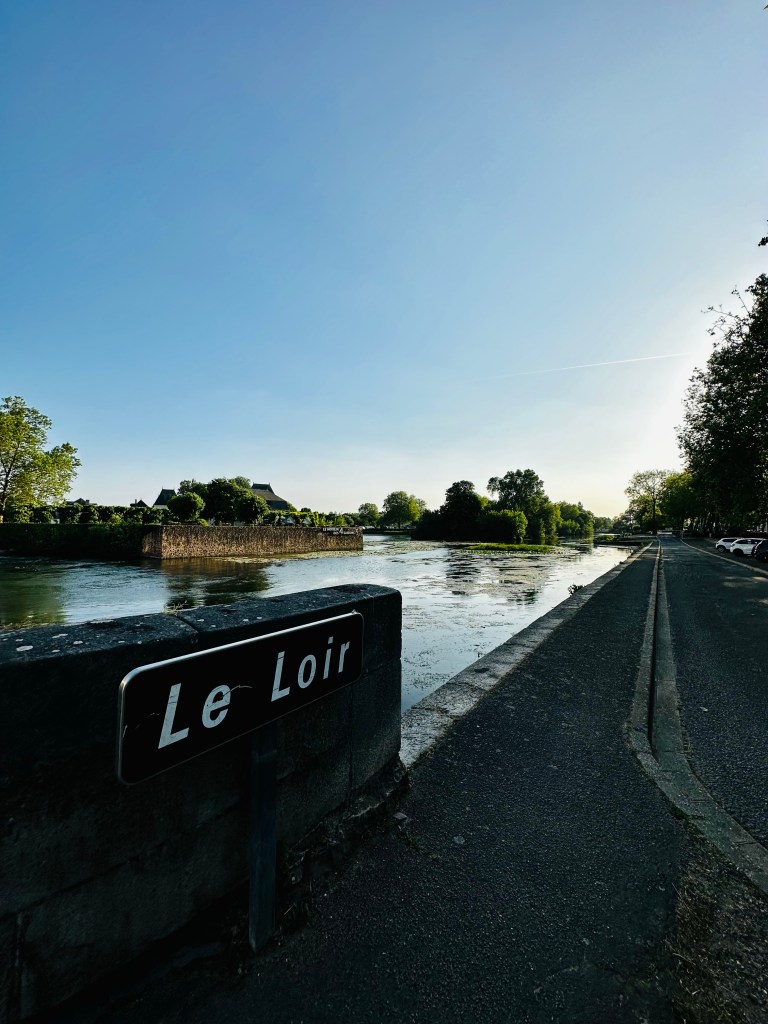
This river is Le Loir not La Loire

As I write we are in the lovely little town of Saint Mere Eglise, Normandy. And would you believe they are having D-Day celebrations. The town is hopping with American soldiers (who will be dropping out of the sky in parachutes in the next few days.) We’ve never been here at this time of year and didn’t realise it was such a big occasion.

There’s a walkway around the campsite beside the river and it’s called Promenade Colette Cosnier. The sign says she wrote about women and the feminine condition

After our Friday night in the cave houses town of Turquant we left the Loire valley and drove to the Loir – no that’s not a typo – there really is a different river with almost the same name as the longest river in France with all the chateaux. We stayed in the campsite in the town of La Flèche where there’s a bridge over the smaller river, the Loir.

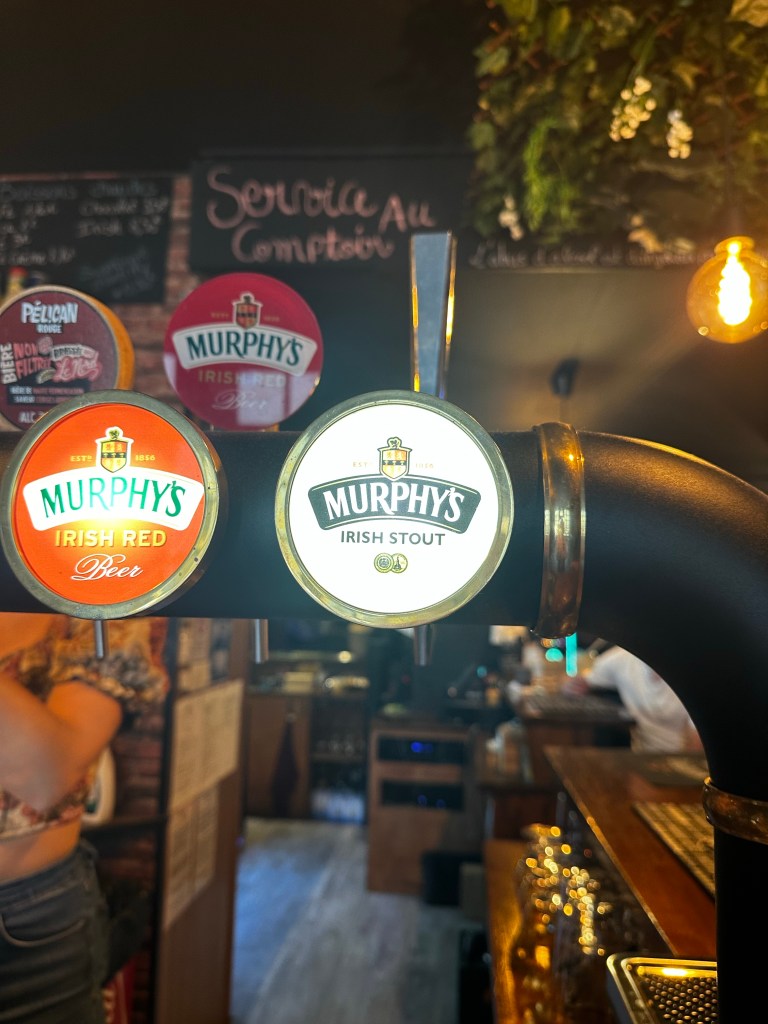
We found an Irish pub… with MURPHY’s but no food

The weather was hot with blue skies for two days and then hot with a lovely breeze for the third day. I was chasing shade around the motorhome but showering helped and the bugs were still not biting. Yaa! (By the way, thank you for all your suggestions re the mosquitoes, next time I will be well equipped. Also, that was a joke about not showering… just in case you were wondering)

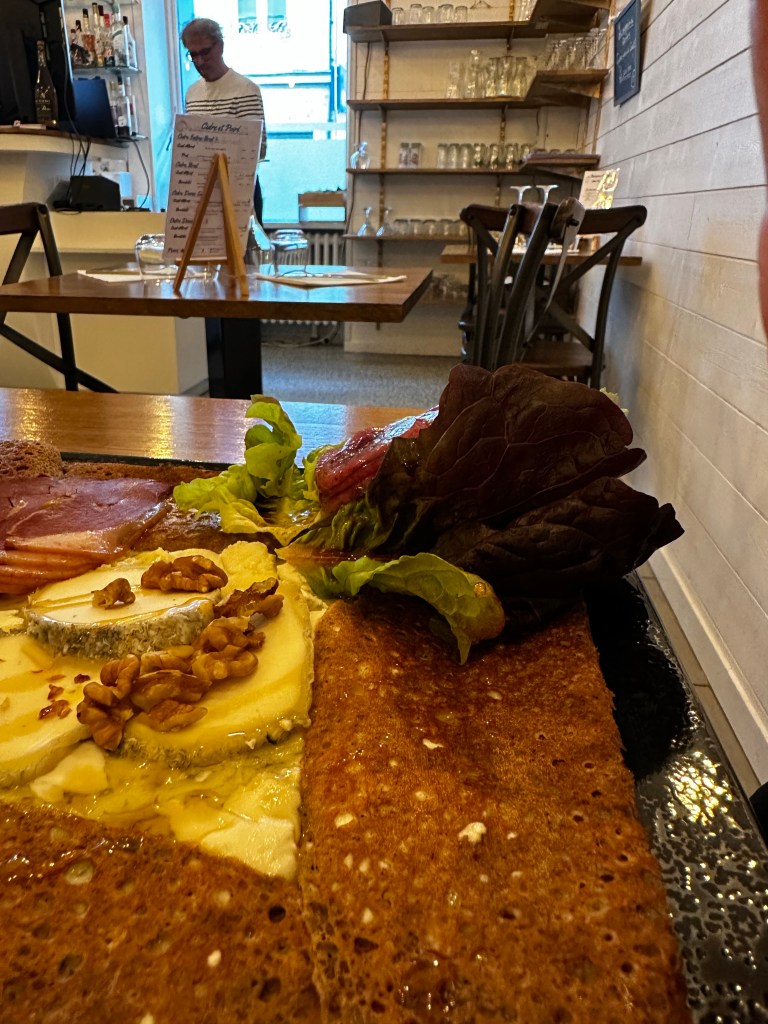
Gorgeous Galette – duck, apple, walnuts and Camembert (Restaurant La Bisquine)

It was a holiday weekend in La Flèche (and the Uk and the USA) and that always makes it a little more tricky to line up nourishment options. This is due to the further tightening of the already tight time range of opening times for shops, restaurants and supermarkets.

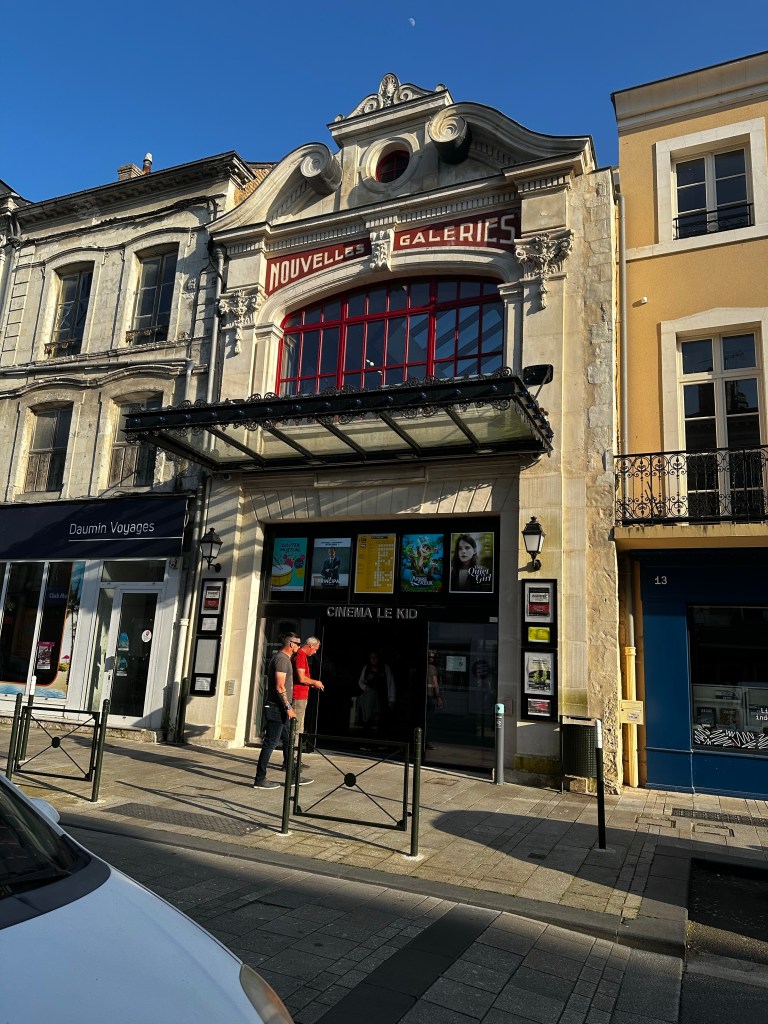
The local cinema was showing the Irish language movie The Quiet Girl

But we have been adding to our Information about France basket and were able to supplement the enduring dried porridge with other possibilities. Plus there was a surprise – the baker had a spot at the campsite from 8am to 9am on Sunday morning! Again we have managed not to starve. Do I talk about food too much?

Getting creative with self care

The Cardinal and the Caves

Front gate to Richelieu

On Friday we also visited Richelieu on our way north. You may have heard of Cardinal Richelieu? From the Three Musketeers? He was also a real Cardinal and at the same time a politician. It all seems to have been a bit more complicated back then or maybe it was simple economics. In a nutshell his mother needed one of her sons to become a bishop. There was money promised to her husband from the king but it was in the church budget so she needed a bishop in the family to get at it.

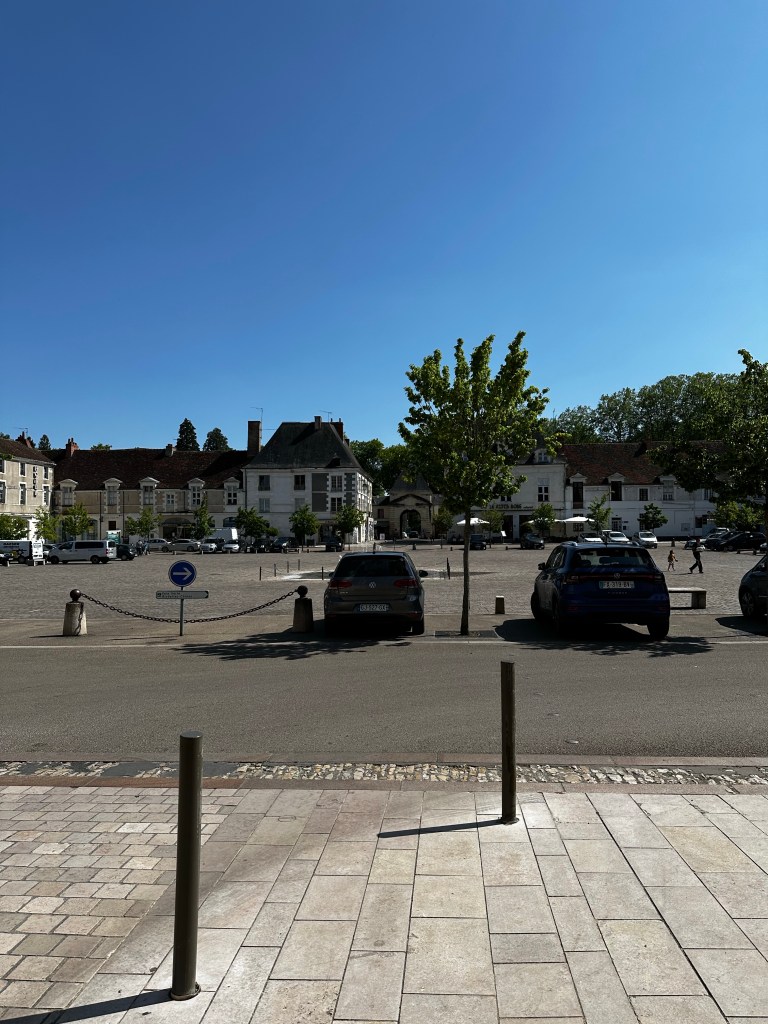
There’s the big town square…

Richelieu’s older brother was already a priest but he was not keen on the plan and he became a monk instead. The younger Richelieu was keen and agreed to become a bishop for his mother. He studied what he needed to study and became a priest and then a bishop in 1607. The money was now safe.

…and a huge antiques shop opposite the church

Sometime in the 1630’s the Cardinal bought land (near his original home) where the town now stands and had the architect, who designed the Sorbonne, design a walled town on a grid.

…and a huge statue of the Cardinal

You might remember the town of Monpazier was also on a grid? But while Monpazier is beautiful Richelieu is tidy and neat. Kinda like it’s pretending to be old. Of course it is old but not old-old. (Have I become an old snob now?) There’s also a park and there was a big chateau but it’s gone. Oh and the bishop built a smaller chateau a few kilometers outside the town, for his mistress… as you do.

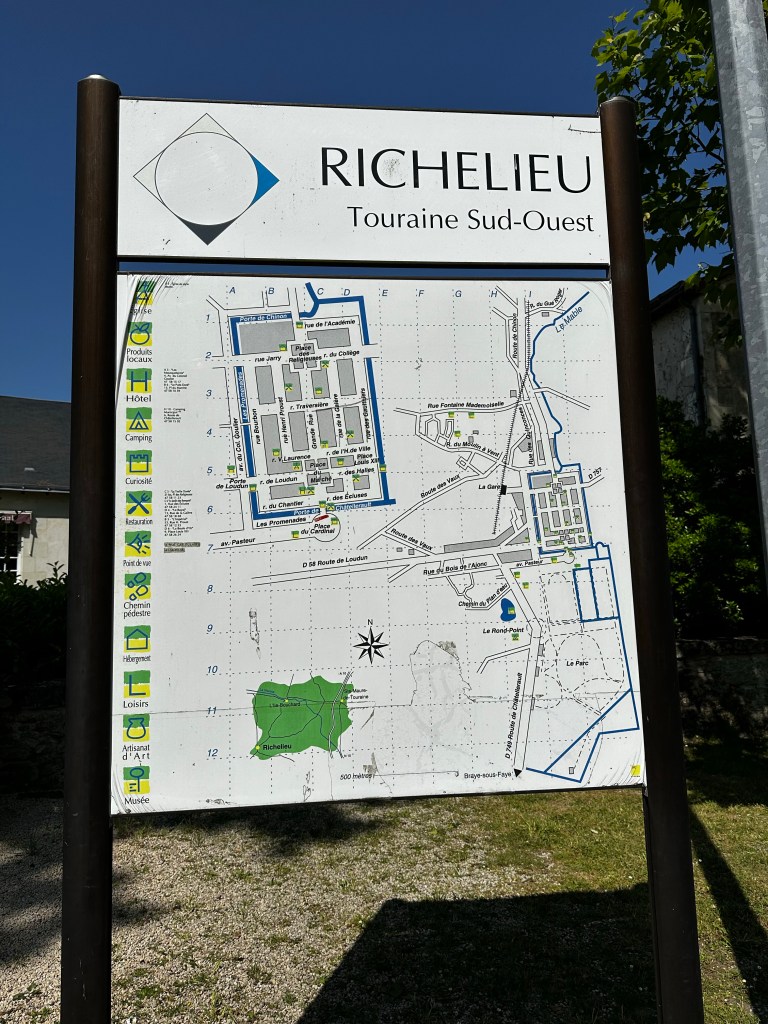
The town plan… on a grid

It was a hot day and we went in search of ice creams but it was not to be. The ice cream signs outside the cafe were just for decoration, not to be taken too seriously.

The white/cream stone is called Tufa, at Turquant

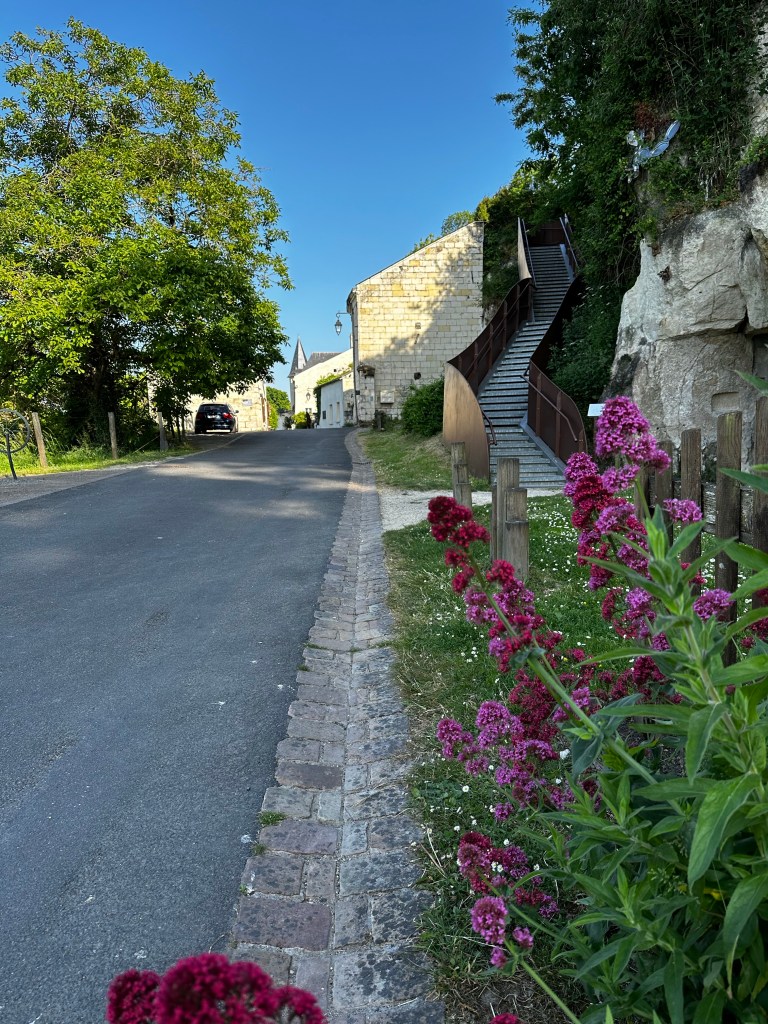
We travelled on until we found motorhome parking for the night on the banks of the Loire in a village called Turquant. The village is built into caves of Tufa stone. There are miles of tunnels in the caves and it’s possible to take a tour of the homes. We were still in travel mode so left early the next morning.

One of the houses built into the stone, Turquant

Driving through France

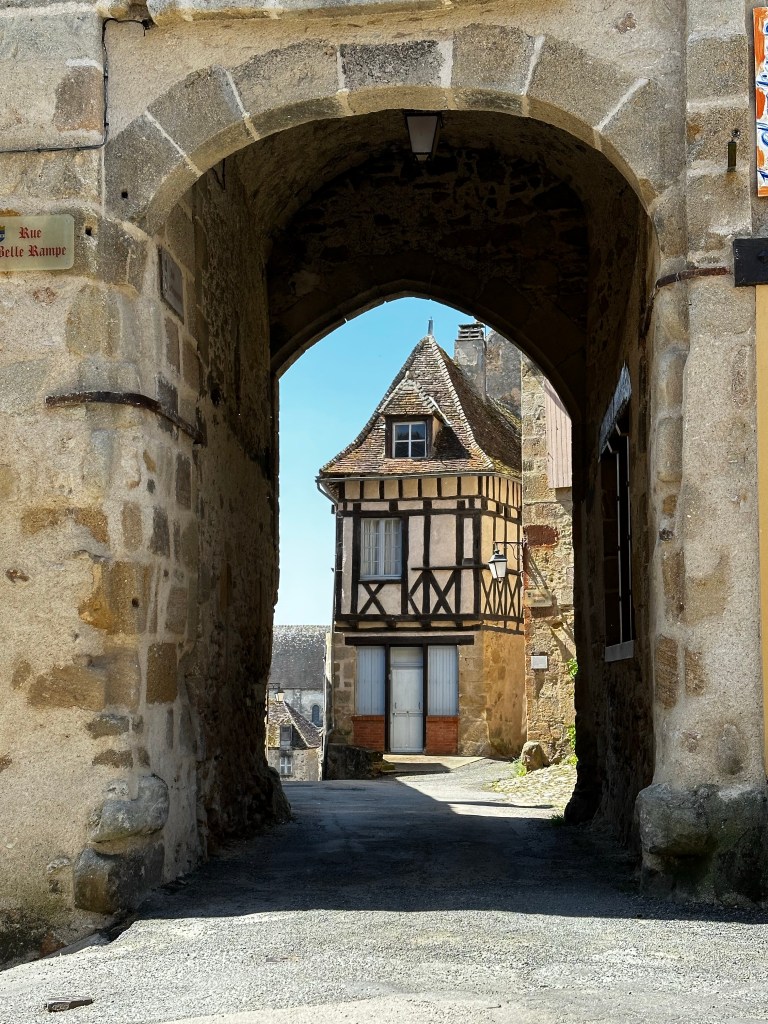
Through the arch in Saint Benoit du Sault

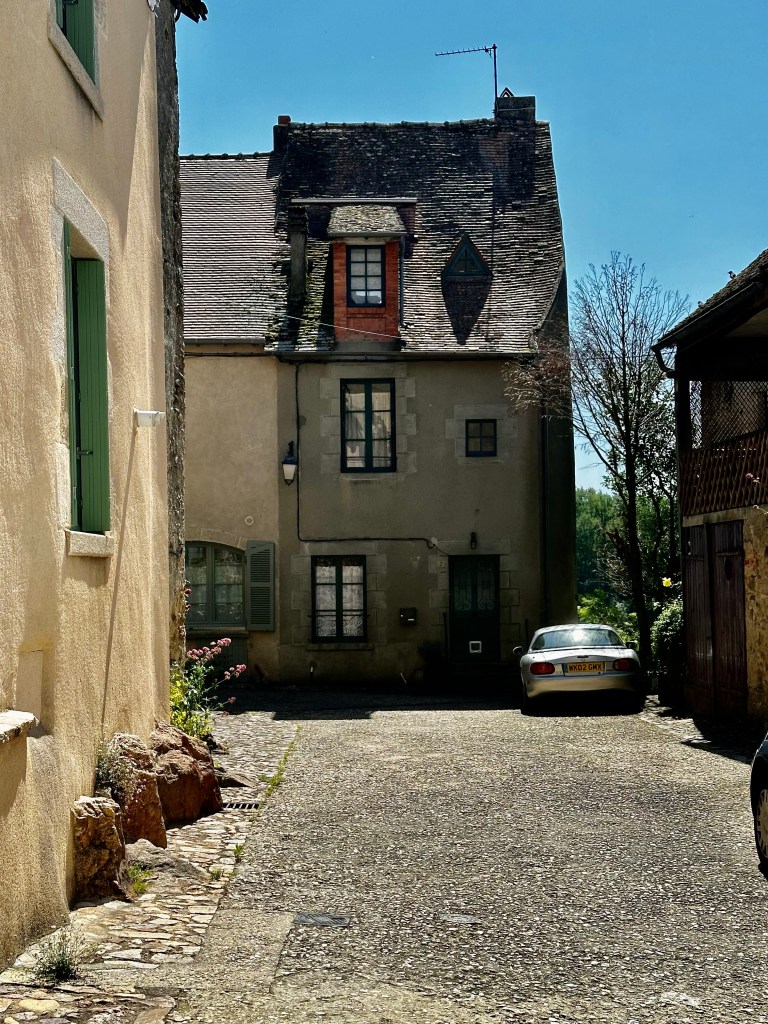
On Friday we left Saint Ybard. Our plan was to drive for hours and pick up a couple of beautiful villages on the way. We really lucked out in the Dordogne and Lot departments because there are lots of the beautiful villages there.

In the shade of an old tree

They’re a little more spread out in the rest of France. We checked the map and headed for Saint Benoit du Sault. Wandering around in the narrow streets is such an uplifting thing to do. Then it was lunch time so we found the boulangerie and bought some bread.

Tiny heart

Something we always have in the fridge is the ingredients for a French bread sandwich so lunch is always sorted. And if dinner becomes problematic we can have second lunch instead.

What time is it?

One of the things we had to let go when we started travelling like this was that we wouldn’t always have everything we need at hand. I suppose need is the concept we had to let go. In truth we need very little. Although we don’t always feel or act that way.

Cobblestone history

After lunch we set off again. Unlike our trip through France back in April on this return journey we were staying off the motorways. This can make me quite anxious as I’m sitting on the drivers side so every wide truck or van comes quite close to me. Sometimes too close for comfort.

Romeo, Romeo…

But I’ve been practicing my meditation and repeating my mantra and on Friday I was able to notice the countryside. And I noticed the sheaves of wheat waving in the breeze.

Isn’t this like a house in a fairytale?

Half of France is agricultural land. Imagine, half! I looked it up. (Then I looked up Ireland and it’s 64%.) Food is one thing we do need.

Relationship Advice

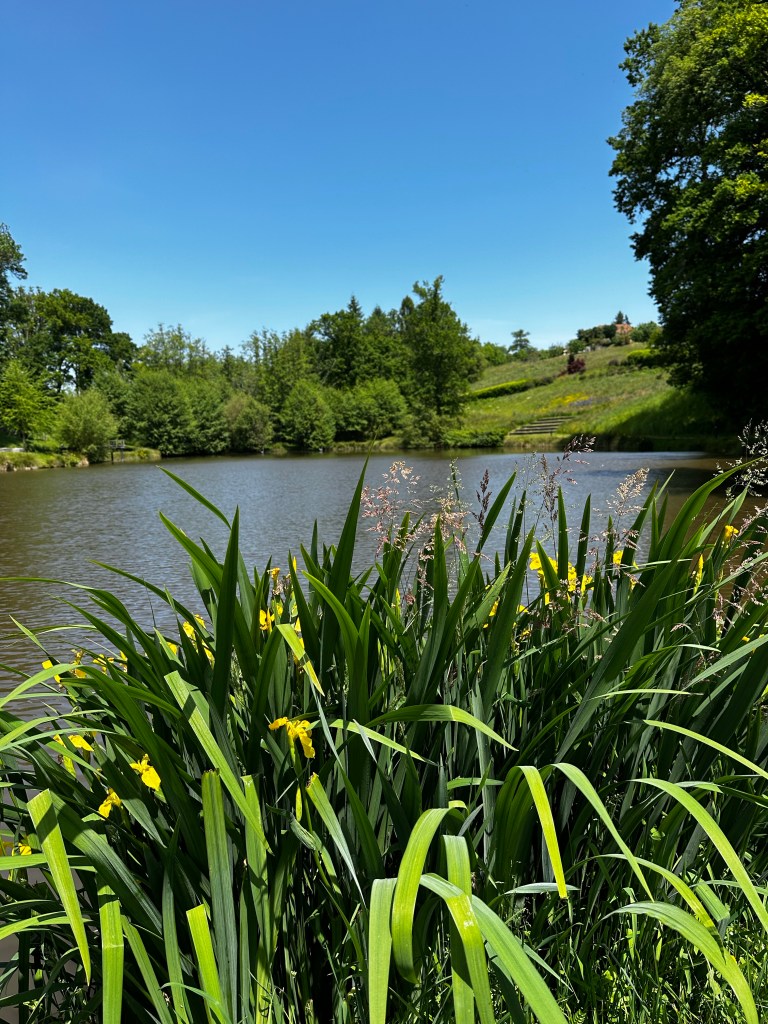
Fishing lake at Saint Ybard

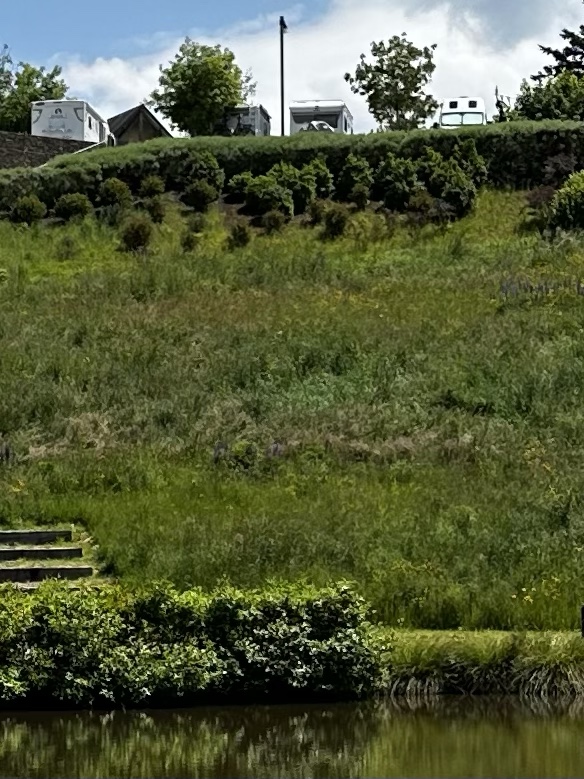
It was time to move on and travel for a bit in the general direction of Ireland. Yes it’s nearly time to go home. We left the village of Martel and drove for a couple of hours to Saint Ybard. This is a very small village with a very pretty fishing lake and free motorhome parking. We stayed one overnight .

Beautiful shaded walk around the lake

Normally I wouldn’t be too happy staying near a still body of water due to the mosquitoes. You see they love me but their love is not reciprocated, in fact I would like to finish our painful relationship. So I’ve been taking mosquito relationship advice. Please wade in if you have an opinion, so far it’s just Denis and my mother in law, Eilish, who are counselling me.

There’s Ruby overlooking the lake

Denis says if you keep moving they won’t get a chance to bite. I walked quickly around the lake all day. Eilish said don’t wear perfume or deodorant. I kept downwind of other humans. And success… I was not bitten. But was that because there were no mosquitos? Or because they couldn’t catch me? Or because they didn’t like how I smell?

Evening at the lake

My sister has promised to bring back some Canadian anti-mosquito thick white cream stuff that works a treat over there where the mosquito are bigger… seemingly. In the meantime I’m afraid to slow down or apply deodorant. I’ve also stopped showering. Now I’m wondering if this is why the flies are following me…

Blending in to mislead the bugs