

(Bayeux Cathedral)
This is our last full day in France and we are spending it in the town of Bayeux. I think I read somewhere that this was the only town in Normandy that survived the Second World War. Imagine, it’s 1944 and the war has been going on for five years everyone is fed up but the allies have a plan. They will land on the beaches of Normandy with loads of troops and tanks and trucks and weapons. Then they will make their way across France neutralizing, killing or capturing the enemy.

(There are 4,000 soldiers buried in Bayeux in a beautifully maintained cemetery)
The day came, D-Day and they landed on the beaches less than 10 km from Bayeux. There was very little resistance to begin with and they were able to make this town a base for the troops and the war machinery. Very soon they realised they had to build a bypass, the first in France, to protect the old town from the war traffic as they made their way south and east to finish the war. Finishing the war took a lot longer than they planned. There were a lot more deaths and there was a lot more destruction. In the end it was the allies who were responsible for the destruction of the other towns in Normandy. War is a messy thing.

(River Aure running through Bayeux)
We arrived at the motorhome parking beside the Museum of the Battle of Normandy in the morning and I went wandering. There was a walking tour brochure in the tourist office called Vieux Bayeux (Ancient Bayeux) with a map and lots of information plaques dotted around the town. I spent a couple of very enjoyable hours following the little discs on the ground and reading the information on the plaques.

(Vieux Bayeux walking tour map)
Bayeux is most well know for the Bayeux Tapestry, a huge panel (over 200 feet long) of embroidery work that’s nearly a thousand years old. It tells the story of an earlier war. War is very popular in art.
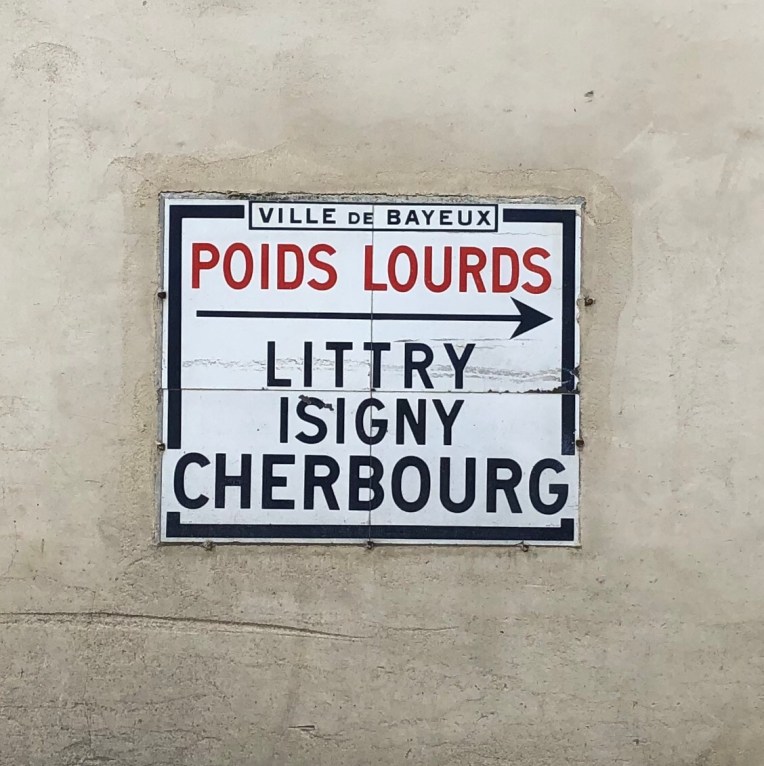
(Old ceramic road sign)
Bayeux is a very busy town with lots of tourists and lots to see and lots of souvenirs to buy. English is spoken everywhere and there are English signs in every shop window. It could be because this is the 75th anniversary of D-Day and this is a nice place to come to remember those who have died. Walking through the war cemetery in the afternoon was a sobering experience. The most common age on the gravestones is 22. War is extremely sad.
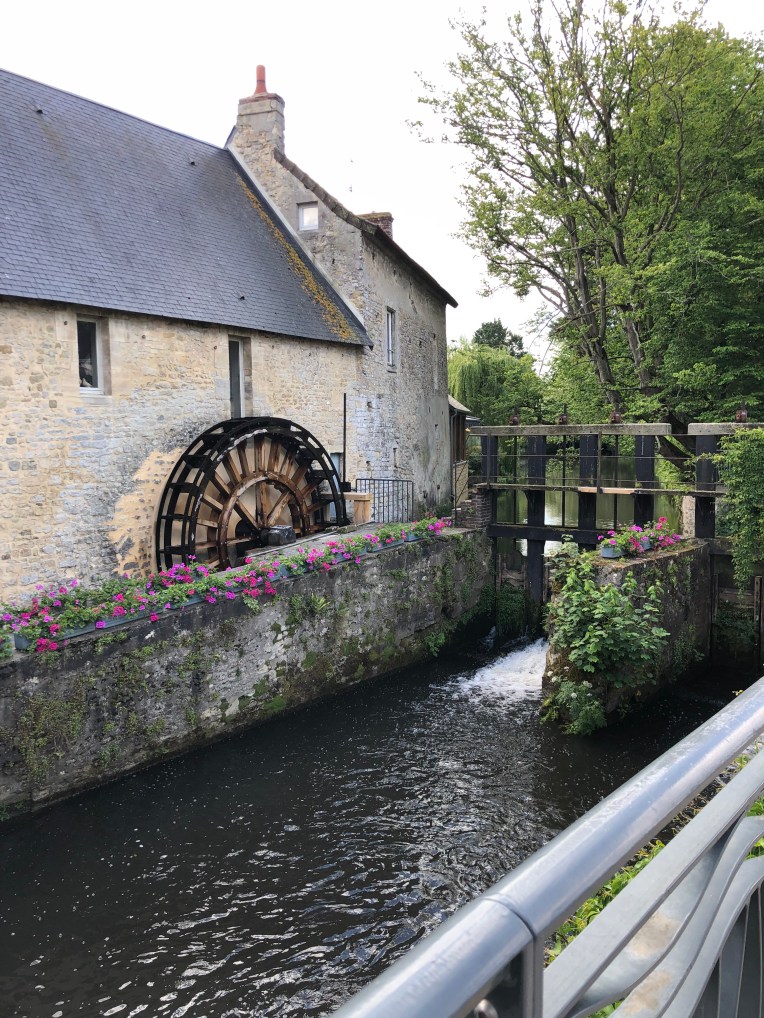
(Pretty little water wheel near the tapestry)
There’s a huge supermarket near the cemetery and in the late afternoon I dropped in to stock up on supplies for our last day. I didn’t realise I had forgotten my purse until I was in the queue for the checkout. I experienced some panic wondering what to do. I had enough change for the bottle of water but the rest I would have to leave. The queue moved slowly forward as I practiced what I would say in French about forgetting my purse, being very sorry but I would have to leave these items but take the water…
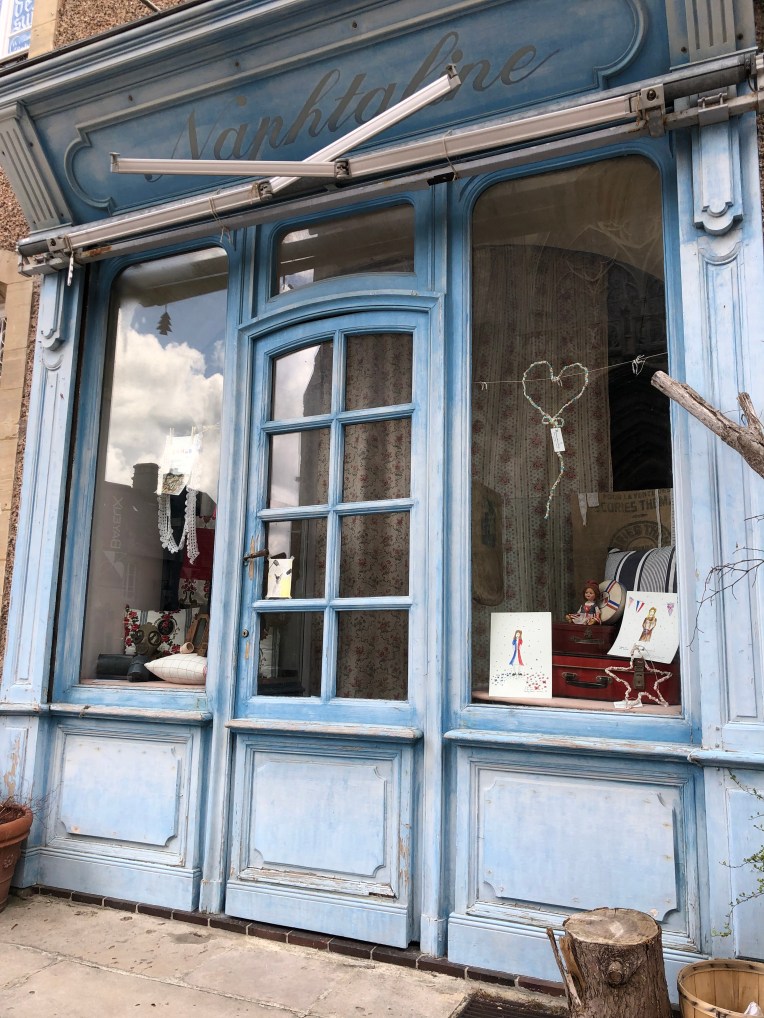
(Beautiful shopfront near the cathedral)
Do you speak English? No… I muddled through but it’s ironic that I’m panicking about such a small thing so close to the war cemetery. If I stop panicking about the small things will I have to start panicking about the big things?
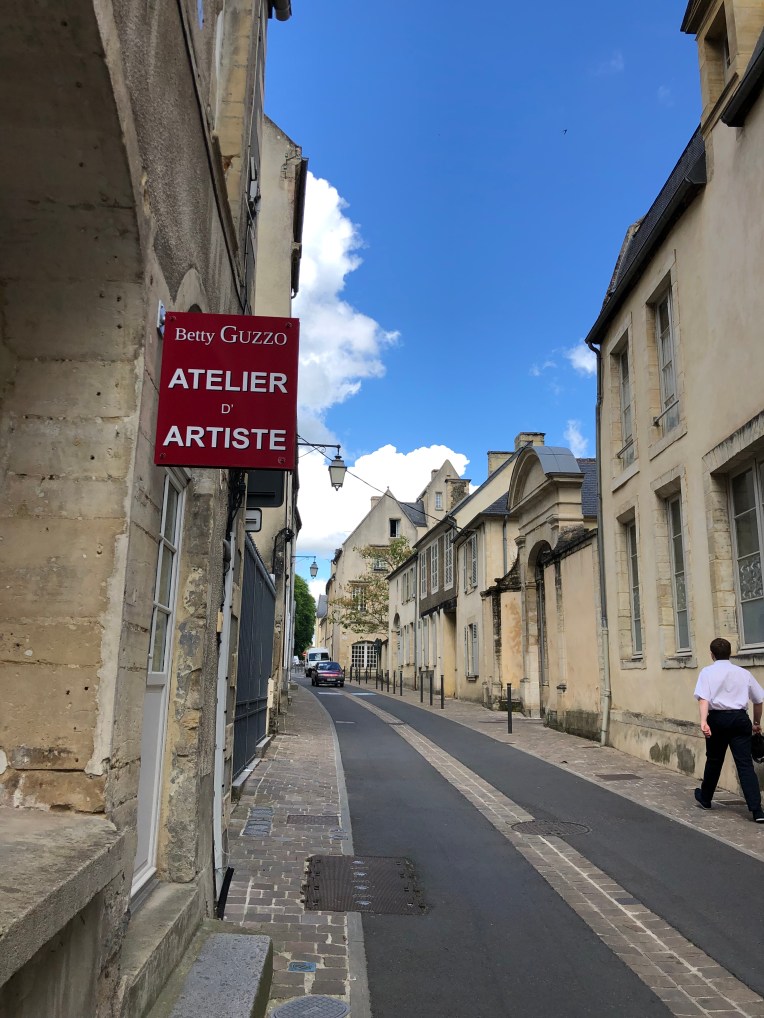
(Artist studio)
There’s an organization called The Commonwealth War Graves Commission set up in 1917. They look after the graves of the 1.7 million people buried in France after the wars of 1914-1918 and 1939-1945. There was a plaque outside their cemetery in Bayeux that made me cry. It said their “founding principal is to honour each person equally regardless of rank, race or religion and to do so forever.” Forever. We don’t do this for the living.
If we did, there would be no war. Mairead.

(Bayeux: Overnight parking €4 with rubbish and recycle bins. Very nice public toilet near the museum. Supermarket past the war memorial graveyard.)


 Travel stories