Spanish Surprises

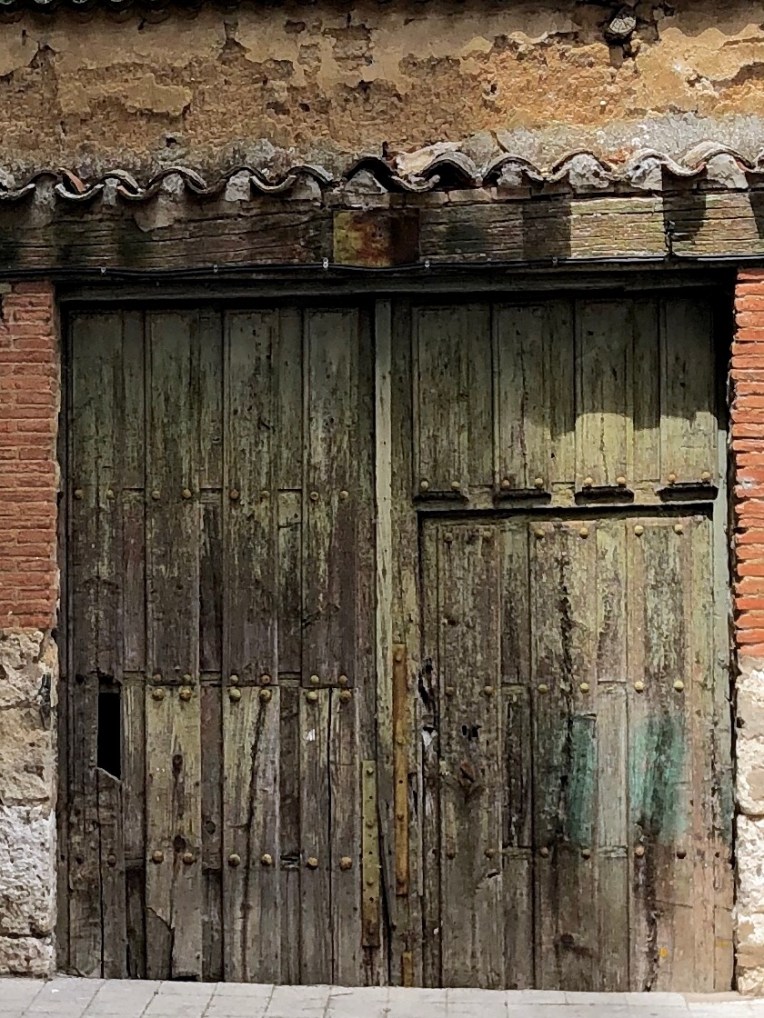
(Lovely old gate in Palencia)

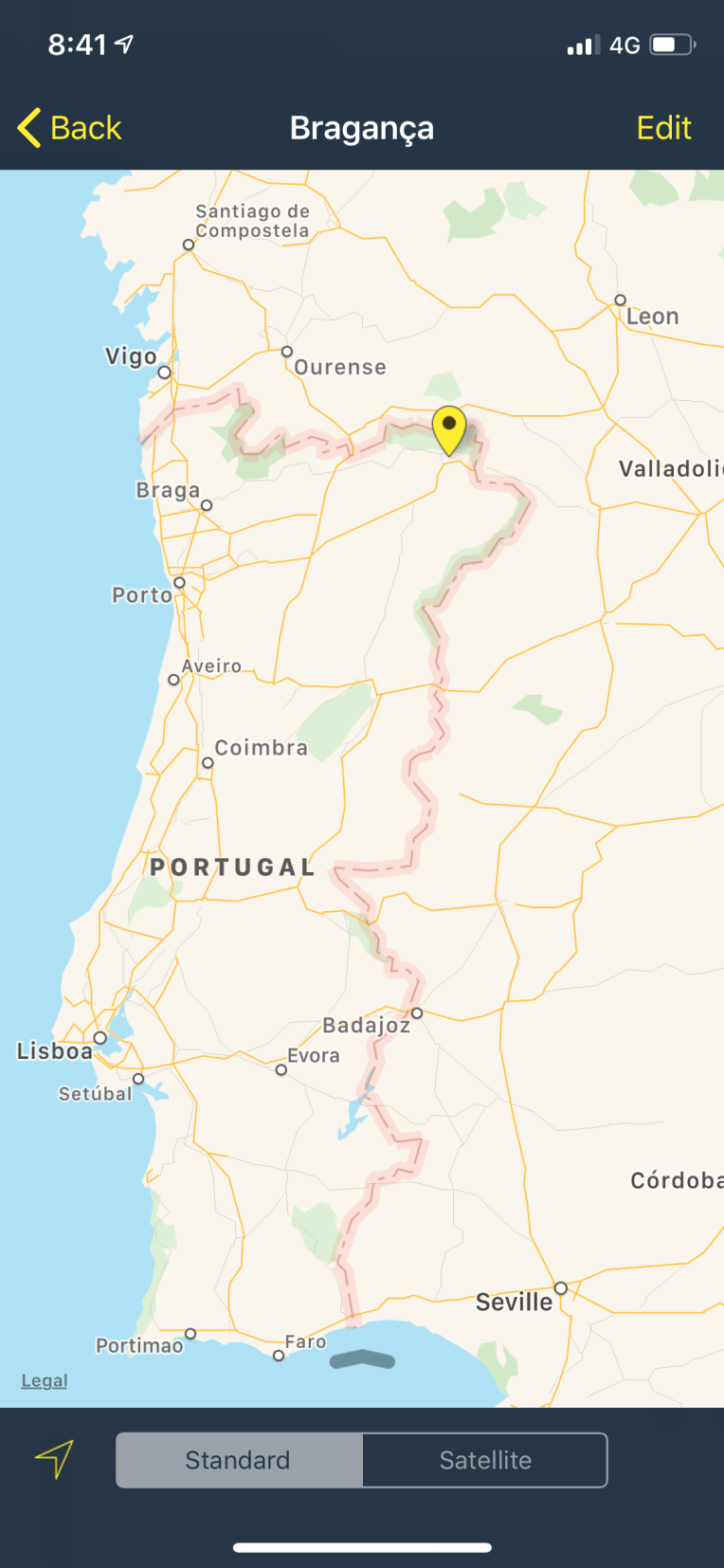
After lunch we changed plans and decided to move from the beautiful view and my stork and travel a couple of hours here to Palencia. Travelling by motorhome you can do that, travelling by motorhome you sometimes have to do that. Earlier at Bragança the toilet cassette empty station was full to overflowing so we couldn’t empty our cassette. There were no facilities at Puebla de Sanabria so we went on to Palencia.
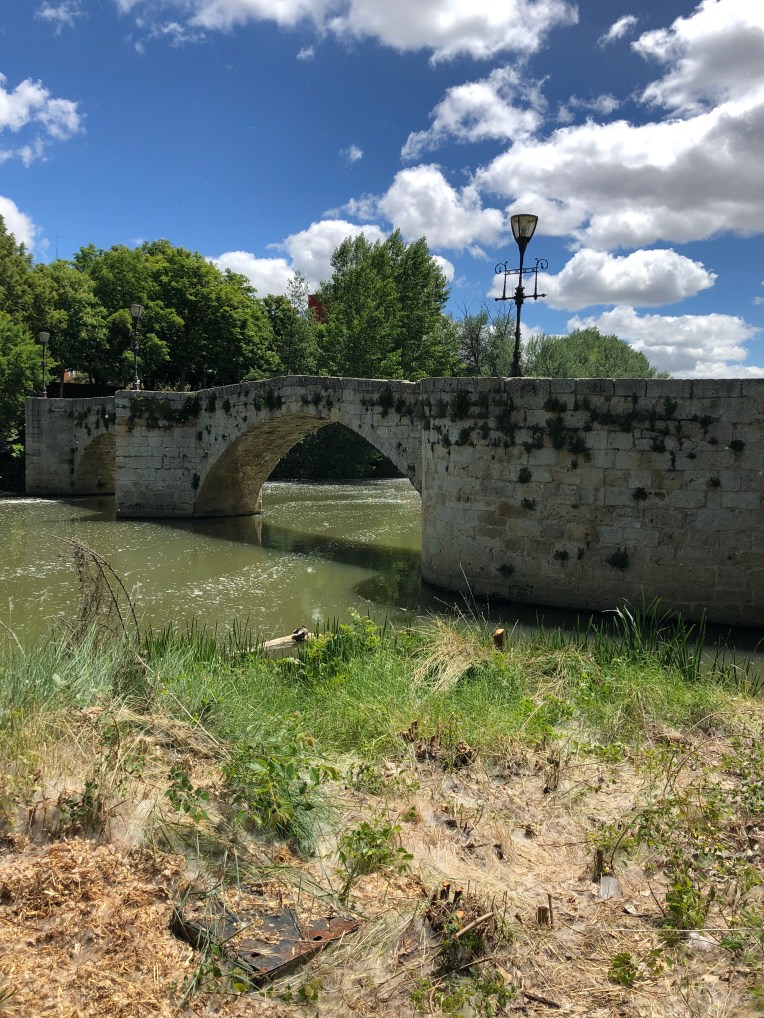
(Old bridge)

We had a moment of confusing when we were almost there. There was something wrong with the sat-nav. It was 2.55pm and the sat-nav was predicting we would arrive at our destination in five minutes. It also said our time of arrival would be 4pm. But that was an hour and five minutes away. Something was definitely wrong.
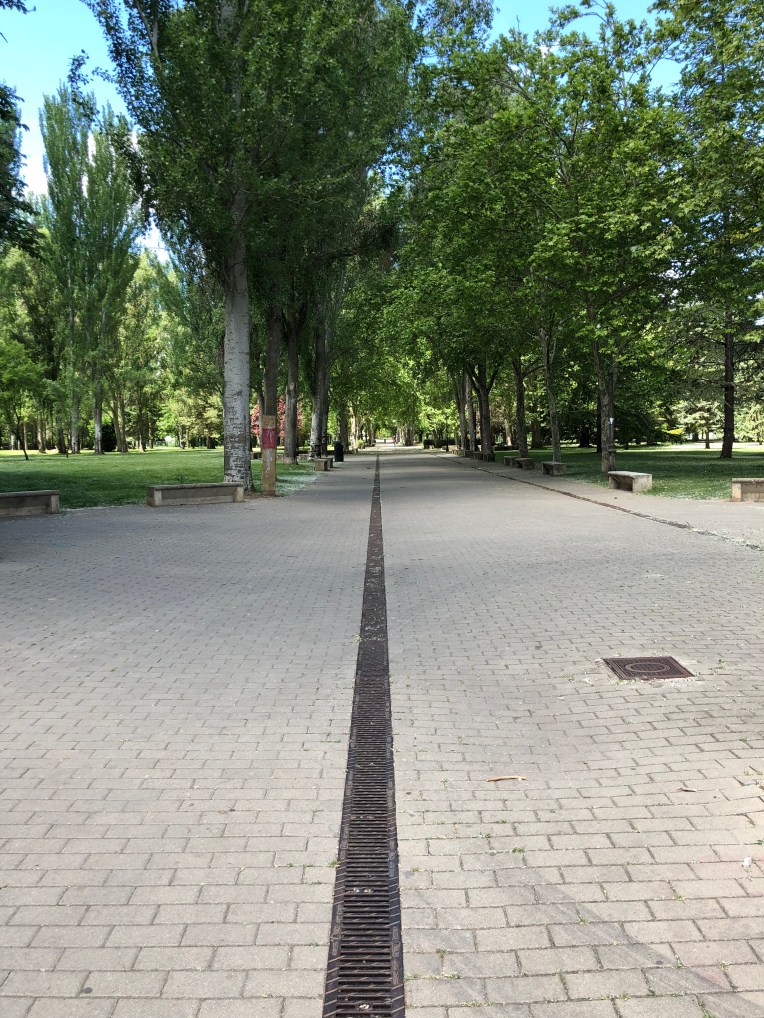
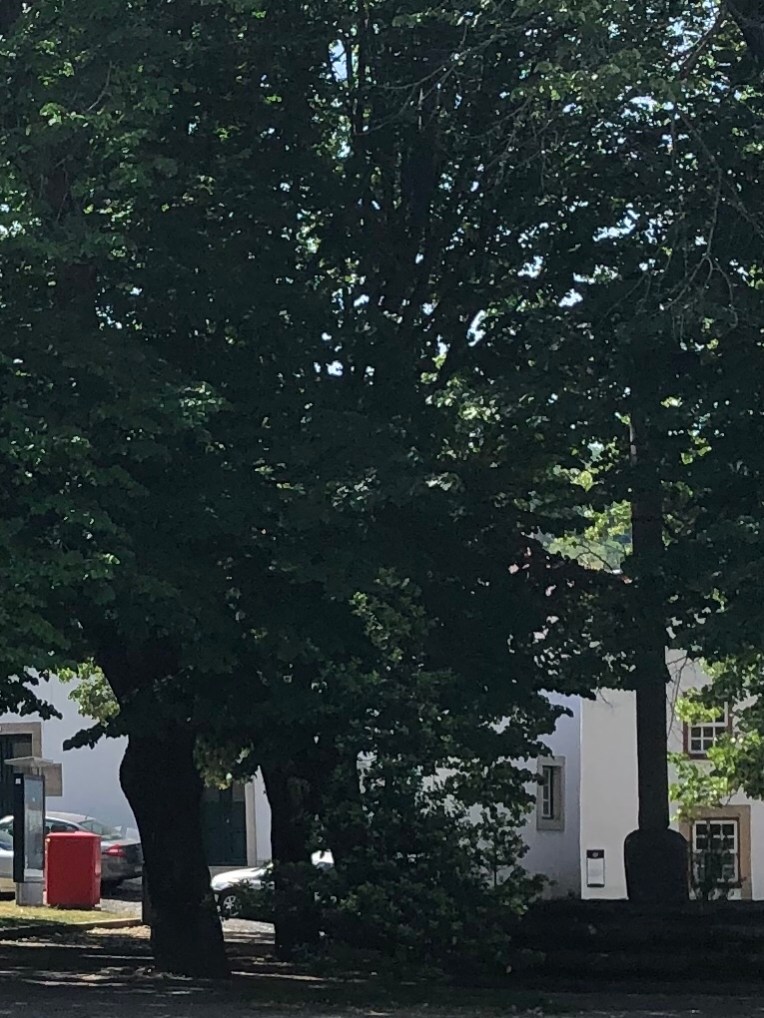
(Straight through the park)

It happens every time we cross back over the border into Spain. The time difference. We lost an hour. We will get it back when we land in Ireland. (Must remember to enjoy that.) What do the people who live beside a timezone change do? How do they avoid confusion? Of course it could be really useful when you run out of time to pop across the border and get another hour. Imagine that…
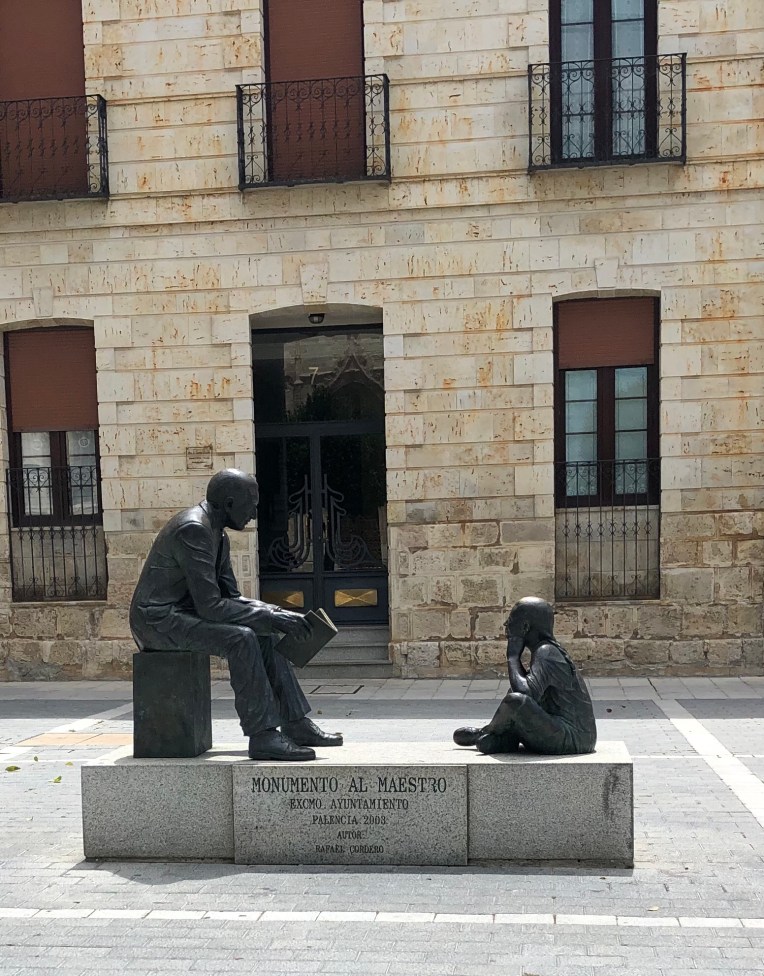
(Cute statue near the cathedral)

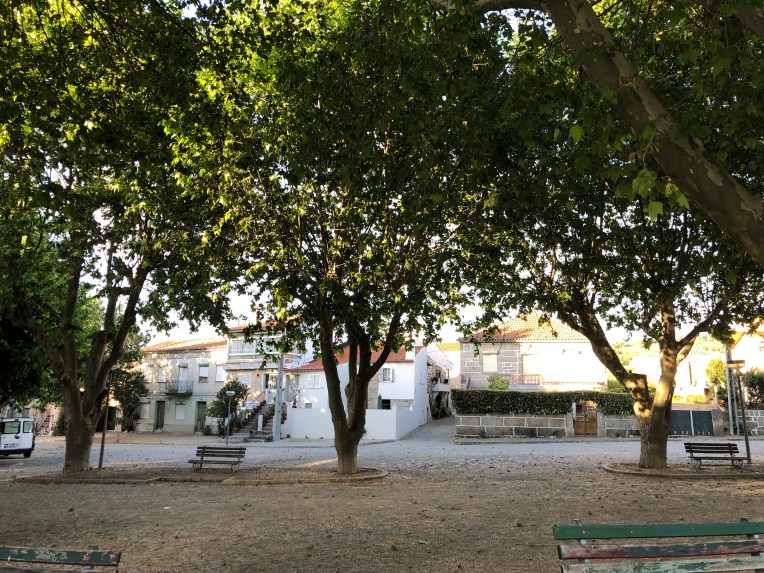
Palencia is a very old town with a great free camping place just ten minutes from the sights. There are toilets and showers and something we really need at the moment – a washing machine. I spent the afternoon washing clothes. There’s also a few clothes lines, solar power.
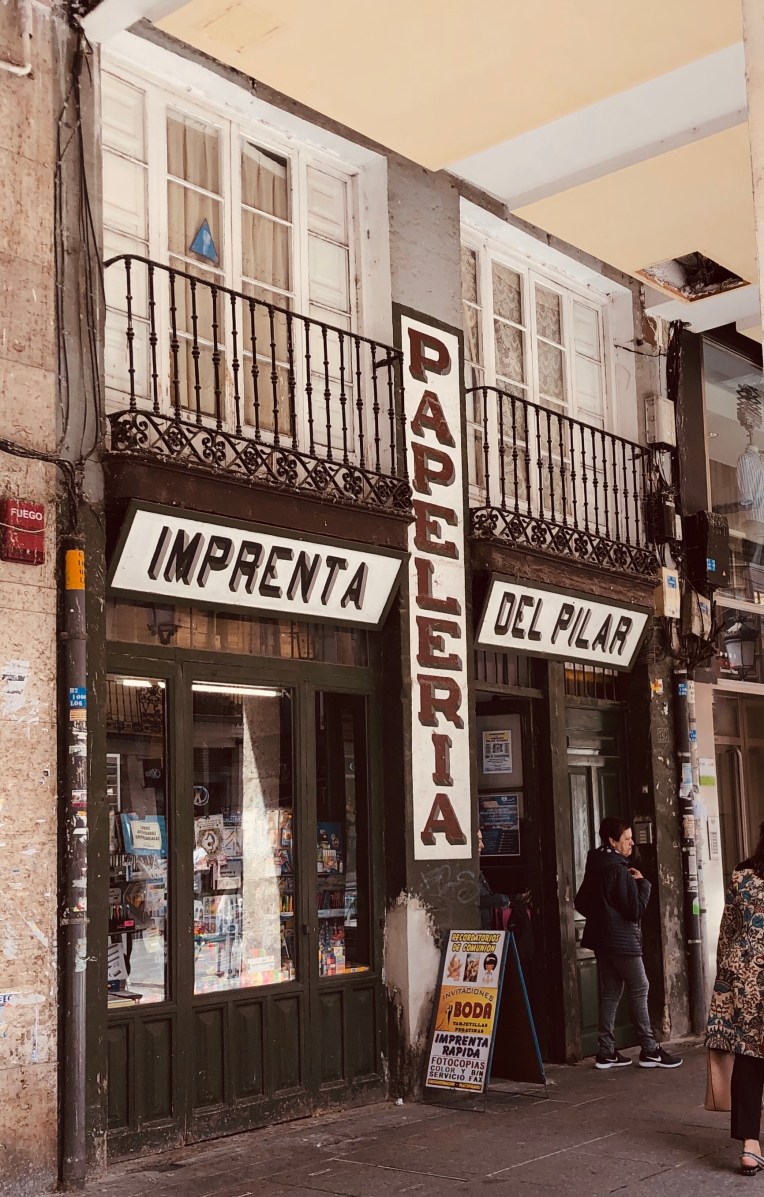
(Old stationery shop)

There’s also a cathedral, churches museums, loads of shops and plenty of restaurants and cafes. We found a lovely tapas bar. Another thing we forget when we cross the border, no one speaks English and there are no English versions of the menu. When I asked the waitress if she spoke English she opened her eyes wide in happy surprise and shook her head to indicate no. French? Same response.

(Post box at the post office)

It was a lovely moment because it was unexpected. She reacted without irritation or apology or sorrow or guilt or disappointment or anything negative. She seemed genuinely happily surprised. Almost like she couldn’t wait to see what might happen next.

(Wine bottle light fittings at the tapas bar)

What happened next was we discovered we know far more Spanish words than we thought. Words like Cerveza (beer) aqua con gaz, (sparkling water) and tapas came tumbling out of our mouths. Now we were smiling with happy surprise too. She pointed us at the tapas section in the menu and then went off to get our drinks. The words in the tapas section were lovely and mostly unfamiliar but they were only €2.50 each so we picked the names we liked.

(Love the coat hooks)

We picked well! They were amazing. The date on top of a rasher (not actual rasher but better if you can even imagine that!) on top of an egg on top of a pepper on top of bread one was the most amazing things I ever tasted. By the time we were leaving we could say multo bene which we hope means very good. It probably does because our waitress was smiling with a different happy surprised look. You know the one parents give to their children when they do something good? Although she was very young. Maybe it’s the look grandchildren give when their grandparents learn to use the remote?

Multo bene, Mairead.

She Rises

(That’s a stork up there)

Yesterday morning we left Portugal. As I write we are in a town in Spain called Palencia. Leaving was a strange experience. First, the road was narrow and it twisted this way and that as it wound though the mountains. I was twisting this way and that too. It was uncomfortable. I hate leaving.

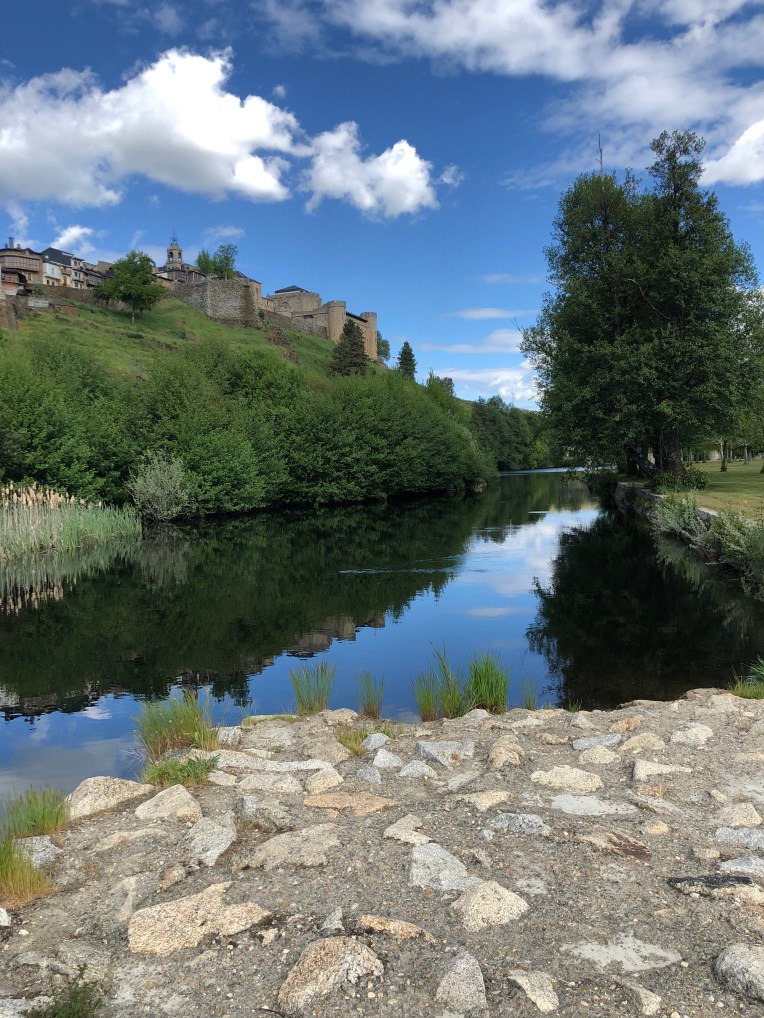
(The town of Puebla de Sanabria, Spain)

Just another characteristic of my human mind. Discomfort makes me crave familiarity. I am discomforted by change. The road signs change. The names of towns are unfamiliar. The possibility of a morning coffee very unlikely. I am a creature of habit breaking a well formed habit and it’s painful.

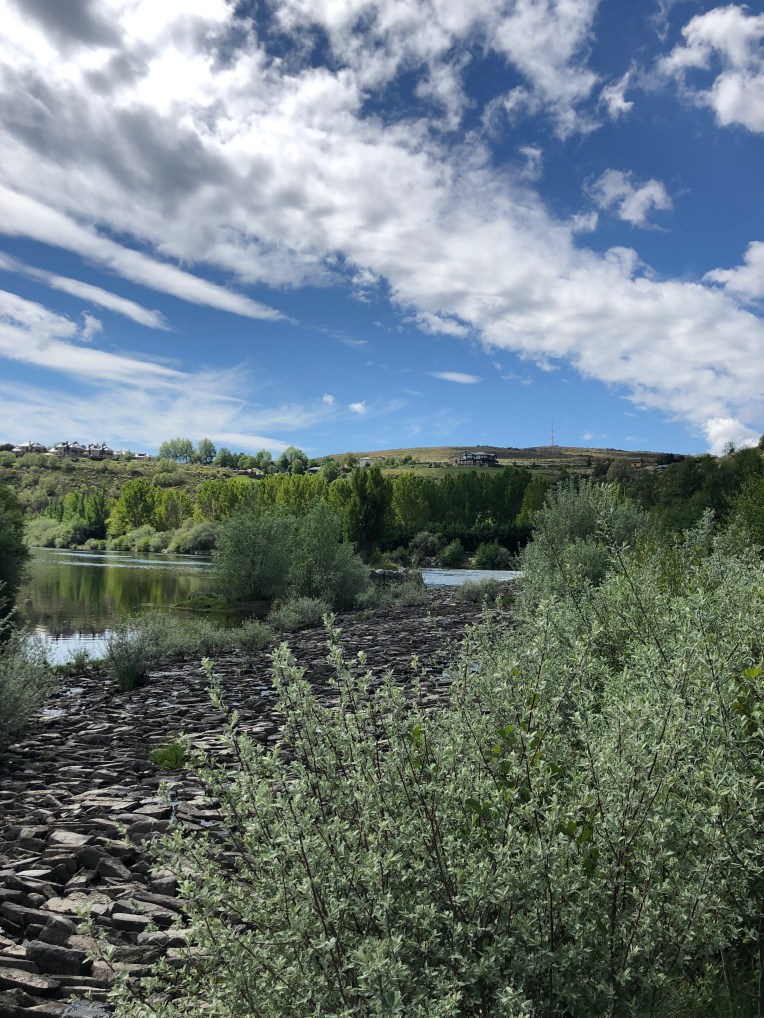
(River view)

We arrived at our destination for the night, a car park in the town of Puebla de Sanabria. It was hot. There was no shade. I was grumpy. The nearest coffee was up, up, up a steep gradient on the other side of the river. It was getting hotter. There will be no coffee. I leave Denis to park the van while I take my mood to the riverside.

(Can you see her?)

And there she is. Standing waiting for me. How quickly I forget. A stork. Every stork has been reminding me to stay present. Reminding me to drop my expectations, my past losses, my future hopes. Just be here now.

(Just at the last moment… she rises)

I looked across at the other side of the river and it’s beautiful. I hadn’t noticed. I missed something beautifully right in front of me because I was holding on tight to something I didn’t have.

I made tea instead of wishing for coffee. Mairead.

Another Day in Bragança!

(From the walls of the castle in the old town)

Yesterday was hot in Bragança but as it’s Portugal (thank you, Portugal!) there are numerous picnic tables placed near the camping car parking. As they are all placed strategically under olive trees (not actually trees but that’s a different story) it’s possible to move from one to the other as the sun moves and stay in the shade. That’s what I did.

(More scary stairs to climb)

First though, I went to the supermarket, we are down to emergency supplies again. This time not because we weren’t taking every opportunity but because we are moving in the early morning every day and pretty much occupied when we arrive. Also we are staying in small towns and villages. There hasn’t been an opportunity to go to a supermarket. Fortunately, there is a small one just across the junction from here so off I went with my list.

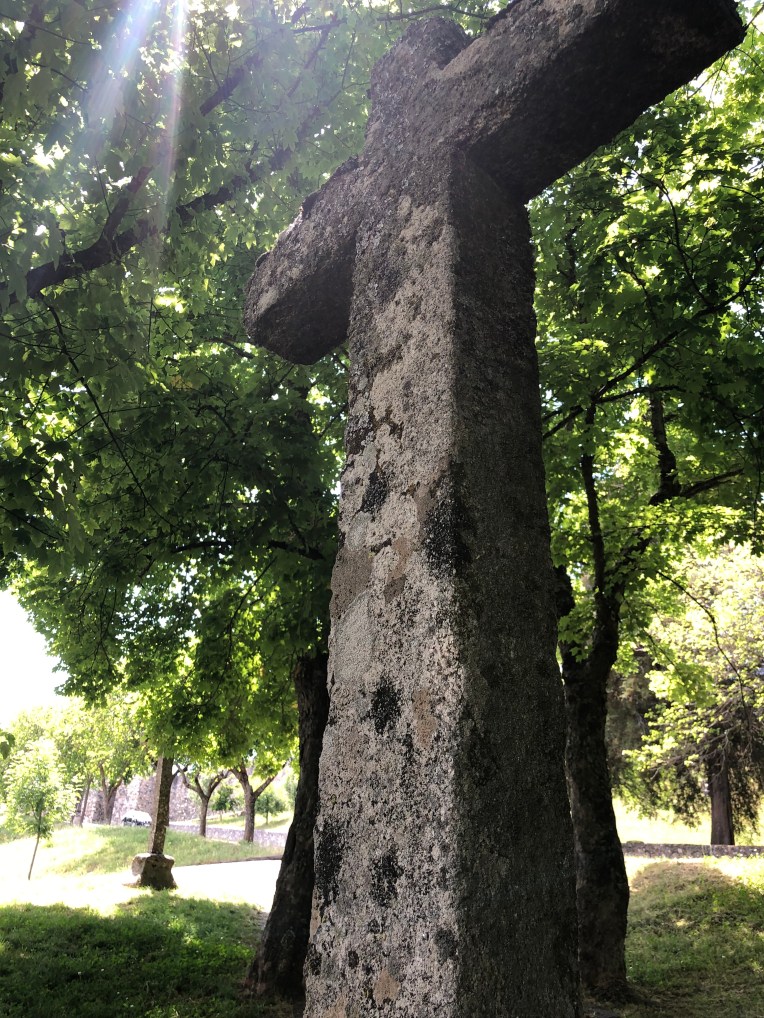
(I counted six old crosses in the short distance between our parking and the old town walls)

When we started travelling one of our favourite things to do was go to the supermarket. Yes, quite strange. (One of my least favourite things to do while at home…) They were interesting, so many odd looking products, so much art on the sardines, so much food we’d never seen before. Then we got used to them. We recognised the food, we became familiar with the layout and we stopped being in awe.

(Statue of D. Fenando outside the walls of the old town)

Except… when we go into small local supermarkets. For one thing they are often in darkness or at least dimly lit, so you have to strain your eyes to see what you’re looking for. It becomes like looking for treasure in a cave or sea glass on the beach. Also, the layout is totally different and it might even span two or three separate rooms. The products are totally different too so you have to pick up more tubs or jars or cans and examine them closely to see if they really are butter or tea (the green tea has finally run out!)

(Flowers in the streets of the old town)

To top it all some of the products are behind the counter and you have to ask for them. This doesn’t happen at the big supermarket. There you can be anonymous and never speak a word until your farewell obrigado as you leave. Here in the small dark supermarket you have to make a stab at communicating. It always turns out well. Mainly because each of us is highly motivated to be understood. I want the food and the shopkeeper wants to sell me the food. It’s a perfect match.

(Narrow gate into the old town)

I got tea, butter, bread rolls, and water all by myself but had to ask for cheese and ham from behind the counter. Way back in Santiago de Compostela (you remember that’s where I got to meet my friend?) in a small shop where everything was behind the counter, I was asking for cheeses but couldn’t make myself understood. I couldn’t see any cheese so pointing wouldn’t work instead I had to look it up on my dictionary app. The shopkeeper took my phone to look at my app because I was doing such a bad job of pronouncing it. Then she taught me how to say cheese in Spanish. I remembered and this is another great thing about Portugal if you know any Spanish the Portuguese will be able to understand you.

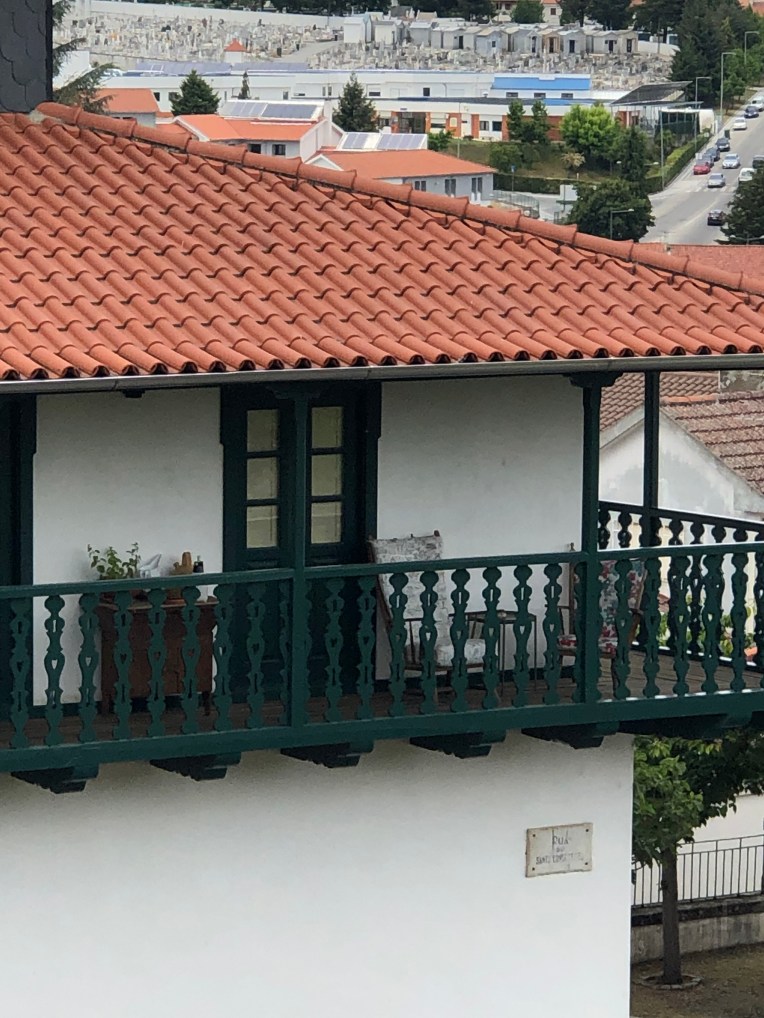
(Imagine. I love this balcony)

Cheese is queso in Spanish, I was pronouncing it queso (qway-sew), it is pronounced kay-zzo. The shopkeeper in Bragança understood me.

Our cupboards are full, Mairead.

(Bragança, free parking, motorhome facilities, toilets nearby, great location near the old town. Great restaurant just inside the walls.)

The Old Town of Bragança

(The castle inside the walls of the old town)

We have arrived at the town of Bragança. We are tired. We have been pushing on to make time for later. We loved this town last year and we promised ourselves we would stay longer this year but this seems unlikely now. So I will enjoy each moment that I am here and perhaps a future visit will be longer.

(Wild flowers flourish nearby)

The weather is warm, the birds are singing and I am sitting on a perfectly placed bench under an olive branch. Fitting… possibly. Behind me is the old town, in front of me the hilly countryside. If I lean a little forward and look left I might see Spain.

(Winding walking path around the old and new town)

This feels like a perfect moment to be mindful. I might have passed all this by if I didn’t realise it was only here for one day, that it is passing. More like we are passing but this experience in this particular town on this particular day is passing. We are also passing and we are passing through. Maybe we are passing ourselves out.

(Farming views)

Every experience changes us or gives us the opportunity to change, the opportunity to do something different or differently. But we do not need to be travelling, seeking foreign lands to have experiences. Every moment is an experience.

(Shady spot inside the town walls)

There’s an opportunity waiting for me here. If I stay awake I will see it. Or hear it. Or feel it.

Don’t pass it by, Mairead.

Optimistic Outlook

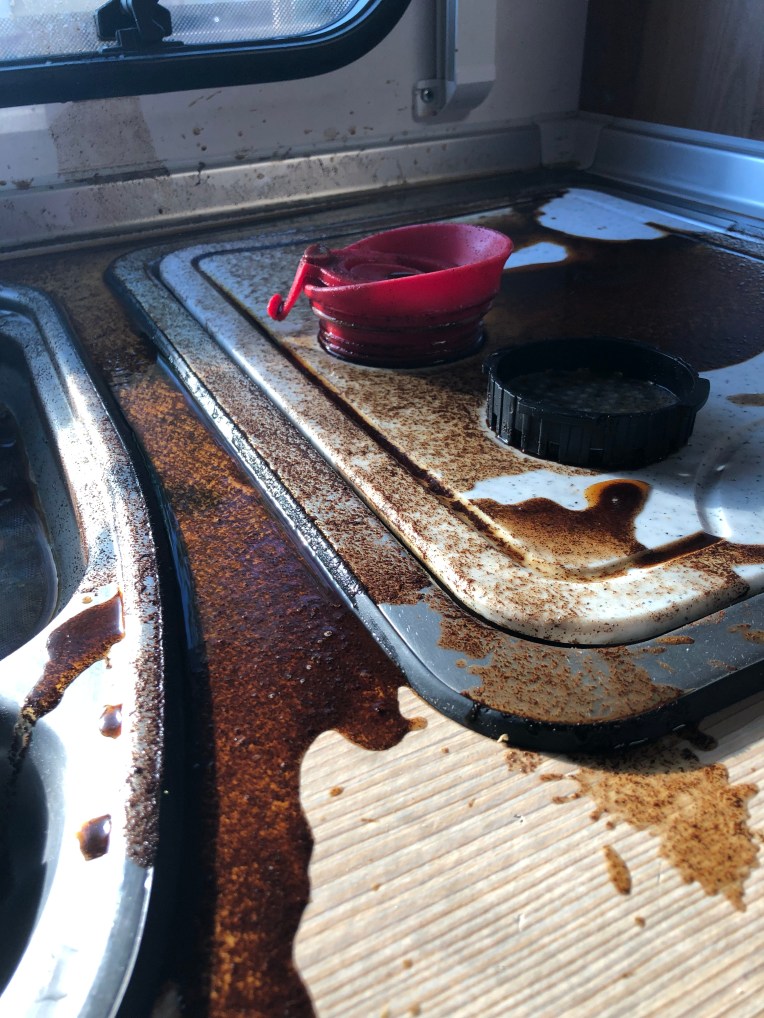
(Bad…? Not too bad…?)

The following morning we left early but not before Denis spilled his coffee. Every morning Denis makes a travel mug of coffee and sips it throughout the day.

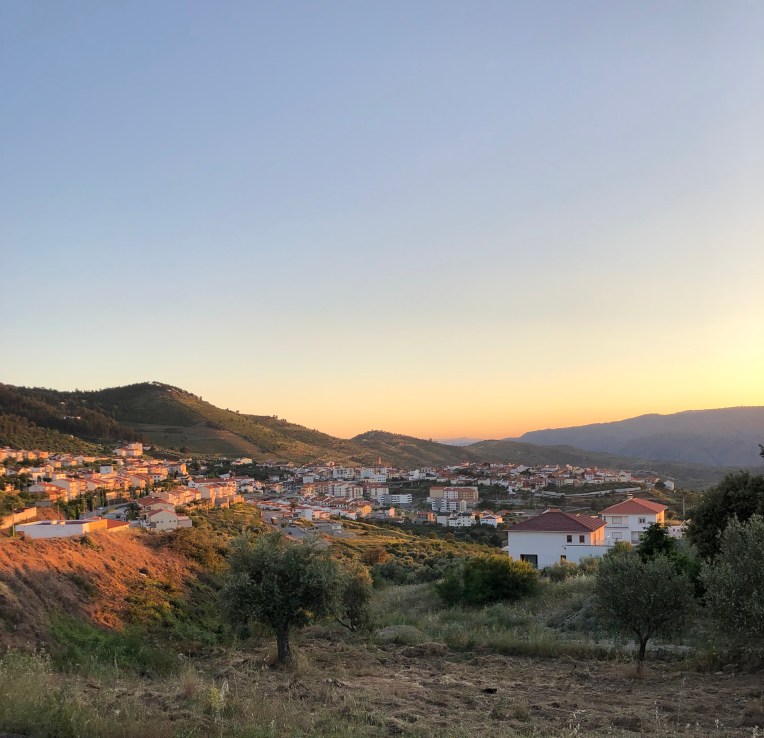
(Sunset in Torre de Moncorvo from our parking spot)

In the early days he used a Nespresso machine but that won’t work with the solar electricity (I don’t understand why…) so now he uses an AeroPress. It’s become a bit of a ritual with him. He boils the kettle, assembles the parts of the press, measures exactly one scoop of coffee with the special scoop, pours in the boiling water, takes the special stirrer and stirs for a precise time.

(Breakfast with a view)

Then he takes a little circle of filter paper, wets it and places it in its holder, then screws the holder onto the press. Another precise amount of time passes and he inverts the press onto the mug. Pressing firmly on the AeroPress shoots the hot water (now turned into coffee) through the paper filter into the mug. Never a problem… until this morning.

(Can you see the tower? Torre?)
I was alerted by the, oh shit!

Are you ok?

I’m fine, just spilled my coffee.

Oh no, is it a big mess?

No, it doesn’t look too bad.

Yes it did look bad. I think this might be the definition of the difference between an optimist and a pessimist. At least it smelled good.

(Sunset makes everything look soft)

Our next stop for the night was the town of Torre de Moncorvo. They have a lovely camper van stop on a hill overlooking the town. We had planned to eat out that night but I was concerned about the gradient… it looked steep. Downhill all the way to town but uphill on the way back. Besides, we had plenty of pot noodle left in the larder. Denis, on the other hand, was looking forward to dinner out, it’ll be a pleasant 25 minute stroll.

(Forty-three!)

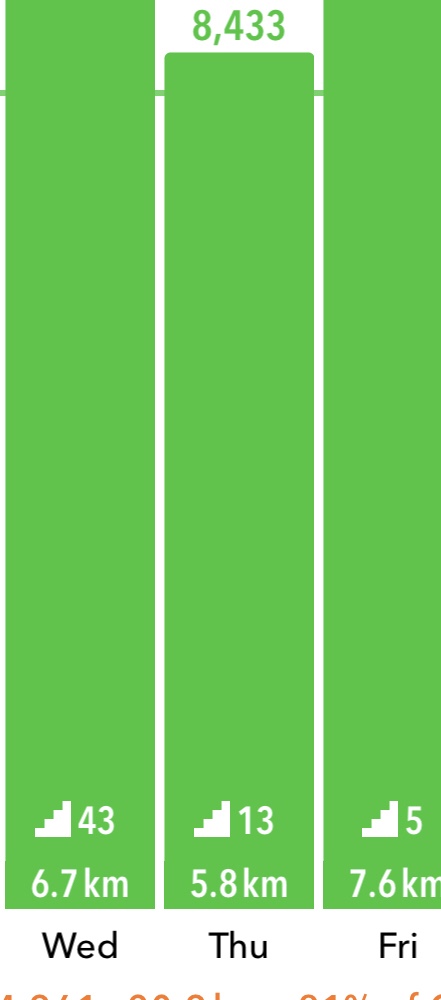
As well as the distance and steps I walk my steps app tells me the number of flights of stairs I climb. Our pleasant stroll was the equivalent of 43 flights of stairs…

I was not wrong about the gradient, Mairead.

(Torre de Moncorvo: Free Parking, toilets, motorhome facilities, picnic tables under shade,. Restaurants a pleasant 25 minute stroll downhill.)

Olive Oil and Wine Tasting

(The road north)

We have travelled a long way since Castro Marim and the Algarve and we’ve seen huge changes in the countryside. This eastern area of Portugal is not as well know as the west or the south but it is truly spectacular. We’ve been speeding through it (not actually breaking any speed limits…) and it deserves much more time and attention.

(Getting closer to the clouds)

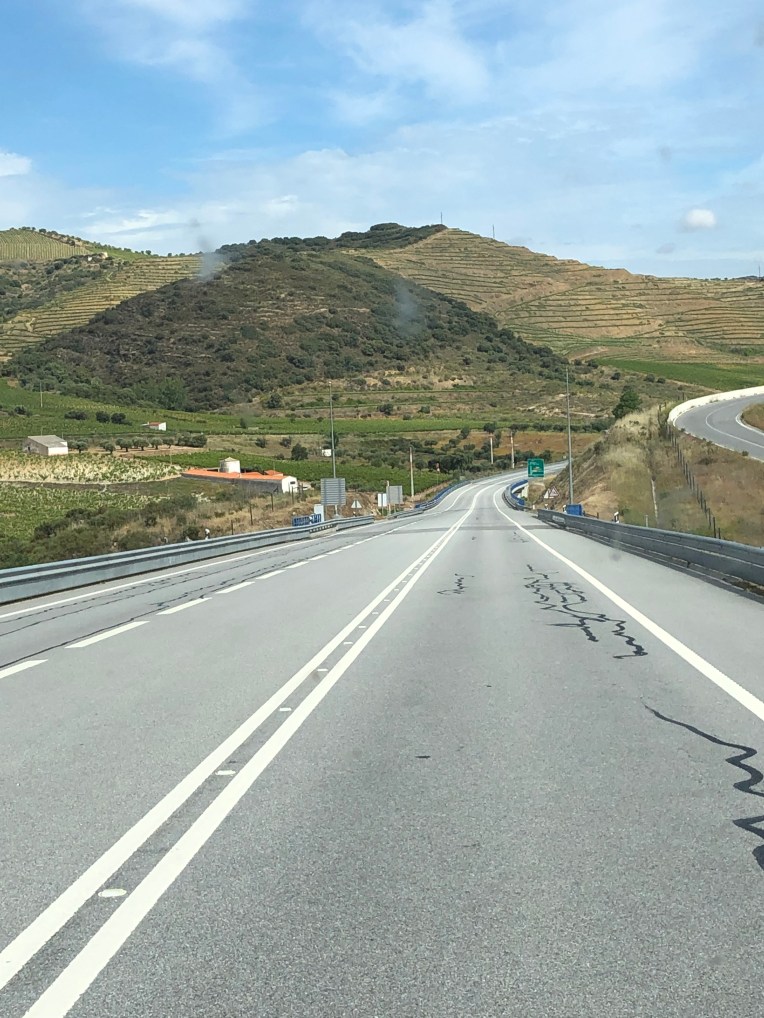
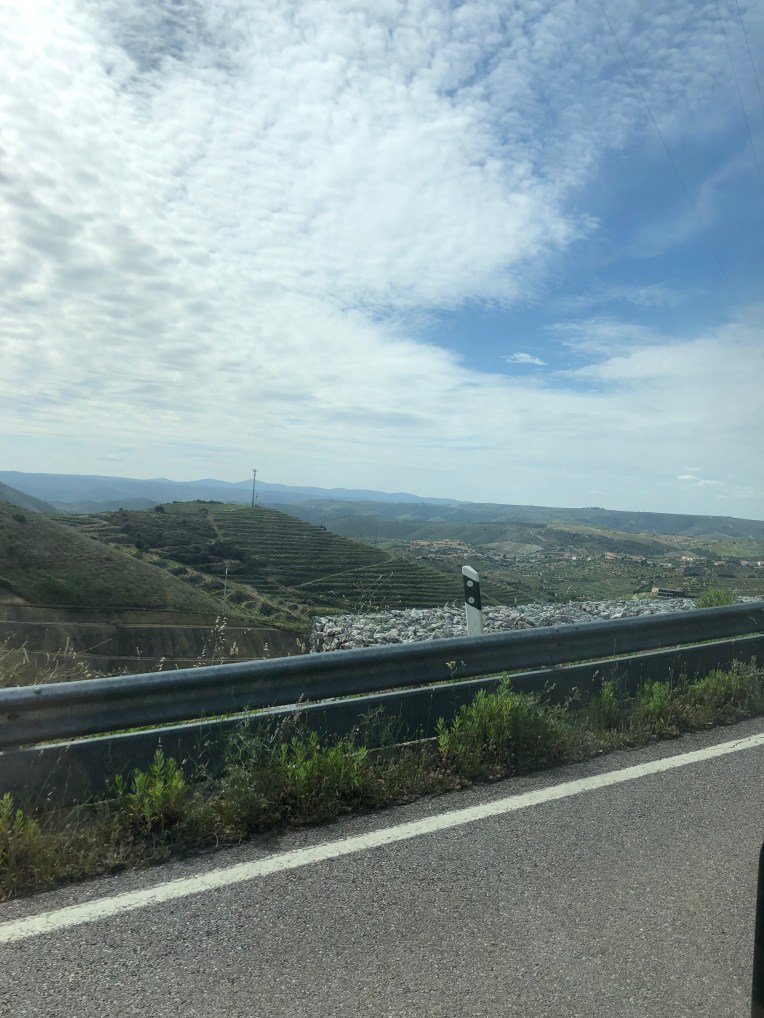
Our next stop was the small town of Freixo da Numão which promised wine tasting and olive oil but no mention of the amazing views on route. The E802 road runs up the east of Portugal and it’s mostly free with amazing countryside views. From time to time you can see little villages or vineyards perched impossibly on a hill side. Or there are enormous rocks like giant’s playthings just strewn around.

(Can you see the road below?)

The sat-nav directed us off the main road with no indication we were about to go up into the clouds. As we wound round and round the hillside we got higher and higher every now and then able to see the road we’d just been on far, far below us. I was torn between awe and frozen fear. Meanwhile the locals thought we were driving too slowly and kept overtaking us on winding bends with sheer drops.

(Shaded seating in the center of Freixo de Numão)

Eventually we reached the top and the town. Parking for the night was beside a sports ground surrounded by wild red poppy plants. Wine tasting would be happening in the evening, there was work to be done first. I had a plan bubbling away inside my head about compiling the trip’s blogs into an ebook and Denis was busy with client work.

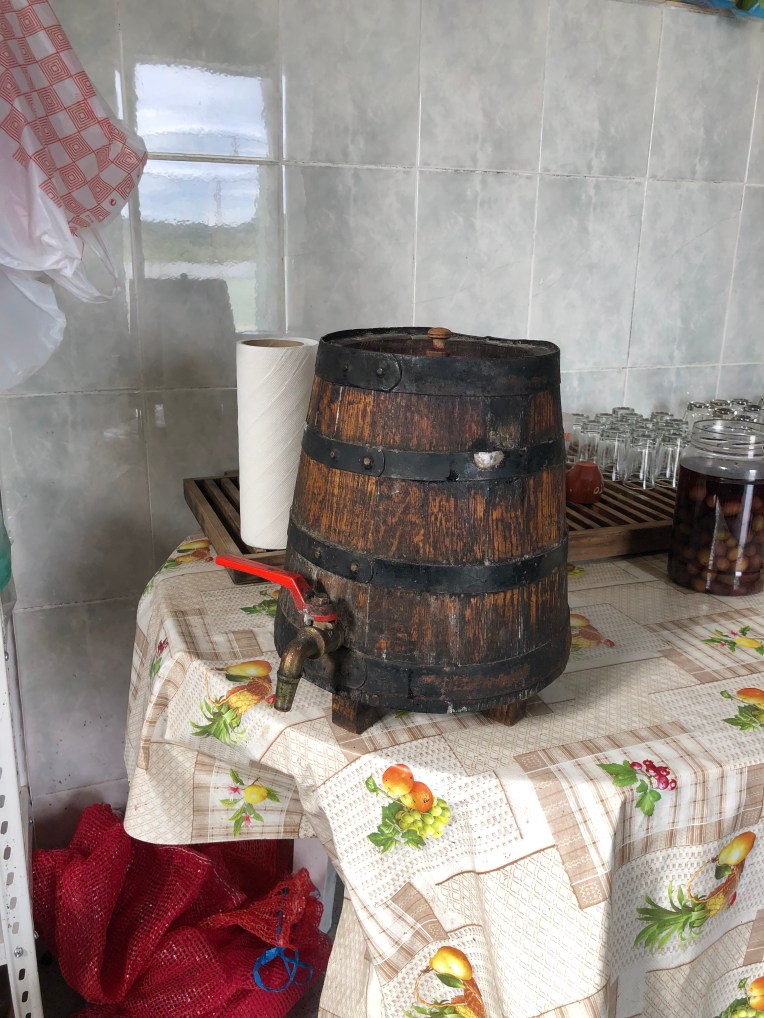
(That’s a barrel of port)

At six-thirty there was noise outside, the time had arrived to taste the wine. We followed the other campers to a shed under the sports stands. Our host had little barrels of port, boxes of wine, olives and olive oil. The other campers were French and Belgian and our host had lived in France for a few years so French was the common language.

(The olives were amazing)

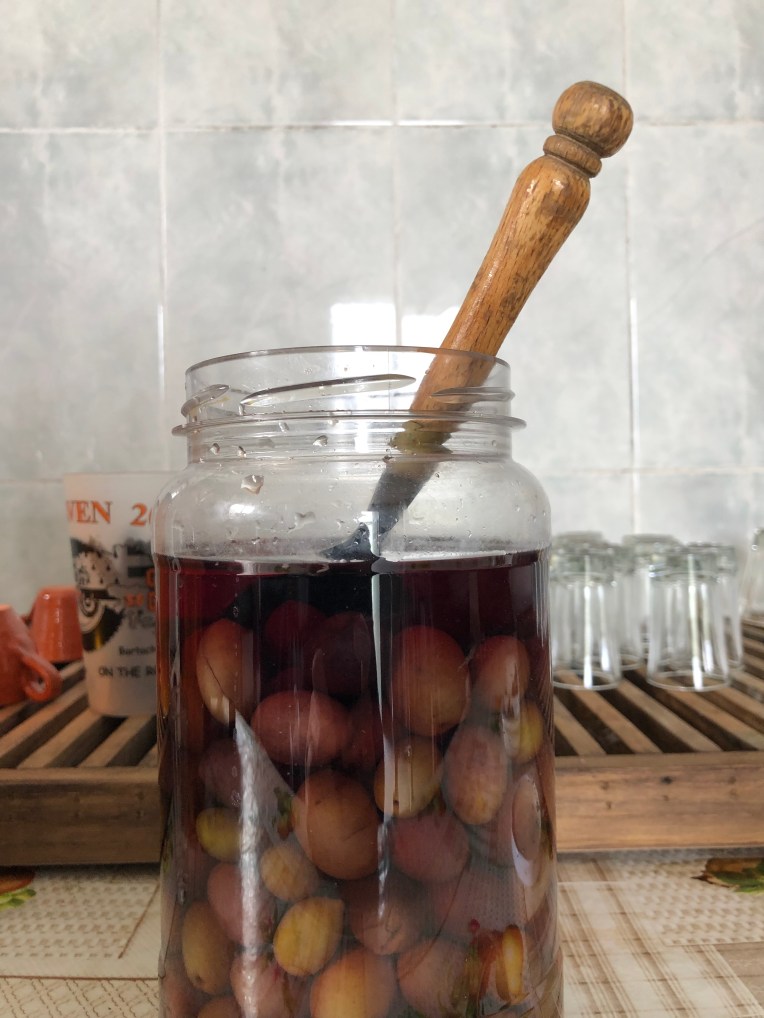
We were a little out of our depth but Denis bravely tried the wine and even the port. I tasted the olives and they were so good I found a way to purchase them in French. I also accidentally purchased 5 litres of olive oil… the precise volume required getting lost in translation.

Anyone for a share in my olive oil barrel? Mairead.

(Freixo de Numão: Parking €5 includes electricity and water. Small shop and bakery about 15 minutes walk down the hill. Wine tasting each evening around 7pm)

Bird Song and Frog Croaks

(Park here… this one’s in Spanish but the picture is always the same)

Sunday is the day we travel the longest so from Évora we travelled three hours to a camper van parking spot called Penamacor in Benquerença which is in the middle of the countryside. We passed through small mountain villages, along narrow roads following parking signposts.

(Lovely lavender growing wild)

When we arrived it was full of camper vans and motor homes and there was a spot for us beside the river. The temperature was high but there was shade. With the solar panels we don’t normally park in shade but as we’d been travelling for hours our battery was full.

(Can you hear the frogs?)

We parked up and went for a walk. There was a little bar on the other side of the river over a foot bridge. I’ll remind you this was in the middle of the country, nearest tiny village probably 5km. In the height of summer the river gets diverted and you can swim here, there’s also a playground. There were plenty of people inside the bar and on the deck outside. The waitress had no English but we managed to be understood.

(Sun-bleached table)

Afterwards we walked along the deserted country road and a dried mud lane to another bridge. This is olive farm land with small holdings and what looks like hand-ploughed fields. The only sounds the birds singing and the frogs croaking.

(Wild flowers by the side of the road)

Denis barbecued chicken outside and we were asleep before ten. Next morning we left early.

Note to self: Spend longer here next time. Mairead.

(Free parking, free motorhome facilities, free rustic toilets and shower, near bar.)

Weird chapel in Évora

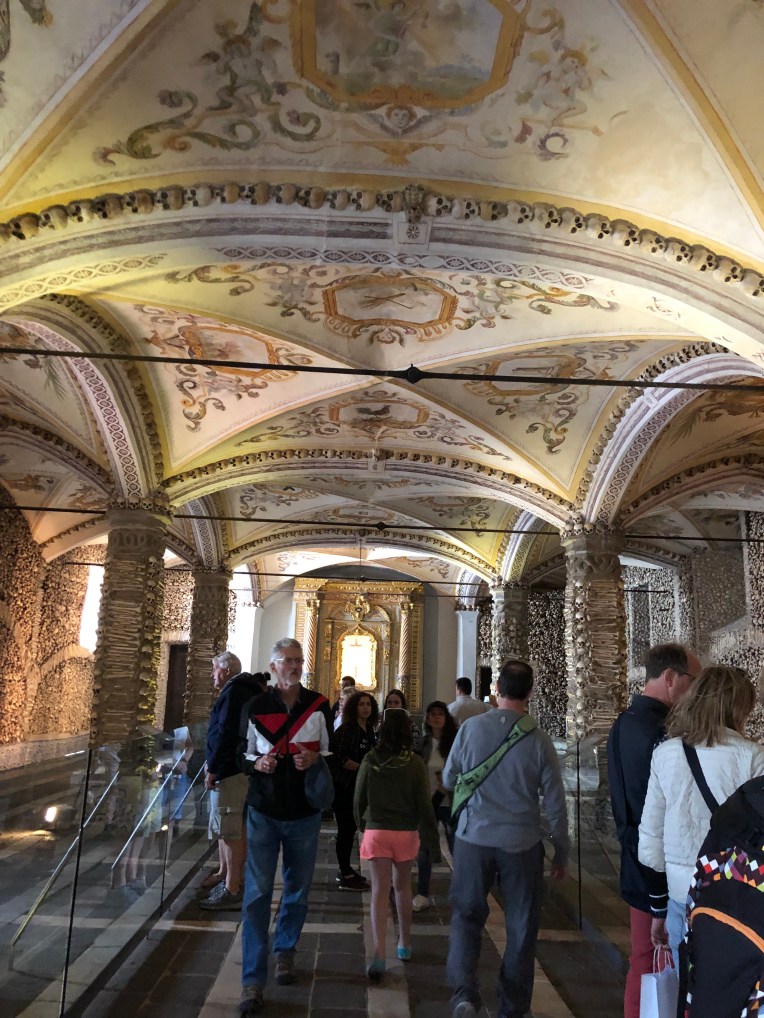
(The Chapel of Bones)

Next morning we drove up the road to Évora. It was a hot dry Sunday and we were on a mission. Two missions really. Denis had heard about the Chapel of Bones and wanted to see it. I wanted to find a souvenir to remind me of storks when I was at home.

(The words above the door: We bones that are here are waiting for yours...)

First the chapel. Of bones. Yep real bones and skulls. Thousands of them. The chapel was built and decorated in the 1600’s. Seemingly it was a popular thing to remind the living that they would be dead soon. There are words over the entrance that read, We bones that are here are waiting for yours.

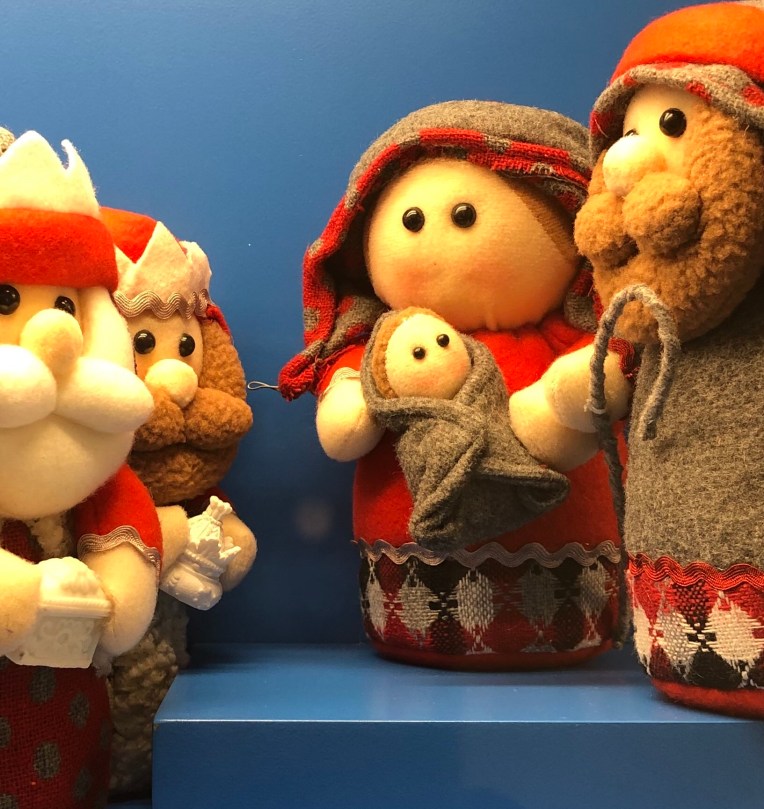
(Cute knitted Christmas scene)

Upstairs is a little more jolly. There’s a huge collection of Christmas cribs from all over the world. Some are adorable. I particularly liked the ceramic ones and the knitted ones. Évora has been a town since Roman times and there a Roman ruin in the center along with plenty more recent cathedrals and churches.

(And a ceramic one. This is my favourite, the parents can’t take their eyes off their baby)

After the bones it was time for my mission… a stork to take home. First of all it was not easy explaining to the various shopkeepers what I wanted as the word stork is not Portuguese and I didn’t know the Portuguese word. Fortunately, I have hundreds (very slight exaggeration) of photos of storks on my phone and I was able to show them pictures. Ah cegonha… (sounded like the actress Sigourney Weaver) they would say, followed by, No.

(View of Évora from the roof )

No stork souvenirs. I tried nearly twenty little tourist shops and then gave up. On the way back to our parking spot we stopped for an ice cream and while I was sitting there I noticed a shop I hadn’t tried. Couldn’t leave the last tourist shop unchecked so I went in. They had one! Not entirely attractive. No, let’s be honest, a completely terrible likeness for the beauty that is a stork.

Yes, I bought it. Mairead.

(Évora: free parking, 15 minutes walk to center of town, free water)

Balancing in Beja

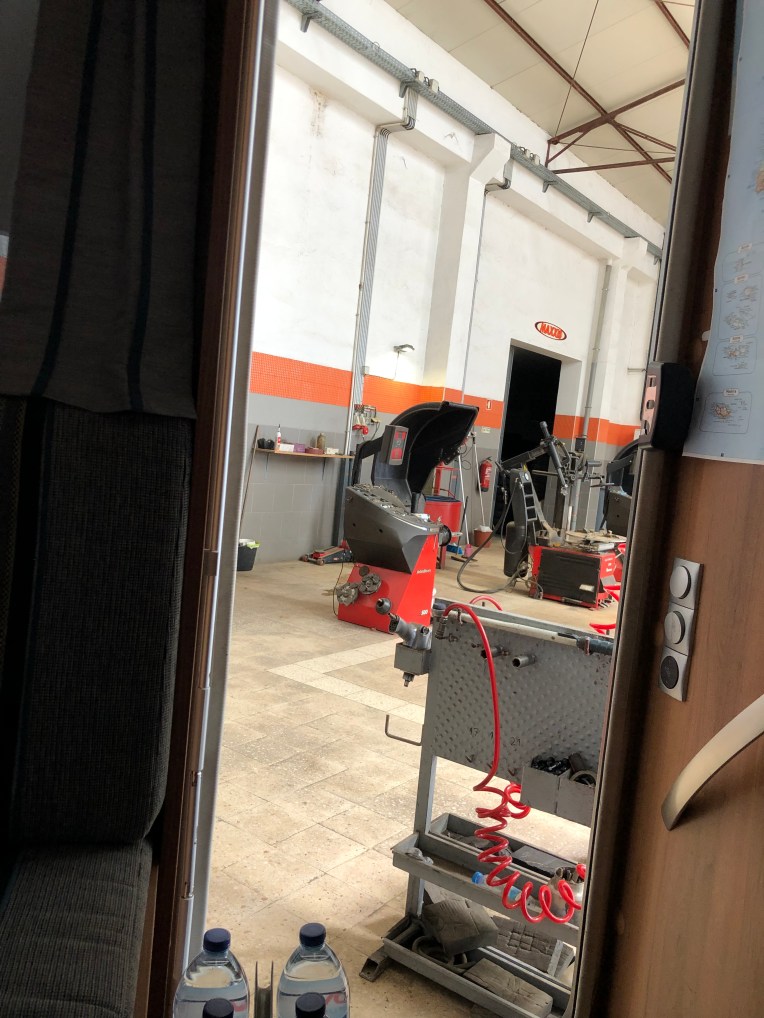
(From inside Ruby inside the garage)

We got to the garage in Beja and Denis talked to the very nice man on the desk. Big and all as the garage was they couldn’t fit us in (maybe to their diary) but he did have a solution. He sent us to another garage to get our wheels balanced.

(The balancing man)

It worked. Ruby is no long shaking, she has found balance. While we waited I was transported back to my childhood. My Dad had a petrol station with a tyre repair garage and I remember watching him or Dick (who worked there) balance wheels. It was labour intensive work. They have fancy machines now in the garage in Beja but it’s still work.

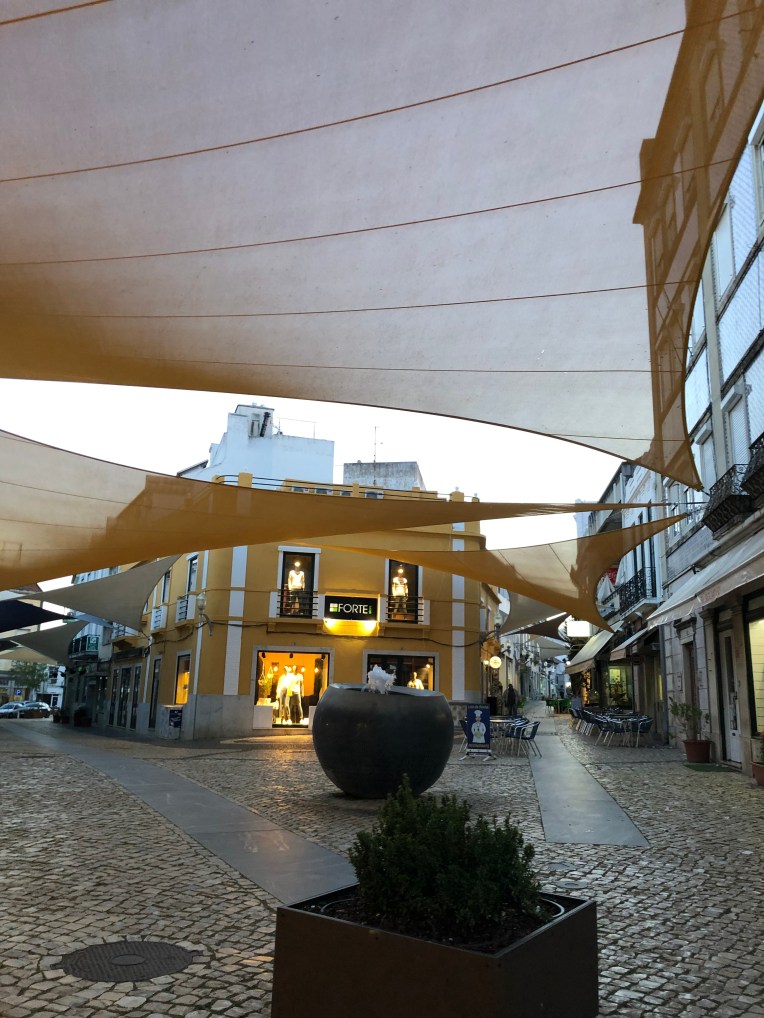
(Bunting over the streets in Beja)

Afterwards we booked into the municipal campsite. I had a fun time bleaching our tea towels before we went on a mission to find dinner. We’d had a lovely meal in a tapas restaurant last year so we went off to relive that. It was closed. We rambled around Beja in the fading light looking for a replacement.

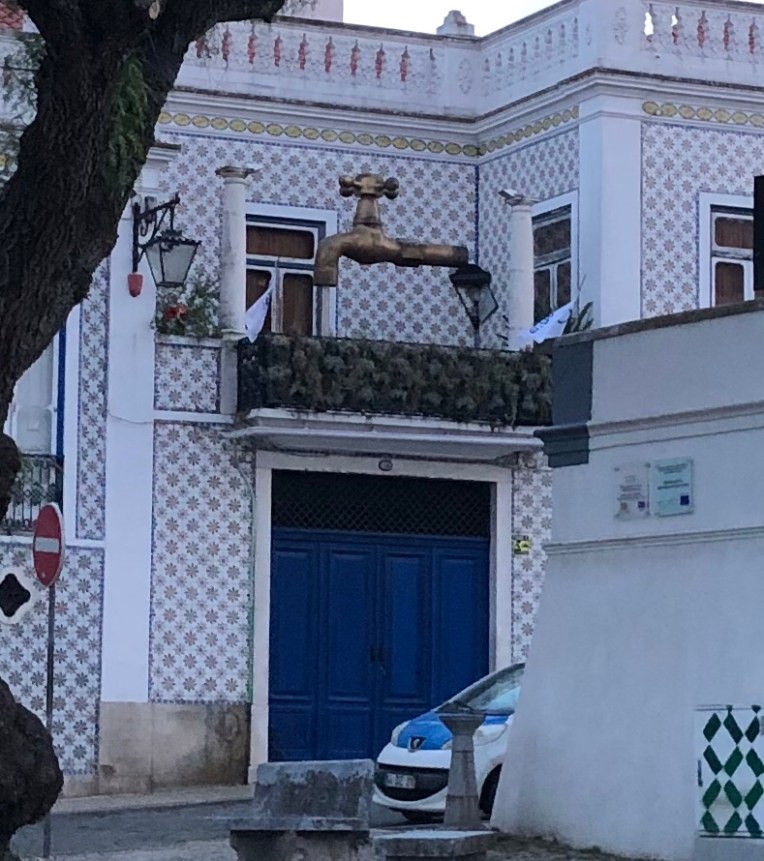
(There’s a tap up there!)

Denis loves Chinese food, especially if it’s an all-you-can-eat buffet. I do not. Not because it’s not yummy. No, it’s because of the temptation of the sweet section and the pancake section. Desert is my favourite meal. Also, I’m too embarrassed to keep going back to the buffet and I never put enough on the plate to begin with. I might be the only person who leaves an all-you-can-eat buffet hungry. We found a Chinese restaurant, it was open, it was not all-you-can-eat. We ate moderately.

Balance in all things, Mairead.

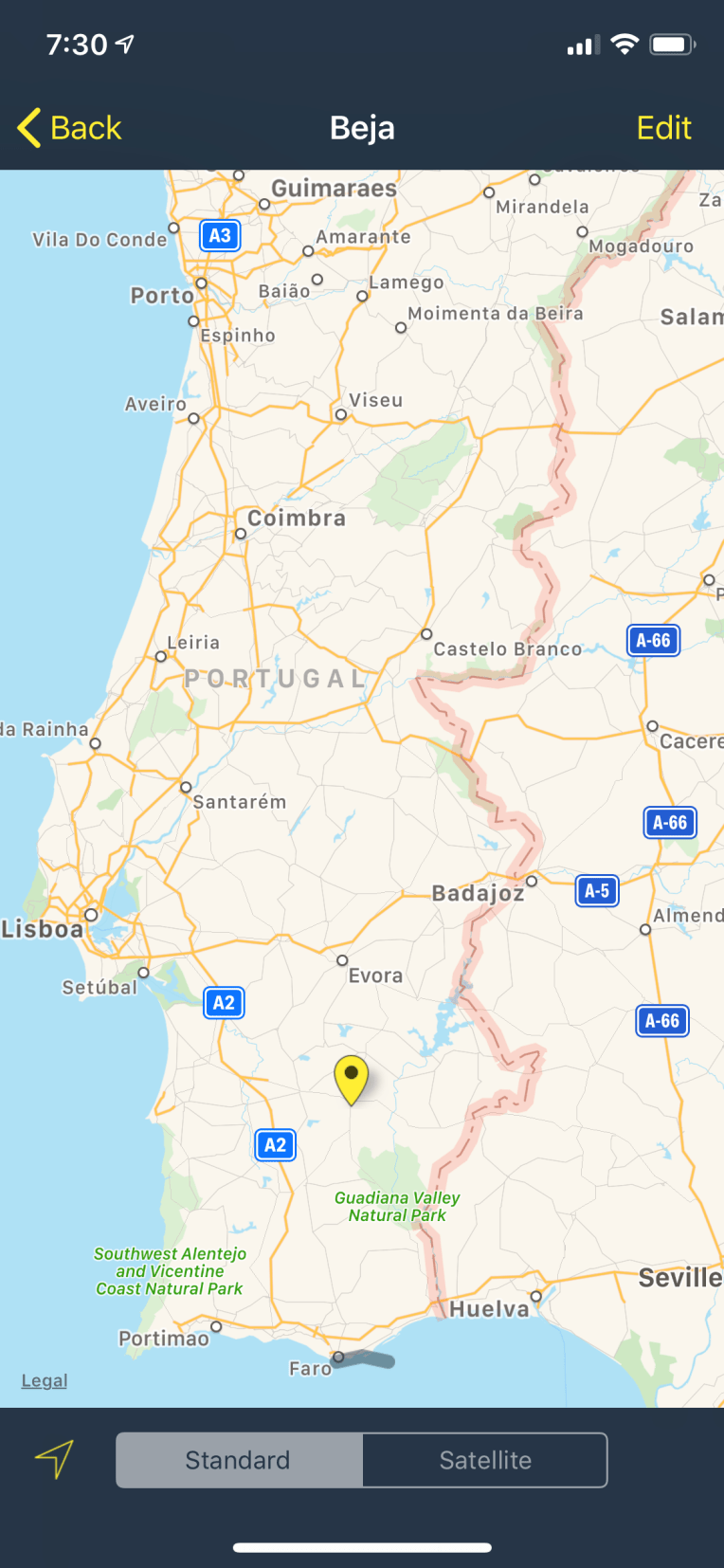
(Beja: Parking, toilets, showers, water €12)