The Botanic Gardens in the rain.

27 9a

(The Botanic Gardens in Dublin)

I went to visit the Botanic Gardens in Dublin last Monday. Although it’s less than an hour away I’d never been before. Not for the first time I’ve contemplated going on holidays to my own house and discovering what the area holds…. but that’s for another time. Monday’s visit was in connection with a course I’m attending.
27 9f

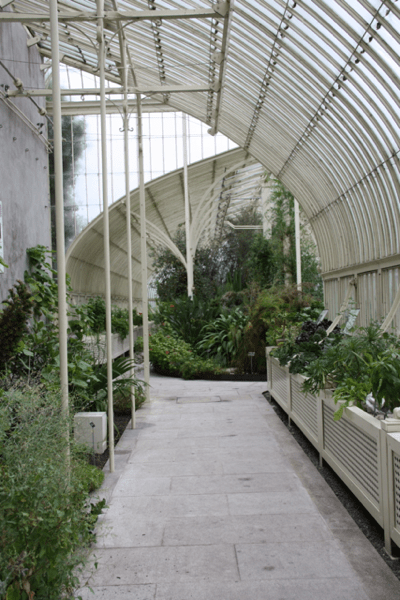
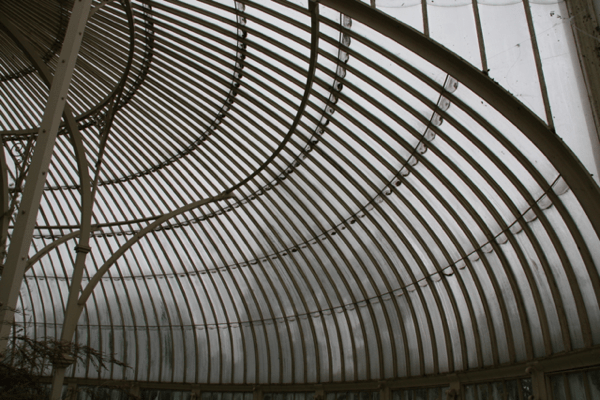
(Beautiful shapes in the glasshouses)

It was a cold, wet day but because of the huge glasshouses there’s plenty of inside space. Also, I had my umbrella for the sprints between glasshouses. Unlike my usual tours this one wasn’t about the place. I don’t know who created this beautiful place. I don’t know how old it is. I don’t know how many acres it spans. This tour was about noticing what’s here…. now.
27 9g

(More beautiful shapes)

There was an art exhibition in a big room over the restaurant (there was lovely sweet potato soup in the restaurant). There were huge plants in the Palm house. There were fly-catching plants in another glasshouse… and there was lots of soft rain.

27 9c

(Unusual plant attached to tree bark hanging from a post)

My assignment for my coursework was to take pictures of, and to sketch…. the things that attracted me. Taking pictures was easy, sketching not so… but half the work is taking out the pen and paper and starting…. and quarter of the work is getting over the shame when your sketch looks nothing like the object you’re sketching……

Start… now, Mairead.

The rainy season has arrived…. time for a story change!

25 9a

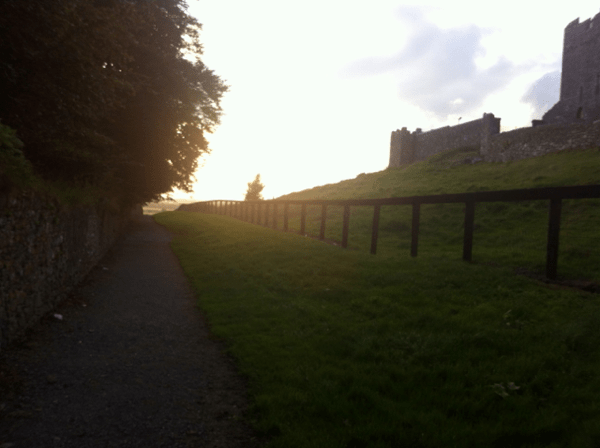
(Lovely day in Cashel, Co. Tipperary on Saturday)

It rained all day yesterday and it looks like it’s ready to do the same today. As always it’s funny how I get used to the weather and think it’ll never be any other way…. then it changes. At the weekend it was dry a little cold and sunny, I thought that was going to last, in fact I can’t remember where I put my rain coat and I don’t remember when I last needed it. It’s like the story of our lives…..

25 9b

(Livestock in the grounds of Cashel Palace enjoying the sunshine)

When we’ve got past childhood and we’re making our way in the world we take with us lots of goodies. We’ve got skills like cooking, organising, speaking French, etc. We’ve got lots of baddies too, like nail-biting, eating with our mouth open, etc. And we’ve got our story. The story that defines us, tells us and the world who we are. Trouble is we are not completely aware of our own story. We’re not completely aware of the story of others either but at least we see their behaviours.

25 9c

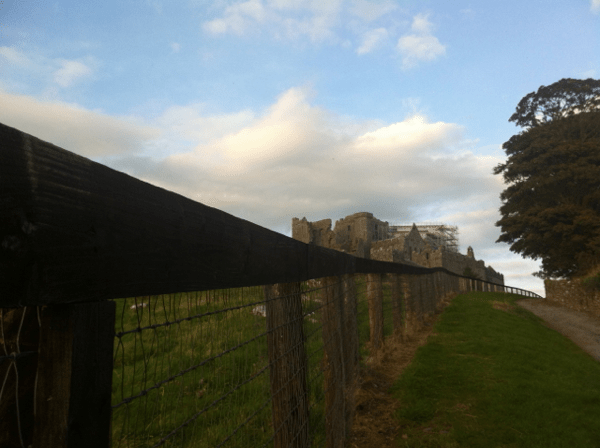
(Evening walk beside the Rock of Cashel)

When someone’s behaviour includes repeatedly putting themselves down, you can be sure their story includes a reason to be put down. When someone repeatedly allows others to bully them you can be sure their story includes them as the victim. When someone repeatedly makes fun of themselves, you can be sure their story includes the fool. But there’s good news, we can rewrite the parts of the story we don’t like, the parts that we notice when we notice our behaviour.

25 9d

(Fence post perspective)

We don’t change it by putting ourselves down – that’s just more of the old story. We change the story when we are inspired. When something lights you up, lifts your heart, or just plain interests you – wallow in it!  Play with it. Allow it to inspire a different story.

What lights you up? Mairead.

Helen Kearney’s welcome home.

16 9l

(Picture of Helen Kearney in London. Source: Scott Heavey/Getty Images Europe)

I have more photos and things to say about Canada but first I want to tell you where I was on Saturday afternoon. I went to join hundreds of others in Dunlavin, Co. Wicklow, to welcome Helen Kearney home from the Paralympics. She won three medals – two bronze and one silver – in Equestrian Dressage and she got to meet Ryan Tubridy on the Late Late show!

16 9d

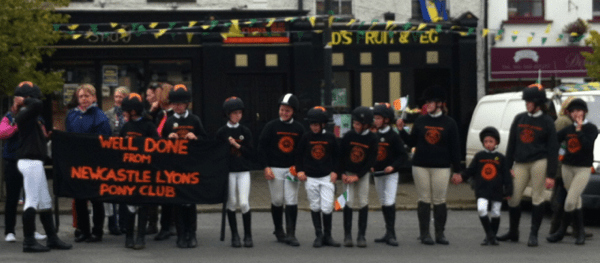
(Some of the supporters. When she was younger Helen was in the Newcastle Lyons Pony Club)

Helen has a progressive degenerative disorder called Friedreich’s Ataxia and when she was diagnosed at the age of twelve her parents did something amazing – they bought her a horse. I’ve known Helen’s mum, Mary, since I was little – she’s my cousin – so it doesn’t surprise me but it does inspire me.

16 9h

(Supporters came from Hollywood… Co.Wicklow)

I arrived early on Saturday as the groups of supporters were getting ready. There was great excitement and pride and everyone was smiling. Bunting had been stretched across the street and between the houses and almost every window displayed a picture of Helen. I had forgotten to bring my camera but had my phone – the pictures are a bit fuzzy.

16 9j

(At the GAA club, speeches and clapping… lots of clapping)

The celebration began with a parade of horses and ponies and vintage cars and local groups, and it seemed like the whole town had turned out. We followed the parade to the GAA club and there were speeches and presentations and even poetry. The community of Dunlavin had organised the event and had baked cakes and buns so after the speeches we retired to the club house to drink tea and eat the cakes.

16 9k

(One of the cakes, yum)

It was lovely meeting up with my cousins and my aunt Brigid (Helen’s granny) to celebrate a brilliant achievement and an inspiring young woman. Oh and I nearly forgot while she was in London competing Helen also graduated in absentia from University College Dublin with a Bachelor of Commerce!

Thank you Helen, for following your dream, Mairead.

The passionate (and very funny) guide from Fort George.

12 9a

(Everything in Canada is in English and French)

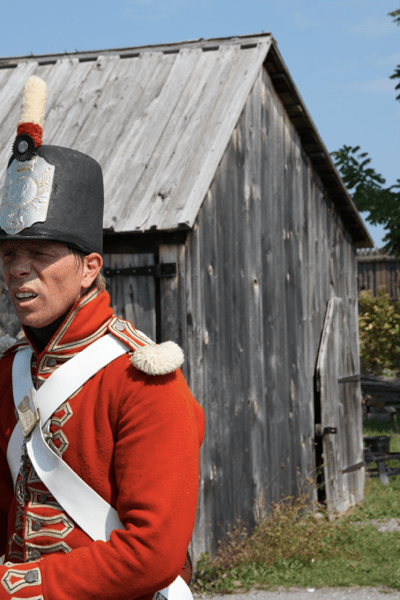
After the power station we went to Fort George, (you can watch a video about its role in the Canadian (British) – American war of 1813) an old British Army Fort. The original fort was constructed in the late 1700’s but had fallen into disrepair by 1815. The present buildings were constructed in 1937. All the buildings are wooden and very pretty. When we arrived the tour had already begun so we ran to catch up with it in the barracks. This is where the ordinary soldiers lived. It was one big room with bunk beds. Soldiers had a really hard life and had to sign up for seven years with little pay and not much comfort. Often they had to stay a further seven years to pay outstanding bills possibly for their uniforms, losing even a button was costly and had to come out of wages.

12 9c

(The background)

The officer’s quarters were much better and they had a much better life, as it was the rich who became officers. (In wealthy families the first son inherited the estate but the second and subsequent sons were given money to buy a job!) They could also pay for good food. While the ordinary soldiers had watery stew for dinner every day, the officers had six courses, often with foods imported from Europe.

12 9d

(Pretty…)

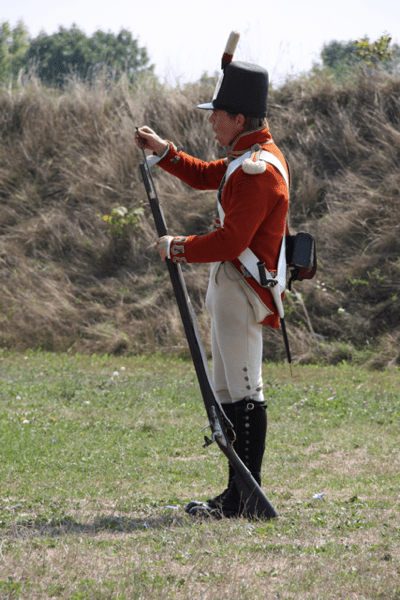
After the tour we were sent out to watch a demonstration of a musket by a really amusing guide. He was obviously passionate about his job and went into great detail telling us about how a musket works and then demonstrating it. Turns out it doesn’t work very well… it misses more often than it hits; it creates a huge smoke cloud when it’s fired, bit of a problem for camouflage; it takes at least half a minute to load one shot; it’s very heavy. But at the time (1800’s) it was the best they had and everyone had the same disadvantages.

12 9g

(Our musket guide)

He told us stories including one about the time he (accidentally) pushed the bayonet into his finger and had to go to the hospital still dressed in his red uniform. When the demonstration was over the assembled crowd didn’t want to leave, we were all smiling waiting for another story and he seemed to be enjoying himself too!

12 9h

(His funny face!)

Was it Confucius who said “Choose a job you love, and you will never have to work a day in your life“? In the end we left because the temperature was hitting thirty degrees and we were off to the beautiful town of Niagara on the Lake.

Choose a job you love! Mairead.

Japanese Gardens Co. Kildare

23 8a

(The Bridge of Life)

Yesterday we went to the Japanese Gardens. Our admission included a tour of the National Stud (horses) but we just went for the garden and the food. We arrived around midday and it was busy, tour buses and families. Ok everyone with the tour stand by the wall. As luck would have it there was a torrential rain shower as we got our tickets so we had an early lunch. Back in the garden it as a bit too busy for photographs, each time I lifted the camera to point at something picturesque a little one ran up to it. Look Gran-Mam, look at the stone!  But I got a few.

23 8c

(Couple of swans preening at the lakeside)

The garden symbolises the Life of Man. At the entrance you have the choice between the Easy Path and the Rugged Path. Of course we took the rugged path and before long were slipping and sliding on slick wet stones. Maybe the easy path would have been just fine….. We struggled on through the Cave of Birth – tight fit, the Tunnel of Ignorance – dark and wet, the Hill of Learning – more slipping and arrived at the Engagement Bridge. There’s a gap in the bridge and you have to leap (very small leap) across. On the Honeymoon Path there’s a Difference of Opinion and the path separates…  We bravely climbed the Hill of Ambition and arrived at the Chair of Old age.

23 8b

(Entrance to Fiachra’s Garden)

As the sun was still shining we decide to have a look at the Stud or at least the paddocks with the mares and foals, but it was not to be… another shower had us sheltering in the Beehive Monastic Cells. These are modelled on a monastic site found at Skellig Mhichil, off the west coast. A bit dark but very dry we sheltered with a few of the families. This was Fiachra’s Garden. Fiachra was a 6th century Irish monk who left Ireland and founded a hermitage in France. He encouraged manual labour, gardening and giving to the poor  and is the French patron saint of gardeners. His garden here was designed to make us think of this man (and many more like him) who followed a path of adventure inspired by their passion.

Paths can be slippery – be aware! Mairead.

Hit the nail… not the thumb!

20 8c

(Love my little empty frame)

I was hanging some picture frames on the kitchen wall yesterday. I think it took me two hours but the time flew and my mind wandered to thoughts of “noticing what’s right“, again. Putting my attention on what’s wrong is like hitting my thumb with a hammer…. when what I want to do is hit the nail.


20 8b

(Some of my finished wall… Look Nolene it’s your painting!)

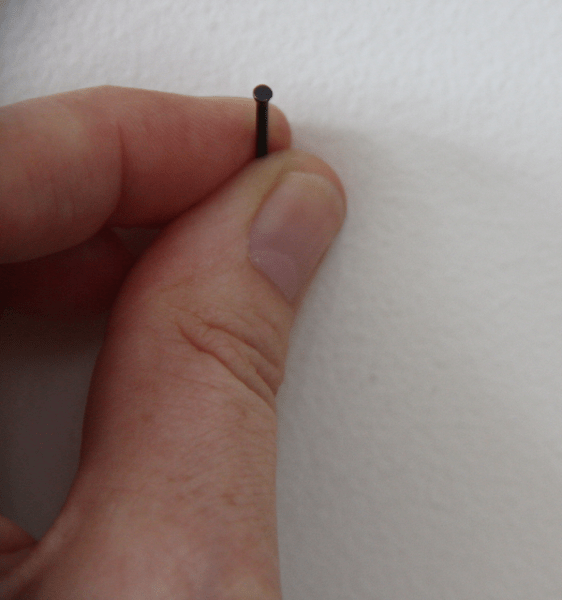
We’ve all had the experience of hammering a nail into a wall. When I was being shown first by my Mum or my Dad, I can imagine I was hyper excited to get the hammer into my hands. It looked so easy and such fun, whacking a bit of metal and making loads of noise. I held the nail in one hand and the hammer in the other and took a big swing… and hit my thumb!


 20 8a

(Hit the nail, hit the nail!)


From that moment on it was no longer fun… I watched my thumb like a hawk and each time I aimed for the nail I was looking at my thumb. Of course I hit it again. After that first lesson it took me a while to go back to hammering a nail and it never seemed as much fun….

20 8d

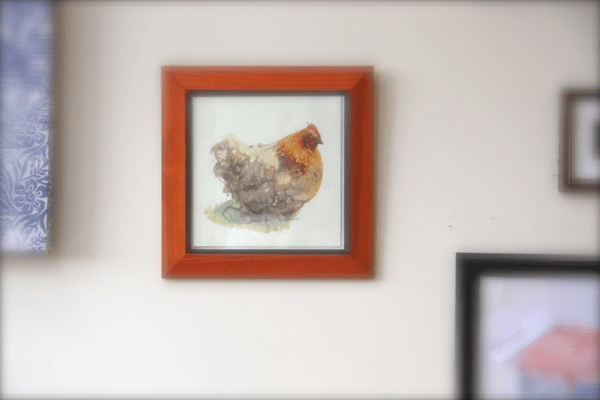
(Hen picture… Look Ciara it’s the charity shop frame!)

Put your attention on the nail – the thing you want to hit! That might be good grades, or good health. It might be a life purpose or employment. It might be a holiday or friendship or even peace. If you continuously worry (i.e. think about) the opposite – bad grades, ill-health, lack of purpose, unemployment, no holiday, no friends, war – then that’s what you’re aiming for.


You don’t want that do you? Mairead.


A Town of Runners – beautiful.

16 7a

(Remembering my girls)

Last night we went to see a beautiful movie  – A Town of Runners. It was set in Ethiopia, in a small town called Bekoji. There was only a dirt road from the town so it has stayed small. The story is told by a boy who works in his grandmother’s small shop. The one thing that is not small about the town is the number of successful runners that have come from here. When the movie was completed in 2011, there had been eight olympic gold medal winners, ten world records and thirty-two world championships won by people from Bekoji. Not small at all.

31 7c

(The path to our dreams is not always straight)

The movie is about two friends Hawii and Alemi. Hawii loved winning races and was happiest when she was first and Alemi was second…. She was fourteen when she said this and her honesty was touching, she loved when her friend did well, but there was only one winner and Hawii wanted to win.

31 7a

(Broad Beans)

Then there was the coach. The man who trained those successful athletics was called coach throughout the movie so I had to look up his name, Sentayehu Eshetu. He trains the children in this town and continues to train them until an athletics club from a big town picks them for their team. That’s the dream, to get chosen, just like the young Irish boys wanting to be picked for their favourite English football club. He smiles a lot, he is very respectful and the runners love him. He is on their side. He also has rules. At one point he has them pulling weeds and clearing grass from their running track – a red clay circle in a field with a shed for coach’s office. There is sadness in the movie also when the dream becomes difficult for Hawii.

31 7d

(Water… we complain about rain but we need the water)

This movie shifted my outdated perceptions of Ethiopia. My memories of Live Aid in the eighties and the images of famine had drawn a detached, far away, not-my-world, picture that I held as true. Watching A Town of Runners I felt a connection to these girls, to their hard-working parents, their grandparents, to their coach. When they were clearing the weeds from the track I was remembering my weeds. When Hawii’s grandmother was worried about Hawii, I was remembering being worried about my children. When Alemi’s father was harvesting a vegetable crop, I recognised it as broad beans and was remembering my time in the wilderness. When a hen scratched in the red clay, I remembered my girls – the hens.

Movies can do that, shift your perceptions. Mairead.