The passionate (and very funny) guide from Fort George.

12 9a

(Everything in Canada is in English and French)

After the power station we went to Fort George, (you can watch a video about its role in the Canadian (British) – American war of 1813) an old British Army Fort. The original fort was constructed in the late 1700’s but had fallen into disrepair by 1815. The present buildings were constructed in 1937. All the buildings are wooden and very pretty. When we arrived the tour had already begun so we ran to catch up with it in the barracks. This is where the ordinary soldiers lived. It was one big room with bunk beds. Soldiers had a really hard life and had to sign up for seven years with little pay and not much comfort. Often they had to stay a further seven years to pay outstanding bills possibly for their uniforms, losing even a button was costly and had to come out of wages.

12 9c

(The background)

The officer’s quarters were much better and they had a much better life, as it was the rich who became officers. (In wealthy families the first son inherited the estate but the second and subsequent sons were given money to buy a job!) They could also pay for good food. While the ordinary soldiers had watery stew for dinner every day, the officers had six courses, often with foods imported from Europe.

12 9d

(Pretty…)

After the tour we were sent out to watch a demonstration of a musket by a really amusing guide. He was obviously passionate about his job and went into great detail telling us about how a musket works and then demonstrating it. Turns out it doesn’t work very well… it misses more often than it hits; it creates a huge smoke cloud when it’s fired, bit of a problem for camouflage; it takes at least half a minute to load one shot; it’s very heavy. But at the time (1800’s) it was the best they had and everyone had the same disadvantages.
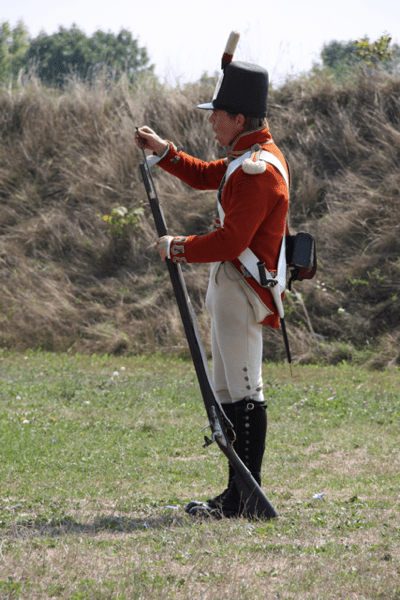
12 9g

(Our musket guide)

He told us stories including one about the time he (accidentally) pushed the bayonet into his finger and had to go to the hospital still dressed in his red uniform. When the demonstration was over the assembled crowd didn’t want to leave, we were all smiling waiting for another story and he seemed to be enjoying himself too!
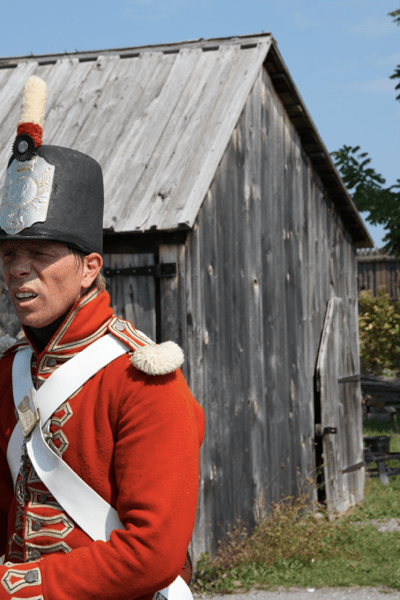
12 9h

(His funny face!)

Was it Confucius who said “Choose a job you love, and you will never have to work a day in your life“? In the end we left because the temperature was hitting thirty degrees and we were off to the beautiful town of Niagara on the Lake.

Choose a job you love! Mairead.

Friday Quote – You can do it!

07 9a

(You see that dot on the picture? That’s a man walking a tightrope between two (very tall) buildings in Niagara….)


“People become really quite remarkable when they start thinking that they can do things.”—Norman Vincent Peale


Our last day on holidays, we’re flying home tomorrow with lots of memories and tons of photos. Thank you Canada – you’ve been great! Mairead.


Walking in Delgany Graveyard.

27 8a

(One of the oldest gravestones with the sunburst motif)

On Friday morning when I should have been packing (more about that later…) I was in a graveyard listening to a woman with a passion. It was Delgany graveyard and the woman was Lally de Buitlear. I want to be Lally when I grow up… For those of you who haven’t wandered as a child among old gravestones, it’s never too late to start.

27 8c

(Formerly a spade… )

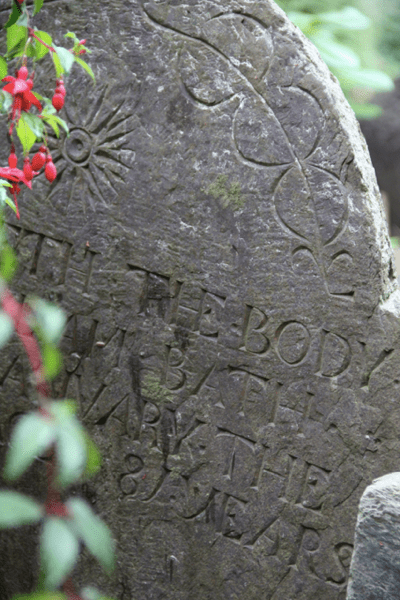
Last week was heritage week and there were lots of talks around Ireland. Lally introduced a group of thirty of us (including five very attentive children) to gravestones. We learned about the apprenticeship of a gravestone mason, the fashion for the sunburst design up to the 1700’s when it was replaced by the letters IHS. The fact that all the stones face the rising sun. The oldest ones are made of layers of slate, the old church (in ruins) was also made of slate, shipped over from Wales.Then there were the stories. About the odd-looking modern stone – the woman decided well before she died to get rid of her family gravestone and put up a “nice” new one…. About an old bicycle half hidden under the trees. About the power of a Buddleia tree to slowly topple a huge granite gravestone.

27 8b

(Gravestone with IHS motif, notice the layers of slate)

But my favourite story was about Lally herself. When she was younger she decided to go on a photography course and one of her assignments was to visit a graveyard and capture the gravestones. She went to Delgany graveyard and filled her portfolio. Years later when she was committed to the restoration of this graveyard she took out her portfolio and used the photographs to apply for a grant to help with the work. What’s more there was some ruling that said you could only raise fallen gravestones if you had proof that they had been standing. Lally had the proof in her portfolio and her team were able to raise those who had fallen!

27 8d

(Frost damage to the outer layer of slate)

It reminds me that nothing in our lifetime is without value. We may have started ten different jobs and finished none, we may have dropped out of college, we may have stayed in a job we hated, we may have taken time off to raise a child, we may have indulged in baking cakes, in learning karate, in playing board games. It all counts and it all adds up and it’s all valuable. It never too late to indulge your passions. Do the courses you are drawn to and fill your life with the things that make your heart sing. It may even lengthen your life! Thank you Lally de Buitlear, you are an inspiration and a mine of information. (By the way the team of volunteers at Delgany graveyard are always looking for more helpers.)

27 8e

(The little church is in ruins but this floor tile survived)

Right.. the packing… we’re in Toronto! More about that tomorrow, Mairead.

Japanese Gardens Co. Kildare

23 8a

(The Bridge of Life)

Yesterday we went to the Japanese Gardens. Our admission included a tour of the National Stud (horses) but we just went for the garden and the food. We arrived around midday and it was busy, tour buses and families. Ok everyone with the tour stand by the wall. As luck would have it there was a torrential rain shower as we got our tickets so we had an early lunch. Back in the garden it as a bit too busy for photographs, each time I lifted the camera to point at something picturesque a little one ran up to it. Look Gran-Mam, look at the stone!  But I got a few.

23 8c

(Couple of swans preening at the lakeside)

The garden symbolises the Life of Man. At the entrance you have the choice between the Easy Path and the Rugged Path. Of course we took the rugged path and before long were slipping and sliding on slick wet stones. Maybe the easy path would have been just fine….. We struggled on through the Cave of Birth – tight fit, the Tunnel of Ignorance – dark and wet, the Hill of Learning – more slipping and arrived at the Engagement Bridge. There’s a gap in the bridge and you have to leap (very small leap) across. On the Honeymoon Path there’s a Difference of Opinion and the path separates…  We bravely climbed the Hill of Ambition and arrived at the Chair of Old age.

23 8b

(Entrance to Fiachra’s Garden)

As the sun was still shining we decide to have a look at the Stud or at least the paddocks with the mares and foals, but it was not to be… another shower had us sheltering in the Beehive Monastic Cells. These are modelled on a monastic site found at Skellig Mhichil, off the west coast. A bit dark but very dry we sheltered with a few of the families. This was Fiachra’s Garden. Fiachra was a 6th century Irish monk who left Ireland and founded a hermitage in France. He encouraged manual labour, gardening and giving to the poor  and is the French patron saint of gardeners. His garden here was designed to make us think of this man (and many more like him) who followed a path of adventure inspired by their passion.

Paths can be slippery – be aware! Mairead.

Keep your eye on the ball!

21 8c

(My Dad’s garage and petrol pumps in the 1960’s)

My Dad had a saying “Keep your eye on the ball.” It probably comes from his days teaching young lads to play hurling, encouraging them to  look at the ball while they raise the hurley to hit it. He used it with us kids to tell us to stay focused on what we were supposed to be doing. Like the customer service competition….

21 8b

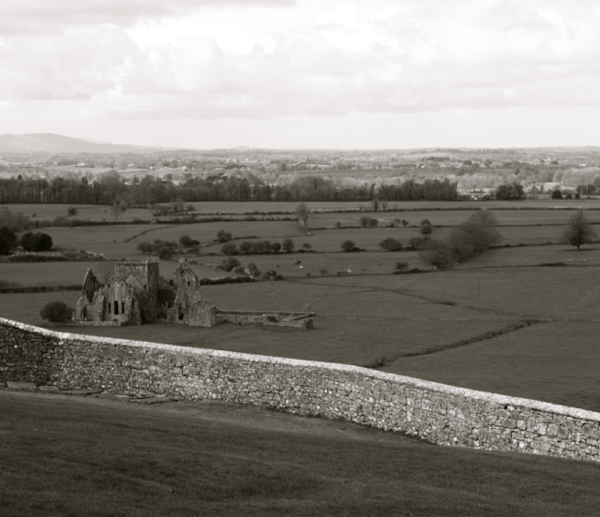
(Hoare Abbey near the Rock of Cashel)

My Dad had a garage and petrol pumps and sometime in the 1960’s or early 1970’s there was a competition between all the Esso garages to find the one with the best customer service. This was a time when there were pump attendants and the customer never needed to even step out on the forecourt to have the tank filled. My brother and I were working on the pumps in the summer time so we were included in the training for the competition. We were trained to give the customer a nice experience. I’m sure Esso had a vision of creating great service in all their garages… my Dad’s vision was to win the competition.


(Our playground as kids)

This week in Ireland petrol prices will top €1.70 per litre, you’ll have to fill your own tank and no one will offer to clean your windscreen. Back then you could fill your tank with £10, pump attendants were the norm and they were friendly by nature. But this competition focussed that natural friendliness. By the end of the training my brother and I had a clear goal – happy customers. It started as soon as we saw a car approach. We guided them to the front-most pump (so that the second pump would be clear for another great customer experience). We smiled and greeted warmly. We talked about the weather, the traffic (only heavy on a GAA match day) we inquired whether they needed help with the route to their destination. But most important we asked if they wanted their oil and water checked or maybe their windscreen washed. Usually they said no thank you but it was clear they were happy to be asked. Happy customer.

For that summer we kids kept our eye on the ball and we won every time we created a happy customer. Our Dad kept his eye on the prize… and he won the competition! In fact I think he won it at least twice!

Keep your attention on what you want, Mairead.

Ps and if you don’t know what you want, keep you attention on discovering what you want…

The Fishing Village.

13 8d

(View from the car park)

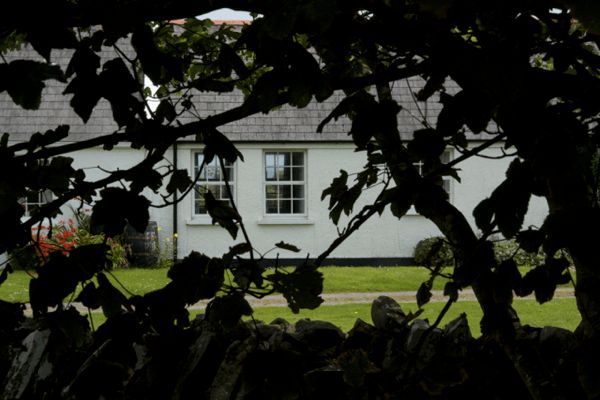
We’re back home but still remembering our visit up north, today it’s the fishing village of Kearney. It’s no longer a fishing village, it is owned and managed by the National Trust (conservation organisation) since 1965. It is extremely pretty, lots of white washed cottages and flower gardens and the sun shone. The brochure says it’s a living village, which means the cottages are still lived it. In fact a google search showed one of the cottages is for sale.

13 8b

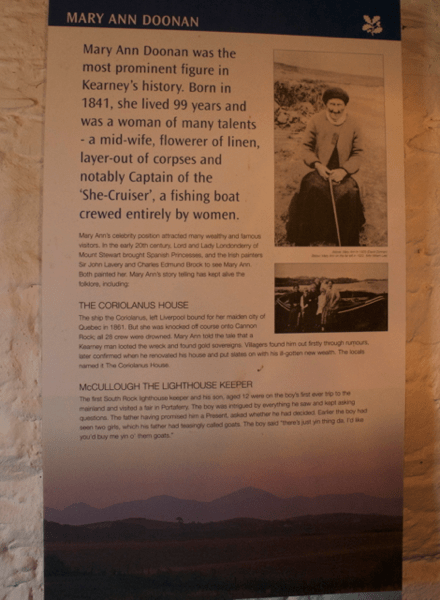
(Mary Ann Doonan)

There are no shops in the village, no pubs, no restaurants but there is an information center with a poster about one of the famous residents, Mary Ann Doonan. Mary Ann was a bit of a celebrity in the early 1900’s and was even painted by Sir John Lavery (famous Irish painter born in Belfast.) She had many roles in the village including being captain of the She-Cruiser, a fishing boat crewed entirely by women. This was in the 1800’s and the google searching could dig up no further information so we’ll have to make it up….

13 8a

(The view from Mary Ann’s cottage)

Maybe her Dad left her his fishing boat in his will… and she wanted to have an independent income… without getting married… Maybe she always dreamed of being a fisherwoman but customs or superstitions prevented her from joining a men’s boat so she needed other women to help her crew her own…. Could be Mary Ann Doonan was a bit of an adventurer and she was willing to break all the rules. Whatever the reason the local important people, Lord and Lady Londonderry (we went to visit them too), were very impressed and brought their famous friends to visit Mary Ann.

More from the peninsula tomorrow, Mairead.

A Town of Runners – beautiful.

16 7a

(Remembering my girls)

Last night we went to see a beautiful movie  – A Town of Runners. It was set in Ethiopia, in a small town called Bekoji. There was only a dirt road from the town so it has stayed small. The story is told by a boy who works in his grandmother’s small shop. The one thing that is not small about the town is the number of successful runners that have come from here. When the movie was completed in 2011, there had been eight olympic gold medal winners, ten world records and thirty-two world championships won by people from Bekoji. Not small at all.

31 7c

(The path to our dreams is not always straight)

The movie is about two friends Hawii and Alemi. Hawii loved winning races and was happiest when she was first and Alemi was second…. She was fourteen when she said this and her honesty was touching, she loved when her friend did well, but there was only one winner and Hawii wanted to win.

31 7a

(Broad Beans)

Then there was the coach. The man who trained those successful athletics was called coach throughout the movie so I had to look up his name, Sentayehu Eshetu. He trains the children in this town and continues to train them until an athletics club from a big town picks them for their team. That’s the dream, to get chosen, just like the young Irish boys wanting to be picked for their favourite English football club. He smiles a lot, he is very respectful and the runners love him. He is on their side. He also has rules. At one point he has them pulling weeds and clearing grass from their running track – a red clay circle in a field with a shed for coach’s office. There is sadness in the movie also when the dream becomes difficult for Hawii.

31 7d

(Water… we complain about rain but we need the water)

This movie shifted my outdated perceptions of Ethiopia. My memories of Live Aid in the eighties and the images of famine had drawn a detached, far away, not-my-world, picture that I held as true. Watching A Town of Runners I felt a connection to these girls, to their hard-working parents, their grandparents, to their coach. When they were clearing the weeds from the track I was remembering my weeds. When Hawii’s grandmother was worried about Hawii, I was remembering being worried about my children. When Alemi’s father was harvesting a vegetable crop, I recognised it as broad beans and was remembering my time in the wilderness. When a hen scratched in the red clay, I remembered my girls – the hens.

Movies can do that, shift your perceptions. Mairead.

Grow your own… dreams.

18 7f

(Ripening tomato)

There were a lot of things growing while I was in the Wilderness, tomatoes, courgettes, lettuce, weeds, to name a few. Each night as I watered the plants in the greenhouse I was able to notice their progress. At first I just noticed the one orange ripening tomato and little yellow flowers. Then I noticed a hidden green tomato. It was green so it blended in with the leaves. But then I started to notice the flowers as they turned from bright yellow into dull green… into tomatoes.

18 7a

(The yellow flowers turning as they become tomatoes)

Of course, I’ve done biology in school and I know that the bees and other insects pollinate the flowers and that’s how the fruit is created but seeing it happen in front of my eyes made me pause…. The same thing was happening outside with the courgettes. As the beautiful orange-yellow flower was dying it was being pushed forward by the growth of a little courgette plant. The courgette plants didn’t even have the benefit of the warmth of the greenhouse or the regularity of my watering (although the rain was pretty regular.) They just got on with the job with only nature to assist.

18 7b

(One of the flowers has turned into a tomato)

Each day as I wandered around outside, chatting with the hens or just experiencing the calm I noticed these growing things and I wondered what I was noticing. Was it the fading colours of young flowers turning into the nourishing strength of fruit and vegetable? Was it the power of nature that allowed the plants to do their thing? Was it the daily slow growth step by hidden step that resulted in bounty? Was it the cycle of planting a seed, feeding it, watering it, giving it light and heat, allowing it to produce?

18 7e

(The courgette… notice the little plant at the base of the flower)

Was it the intention of the grower, one day long ago who decided he really wanted to grow tomatoes and he took the first step and bought the seeds? When the grower returned to only one ripe tomato he told me that he had met a woman on his travels who had decided she wanted tomatoes. She took a lot less care than the grower and already within a very short time she was collecting and sharing lots of ripe tomatoes. She lived in a place with lots of sun. Growth is taking a little longer in Ireland this year… lucky us, we get time to enjoy every step of the cycle!

….the best time to plant a tree is twenty years ago. The second best time is now…” African Proverb.

Plant your seed, Mairead.

Report from the Wilderness.

(River on one side)

I’m out in the wilderness for a while….. and I don’t mean metaphorically. I’m living in the middle of the forest with a lake on one side of the road and a river on the other. There are hens in the garden, cats in the house and goldfish in the bowl. Although I haven’t seen them yet there are also deer over the fence.

(Beautiful flora, foxglove I think)

I arrived about an hour ago and unpacked my life. It’s been interesting to see what my life consists of….. computer, phone, food, clothes, stuff to wash and soften (!) my skin and hair, books (even though there are hundreds of books here) and crafting materials. Apart from feeding myself and the animals I am free to follow my heart’s desire.

(Lake on the other)

When I choose to come here I did wonder to what purpose I would use this wonderful opportunity. Would I write a book? (Probably a bit optimistic it will only be two weeks!) Would I learn to paint? Would I go for long walks? Would I learn some new vegetarian recipes? Would I read a full book in one sitting? Would I go back to watching TV? Would I sleep? A lot? What would I love to do while I’m here?

(A path running through the middle)

Turns out I probably don’t have to answer those questions in advance (although I do have to bring the ingredients to do any of them.) I can just allow my choice to unfold… a little at a time. At this time my heart’s desire is to write.

What’s your heart’s desire, at this moment? Mairead.

PS Both my mother and mother-in-law’s heart’s desire is more words in the blog (well I think that’s what they meant, “..the pictures are alright but…”) Ask and you may well receive….