A Day in Porto – Part 3

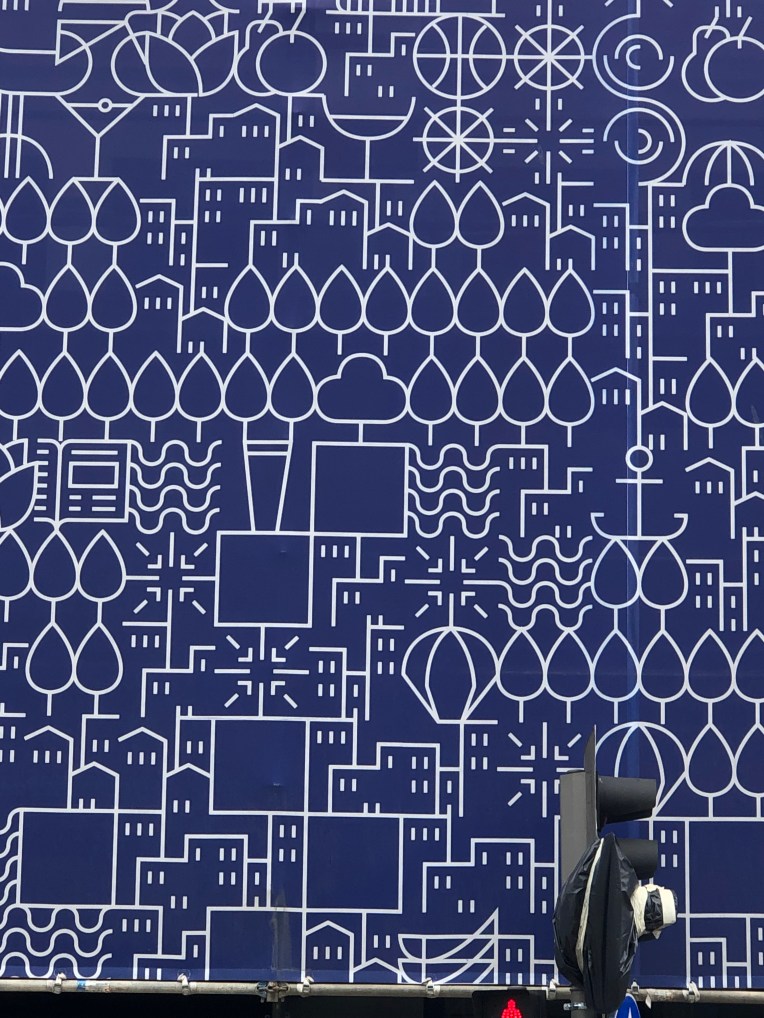
(Temporary blanket of plastic around Porto’s market while it is being renovated)

After counting the tiles on the church we passed Porto’s huge produce market called Mercado do Bolhão. I mentioned in part 2 that it was being renovated. Then we passed the shop where the natas were being made in the window and arrived at Comer e Chorar Por Mais. Up until today I thought the name of the shop might be a trio of business partners something like Johnson, Mooney and O’Brien. It’s not, it’s much better, it’s literal meaning is Eating and Weeping for More. (Or the less poetic mouthwateringly delicious.)
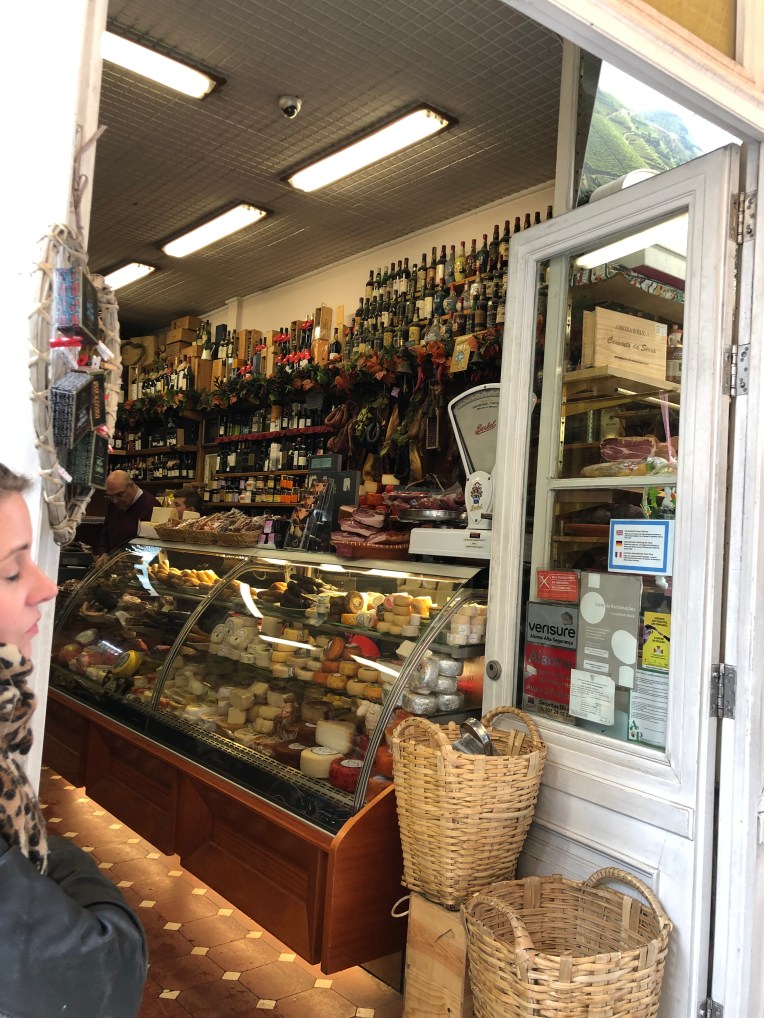
(Comer e Chorar Por Mais for yummy food)

The shop had been around since 1916, on Saturday we would be tasting port, six month-old cheese, 18 month-old cheese and thirty-month old cheese, three different cuts of very thinly cut cured ham, three different breads and olives in garlic. Everything was absolutely amazing. They age the cheese themselves and start by coating it in paprika. The premises was only tiny but full to the brim with interesting food and drinks.

(Can you see the bottles of port on the top shelf on the left? Vintage. Vintage is my new favourite word)

The owners were very friendly and answered loads of questions in spite of also having to serve customers coming and going the whole time. While I was chewing on the Easter bread (a traditional bread filled with meats and cheeses before it’s baked, a treat at Easter after a meatless lent..) I noticed the port bottles on the top shelf. They were a similar (I mean exact) vintage to myself and over €700 a bottle. Everything in this shop appreciates age… I feel right at home.

(Another beautiful old grocery shop)

I couldn’t spend too long appreciating my vintage because we were off to Império to sample some cod fish cakes. Isabel was telling me that the Portuguese have three main food groups, meat, fish and cod. She was joking but not about the fact that they really like cod. I was thinking that sounded a bit like our love of potatoes and the Bolinhos de Bacalhau combine both cod and potatoes!
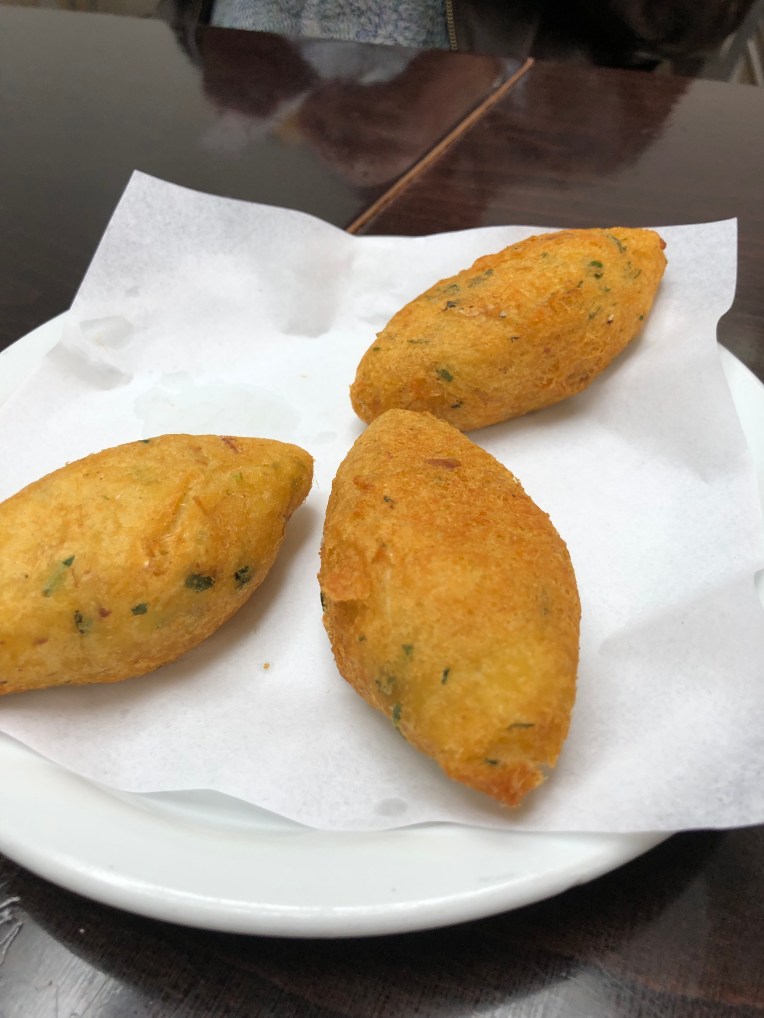
(Bolinhos de Bacalhau at Império. Very yummy)

Isabel described how her mother used to make them. First… I think the cod is cooked first, then remove all the bones. Then lay it on a cloth and fold over and roll back and forth again and again and again for a long time. This shreds the cod. Next combine with mashed potatoes, herbs and egg. Then take two teaspoons and shape into little rugby ball cakes. Finally, deep fry in vegetable oil. Or you could just buy them in Império where they make the best ones and serve them with a glass of vinho verde.

More from Porto tomorrow, Mairead.

A Day in Porto – Part 2

(Lunch at A cafe called the Garden in Porto. Florentine eggs)

Just in case you were worried, we have managed to top up our toll account online. This was impossible (for me) to do last year and created a mighty challenge to our relationship for an afternoon. They have changed it and all danger to relationships has been averted.

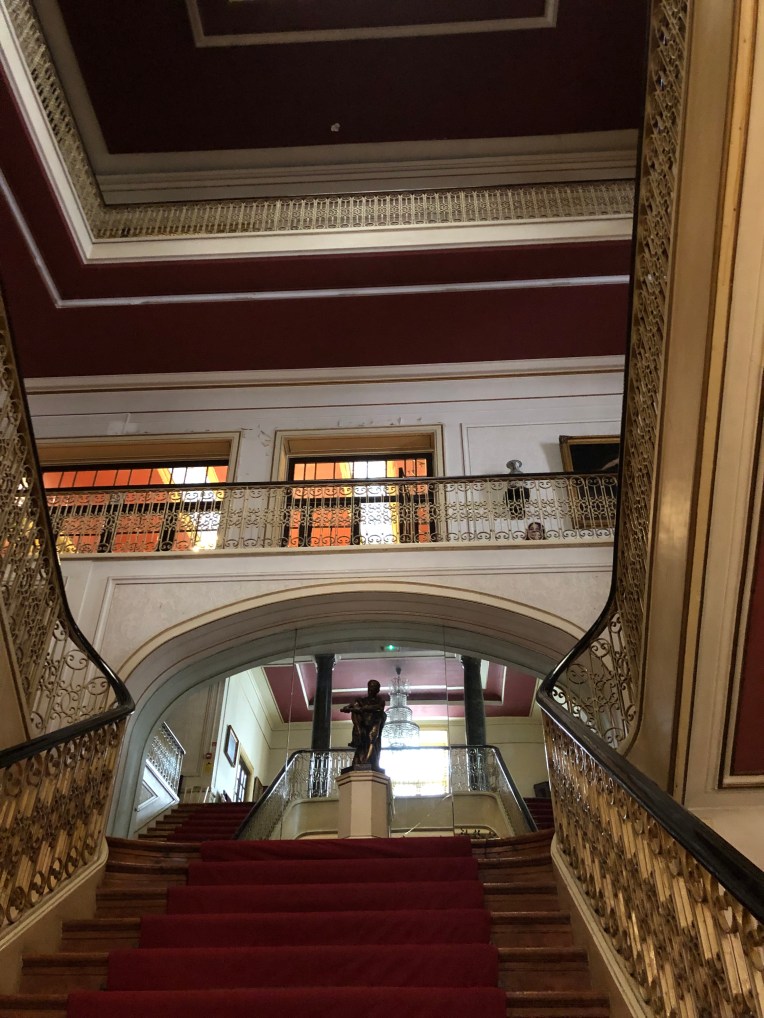
(I snuck over a barrier at the gentleman’s club to get you a picture of the stairs. Not a feminine touch in sight)

So back to Porto. It had been a beautiful morning but after lunch the rain started so we went to the cafe/WiFi location at Fnac. That a French shop selling books, magazines, general stationery, cameras and general electronic goods. We waited until 2.45pm and then went next door to the C’alma Speciality Coffee Room where our tour was to begin.

(An old tram. Fnac is on the left and that’s St. Catarina street in the distance)

There had been an instructions email with our tickets saying we should arrive 15 minutes early. I love following those kind of instructions and would happily have arrived there 20 minutes early. Denis on the other hand likes to arrive “near enough” to the exact time. We compromised… and left Fnac at 2.45pm. When we got to the cafe, two minutes later, our guide was waiting outside. We exchanged names and I said, are we the first? and she said, no the others are waiting inside.

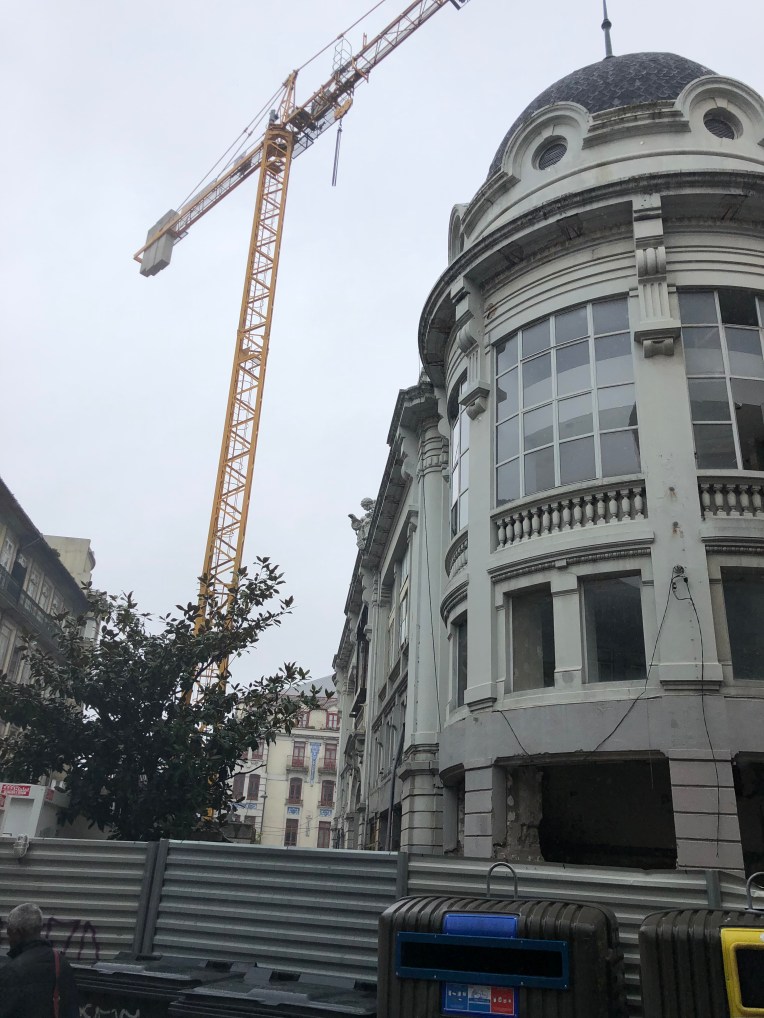
(They are renovating the old market. It’s huge, could take years)

I could not believe it! We were the last! There were five people waiting for us to show up. Five sets of eyes looking up at us. I definitely looked embarrassed. Too embarrassed to give Denis the this is your fault eye.

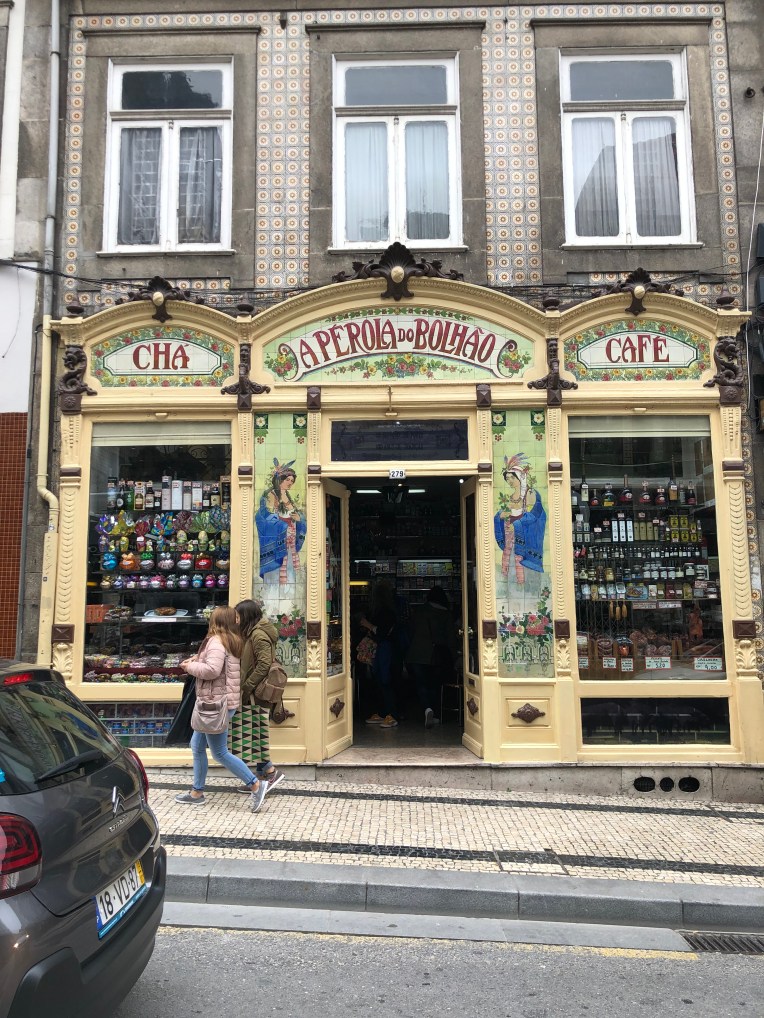
(Beautiful old grocery and cafe)

I forgot to take pictures of the incredibly cute coffee glasses. Oh well… Our guide was lovely, her name was Isabel. She explained that the C’alma cafe was part of an old gentleman’s club and we would be starting our tasting in one of their sitting rooms, with coffee and a Pastel de Nata. I think I mentioned the Nata (everyone calls it nata, which is just as well because I can’t pronounce Pastel) in another post, they are a flaky pastry case base filled with custard and burnt on top. I love them. If you want to try one in Ireland (or in the UK) they sell them at Costa’s cafes – in Greystones anyway.

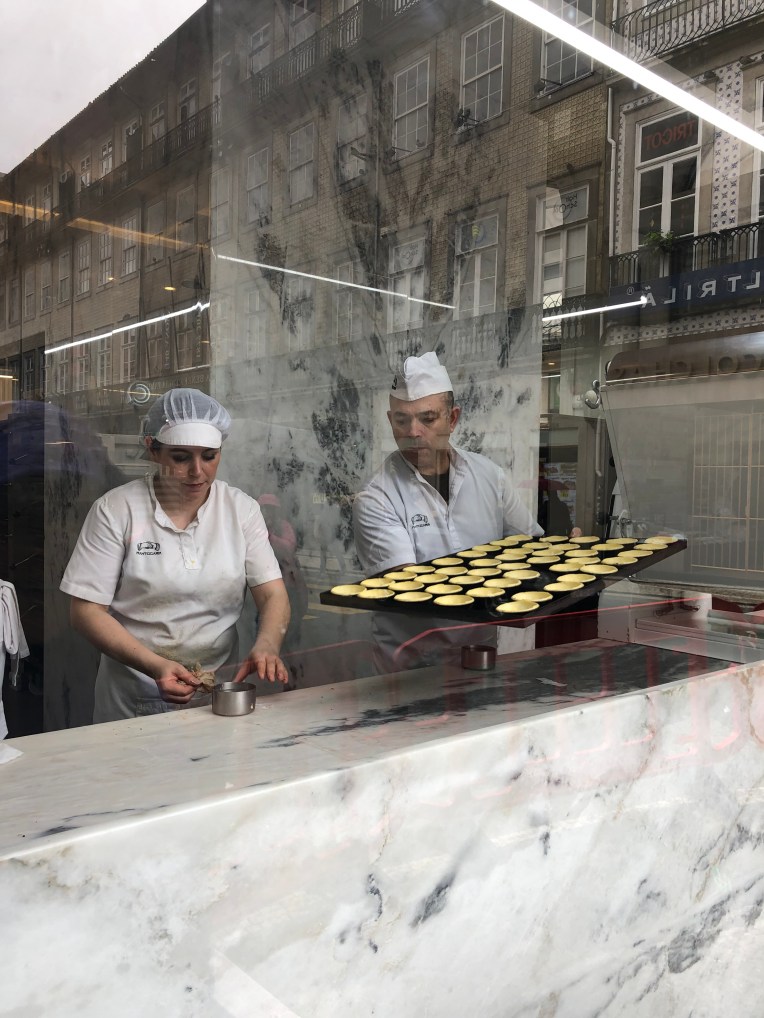
(At the windows of the Fábrica de Nata cafe you can see the bakers making Natas. When a new batch is ready one of the bakers rushes outside ringing a hand bell. You can hear it two streets away!)

Isabel explained that some time in the 1800’s the government of Portugal stopped supporting the monasteries and convents and they had to find ways to make an income. The Jeronimos monastery in Belem, Lisbon created the nata and that’s why there are queues of people at the bakery near the monastery. (I’ll try to get a picture of the queue for you when we get to Lisbon.)

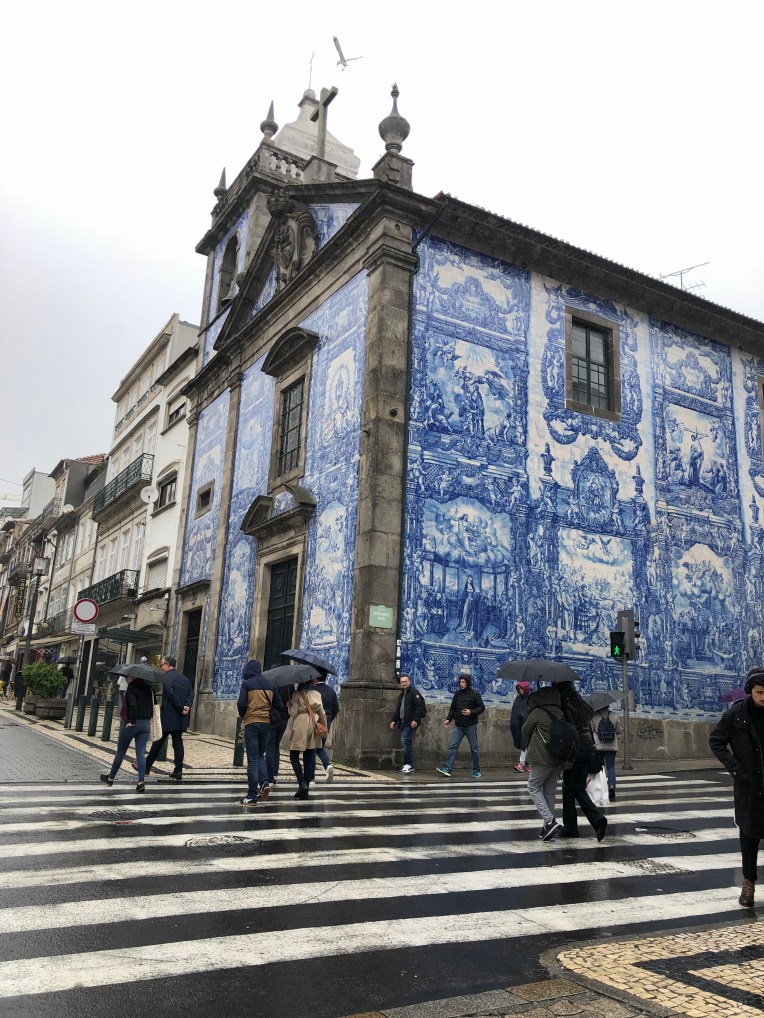
(Saint Catarina’s church. There are 16,000 tiles on the exterior, Isabel said she counted them… or maybe she said she didn’t count them…)

Next we were off to see St. Catarina’s church on St. Catarina’s street, a major shopping street in Porto. Isabel had explained that this tour would be taking us to places not normally frequented by tourists but very popular with the locals. Well we were all thrilled with that because even though we are tourists we prefer being adventurers. Adventurers are almost the first outsider to see an attraction. Once it’s popular with other tourists we are disappointed. (Human nature is nothing if not strange.) Isabel knew we were only human, accepted us and brought us to local haunts. We loved Isabel.

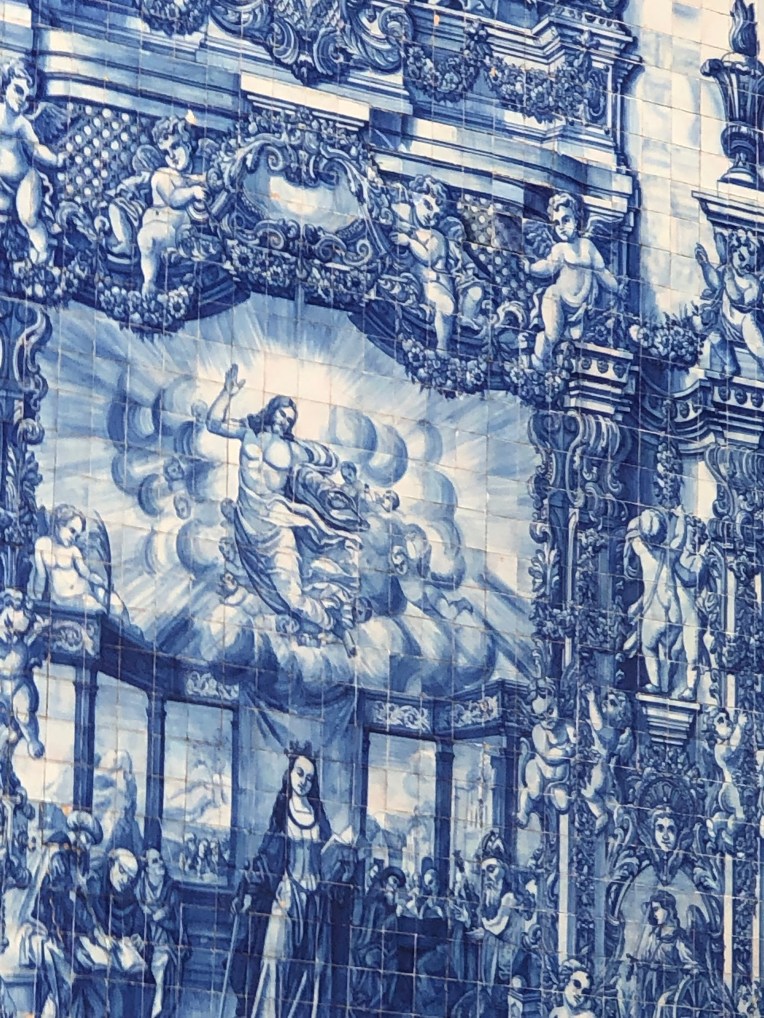
(Close-up of one of the tile scenes on the exterior, telling the life story of St. Catarina. I can’t remember the details but if she’s anything like the other saints it was difficult and had a very sad ending)

Anyways, St. Catarina’s church was popular with the locals because it is the church where they pray for their dead. It’s the only church in Porto where you can light real candles (instead of the electric push button pretend candles) to honour your dead. Unfortunately, it is closed on Saturday afternoons so I couldn’t get a picture of the candles for you.

Sorry about that, Mairead.