Happy Days

(A sail boat off Bray beach)

The de-clutter continues and yesterday I was going through the drawers in the sitting room. Three drawers in particular were lovely. At some point they had become the dumping ground for old birthday cards, mother’s day cards and father’s day cards. The drawers were full and had not been tidied for some time so the cards on the bottom were from ten years ago. Among the beautiful purchased cards, were even more beautiful hand made cards.

(Bray Head)

These hand made cards were created using folded pieces of A4 paper, pencil and crayon. They were made by seven, maybe eight year old hands. The spelling isn’t perfect. The planning isn’t exactly right (words disappear off the page or are squashed together near the edge). They don’t stand up on their own. At first glance they aren’t even attractive. But I’m keeping them!

(The Big Wheel, at the Bray Summer Festival)

Because they are real. The real is perfect, it’s just not plastic perfect. So next time something you create doesn’t turn out exactly perfect, celebrate the real perfect in it. You can even put it in a drawer for later.

You’re real perfect, Mairead.

ps if it’s a cake, don’t bother putting it into a drawer, send it on to me.

Yarn and Patterns

(sigh…)

I love making scones. In fact I’m finding it a little difficult to write because my mouth is watering in anticipation. And since I’m not actually making them, just writing about making them there is nothing to anticipate….. Usually when I think about making scones, I go ahead and make them. So my mouth has learned the pattern and is responding. Pavlov did an experiment with dogs and food and salivating, not that I’m comparing myself to a dog… but it is a similar concept.

(One of the Yarn Room people made these crochet flowers)

I love going to craft shops. I went to The Yarn Room in Ashford yesterday. They sell yarn….. and books and fabric paint and needles and weaving looms and thread and buttons and…. And they give classes and they have a Knit Night every Thursday, where people turn up and knit!  Everyone who works there does crafty things, yesterday Stephanie was following a pattern in one of their books to make a crochet waistcoat in a beautiful multicoloured yarn. When I go there I feel good. I don’t have to try to feel good, my whole body has learned the pattern and is happy to oblige.

(sigh…)

I hate, well, really dislike, cheese. The texture is yucky. The smell is awful. A food that is applauded for going mouldy can’t be good. My nose is wrinkling just imagining it. My stomach is churning a bit too. I didn’t have to move my nose it was way ahead of me and my stomach remembers a night in the 80’s when I thought cheese fondu was a good idea…… it wasn’t.

(sigh, sigh…)

I have lots of patterns set up in my mind and my body, that go back even further than the 1980’s. Some of them limit me and some of them lift me. My job is to notice and choose the ones I want.

Who’s for scones and jam? Mairead.

Awful Arabella

(Maybe it’s time to cut the grass)

Ok, assignment well on the way to being finished… so I’ll take a break to tell you a story. When our children were little I used to love reading to them. I think it was mainly because it involved sitting down! But also, the rhythm of a voice reading (even your own!) is hypnotic and I was probably glad of the effect it had on all of us.

(Nice looking hydrangeas)

One of my favourite books was Awful Arabella by Bill Gillham, illustrated by Margaret Chamberlain (looked this up on Amazon and it brought it all back). I read that book hundred’s of times, no exaggeration. It was very short with two lines and a picture per page, and I still love it. So the story goes, Arabella arrived to stay at the narrator’s home and she was awful. She mis-behaved all day and wouldn’t go to bed and then in the middle of the night she was sick – throwing up type sick. The next day she was much better behaved but in her efforts to be a good girl she made just as big a mess. In spite of all that, when she was leaving the whole family were very sad to see her go.

(Love blue)

The last picture in the book sees Arabella on her own waving from the front gate with a big suitcase in her hand and the family at the front door crying into their handkerchiefs.

(Yellow flowers that come back every year without any effort from me – and they’re not weeds)

Now that I think about it maybe I liked it because of it’s message. I must have been reading it for myself, because it’s a great message for any parent.

No matter how badly you’ve behaved you’re still loveable and forgivable and we’ll miss you when you’re gone!

Missing you already, Mairead.

Debugger is not a rude word!

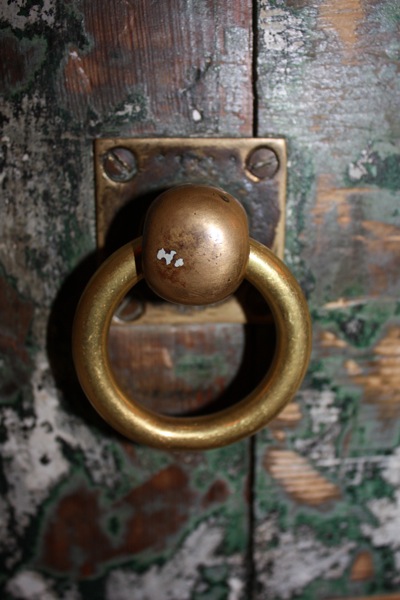
(Old door handle at Sheena’s house)

Last Friday night Denis and I sat on the sofa together and watched a session from the Apple Developers Conference. I was not sitting there because I wanted to watch grown men applaud software – it was Denis’ turn to choose a movie…..

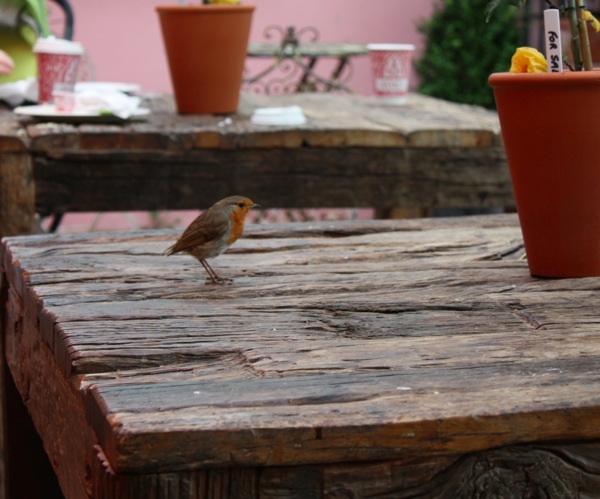
(Avoca in Ashford serves Robins too)

But, you know, after a while it started to get interesting. This particular session was about a new debugger. Yes, that’s a real word (isn’t it great, it sounds rude, but it’s completely legal!). A debugger is a software program that helps programmers to de-bug (take out bugs, errors, faults from) the software they are writing. So if you’ve written a piece of software and it’s not doing what you thought it would be doing you use a debugger.  It steps through the lines of code you’ve written and shows you what’s happening, every step of the way. So you can see which line of code caused the problem. Apple have gone to great lengths to add lots of helpful bits to their debugging software, to provide more useful information and to make it even easier to use. And lots of people (well…men) at the conference were very pleased.

(Look! A heart-shaped stone!)

That got me thinking. Wouldn’t it be really helpful if we had a personal debugger. It could be attached to our phones or even better it could fit in our ear….. Then when something we’re not expecting happens, the debugger could replay the scene step by step and we would see what’s gone wrong, and change it.

(Daisies)

So for example: You’re chatting with significant other (could be partner, mother, friend, sibling) and suddenly (or slowly) you realise you are really irritated and you have even begun to say some potentially damaging stuff. What’s more, you’re saying it out loud! The “other” either storms off / says some of their own stuff / starts to sob / looks stunned – take your pick.

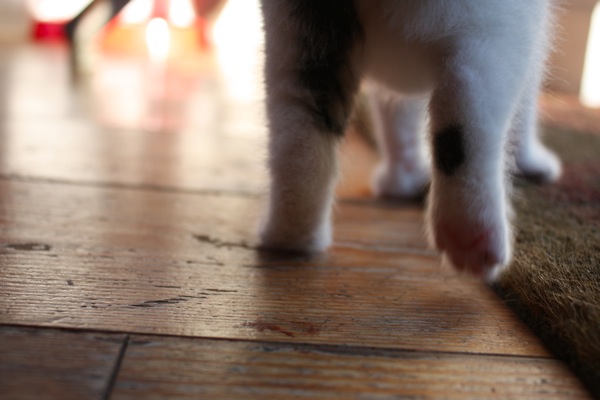
(Little kitten legs…. cute)

Wouldn’t it be great at this moment to be able to click the debugger in your ear and find the moment where it all went wrong? Then change that line of code so it wouldn’t go wrong again? We have loads of code in our heads, written by others or written by us for a good reason, at the time, but the time is different now. We are much more intelligent than any computer, so we can debug our own code just by noticing it.

Debug yourself, Mairead.

Morning Pages

(Come on in….)

A long time ago I read the book The Artist’s Way by Julia Cameron. In it, there’s an exercise called Morning Pages. The idea is that every morning before you do anything else, you take our your A4 pad and your pen and write without stopping for three pages. What do you write? The first thing that comes into your head and if nothing does, you write “nothing is coming into my head” and usually that’s all it takes for something to come into your head!

(Patterns)

I think the rational for this exercise is two-fold. One, it’s practice at writing and two, it clears all the thinking stuff out of your head and onto the page. When the thinking stuff is gone, then there’s space for the good stuff. The good stuff is wise and helpful and intuitive. The kind of stuff that gets buried under the worry and trouble and problems. The whole process  is a bit like weeding a vegetable patch so that your crops can grow.

(Pink geraniums)

I wrote my Morning Pages for at least eighteen months. Clearing the thinking stuff was very useful and of course I enjoyed the writing. But the added bonus was the structure and discipline of daily practice. Practice makes Perfect. In order to become good at something we need practice. That includes being calm or staying grounded or accepting ourselves or living a less is more kind of life or whatever it is that floats your boat! We need to practice…. daily.

(More patterns)

Practice, practice, practice, Mairead.

Why are we here?

(More patterns)

I’ve started my de-clutter project. So far my room is beginning to feel clear and un-cluttered….. in one corner. This isn’t going to be a rush job. It took a long time to get this way, it will take more than one day to undo.

I noticed as soon as I got up this morning I was ready to begin and that got me thinking about intention. Intention is very interesting. It’s where you consciously decide how you want to be, or how you’re want a situation to be. Then, it acts as a guiding light drawing you towards exactly that. So in effect yesterday I set the intention of clearing the clutter today. Because I had written about it, it was very clear in my mind what my intention was and it corresponded with what I wanted to happen. Ok, I still had to empty the drawers – it’s not magic but it is easier.

(Hanging around on Bray Promenade)

Each time we get into the car to drive we start off with an intention. To go to work, the shops, the garage, the airport. A long time ago when my daughter was little and I was running late, I drove to the supermarket instead of her play-school. I was thinking of what we needed for dinner. When the car stopped, she said “This isn’t my school, why are we here?”

(And more patterns)

If we do not consciously set the intention then we get the default and what’s worse it’s usually the thing we fear happening. So for example, if you hate social occasions, then the default intention as you enter a party is  something like, “I’m going to hate this.”. You definitely didn’t want that. A more useful intention might be “I’m going to notice people or things I like about this party”. Now your attention has a focus other than your dislike of the situation.

(Somewhere a farmer intends to feed his animals for the winter)

Intention focuses the attention. Do you want your attention to be on what you fear happening? Or what you’d love to happen? What would you love to happen? Put your attention on what you’d love to happen by setting that as your intention. Hint: Start small!

Where are you driving to? Mairead

Pause between the Cycles

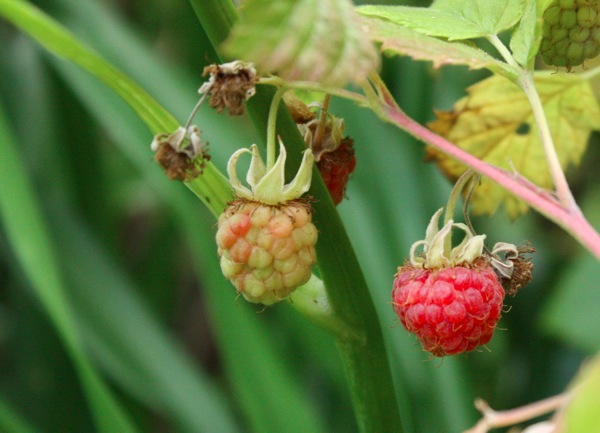
(Raspberries in Liam and Kate’s garden)

Today I’m doing housework. Sitting here on the sofa, squashed up between the upside down side tables, the books and the cushions, it looks like I’ve been very busy. I like this moment. Before everything goes back in its place. If someone walked in now they would think I was a great housewife (as long as they didn’t notice me sitting down).

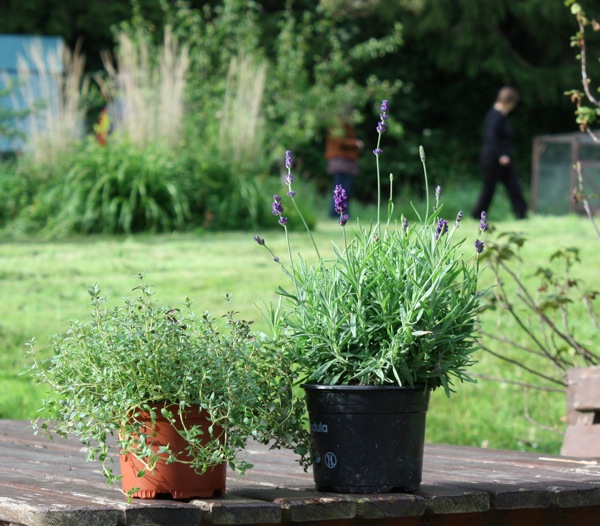
(Seemingly Lavender keeps the flies at bay?)

There’s a similar moment when I do the ironing (which I love doing). The moment when the shirts hang crease-less, the t-shirts and jeans stand in their towers, and the sheets, duvet covers and pillowcases look like they’ve just come from the shop. I make this moment last as long as possible. Sometimes, it’ll be days later when I put away the finished ironing. Until then I’ll smile inwardly every time I see it. Of course, the longer that moment takes, the longer it will be before the cycle begins again.

The cycle of washing, drying and ironing.

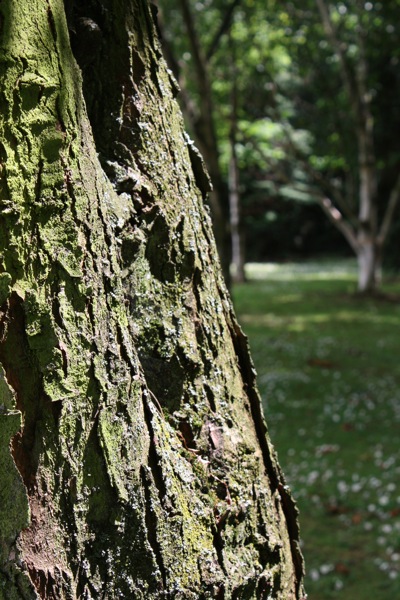
(Wrinkles on the old tree – beautiful)

Breathing is a bit like that. We breathe in……… we breathe out…….. we pause….. Then the cycle begins again. The pause is like noticing the ironed clothes and smiling inwardly. Notice it!

Breathe, Mairead.

“No one can make you feel inferior without your consent” – Eleanor Roosevelt.

To celebrate the inauguration of a new president in America I started reading Barack Obama’s book Dreams From My Father. In it there’s a story about his father (also named Barack) at college in Hawaii in 1961 or 1962. 

One night he, his father-in-law and some friends went out for a drink. There was a white man at the bar who was annoyed that a non-white was allowed to drink at the same bar. He voiced his opinions loudly. (This was within six years of Rosa Parks being arrested for saying no, on a bus, to racial segregation.) Barack Snr. heard the comments as did his friends, who anticipated a fight. Instead, he went over to the man and “proceeded to lecture him about the folly of bigotry, the promise of the American dream and the Universal rights of man”. It ended peacefully. Something about this story got me thinking.


At the Access your Calm course we touched on The Four Agreements by Don Miguel Ruiz, in particular the Book of Law, a metaphorical list of rules that we each learned as children and still carry around with us. As children we were taught to obey the laws and we still feel guilty if we disobey them. Unfortunately, it’s easy to disobey them, as the laws often contradict each other. So we find ourselves feeling guilty a lot.  We’re stuck in the “be a good child” mode and if we’re breaking the rules then we’re not being a good child. Of course in the grownup world where we live we don’t want everyone to know that we’re not good so we cover up. We act “normal” and discuss our good beliefs and what should be everyone’s beliefs. But underneath it all we believe we’re “bad”, because we can’t keep the rules, all the rules. So, when we are accused of some “fault” and we are upset, it is because beneath our carefully held veneer of acting normal, we believe the accusation. 


For example, you’re taking a coffee break in the kitchen at work and a colleague passes and jokes, “You’re always in here, do you ever do any work?” and then continues on walking. Depending on your Book of Law rules, you may or may not take offense at this remark. For example if one of your rules says Be conscientious and another Don’t be lazy, then you will probably take offense. And you may carry the pain of it around with you all day (long after the colleague has forgotten their throw away remark). You may say and believe  “she hurt me”, but in truth you have hurt yourself. By the way, this is true even if the colleague believed what she said, but that’s her issues!


We can realise that the Book of Law is just an illusion, albeit one that was very necessary when we were growing to maturity. Now we can write our own book and it will include some of the old rules and some new. And crucially, we can trust that we are intrinsically good, and begin to believe that as a new rule.


So when I read the story about Barack’s dad I saw it like this – When Barack Obama Snr. heard the racist remarks directed to him he did not believe them. He didn’t have any rules in his Book of Law about skin colour, he didn’t have any rules about him being less than or repressed by, white people. Barack Obama Snr was the son of an elder of his tribe on the shores of Lake Victoria in Kenya. He won a scholarship to study in Nairobi and was selected by Kenyan leaders and American sponsors to attend University in America and afterwards to return to Kenya. He was the first African student at the University of Hawaii and he graduated within three years, top of his class. He trusted that he was intrinsically good and he believed that as a rule. 


In summary – An opinion about you doesn’t shake you, hurt you, or offend you – unless you believe it.


When the remark was made at the bar, Obama Snr. saw it for what it was – an uneducated and flawed opinion, and he set about reeducating the individual! No offense was taken, as the person was obviously (to Obama) misguided. Obama Snr. had the option to walk away, or stay and teach. He choose to stay and teach. Fighting wasn’t an option, there was nothing to fight for, nothing to defend. 


The next time someone “hurts you” or “offends you”, would it be useful to consider that they have given you some valuable information? Have they have uncovered a rule from your Book of Law that you believed you were guilty of breaking? 


You have a choice – be offended and blame “them” …… or …… become aware of your conflicting rules. What would be the most useful choice for you? 


The only thing worse than being talked about is not being talked about”

Oscar Wilde.


I met my friend Monica, for lunch today and we discussed this topic. She recalled a situation that occurred over 25 years ago. She was living abroad with her husband and young daughter. One day she discovered that a “friend” was spreading a rumour that Monica’s husband was not the father of their daughter. My friend thought this hilarious as her daughter looked so like her husband no sane person could doubt her parentage. And of course Monica herself also knew for sure who the father was. So rather than feel offended, my friend was chuffed (like Oscar Wilde) that she was being talked about!

The story of Zac and the pooh.

During December I spent some time with my nine year-old niece, who seems to attract trouble, skillfully! She has inspired me to write the following story. (By the way, my sister, her Mum, discovered that she had started to re-write the story using a new spelling for the stuff that was attracted to Zac. She guessed adults might not like the word poo….. I respect my neice’s wisdom so I have changed the spelling in the following version.)

Story for Caoimhe.

Once upon a time there was a little boy who had an unusual skin problem, pooh of all kinds was attracted to him. Wherever he went pooh flew to him like iron filings to a magnet. His Mum and Dad and his Granny cleaned off this pooh so that the boy could walk among the people of the village without being laughed at or shunned. But the boy hated this cleaning. He shouted and raged against his parents and Granny. You see he didn’t know that he was constantly covered in pooh and he didn’t smell it. One day he was so angry (about the cleaning) that he ran out into the garden and screamed and screamed. When he finally got tired of screaming he stopped and immediately heard a quiet voice whisper,

“Zac, would you like to see my magic mirror?”

Over by the compost heap stood a little fairy girl and in her hand was a tiny little mirror. The little boy was astonished because he had never seen a fairy before and he didn’t realise fairy’s could speak.

“Yes, please”, he whispered.

So the fairy girl held up the mirror in her two hands and Zac looked in, and for the first time he saw that he was covered in pooh. He jumped back in fright and landed in a patch of carrots, on his bum. He was very surprised and nearly missed what the fairy girl said next.

“Now Zac, look as I turn the mirror over.”

And he looked and what he saw was so… so…. so…. beautiful and so handsome and so lovely that he smiled – a very big smile. And when he smiled that very big smile he saw himself in the mirror shining like a bright light for everyone to see and admire. Then the fairy girl whispered,

“Zac, its time to let go of the pooh.”

But the little boy didn’t know how to do that so the fairy girl gave him instructions:

“First, every day for the next 21 days while your Mum and Dad and Granny clean off the pooh you have to stand very still. Second, after the 21 days are up, come out here and meet me again and I will give you my magic mirror and further instructions.”

Zac did exactly as he was told and 21 days later returned to the spot by the compost heap where the fairy girl was waiting. She held up the mirror and he saw how gorgeous he was and when the mirror was turned over he saw that he was gorgeous on that side too.

“How come I look so great on both sides, now?”, he asked…. and the fairy girl replied, “Because now, Zac, you are as beautiful on the outside as you always were on the inside.”

And the fairy girl gave Zac the mirror and told him to check from time to time how he was doing on the outside, but to always know that, “you are beautiful, radiant, and shining always, always, always on the inside, where it matters.”

From that day on only small bits of pooh clung to Zac and when he looked in the mirror and realised they were there, he stood still and cleaned them off, himself. But always, always when he looked at the other side of the mirror he was beautiful, handsome, gorgeous and radiant.

The End.