Talking about earthquakes

Osaka City Sewage Science Museum

We’ve been visiting museums. Last Friday we went to the Sewage Science Museum of Osaka. Very interesting. It seemed fitting to go there when we realised they had a museum with all the excitement about the toilets. I had hoped we’d be able to get a tour of the sewers but this was not to be.
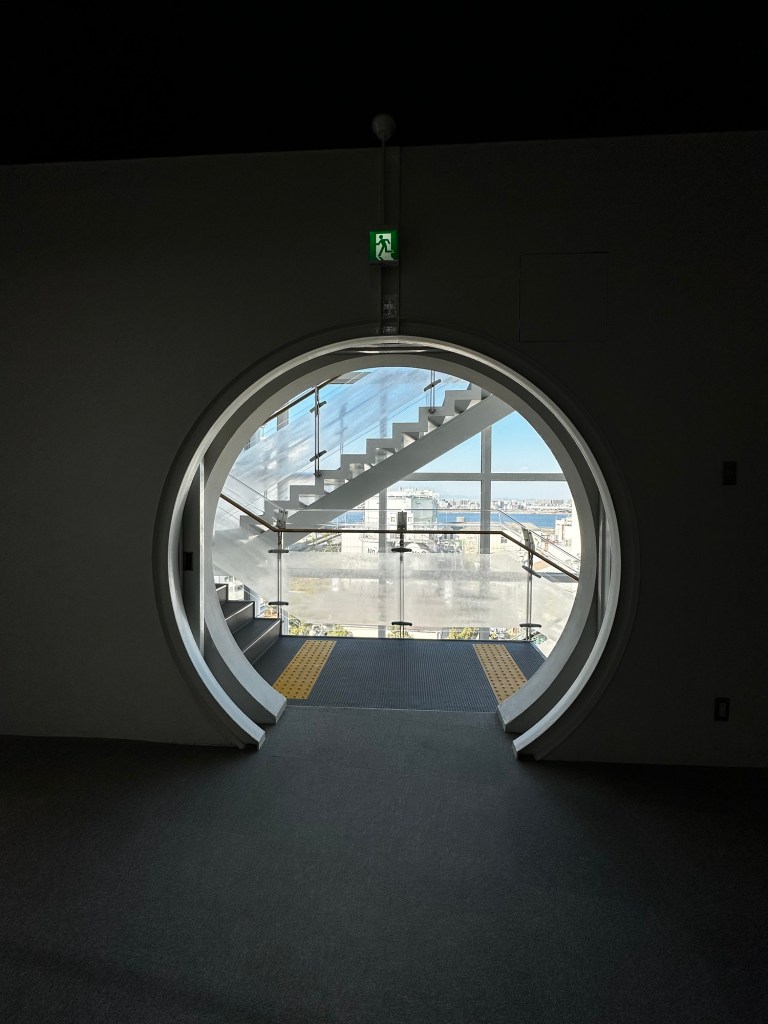
View of the city from the Sewage Science Museum

Then today we went to see the Earthquake memorial near Kobe. There was a huge earthquake (7.3 magnitude) in this area in 1995 and more than 6,400 people died. Doesn’t seem that long ago to me. I had small children in primary school I was on the parents association and trying to survive life. I think that’s why this museum and the movies and sets affected me. I didn’t take many photos.

The dots show earthquakes of magnitude 2 or more in Japan in the year 2018!

It was on January 17th at 5.46am 1995. (There was a grandfather clock in the exhibition that had fallen over and stopped working at the exact time.) We heard first hand stories from people who were children at the time. About how family members died beside them and how their homes were destroyed and all their possessions lost. About how they were living in a gym with food provided by emergency services. Eventually emergency cabins were set up but not in their own communities and the older people found this the hardest.

The stops signs look like the yield signs?

Volunteers came from all over Japan to help and eventually the area was rebuilt and people went back to their own neighbourhoods.

That was one part of the exhibition and the next part was manned mainly by volunteers, possibly retired people who could speak different languages. We met a lovely man full of energy for his topic who was guiding us through what happens when the earth’s plates collide. I think he said there’s only 11 plates in all the earth and when they don’t slide harmlessly over each other the earth quakes happen. Did you ever play trains crashing with your brother? If he’s stronger then his train can carry on forward while yours tips upward or falls over… something like that is happening with the plates.

We’re seeing emergency signs everywhere

Being near the edge of a plate is unlucky, Japan is near the edge of three plates! (Ireland isn’t near any plate edges, no harm in mentioning here, Ireland is the best place to live as far as natural disasters are concerned.) He showed us a fault line off the coast of Japan that they have predicted (70%-80% chance) that there will be a major earthquake causing numerous huge tsunamis all over Japan within the next 30 years. Gulp.

The dots above show plate edges…

Then he went on to tell us about typhoons with the aid of a video game – which I won by diverting the typhoon with my high pressure… you had to be there. And finally he sent us into an earthquake simulator. Wearing VR (virtual reality) glasses we were in a house when the earthquake started and furniture started moving around. The most surprising thing was how long the shaking lasted. Maybe because all we’ve ever seen are clips on tv or the internet of actual footage that we somehow thought it was just a short experience. It’s longer than a clip and even thought I knew it was a simulation I still wanted it to end.
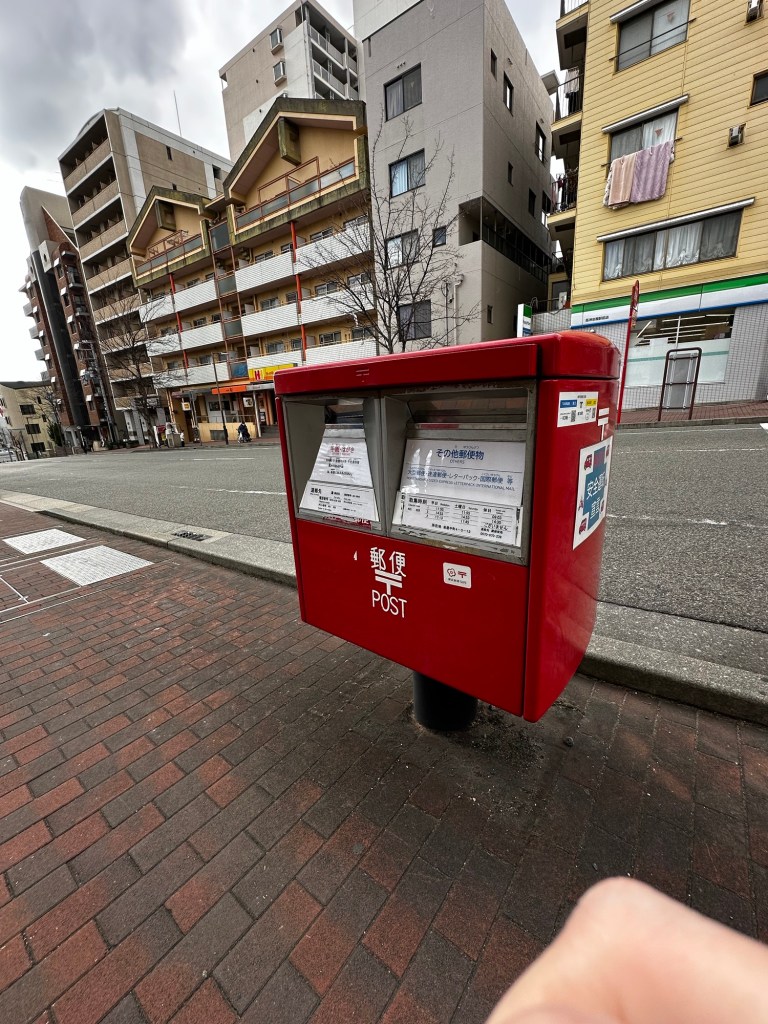
Still haven’t found a post office

The whole experience was both disturbing and inspiring. Disturbing because no one wants a high percentage chance of disaster and hearing real human stories of what happened was disturbing. But inspiring because our guide was an older man but full of energy and passion for the subject of weather and natural disasters and how we can learn from them and make things a bit better next time. And each volunteer asked where we came from and recognized Ireland and were delighted we had come so far to visit.

The green man for crossing the road, is blue in Japan

And the recent earthquake on New Year’s Day on the Noto Peninsula? At the moment the toll is 168 fatalities and 103 still missing. There are 31,800 people in shelters in the Ishikawa Prefecture. You read about these things on the internet or see them in the news but seeing this exhibition today brings these people and their experiences closer. Can you imagine, your home is gone and you’re living in an evacuation center?

We’ll be going to Hiroshima next week and I thought that would be a major emotional experience and it probably will be but I wasn’t expecting this museum to be so emotional. It’s hard to ignore pain and suffering when you see it clearly and even harder when there’s no one to blame. Bad things happen.

Lines of bicycles on every street with flimsy locks… untouched

I wanted to experience the things that made this culture different. I’ve seen the smiles, the dedication to work, the politeness, the kindness, the not-stolen bicycles and in this museum I see resilience. Last night in a local cafe an old man came up to us and nodded and smiled and looked so happy as he said, “Welcome”. He didn’t have any other English except the word, American. He asked, “American?” and we said no we were from Ireland. He nodded, smiled and went off. Knowing the history between these two countries how can he be so kind and welcoming to us whom he thought were American?
Leave the floor washing and follow your heart

We had a great night sleep. Very gentle rolling at 3am but otherwise smooth as a lake. We’ve just had breakfast, the highlight of which was the coffee. They must have a new machine… No the real highlight of the breakfast was the servers, they are always smiling.

We’ll be sitting around for the next six hours so I might as well tell you a story.

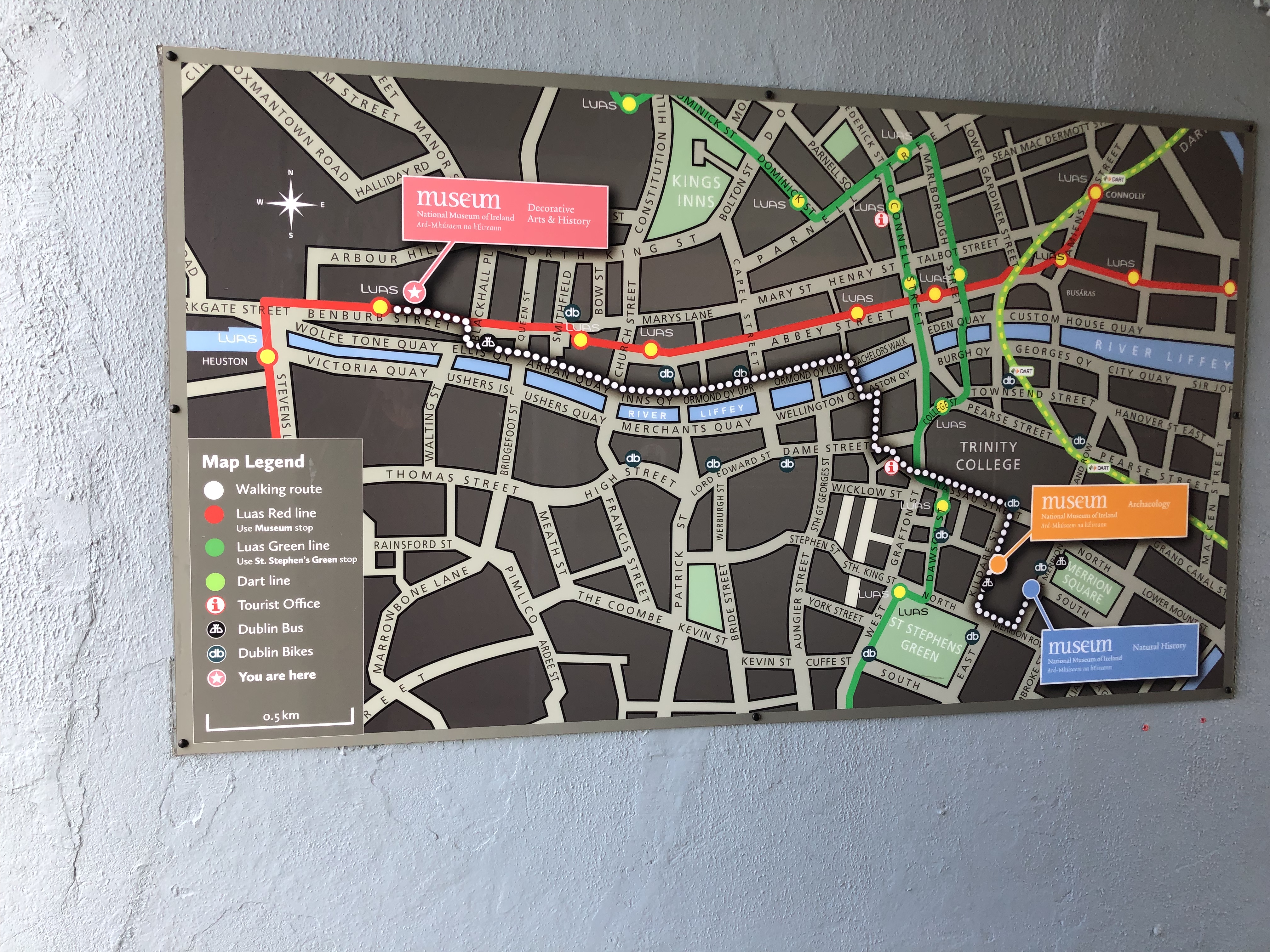
(Map of the National Museums in Dublin, all free entry)

About a month ago I decided to be waaay more organized preparing for this trip. I’d pack all my clothing early. I’d tidy the house and garden and I’d have neat little craft boxes with only a few crafting options to keep me focused while I was away. I thought it would make the last week easier – I love easier. As it turned out the last week wasn’t easier but the whole month was much more interesting than usual and I’m glad I did it that way but that’s a different story. This story is about a war museum.

On Wednesday morning this week I was right on track with the preparation and it even seemed possible I would have time to wash the kitchen floor (long overdue and a bit sticky to be honest.) Then my sister sent a text. She’d seen a video about an art exhibition in Collins Barracks which she knew I’d want to see. I did want to see it, I’d love to see it! It was opening to the public at 10am that morning and she didn’t know how long it would run. This might be my only opportunity.

Of course, I couldn’t go. The sticky floor. The meticulously planned day. The last few groceries. That bathroom could do with another run over. Plus there was a small possibility I could slip in two more craft projects under the bed in the van but only if I started unpacking the garage now. There was definitely no time for an art exhibition.

So I went to the art exhibition.
It was the right thing to do. I don’t exactly know how to explain it to you without expanding the story… How are you fixed for time? I have six hours to spare here.

Ever since I did an art course at BIFE (Bray Institute of Further Education) the story of how some women (a lot of women) were shamed and rejected by society in Ireland because they were pregnant and not married, was calling to me. There was a special place  these women were sent – Magdalene Laundries, commercial laundries where the women worked without pay.

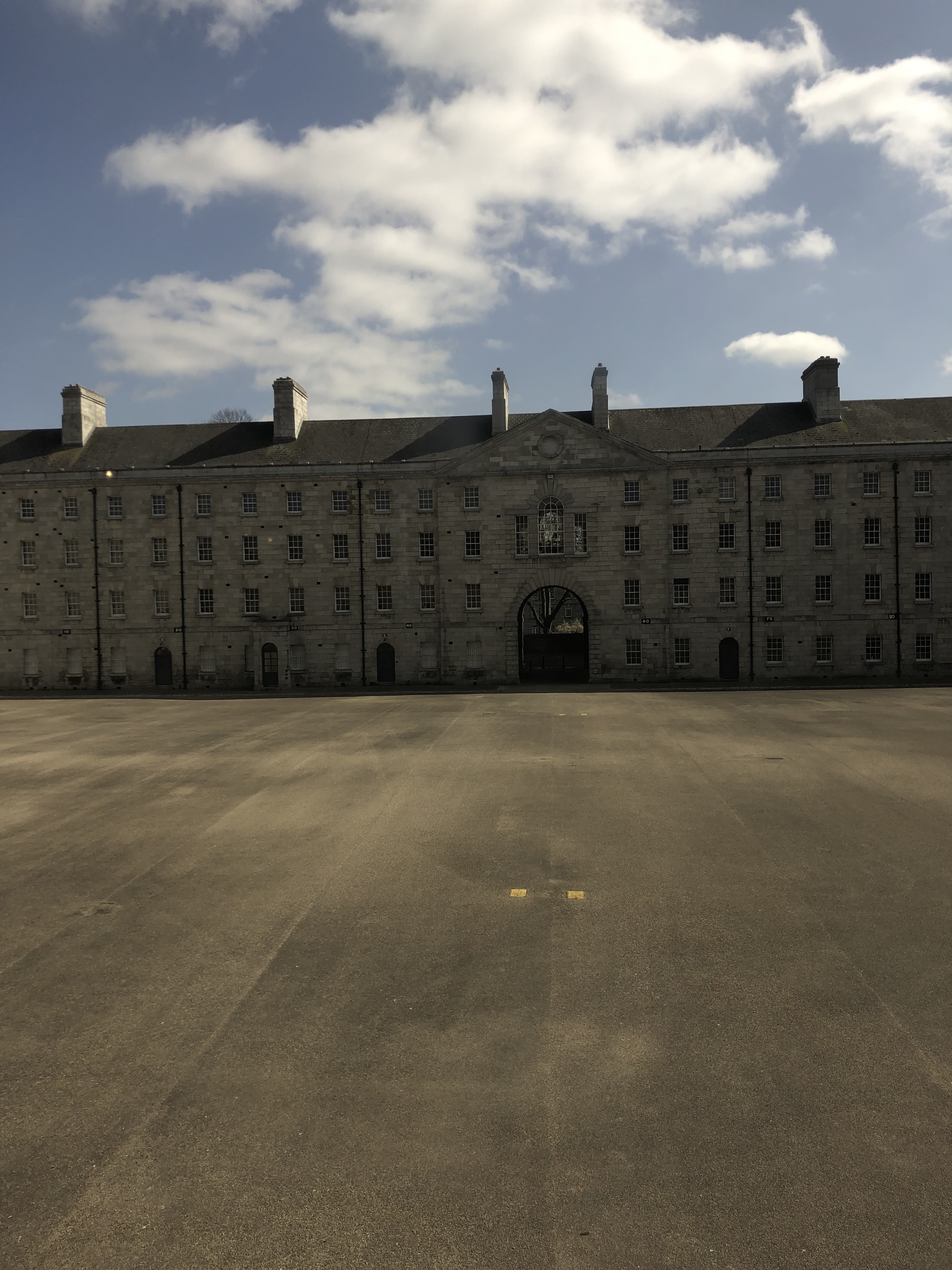
(One side of the courtyard at Collins Barracks)
At first I thought that you had to be pregnant to be sent to a laundry but orphans were sent there too. Sometimes when a woman died and her husband couldn’t cope he would send his children to a laundry or to the industrial schools. Sometimes speaking up for yourself or being a little different was enough to get you sent to the laundry. It was hard to get out and some women stayed all their lives.

I found the stories very upsetting. Something of the shaming of these women played into my own stories of shame.

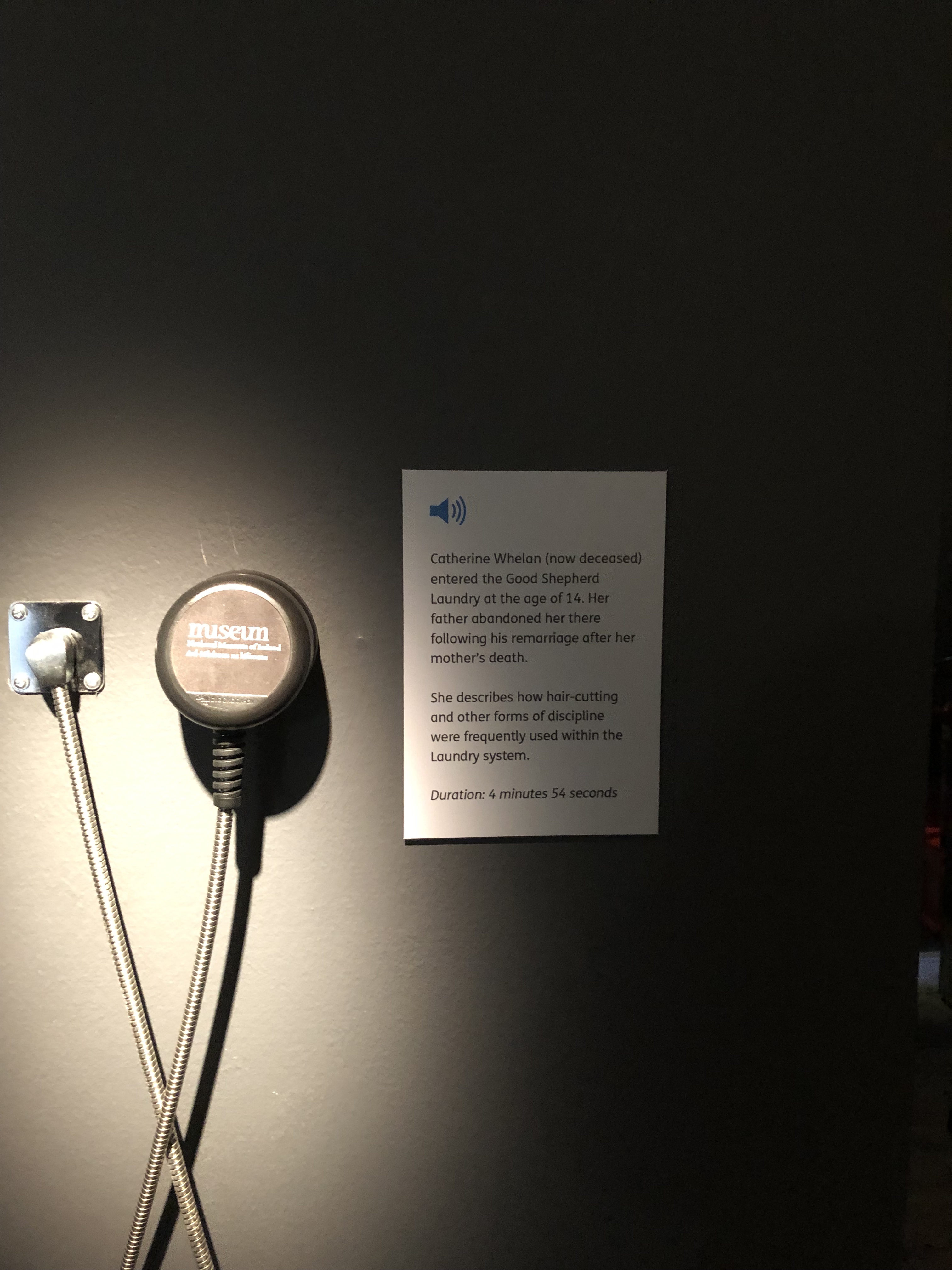
(There were recordings of Laundry women)

Fortunately I had an outlet on my course and I started making art pieces inspired by their stories. I made white porcelain aprons for the white aprons the women had to wear in the laundry. I made pregnant grubby aprons on the reverse of stretched canvases for the shame they endured. I made buttons, loads and loads of ceramic buttons, for all the buttons they must have sewn back on the shirts of Ireland.

After the course I wondered what I could do with the things I’d made, how I could share them. Could I make a statement with them? Weirdly my stories of not being good enough and not knowing enough surfaced and I did nothing.

(A list of the Industrial schools in Ireland. I saw on this list that there was one in my home town. The scissors is made by the artist with glass)
Then last June my sister sent me a text (yes same sister, she’s lovely isn’t she?) to tell me there would be some of the women of the laundries going to the Lord Mayor’s house in Dublin. A committee drawn up by the government had gathered them together to discuss what they had gone through and to consider what could be done now. They would also be visiting the president of Ireland. This would be an opportunity for the public to show their support to the women. I went and stood on the footpath outside the mansion house and clapped and waved and cried. Something good happened there. Something opposite to pointing the finger and shaming. Ireland was different now.

Next morning I had an idea. Imagine if these women knew that Ireland had changed. You see most of them had kept their shameful secret. They had gone to London or America or Australia or somewhere no one would know what happened. They had started again. That’s the lucky ones, the others had died in the Laundry or were still there when they closed in the 1990’s and were moved to nursing homes. They had told no one of their time in the Laundry. How could they? What would people think of them? They didn’t know Ireland was different now.

It is different now, isn’t it?

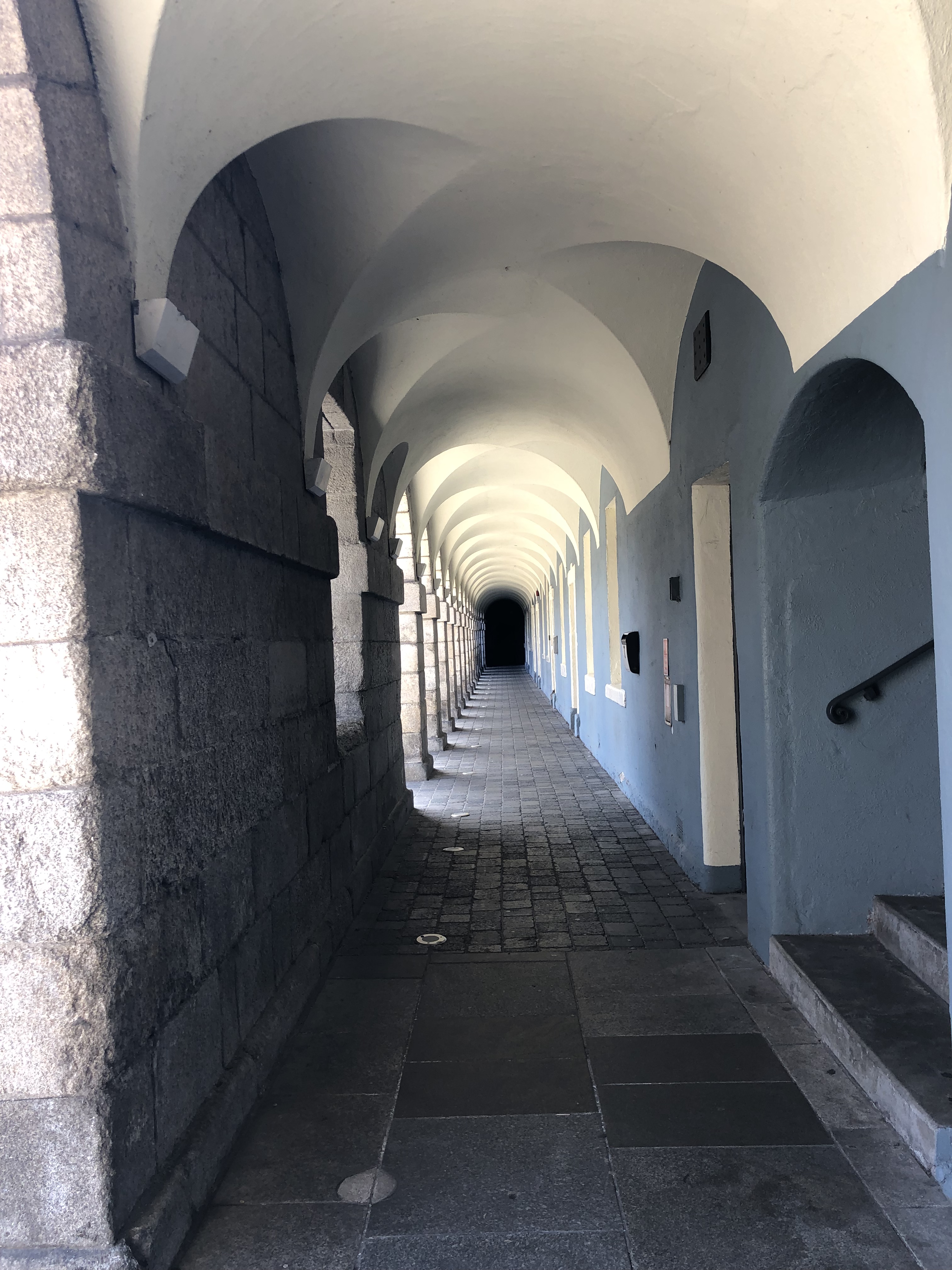
(Covered walkways around the courtyard at Collins Barracks)
I started a social media campaign. By that I mean I set up a Facebook page, a website, a blog, a twitter account. I posted and connected. I wrote to the minister of justice. I pestered friends to share. I sewed a load of buttons to safety pins and asked everyone to wear a white button in solidarity with the women of the Laundry. And then I went back to my normal life. I didn’t know what else to do. I want to believe we are a different more inclusive Ireland, I want to believe it. But I started to read about Direct Provisioning and I started to hear people complain about the media’s attention on the woman of the Laundry when they should have been paying attention to the pope. I started to hear people complain about hearing too much about the babies buried in a tank under an abandoned Mother and Baby home in Tuam.

(The exhibition)

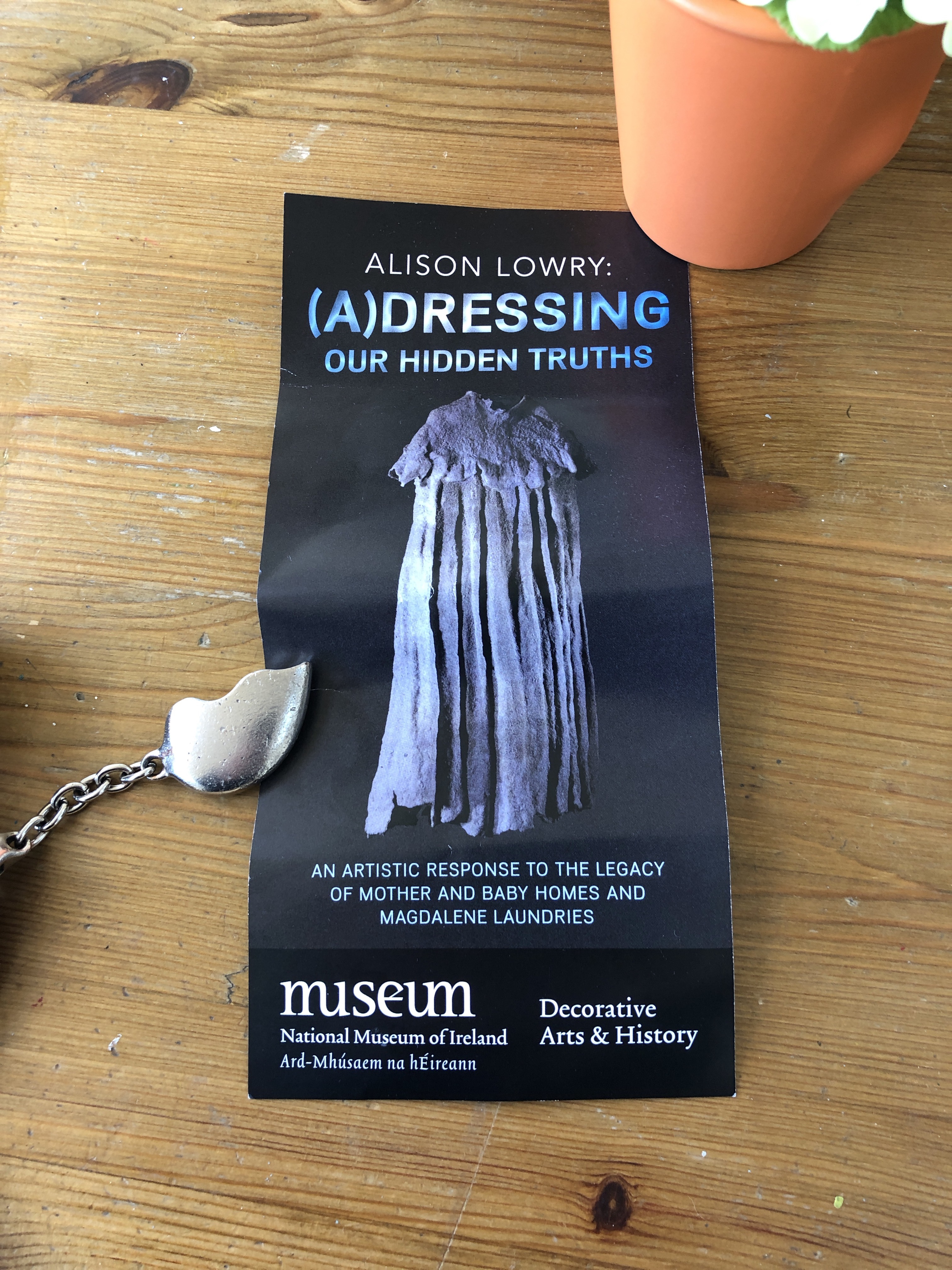
So on Wednesday I left the kitchen floor and went to see an exhibition where the artist, Alison Lowery didn’t let anything stop her until she finished her artist response to what happened in Ireland in the recent past. There’s a video by the artist explaining the exhibition, it takes 10 minutes, it’s worth it, listen. When I was leaving the museum I recognised the woman walking in. Without thinking I said are you the artist? She said she was. I mumbled the incoherent enthusiasm of a super fan, hugged her and went home. I will send her a link to this post as this is what I wanted to say: Thank you for having the courage and generosity to tell this story with your art. I’m a big fan of your work. More hugs.

Do you remember when I told you stories about visiting the war museums in France and Belgium? Do you remember how it was very emotional and I wondered if I should be visiting them?

(A corner of the courtyard at Collins Barracks)

Well there’s a war museum in Collins Barracks. I don’t mean the war of independence, the war against British rule. I mean the war against our own. Against each other. Against women. This one will be emotional and there will be no one else to blame, there are no baddie armies. It’s just us. Against us. Please go, I think you can handle it.

(A)dressing our Hidden Truths. An artistic response to the legacy of Mother and Baby homes and Magdalen Laundries – Alison Lowery. Collins Barracks Museum Dublin. It runs for the year.

Until tomorrow, Mairead.

PS. Didn’t fit the extra crafts or tidy the garden but the kitchen floor is washed!

Pps: This year I’m going to use one of Denis’ apps (REGOapp.com) to help me show you exactly where we are. On the map above the yellow dots show Greystones, Rosslare Harbour, Cherbourg and Mont St. Michel.

Soaring at Soure

2018 9

(Cars go down this street… granted it’s one way)

We have arrived in a really friendly town, called Soure. Initially we had been pronouncing it Sewer but we discovered it is pronounced Soar – much more appropriate. There’s a castle here and if the torrential rain will just hold off for fifteen minutes I’ll go and get some photos and maybe a little historic information. There’s also a museum so I’m definitely going to that. Two rivers meet at the town’s edge and there are lots of old bridges, one particularly narrow. Thankfully they have put lights on it so only one car can go across at a time. There’s a library here too, with free wifi. Denis spent some time there yesterday afternoon, so I’ll have a look today.

2018 3

(Igreja de S.Tiago… big clock)

When Denis got back from the library we went off for a walk around the town, hopefully I will have pictures by the time you read this, if not,I can tell you: the streets are narrow and cobblestoned with old buildings. We stopped off at a cafe for a drink and when Denis got up to pay, one of the customers came over to talk to him. It was the chief of police (I think that’s what he said) and he wanted to welcome us to Portugal! He had brilliant English and he was very familiar with the history of the area and of Portugal.

2018 1 2

(Here you go, Grahame! From one police officer to another!)

He told us that Soure was given a charter by the King in 1111 for its critical role in the war against the enemy at the time (Moors I think). Our friend, the chief of police, had travelled a lot in his work and I guess he recognised that travellers like to meet the locals. We certainly liked meeting him. He introduced us to the Lupin bean, something the locals were nibbling alongside their drinks. Never heard of it before but it’s on Wikipedia if you’d like to find out about it.

2018 7

(Stained glass window in Igreja de S.Tiago. Now I’m wondering if that’s a shell on his hat and if Igreja S.Tiago is the Portuguese way of saying Church of Santiago? Is Soure on the Portuguese Camino de Santiago?)

He also told us about roman ruins at Monografico de Conimbriga, just 12 km from here. I’ve searched for them on Trip Advisor and  they look and sound very interesting so we’ll head off to those tomorrow. We chatted happily for about an hour and then Denis and I left in great form to find the local tapas restaurant. It was dark so not easy to find. I was hoping for a sign… when I looked up and saw a Guinness sign….right over the tapas restaurant! I guess that was a sign. We had very tasty chicken gizzards in a spicy pepper sauce. Yum!

Main message from our new friend: Portugal is very safe and you guys are very welcome over here! Mairead.