Lisbon by Train, Boat, Tram and Scooter – Part 1

(Love the colours. Cafe near the train station at Cais Sodré)

We went to Lisbon on Saturday. If you remember I was to be the tour guide and Denis the tourist. We set off at 8.30am to get the metro train (tram) from Corroios. Corroios turned out to be a bit of a hub for transport. There was a train north to Lisbon or south to Setúbal (also worth going to, tell you soon). There was also the metro tram train that went to Cacilhas and the ferry port. Also a bus just across the road from our parking spot going into central Lisbon. Then more busses within a twenty minutes walk.

(From the ferry, see the bridge?)

We were taking the ferry! It’s a passenger ferry that takes commuters from the south side of the estuary to the Lisbon side. Plus there’s a bonus – it’s two minutes walk from the port to the Time Out Market. Denis loves this place so it was to be our first stop. It’s an old food market with a new section with restaurants. It’s like an upmarket food court for good food from Portugal. We arrived about 9.45am but it wasn’t open yet.
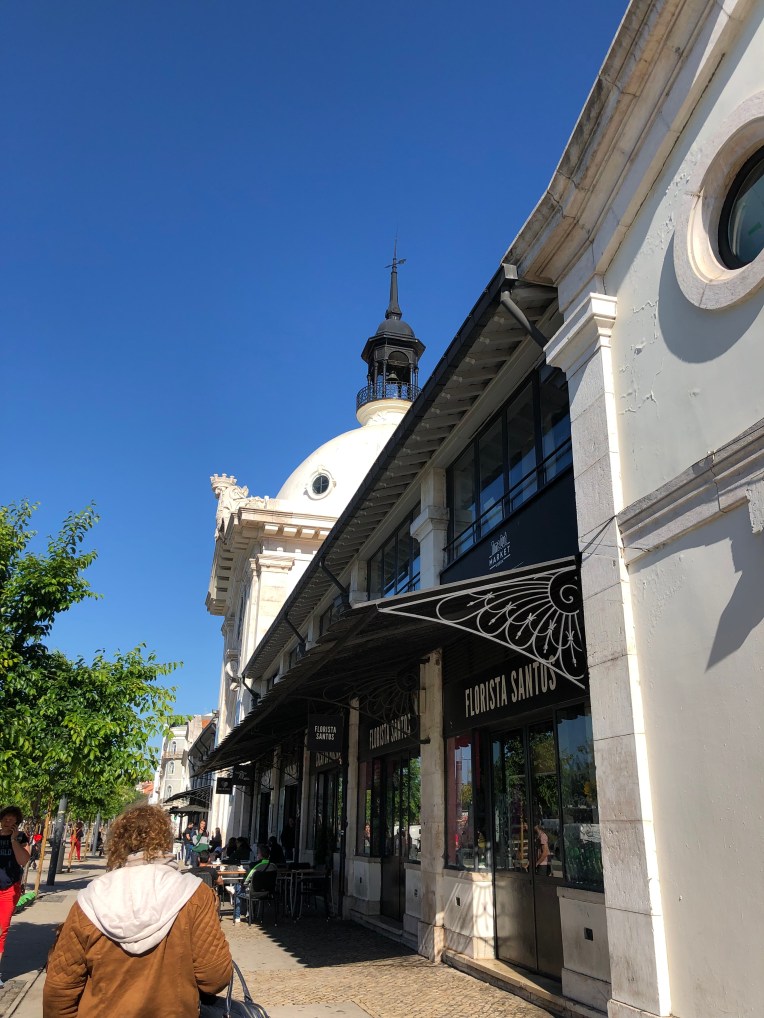
(The outside of Time Out)

If you decide to run your own tour you might want to check the opening times of the attractions. Fortunately, I had built a little flexibility into my planning (sure I had) and there was a cafe on the outside so we loaded up with coffee and cake. Course we did.

(See the sea in the distance? That’s how far we’d walked and we weren’t there yet…)

Then we walked to the next attraction. It was only an 18 minute walk… but it was uphill and the temperature was rising. (Top tour guide tip: check the gradient of walks, over a certain percentage your clients may need public transportation.) My plan was to walk to the Ascensor Da Glória. You may not know this but Lisbon is built on seven hills. We were getting to know theses hills, exhaustively. My next two attractions were very old ways the people of Lisbon invented to cope with their hills. The Ascensor Da Glória is an old, old tram (technically not a funicular, seemingly) that travels up an impossible incline so you don’t have to.

(There it is, ascending)

We were almost there. I was following google maps and we had just one more street to go and it looked pretty straight on the map so no room for error. Well no room for that kind of error, I had made a different kind of error. I couldn’t believe it. We had arrived at the top! Google maps was directing me to the bottom of the incline via the route of the tram…

(There’s the driver and his empty Ascensor da Glória)

But Denis didn’t know that… hey look at this! Yes lovely. We waited for 190 (felt like it) people to get off and then the two of us, the driver and a local got on. No one, no one goes down the Ascensor da Glória, the hint is in the name. But hey, remember the best tours take you where the locals go, the locals go down, only the tourists go up!

Tour guide in training, Mairead.

Tour Guide for Hire

(Marigolds from Sintra)

We’re going into Lisbon tomorrow and I’ve a great tour organized for Denis. Isabel can’t make it so I’ll be the guide but he doesn’t know that yet. (I used to be a guide on the Rock of Cashel, did I tell you? I did? That many times? Oh right.) There’ll be food and coffee and many different forms of transportation. There’ll be stories, some of them true. There’ll be lots of walking and chances to engage with the locals.

(Twilight in Mafra)

That will be tomorrow, yesterday we parked in a residential area on the other side of the river from Lisbon. We were planning to go into the city but it was Freedom Day so everything was closed. You might remember Freedom Day from last year? We sure do. We were in a small town in the Algarve waiting for Ruby’s clutch to be fixed. Everything was closed.

(Aqueduct on the motorway)

That was last year, today we are happy in the suburbs and we’re getting to know the locals. I discovered (via google) that there is a coffee called um abatanado which is very like an americano so I order it every time now. Unfortunately, something about all the a’s in it gets me mixed up. I say ambatono or abentoto or anando. None of which is correct but because my efforts are always combined with a help-me-out-here pained expression I am generously understood.

(Organic wall, Alcobaça)

One of the things we loved the most about going on tour with Isabel in Porto was connecting with the locals and we sometimes forget we get to do that with every coffee experience. So I’ll definitely be including lots of coffee experiences tomorrow.

Say it with me, Um abat-an-a-do por favor. Mairead.

(There we are south of the river (estuary?) free parking, free water, 10 minutes walk to train or 1 minute walk to bus for Lisbon)

What’s an inverter?

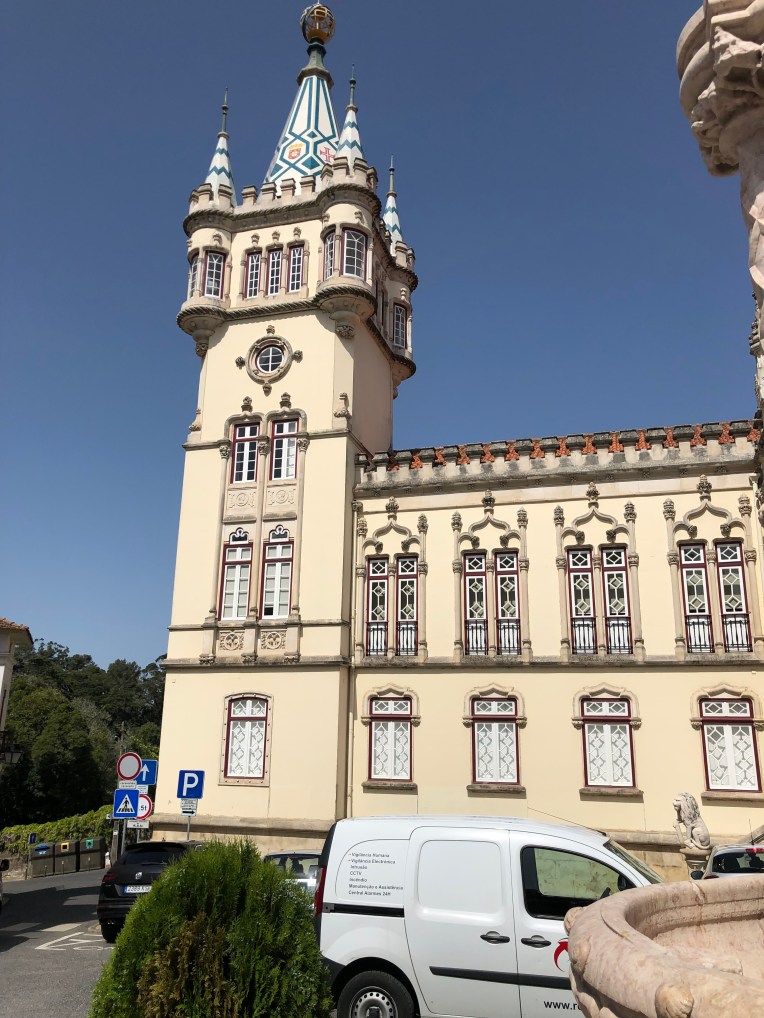
(All the buildings in Sintra were ornate)

Our inverter broke last Thursday. It’s the thing that converts the solar energy into electricity to charge the computers. Usually it has a low pitch hum and drones on in the corner doing its inverter work making me ask regularly, can we turn off the inverter? Well last Thursday it turned itself off for good.

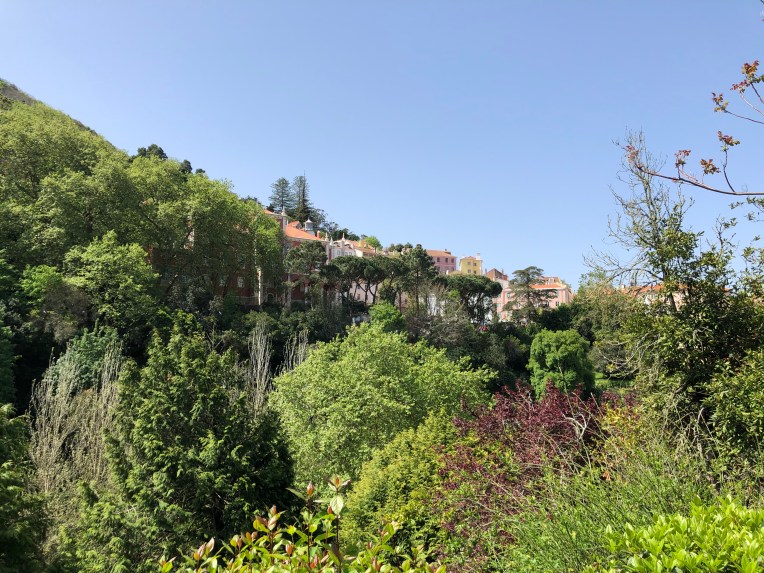
(Lots of green in Sintra)

Not good at all. It’s a big deal and kind of important if you’re using your computer every day. At the time we were in Mafra and there was free electricity so we weren’t stuck but we’d have to leave there sometime… Denis started searching the internet for motor home shops in Portugal and found one in Sintra. Just 20km away.

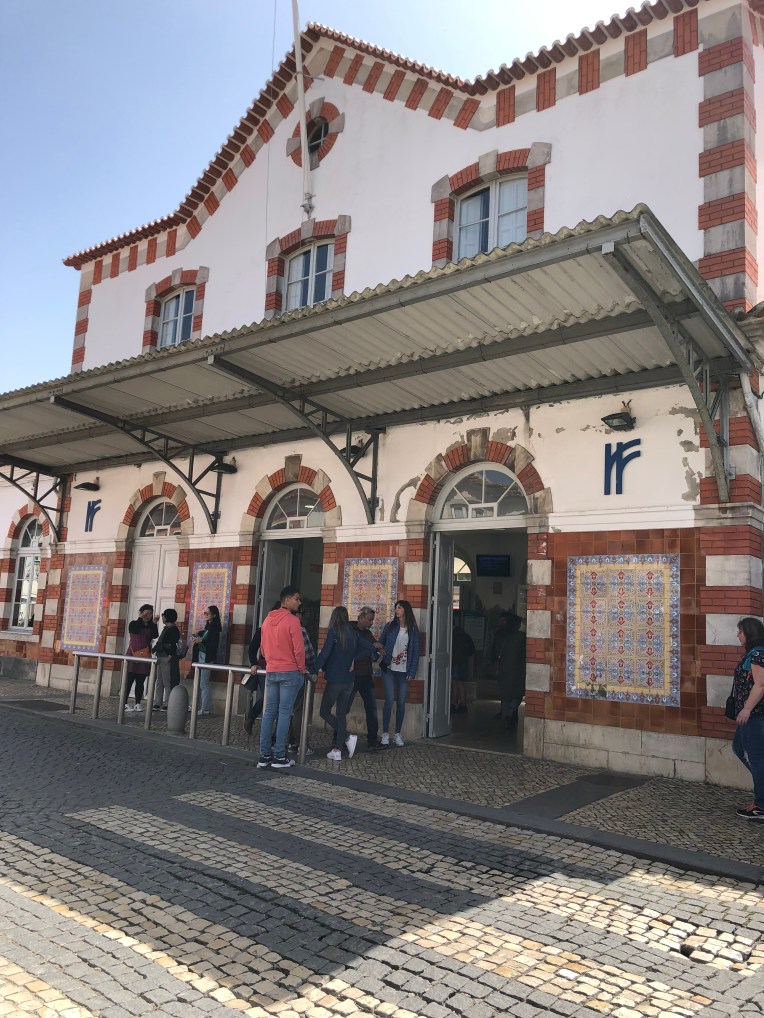
(That’s the train station)

Sintra is beautiful so we could go visit when we were done. But the shop was closed on Friday – Good Friday so we’d have to go on Saturday. We did. We got the inverter! Yaa! Then we found parking at the train station outside Sintra. Now, Sintra is busy at the quietest of times but this was Easter Saturday so not the quietest of times. The place was jammers.

(Various forms of transportation)

We took a break from the crowds at the first cafe we found and celebrated finding the new inverter. We then paid the most we’ve ever paid for coffee and natas in Portugal and it was still about a third of what we would have paid at home. So we celebrated that with a leisurely ramble around Sintra.

(I think that’s a castle up there)

I’m not exactly sure which part is Sintra or maybe it’s all Sintra. If it is then it’s huge. This is where the royalty of Portugal used to come on their holidays. It’s very pretty, lots of hills, trees, old and unusual buildings, old and colorful buildings and people, lots of people. An hour wasn’t going to make a dent but we got the atmosphere and I’m definitely coming back again. I did visit last year but I was with a group of friends and spent most of my time talking and not much time immersing. Sintra requires a long soak.

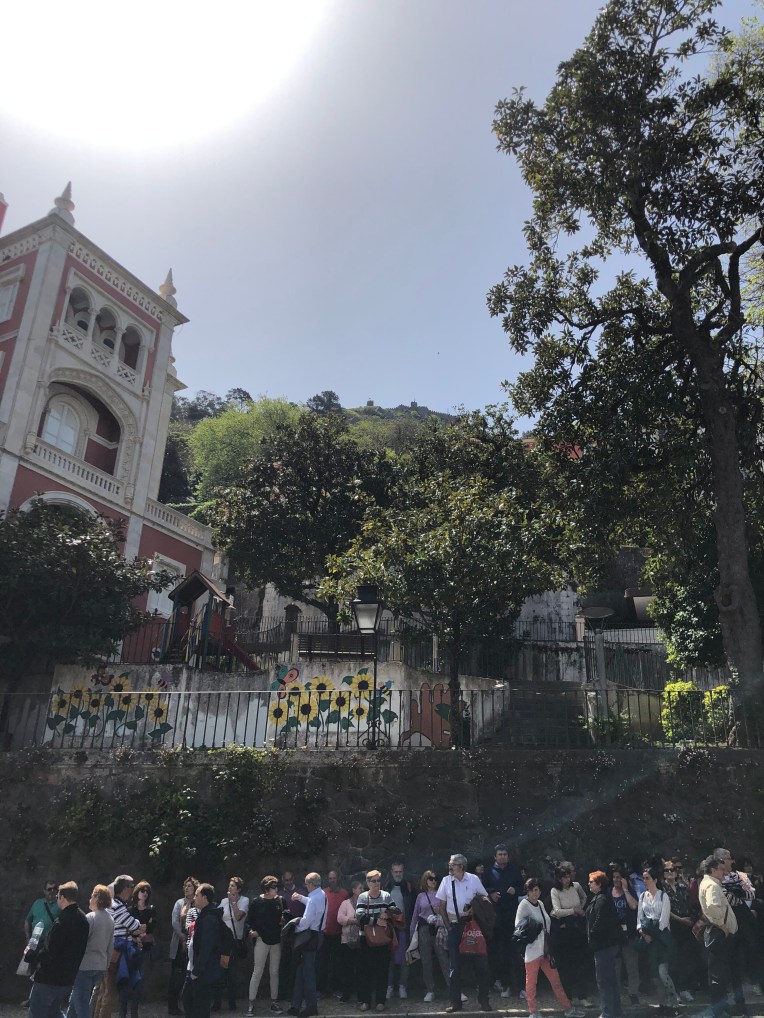
(Long queues for the busses)

Afterwards we drove to Ericeira where Denis fitted the inverter. We have power. Not for the first time I am reminded of the small things that make life easier but that I forget to appreciate. Sintra is probably one of the most beautiful places in this country but the drone of a working inverter seems just as beautiful at the moment.

What are you forgetting to appreciate? Mairead.

The heat is on…

(Nice spot to wait for the laundry to dry on Sunday)

That title is supposed to say the heating’s on… we’re dipping below two digits on the thermometer again and as I’m not talking about the rain I can’t tell you about what’s happening outside. Oh but it’s windy enough to shake Ruby.

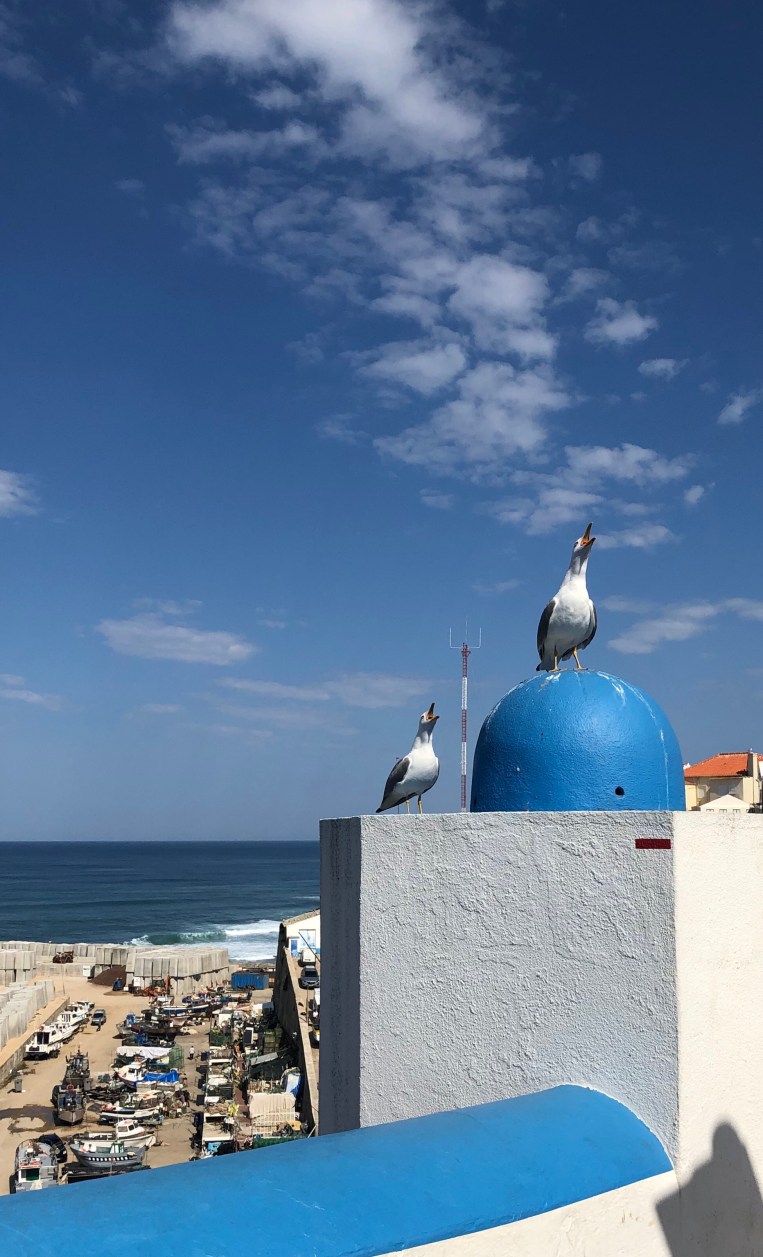
(The seagulls were having a bit of a sing along at the fisherman’s beach in Ericeira)

I’ll tell you what we did for Easter Sunday instead. We had dinner in the Intermarche. The Intermarche is a French supermarket chain here in Portugal.

(No fishermen but a few surfers)

While we were parked near Ericeira on Sunday doing the laundry we noticed a queue at the cafe in the supermarket. A very long queue, which made us curious. What are they selling? Why are these people willing to queue for it on Easter Sunday? How could we find out?

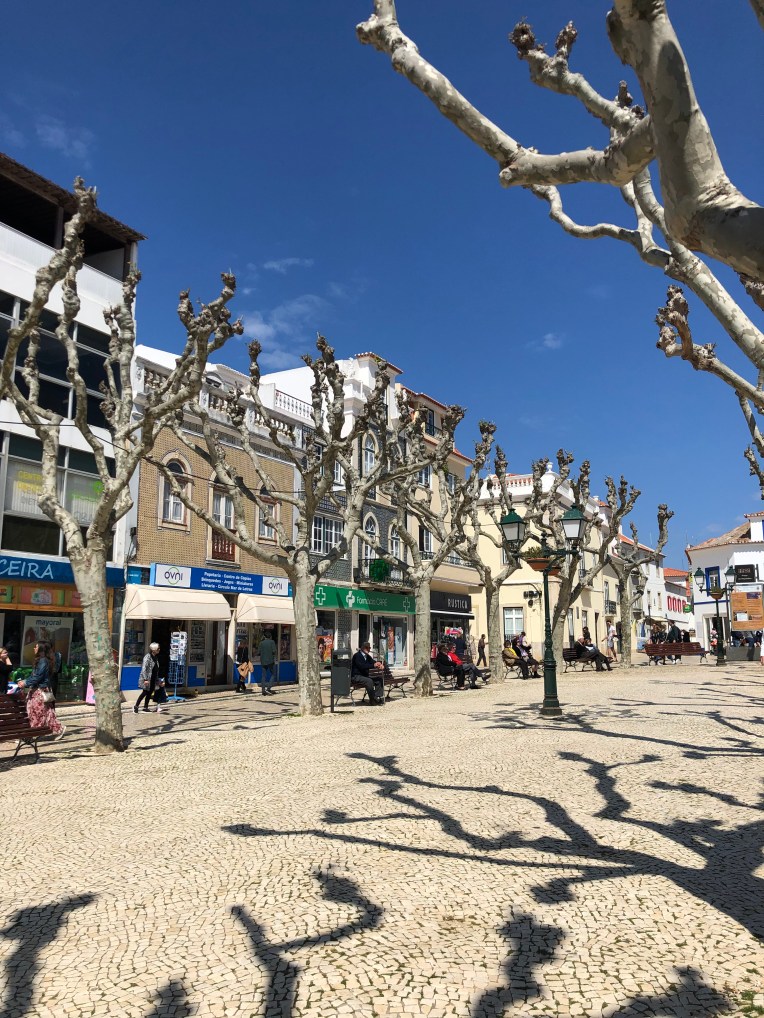
(Town of Ericeira)

We joined the queue. Well we joined the wrong queue to be precise. It was 12 noon, the queue started to move. As we got closer there was a choice to be made. Left arrow in blue with some Portuguese words and right arrow in red with different Portuguese words. We joined the left arrow queue. It was moving very slowly and when we got close to the top we noticed all the choices seemed to be raw…

(Saturday:Highest temperatures so far, left number inside van, right number outside)

We considered what this might mean. Probably not sushi. There was a Portuguese family behind us. I started with the boy who, I figured could be studying English, do you speak English? Alas, he mustn’t have been studying very hard he gave me the universal sign for not really. Behind him his granny gave me a huge smile, her son was next, they were a very smiley family. Finally the mum, she could speak English and explained, this queue was if you wanted your meal cooked from raw. The whole family smiled and nodded as we left that queue.

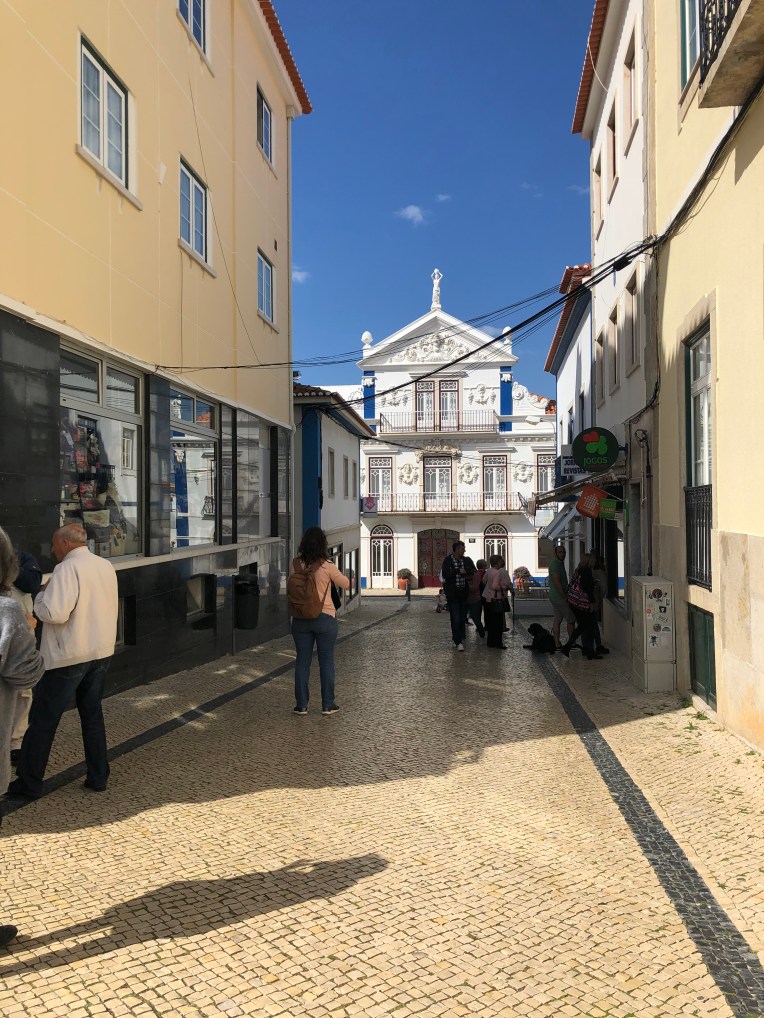
(Lots of blue and mustard trim in Ericeira)

So we found the other queue and all the food was cooked but it wasn’t easy to work out what it might be. Do you speak English? I asked the lady serving. She did. So I asked her what’s that dish there. It looked lovely. But I surprised her by asking in the middle of a busy queue on Easter Sunday, so she got stuck. You know how it is when you can’t remember the word for something? It often happens to me when I’m tired and I can’t remember the word for something. In English, I mean.

(We were loving the shade on Saturday)

So there she was trying to recall the word and the whole queue was holding its breath and the other servers were watching her and time stood still. Finally she said octopus! Would you have said lovely, I’ll have that? I so wanted to say lovely sad I would have… for anything other than octopus… I had a pained expression on my face when I said no sorry what’s that one beside it?

But I needn’t have worried she had found her stride and told me it was cod fish. You remember Isabel told us about the Portuguese love of cod? I could redeem myself and I did. Yes, please I’ll have that!

(Easter Sunday dinner with a view)

As I keep telling you everyone tries to help us and even when they can’t speak English they make us feel really welcome with huge smiles.

Easter Sunday dinner for two with beer, water and orange juice at Intermarche Ericeira? €10.20. Mairead.

How to say Green Tea in Portuguese

(Look at the book paper butterflies!)

We’re sitting in a cafe in the afternoon both in our phones. This is so romantic… well maybe it is. Isn’t romance when the other person turns up with just what you wanted? Or when they ask you what you want and then bring it to you? Or when they’re interested in you and your interests?

(Can you smell the bread?)

Anyways, we’re both interested in reading (him) and writing to you (me) on our phones and that’s how we do romance here in the cafe in Portugal. Plus the sun is shining after a downpour this morning. I was on my get-some-photos walk when the hailstones started. I did have a rain coat and an umbrella but I still ended up with soaking jeans. They’re dry now and the rain clouds are gone… so maybe I’ll stop talking about the rain. Sure I will.

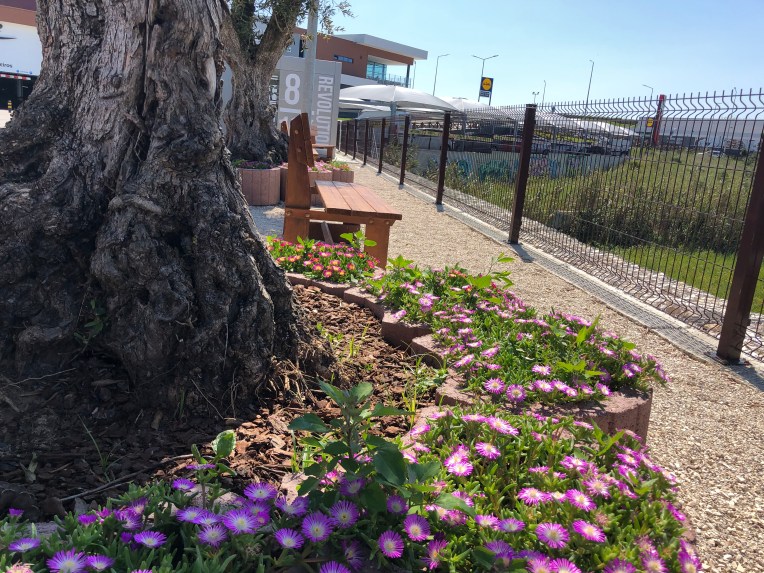
(Flowers in the park)

When we walked in here (to the cafe) there were two ladies chatting and as the locals do I said Bem Dia (good day) and they said Bo Tarde (good afternoon). I think you can say good day at any time.. but it might be just for mornings? Then I asked for thé vert which is the French for green tea… and the waitress said Chá Verde, the Portuguese for green tea.

(That’s how you say green tea in Portuguese)

All this to tell you, no matter what you want to say the Portuguese will help you say it. They are very welcoming and interested in what you want. Like I said romantic.

Isn’t it lovely when someone is interested in you, Mairead.

What to do if there’s a petrol shortage…

(The front of Alcobaça monastery)

We hadn’t heard of the town of Alcobaça (pronounced Alco-Baza, I think) and I don’t know why. It’s very impressive. To begin with there’s s huge cathedral and monastery in the middle of a very cute town. The motor home parking is less than 5 minutes from shops, restaurants and the monastery. There’s free electricity and the parking is free!

(Inside the cathedral)

We were here when the news hit that the tanker drivers strike was causing shortages of petrol and diesel. We had filled up the previous day, fortuitously, so we safe enough. We had everything we needed (culture, food, drink, electricity, shopping, post office) and Spain was only two and a half hours drive away, if the strike continued. It didn’t continue.

(One of the courtyards)

I have some advice for you if you should ever find yourself in a similar situation…

1. If you can manage it at all, fill up with petrol (or diesel if that’s what your vehicle takes) before the strike starts. 2. Park somewhere with a nice historic monument. 3. Ensure there are grocery shops, cafes and restaurants nearby and some electricity. 4. At all times ensure you are within walking driving distance of another country. 5. Find a local who speaks English and pester ask her for hourly updates on the strike. 6. Go for regular lie downs because you will be feeling very stressed.

(Art piece: metal basket with knitting needles)

For balance here’s Denis’ advice: 1. Carry on as normal.

I’m not sure he took the whole thing seriously enough, Mairead.

(Alcobaça. Free parking, near town, free electricity, €1.50 for water)

What were you thinking?

(Nighttime in the sand dunes of Figueroa da Foz)

Next morning we headed for Figueira da Foz. This town was recommended by a Portuguese Camino walker friend who was here. It is lovely, thank you!

(An adorable statue gifted to the town for their role in world peace)

There’s a huge, gigantic sandy beach and huge sand dunes. Huge in coastline and in distance from land to water. Very impressive. There’s also a cute little old town with plenty of cafes and restaurants and even a casino.

(Wording at the statue)

We were in a restaurant in the old town on Monday night when we saw Notre Dame was in flames. (Did I mention every restaurant has a tv or two playing constantly?) It was a strange moment of disbelief, shock and sadness.

(Our view)

Since then I have been wondering why I was so affected. Yes, I have seen the cathedral in real life. No, I was never inside. No, I have no special memories attached to it. No, I’m not (secretly) French. And yet… I was upset. On top of that I had this intense interest in discovering if it was an accident or an attack.

(There was an old fort across the road with bunting)

It turns out it’s not the cathedral burning that’s upsetting me. It’s the meaning I was applying to the burning of this famous place that’s upsetting me. You can see a hint in the fact that I am so interested to discover if it was an accident or an attack. I have given that meaning too.

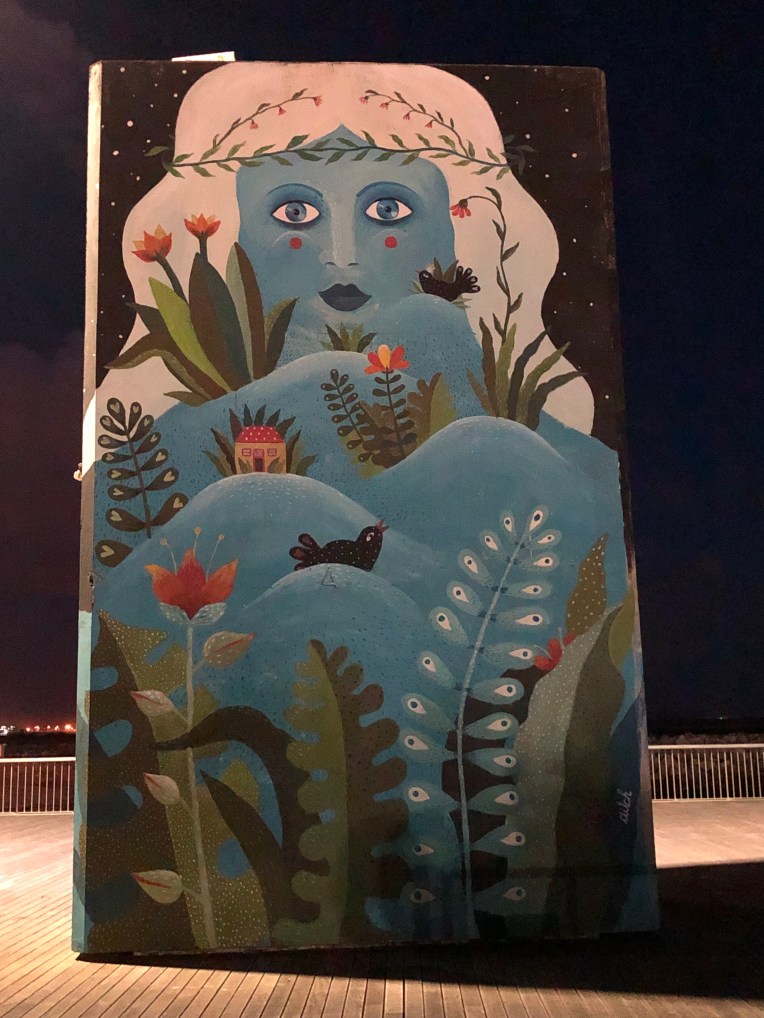
(Huge art piece on the boardwalk)

So what meaning is my mind giving to this situation? My mind thinks that if a huge part of the definition of Paris can be destroyed then nothing is safe. If nothing is safe then I’m not safe. That’s very upsetting indeed to my mind. And what about my interest in the cause of the fire? The difference between an accident and an attack? An accident is less frightening because there are no baddies when it’s an accident. No baddies means no future danger to me, just an accident, all over now.

It definitely upsets me to realise I’m so self-centered, Mairead.
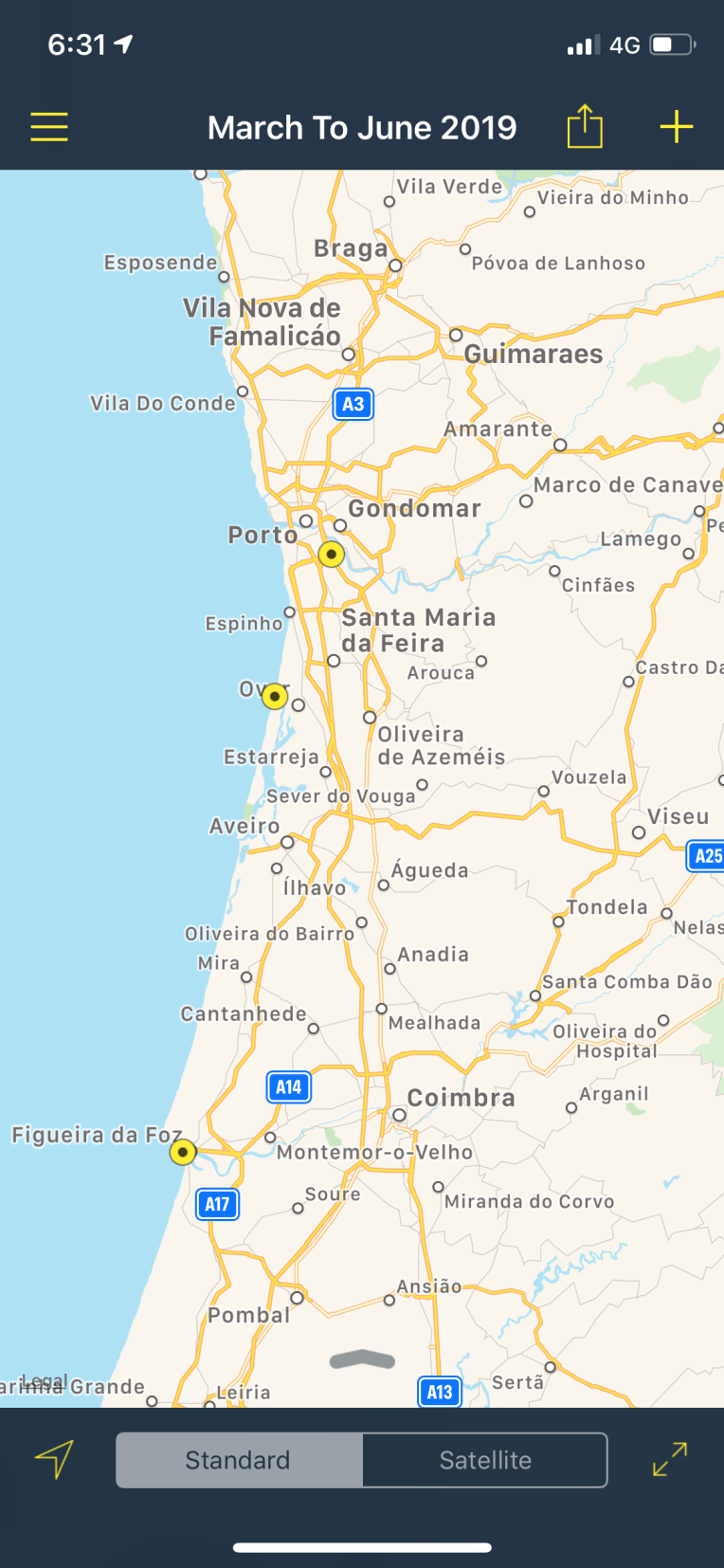
(Here we are on the map. Free parking in the car park near the fort at the beach near the old town)

What to do in Furadouro

(Look at those great clouds)

I’ve finally finished telling you about Porto. That was last Saturday and today is Wednesday and we have some catching up to do. First of all the fuel tanker drivers went back to work. That means there are no more queues at the stations and we won’t have to drive to Spain to top up.

(The Portuguese know how to enjoy nature)

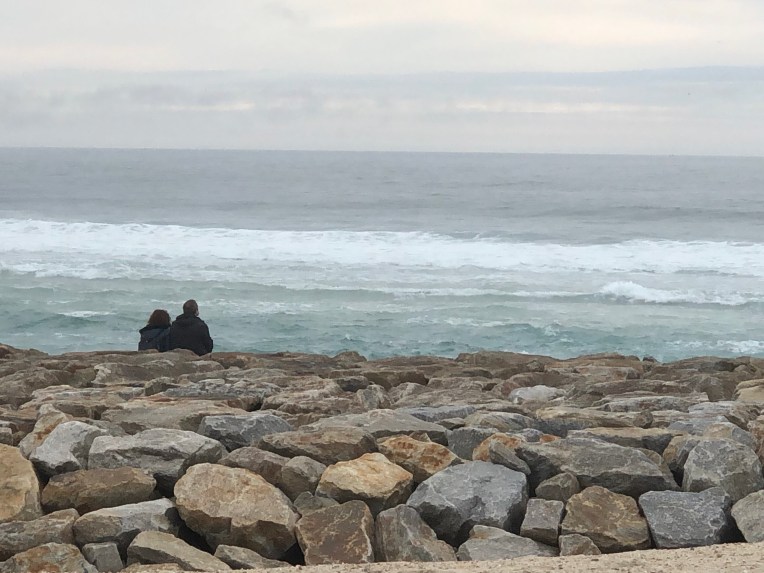
Our next stop after Porto was Furadouro, we’ve been here before, it’s a seaside resort and there’s free parking behind the sand dunes. We arrived on Sunday afternoon and the car park was full but by 8pm most had left. That’s because it’s a weekend destination for Portuguese motor homes and after they have shared a big Sunday lunch and washed up they go back home.

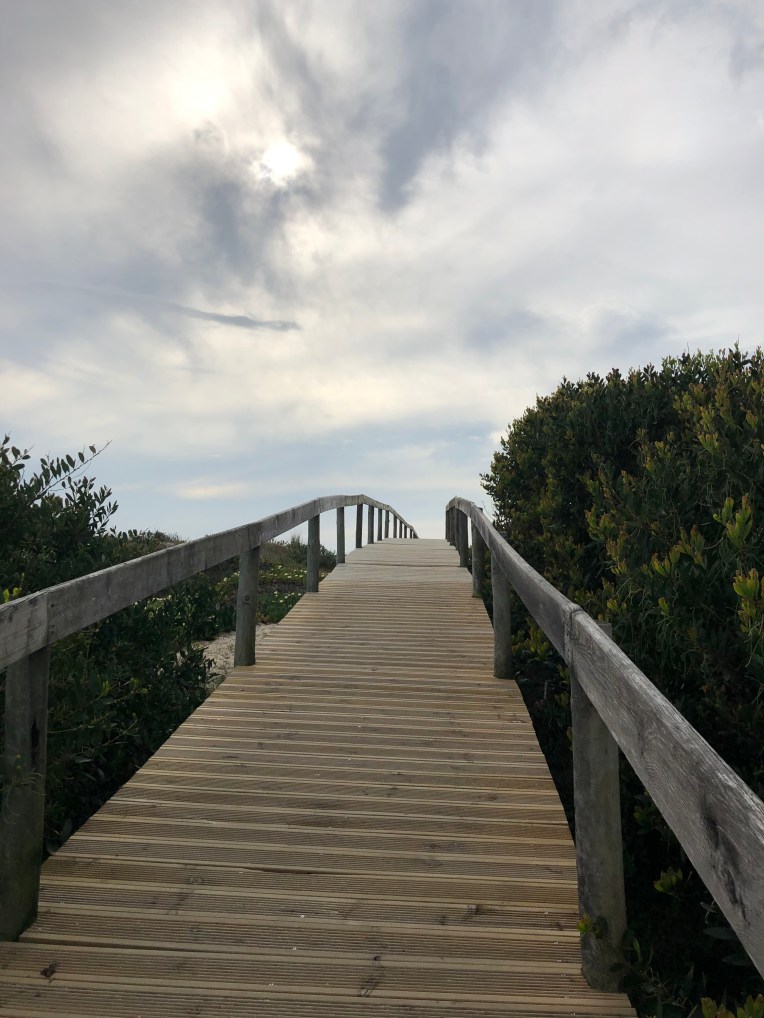
(There’s a boardwalk from the car park to the beach)

There were showers of heavy rain but we managed to get out for a walk in a dry spell. I think that’s something I need to get used to – it rains, more than I expect or want! In the past two weeks it’s probably rained every day but not all day. The other side of the weather is that when it’s hot and dry we attract mosquitoes and they love to bite us. They don’t bite us when it rains… hmm

Starting to appreciate the rainy days, Mairead.

(Furadouro is the yellow dot to the west of Ovar. Parking free, no services but near ocean, restaurants and small supermarket)

A Day in Porto – Part 4

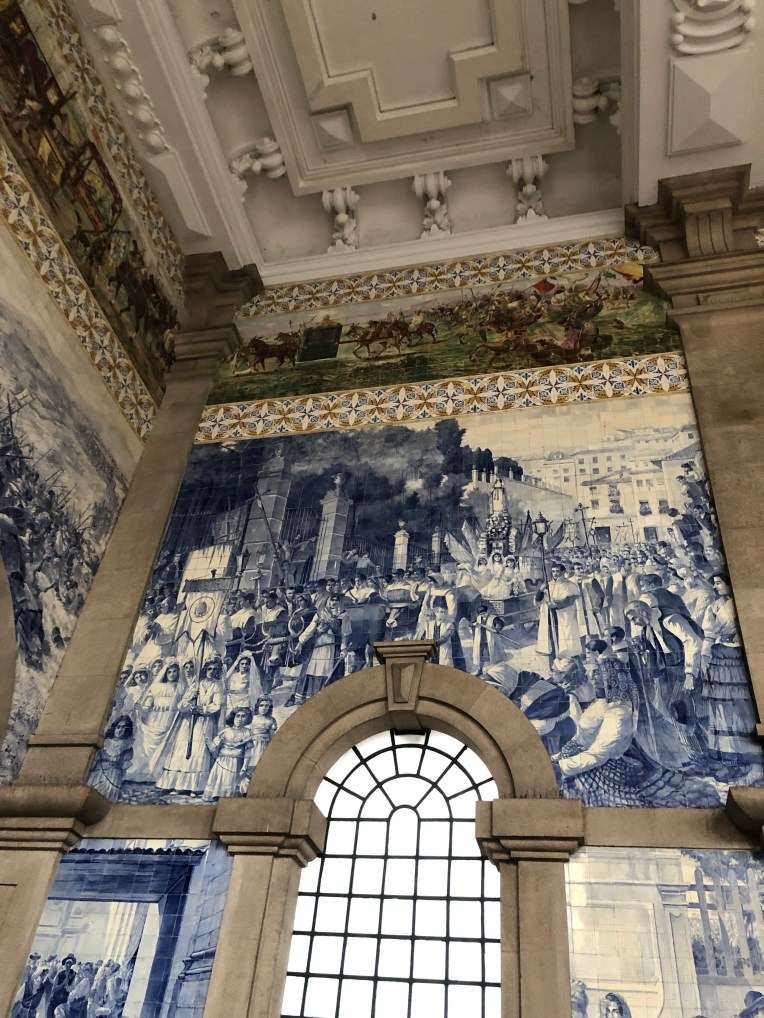
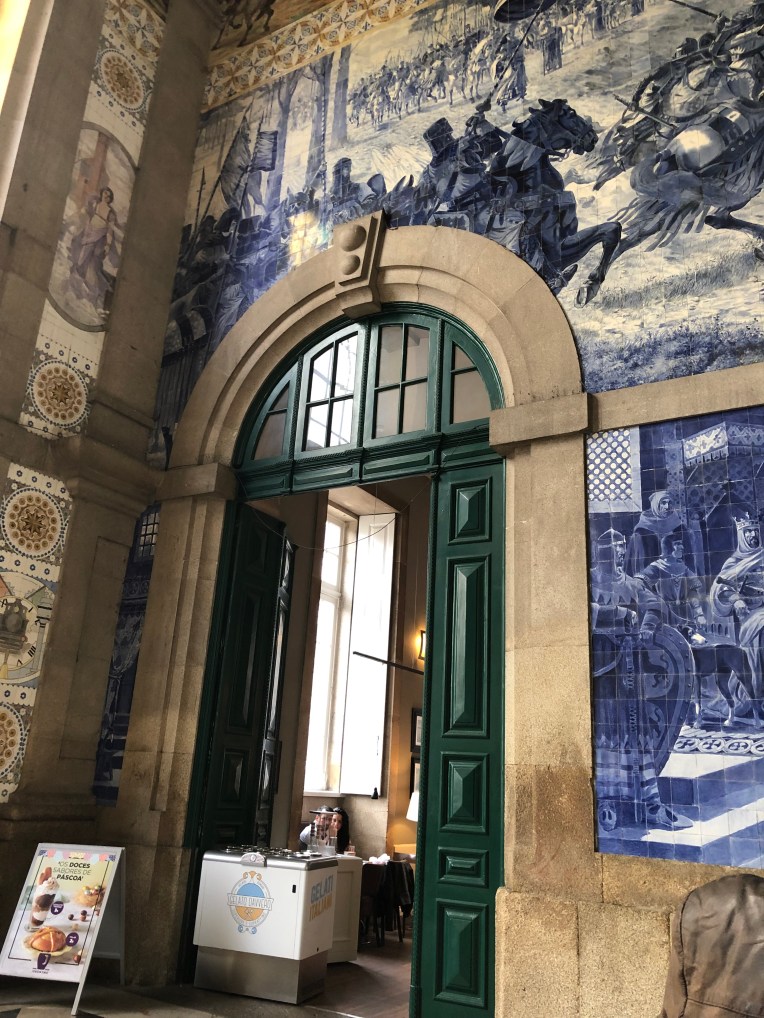
(Tiles at the second Porto train station)

Still talking about Porto although we have moved further south. I am writing in a cafe, the rain is falling outside and there’s a television playing constant breaking news. Although I don’t speak or understand Portuguese it’s amazing what you can pick up from the pictures and the tone of the speakers.

(More tiles)

And indeed the tone of the – up to that moment very quiet – cafe owner as he discussed loudly with a customer, what he was hearing on the tv. So at first it looked like a strike of tanker drivers and I was well able to ignore it but when I looked up and saw cars queuing outside petrol stations I got a bit more interested! At the moment we have plenty of diesel, enough to drive to Spain to get more… So back to Porto…

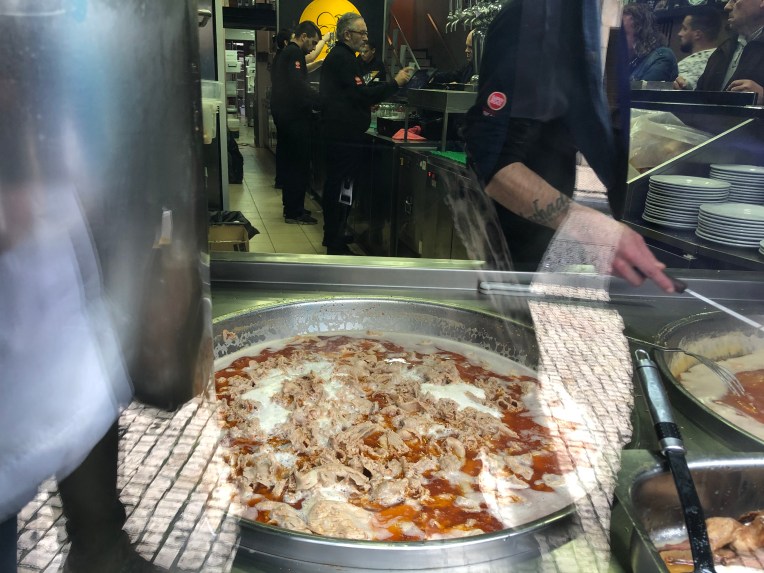
(Looking in the window at the pan of boiling hot spicy sauce in Congo)

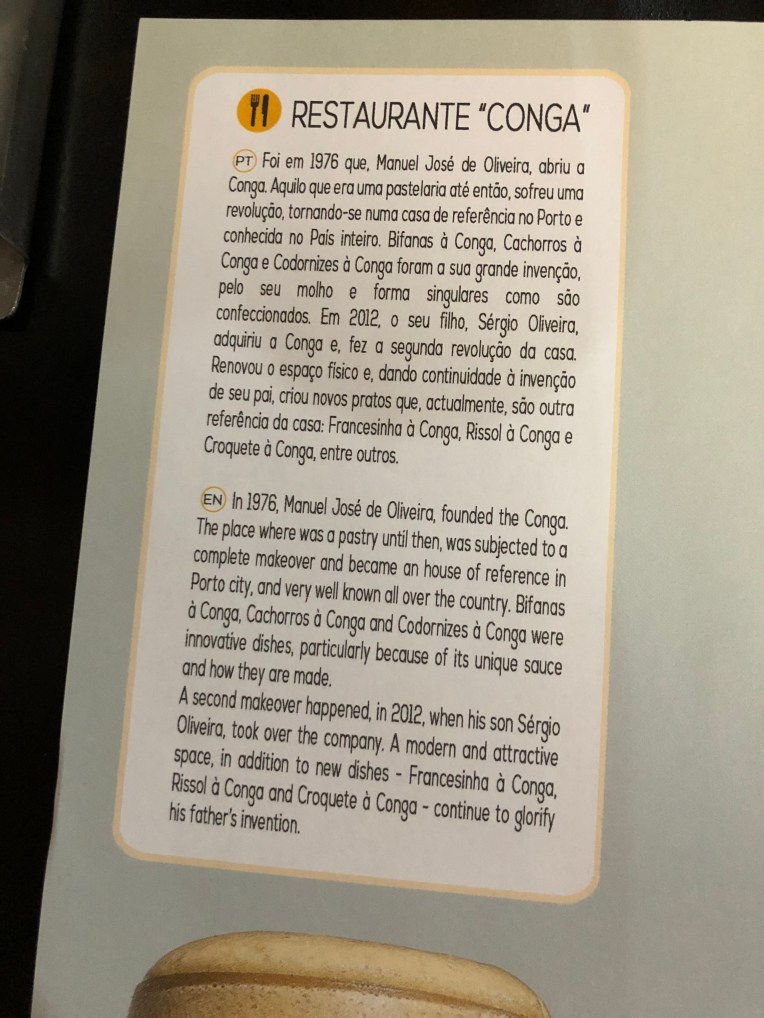
After the fish cakes we went on another walk to a restaurant called Congo. They have been here for decades. They are famous for their spicy pork sandwich. The spicy sauce is called Piri Piri and it’s boiled in huge pans in the front window. Then the raw meat, which had been frozen and sliced with a meat slicer, is added to the boiling sauce. This was served in a bread bun with a glass of beer.

(Congo’s menu tells the story)

Just in case that doesn’t sound very tempting, let me tell you it’s really tasty. Since becoming vintage I am a little concerned about my stomach’s reaction to spicy food. No ill effects to report, this was very good and had the added benefit that the bottled water tasted magnificent!

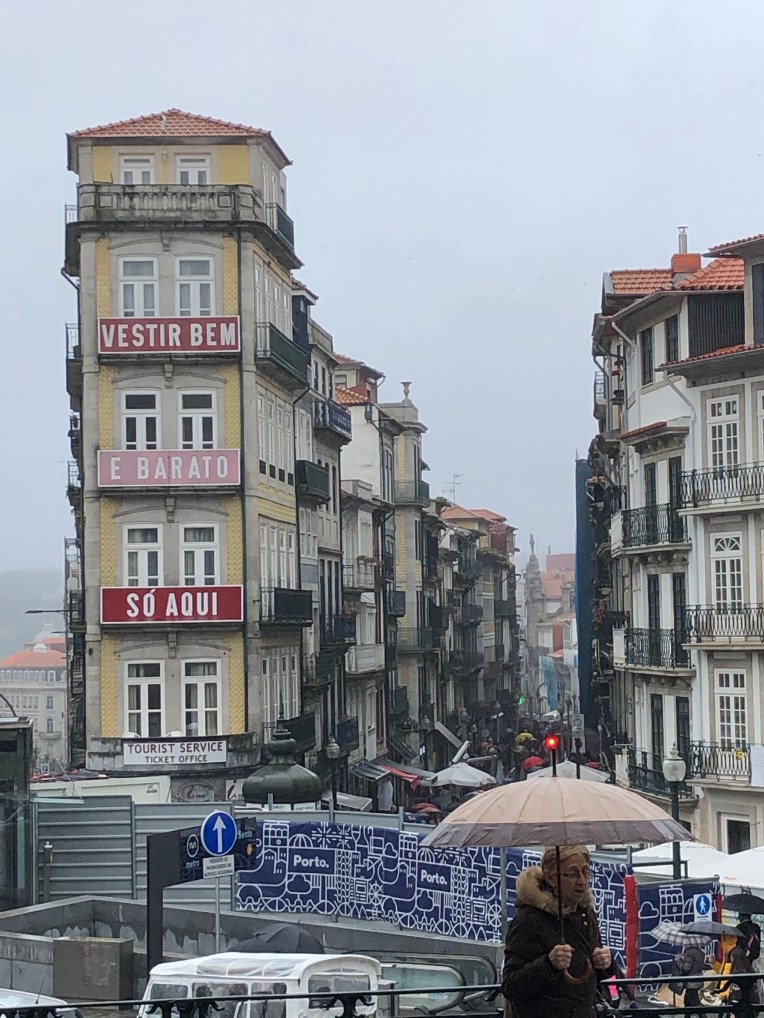
(View from outside the train station)

Our group of seven was gelling nicely now and there was even an opportunity for a joke about Brexit but we had a long (not very long) walk ahead so we finished up and headed to the train station. Yes, the (second) train station of Porto is impressive. Tiles, tiles and more tiles with scenes from Portuguese history on every wall. There’s the war with Spain, well, one of the wars with Spain. The one where both sides were fed up losing so many soldiers in battle that they decided to have a competition instead. A kind of jousting competition. Portugal won. Oh and we didn’t take a train.

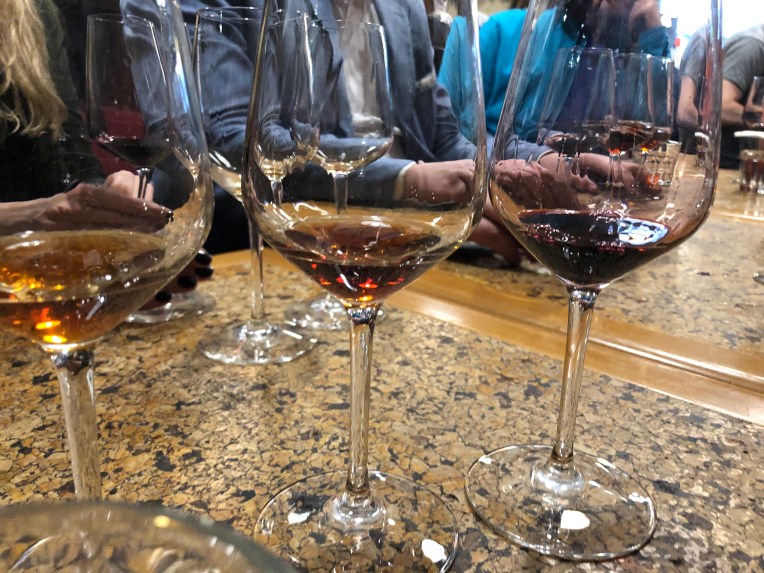
(From the left white port, tawny and port wine)

Back outside we walked downhill via jewelry and flowers street towards the river. We were going port tasting at Portologia with explanations about white port (which doesn’t look white), tawny port and port wine. Very interesting. Port is kinda like Champagne in that you can only call it port if the grapes are grown and the port is produced in the Douro valley near Porto city. Also, it tastes different as it ages. The whole vintage thing just gives and gives, doesn’t it?

(Vintage computer spotted in a shop window)

When everyone had finished their three types of port and I had finished my water that was the end of the tour, it had taken three hours and was really enjoyable. Everyone said goodbye to Isabel but not before doing the Portuguese kissing on each cheek. Then she left promising to (and she did) email us tips and recommendations for the rest of our time in Porto.

(Hope this picture gives you a sense of the steep hill we had to navigate)

We walked very slowly back up the steep hill to get the bus home. When we arrived at the gate (via the death defying footbridge) to the Parque Biológico de Gaia it was locked! Denis thought we could definitely scale the fence. Port wine gives you wings, bottled water makes you wise. We walked back down to road level again and made our way to the main gate. It was locked too… again Denis with the scaling. I pushed the invisible bell (invisible to some…) and the nice man let us in.

Thank you, Isabel, we loved our day in Porto, Mairead.
(Can you see the yellow dot? That’s Parque Biológico de Gaia, Porto. Parking, electricity, water, free entry to park €19)