
(Winding path, Mount Usher)
“Don’t let the noise of others’ opinions drown out your own inner voice.” – Steve Jobs
Listen, sometimes it’s very quiet…. Mairead.

(Winding path, Mount Usher)
“Don’t let the noise of others’ opinions drown out your own inner voice.” – Steve Jobs
Listen, sometimes it’s very quiet…. Mairead.

(Widen your focus… and see the big picture)
The story of us is part of a big Map. The Map is the representation we have created in our mind of the real world outside our mind. It’s just a representation, it’s not real. Just like the map of Ireland is not Ireland, it’s just a piece of paper that represents a real place. A map is much smaller, so it can fit in your car…. A map does not include everything. A map represents mountains with colours and lines. No one believes mountains are just colours and lines they know that’s just a representation. We know a map is not the country it represents.

(Eat well… but not these….)
But we often believe the map in our mind is real…. “this is just the way I am”, “I’m lazy”, “I have no willpower”, etc., etc. We often believe in the story of us…. It’s not real, it’s just a representation…. like the lines and the colours. It’s a representation of something that was said or heard, something that was seen or experienced… and we hung on to it and deleted any experience of the opposite…. and it’s just a map.

(Rest regularly)
Most of the choosing of the representation of the world is done in our childhood and is influenced by the people around us – our parents, our grandparents, our siblings, our teachers and society in general. We are affected by their representation of the world. Their Map has a strong influence on how they see the world and therefore how we learn to see the world.
If there’s something you want to include in your story, start noticing it in your experience. Mairead.

(Mount Usher in Ashford, Co. Wicklow)
The story of our lives is not the story of what happened… It’s the story of what we are. The story that starts “I am….” The story we think we became because of our behaviour or our actions. The story that says this is the type of person I am. This story is probably built up from lots and lots of small experiences and things other people told us… From the moment we learned the story of us everything that happened after that had to fit into that particular story. It had to make sense in our story. If it didn’t then it got deleted… We become very attached to our story.

(Strong, beautiful tree even with all its flaws…)
Like a film maker producing a movie about a famous politician – only stories that agree with the filmmaker’s belief about the politician will be included…. if he believes the politician is a wonderful honest statesman then the stories from his life that show him as an honest and a wonderful statesman will be included. If the filmmaker believes that the politician is a dishonest scoundrel then the film maker will depict stories from the politician’s life where he is dishonest and a scoundrel. The filmmaker may be completely honest in his choices, i.e. he truly believes the politician is honest or he truly believes the politician is dishonest.

(At the boundary of Mount Usher there’s a fence. Beyond the fence there’s a field with very old trees. You can either see the fence or shift your focus a bit and see the trees…..)
Same with our choice of what fits into our story – the movie of us. If the story we truly believe about ourselves says we are flawed then we will only include the times we have been flawed into our movie. Even if we have been a good friend at some point in our life we will delete or distort that memory and remember instead the time we were a bad friend. This is in order that our flawed friend story remains intact. If the story of you says you are flawed then fortunately, you can start again with a new story.
Choose something in your story you don’t like and start to notice the opposite. Mairead.

“The quieter you become, the more you are able to hear.” – Rumi
Listen to yourself, Mairead.

(Clare street looking onto Merrion Square – notice the perspective!)
I saw a documentary on Friday in class about Caravaggio (1573 – 1610), his full name is Michelangelo da Caravaggio. Poor guy, he had a difficult life, one of his parents died when he was five and the other when he was eighteen. He was also literally poor and lived in the poor part of town. Unfortunately he was also easily offended and regularly got into fights, once killing a man in a duel. Paradoxically he was also very religious, taking the bible stories very seriously and wanting to bring them to life in a truthful and lifelike way. At the time this was not the accepted practice. Art was nice and paintings of the saints were pretty. Caravaggio changed that.
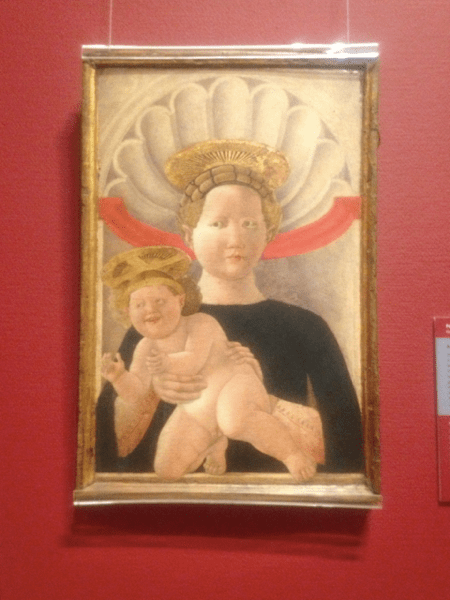
(The Virgin and Child (1440), Paolo Uccello, you can take a no-flash picture of this one – notice the baby’s feet are out of the frame)
He used ordinary people, those he met in the taverns as his models. Once when he painted the Death of the Virgin for a convent, the nuns returned his finished painting as it was too realistic – she looked dead! Of course it probably didn’t help that the model was dead, and when she was alive she worked as a prostitute…. He was very offended by the nun’s action. Another painting, Doubting Thomas shows Thomas’ finger going into a realistic looking deep cut under Jesus’ rib cage – not pretty.
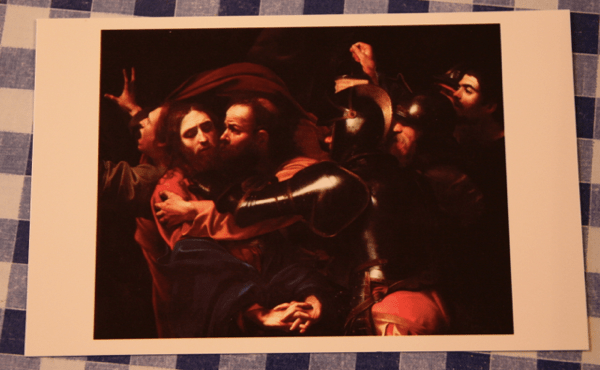
(Postcard of Caravaggio’s The Taking of Christ (1602) – four hundred and ten years old. Not the postcard…)
He was thirty-seven when he died, in mysterious circumstances. His behaviour (the fights) may have been caused by the lead in the paint he used or maybe he was just sensitive… On Saturday I went into the National Gallery in Dublin to see his The Taking of Christ, no pictures allowed but I got a postcard.The first time I saw this painting I was struck by the shiny armour of the soldier, it was only on a subsequent visit that I realised the illusion of shine was created by paint and a very talented (if tormented) painter.
You don’t have to be happy to create art… or buttons… or crochet…. or stories… or cakes… or…. Mairead.
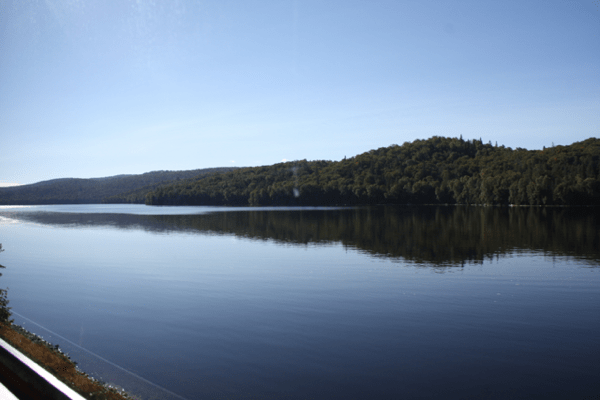
(Remembering Canada)
I am always doing that which I cannot do, in order that I may learn how to do it. – Pablo Picasso
What do you want to learn to do today? Mairead.

(Botanic Gardens, succulents)
We were looking at a very good documentary about Leonard Cohen on Saturday night. It was called I’m your Man and had other people singing his songs from a concert tour, while he chatted to the interviewer (and to us.). One of the songs I hadn’t heard before was called The Traitor. While Leonard explained the song to us I was reminded of Leonardo da Vinci. (Yes, interestingly similar names….)
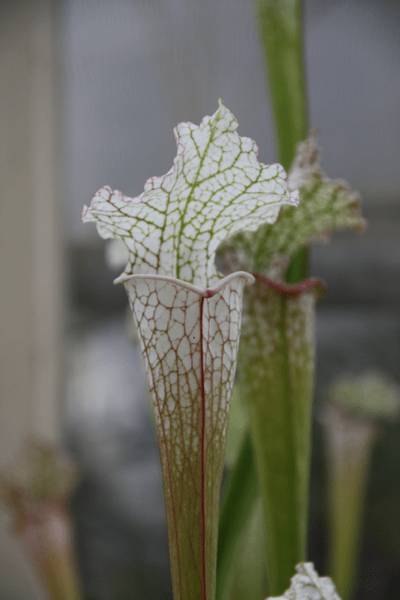
(Fly catcher)
Each week in Art History we get an assignment, this week it’s about the High Renaissance, we have to choose one of the artists of the time and write about them. There are (as far as I can tell) only three artists in that time – Leonardo da Vinci, Michelangelo and Raphael. I was wondering which one to go for when our lecturer told us a small detail about Leonardo….. he didn’t finish everything he started! Not really surprising when you think of all the things he did. He was a painter, sculptor, architect, musician, scientist, mathematician, engineer, inventor, anatomist, geologist, cartographer, botanist, and writer. Not really surprising and yet I was surprised, I thought finishing was really, really important and have felt guilty many times for the things I didn’t finish.

(Are they seeds?)
So getting back to Leonard Cohen who was explaining the song. He was saying that it was about a feeling that you had messed up some important mission, some important thing you were supposed to do. But you come to understand that the bigger mission was not to complete it. The real mission was whatever happened…. the deepest courage was to stand guiltless as “people called me traitor to my face“.
All is well, Mairead.

“I’m a great believer in luck and I find the harder I work, the more I have of it.” – Thomas Jefferson
Today could be your lucky day! Mairead.

“Insanity is doing the same thing, over and over again, but expecting different results.” – Albert Einstein
If you want a different result, then stop doing what you’re doing and start imagining something new you could do instead…… Mairead.
 Travel stories