The First Nata

The first bite of the first Nata of 2022

We crossed the border! We are in Castro Marim, Portugal. We were here in 2019, in fact it was the place where we started hearing an ominous knocking sound from Ruby (our motorhome) that led to a big bill in a mechanic’s workshop in France a few weeks later. No knocking this time. To celebrate our arrival we park and go straight to the nearest cafe. Dos cafe y dos natas, por favor. (Two coffees and two natas, please.) We have been dreaming of these natas for a few hundred miles now. Although it’s possible to get natas in Costa in Bray (and probably lots of other places…?) we never do. We haven’t seen them anywhere in Spain so here in a tiny cafe beside the roundabout at the edge of Castro Marim is our first taste.

Have a rest

The nata was created by the monks (or maybe the nuns…) in Lisbon pre 18th century. They used a lot of egg whites starching laundry which led to loads of leftover egg yolks. Not wanting to waste them gave birth to Pastels de Nata. Tasting my first Portuguese nata in almost three years makes me very happy. Wait! This nata seems to have ignited some ancient ritual and I hear a voice telling me a story. Could it possibly be the true story of the very first nata? It’s in old Portuguese, give me a moment to interpret…
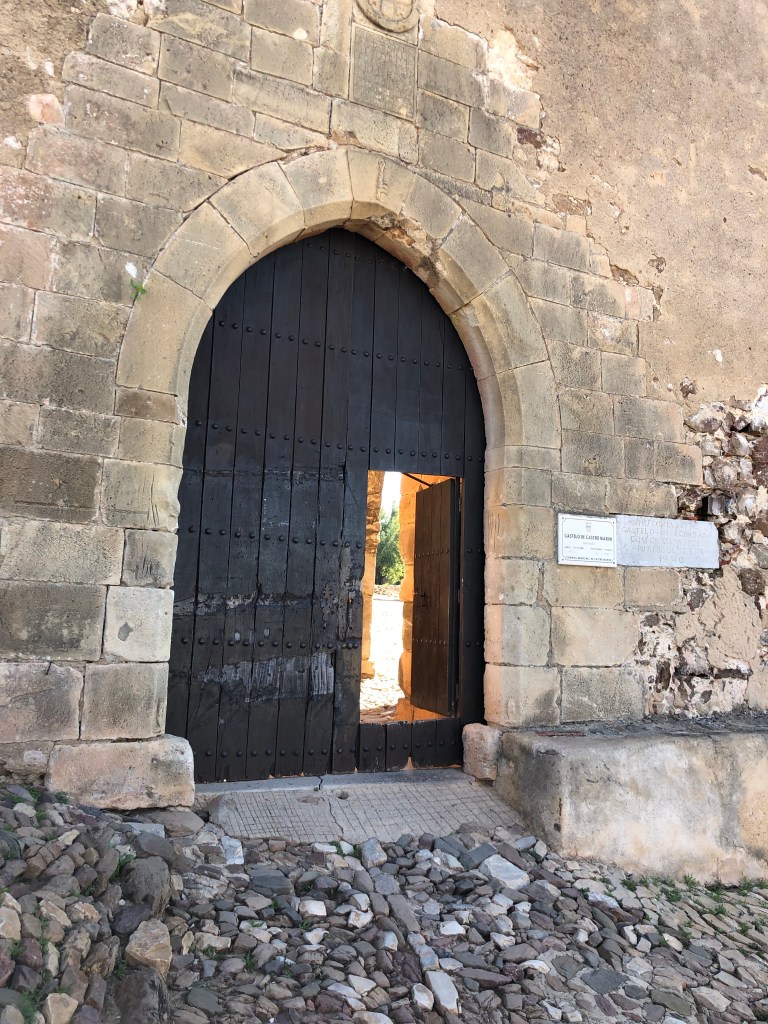
Enter at your own risk….

We’re in a huge stone monastery in Lisbon, Portugal. The year is 1687. Sr. Agusta works in the kitchen she’s only 14 and in training to be a nun. So far she’s not doing very well. Her superiors think she spends too much time daydreaming and not enough time scrubbing. But the old nun Sr. Jerome who makes the bread for the monastery really enjoys her company. It is Sr. Jerome who suggested just now to Agusta to start experimenting with the egg yolks. Sr. Jerome has been wondering for a while what to do with the surplus. The entire congregation (nuns and monks) is fed up with her three times a week omelettes and she’s fed up dumping eggs into her bread dough. She has a few ideas for a desert but today she thinks, if Sr. Agusta doesn’t get a win soon she may be moved into the laundry room and the old nun fears for her safety surrounded by vats of boiling water.


What do you love to eat, Agusta? Agusta! Sr. Jermone has to repeat herself a few time to get Aguste’s attention.

I love pastries, sister. That’s lucky the old nun thinks. What kind of pastries do you love?
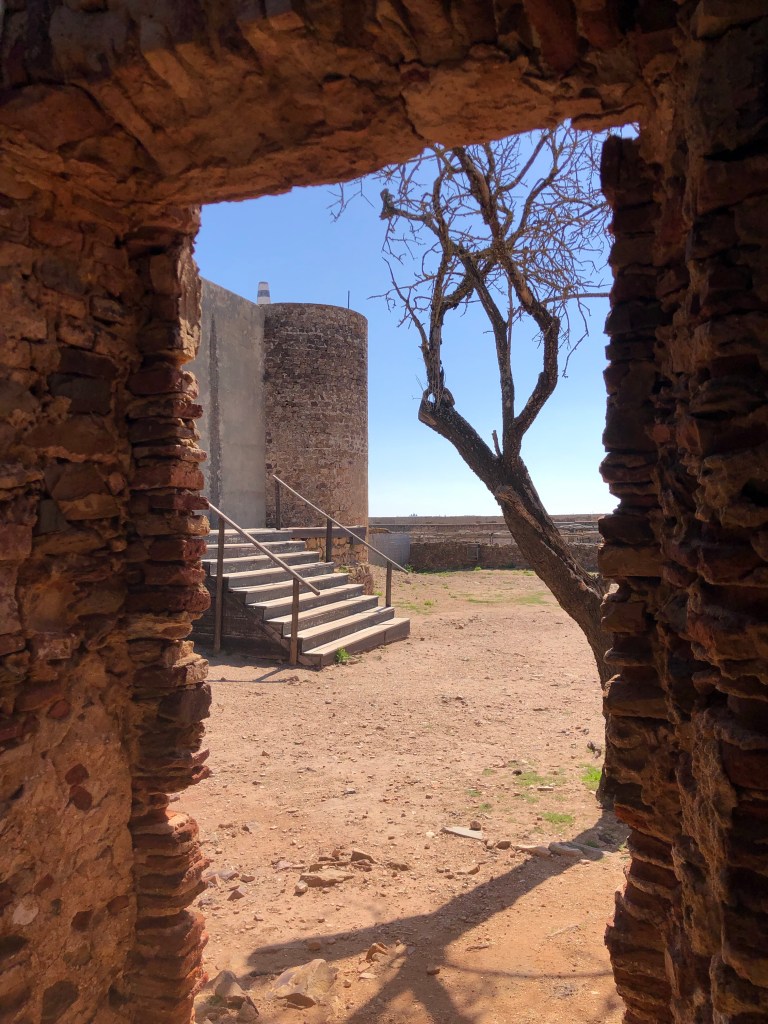
Cool shade

I love all of them but especially apple pastries, sister.

Unfortunately we have no apples, but we do have lots of egg yolks

Sr. Jerome is tired, she has been baking since 3am, She heads off to her cell for a quick nap leaving Agusta with instructions to warm some milk. What Sr. Jerome doesn’t know is that Agusta invents things all the time in her daydreams. There was once where she got very close to inventing a non stick saucepan. When the old nun is gone Sr. Agusta starts dreaming about egg yolks. In her daydream she is adding the yolks to her non stick saucepan with warm milk. Meanwhile the actual milk in the not non stick saucepan is boiling over and a smell of burning is filling the kitchen. (Can you smell it?) From her cell Sr. Jerome is dozing and you know the way a dream kind of takes on the reality of the situation you’re waking up to? Like a doorbell ringing will be in your dream and you wake and your doorbell is actually ringing? Well in her dream eggs and milk are burning and just like that she thinks of a pastry case filled with egg custard! Up she sits and manoeures herself towards the kitchen, calling, Agusta! Agusta! At the same time Agusta is running out of the kitchen, Sr. Jerome, Sr. Jerome, I have it! Creamy Custard Pastries, burnt on top!! They meet in the long corridor in front of the statue of Mary – you know the one with her smiling? Sr Jerome’s face is a picture of joy as Sr. Agusta dances around her. Mary smiles down on them. This is the best day.

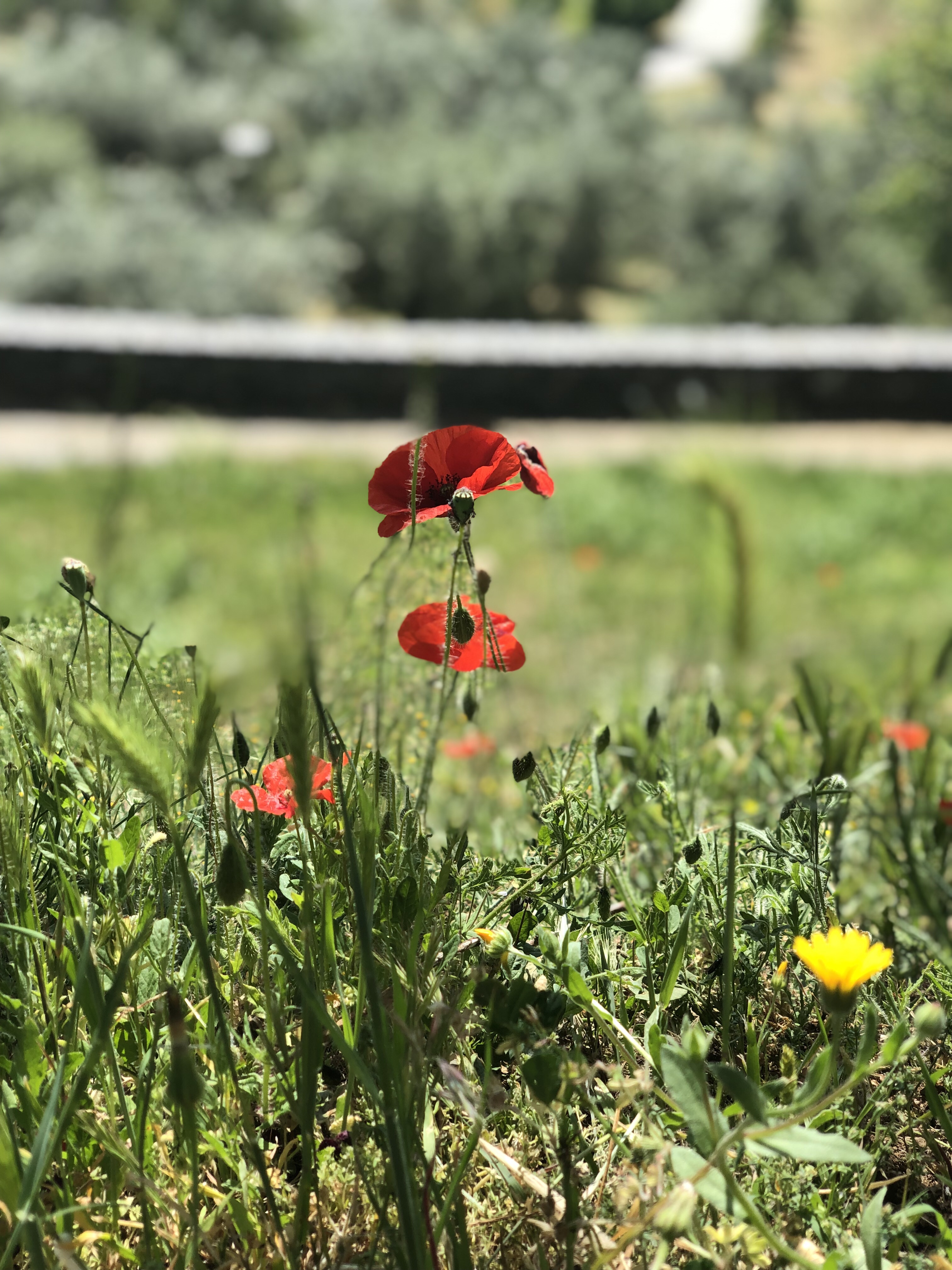
Rocks and red poppies

Unfortunately, this is not the happy ending… the monk in charge of this old monastery has heard the commotion. Long story short, the recipe becomes the intellectual property of the monastery and Sr. Jerome and Sr. Agusta are written out of the history of the nata. Oh well.

Erosion of clay or slices of bread?

At first Sr. Jerome was upset, then angry. But you can’t stay angry for long in Sr. Agusta’s company, she realised there’s something more important than fame and fortune – friendship and daydreams. Sr. Jerome lets her anger go and puts her attention on supporting Sr. Agusta to be the best daydreaming pastry chef she could be. The two nuns spend the rest of Sr. Jerome’s life inventing and perfecting pastries. None were ever as famous as their natas but that didn’t bother them, they had the best life you could have in a convent with no money or power governed by monks. When Sr. Jerome died Agusta left the convent and became a pastry chef in a nearby restaurant. Even though she never got the recognition she deserved for her invention she knew the truth and now you know too.

There you are, you’re the first to know, Sr Jerome and Sr. Agusta invented the Pastel de Nata.

(Disclaimer: This story might not be true.)

Everyday Fearless

(The Book!)

I did it! I finished writing my book about our journey earlier this year to Portugal and I’m really excited. (I’m sick with anxiety too but as that feels very like excitement I’m grand.) Do you remember I was telling you about the book I was going to write and publish on Kindle in a post in June? At the time I was not feeling very confident that I would finish it. I had a story running – on repeat – through my head. The, You never finish anything, story. Well… that story is gone now and I’m really excited!

Actually, my excitement is a bit boundless at the moment so bear with me I’ll make sense in a minute. Maybe if I make a list? Yes, I like lists. Here goes…

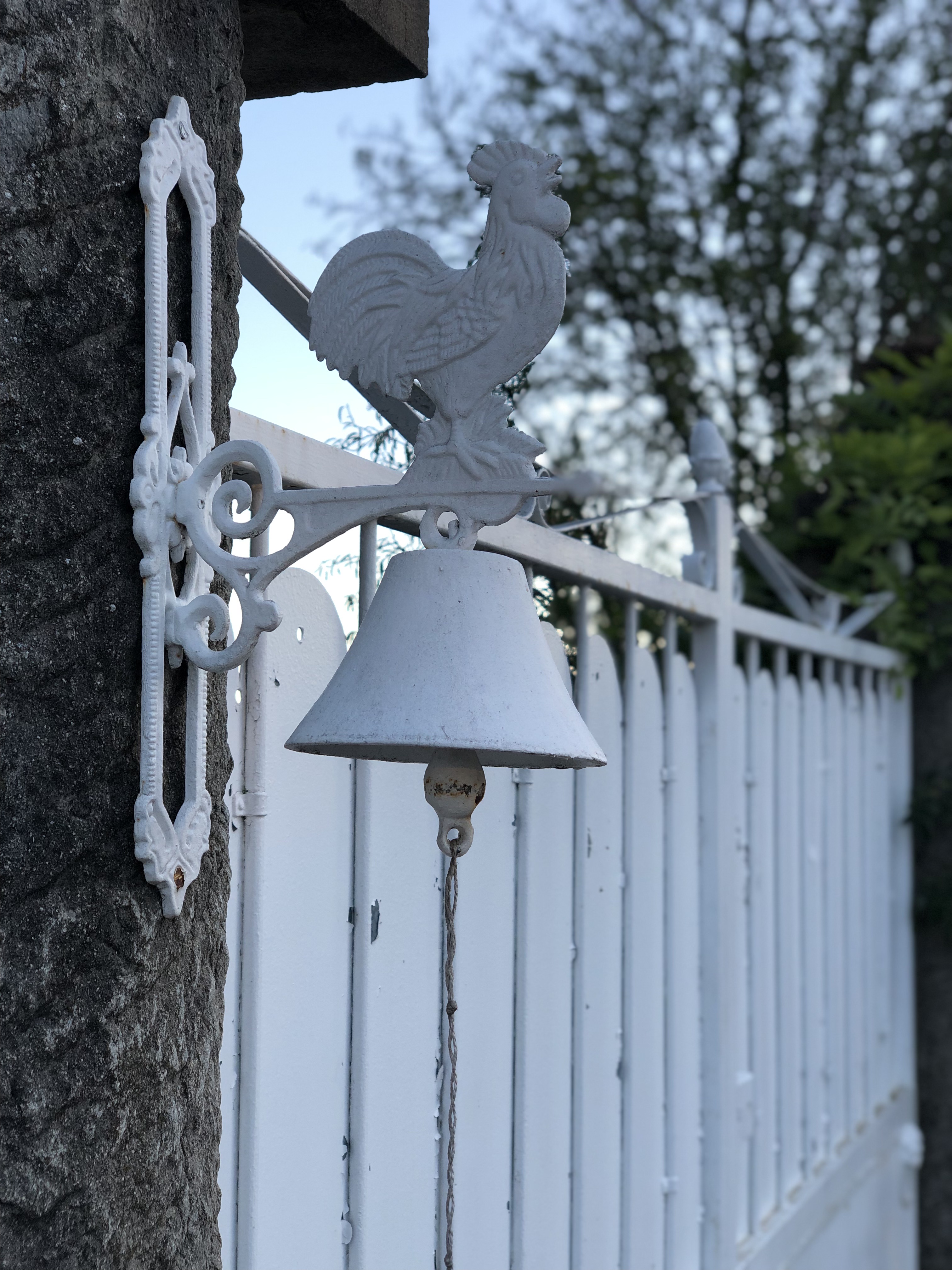
(love this bell!)

Things that are making me feel excited

  1. Finishing. I am completely amazed at what a difference it makes to finish a project but I nearly missed this step – the one where I notice I’m finished.
  2. Getting rid of the, You never finish anything, story. Stories are great because they have a message. When we tell stories to children we are telling them a useful message. For example, The Boy Who Cried Wolf – don’t tell lies. Le Loup qui changer de couleur – accept yourself. But sometimes we hang on to a story with a message that is no longer useful. You never finish anything– don’t try something new you’ll be disappointed.
  3. Telling you! You have no idea how lovely it is to have you on this journey with us and in particular on this journey with me. I love writing and it’s way more pleasing to write to someone. Thank you for being that someone.
  4. The name of the book, Everyday Fearless, came to me after a conversation in Dijon with a friend. Sometimes it takes courage to do ordinary everyday stuff. Like ask for help. Or speak in French. Or find your way in a strange town. Or take a picture. Or start a conversation. Or say, I’m sorry. Or make a phone call. Or run screaming, into the sea at Magheramore Beach. Or do anything that would make me look silly or stupid or flawed. Like telling you before I’m ready that I was going to write a book.
  5. Being alive.
  6. Letting go of waiting to be perfect me, I’m ok with just being me. A few years ago during autumn I went for a walk along the driveway to Powerscourt House in Enniskerry, looking for leaves. I wanted the perfect leaves, the ones that looked symmetrical with no spots or cuts. I couldn’t find one. I searched for a long time. None of the leaves were perfect. Maybe perfect is unnatural?
  7. Imagining myself in twenty years time… at 78. I’m in my art studio. It’s an old run down former car mechanic’s garage with old grease stains on the floor and oil blackened benches but very well insulated so it’s warm and cozy. I make art, I practice Everyday Fearless, I share how to be everyday fearless, I write books (my 16th book was a bestseller) There is laughter all around and I am beyond happy.
  8. Everything starts now….

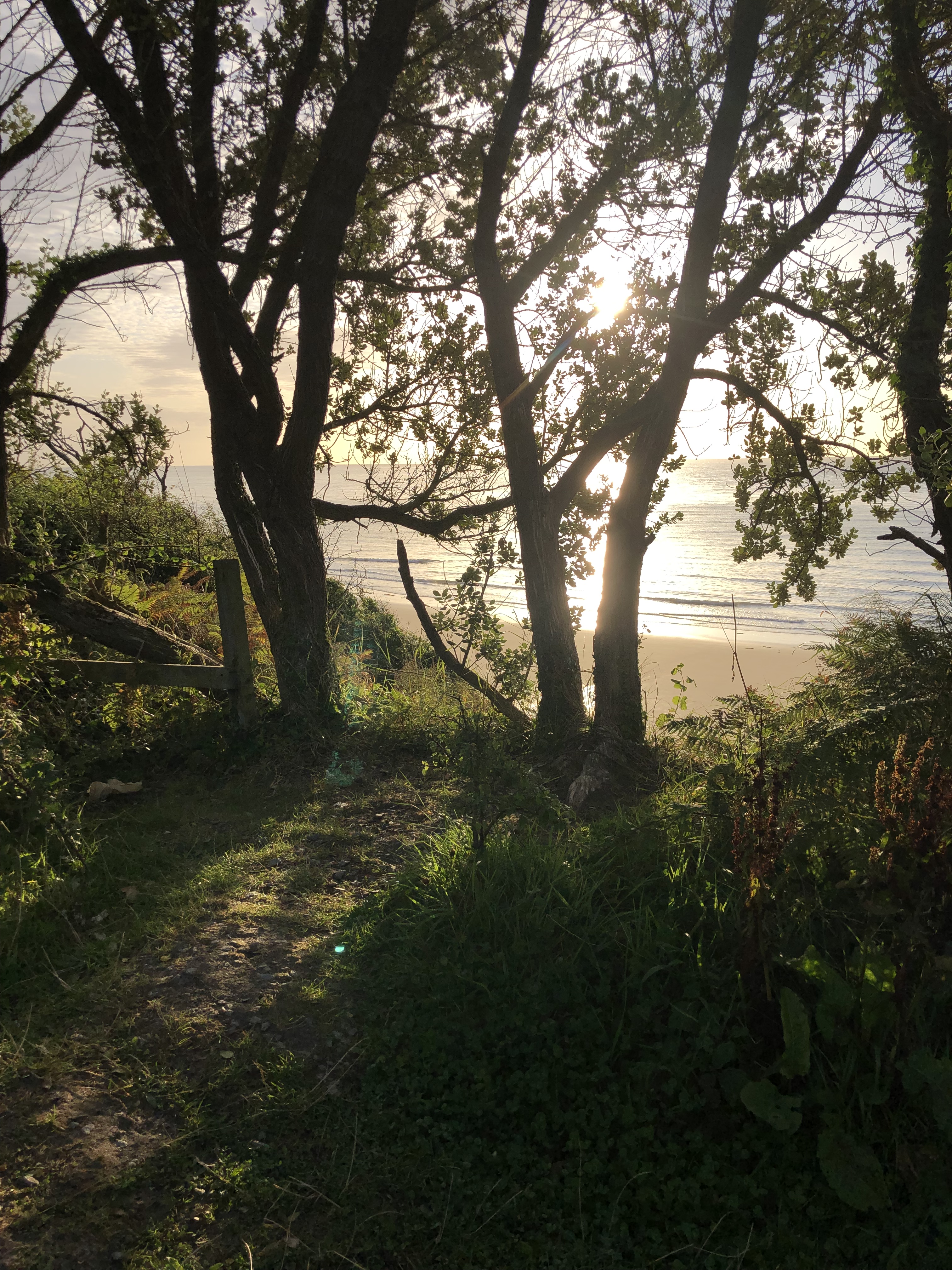
(Magheramore Beach in Co. Wicklow)

So off you go, click or tap anywhere here and have a look at the book that made me realize that feeling sick with anxiety is just another kind of excited! Mairead.

Ps. If that link doesn’t work for you, go to Amazon and search for Everyday Fearless Mairead Hennessy. Thank you!

She Rises

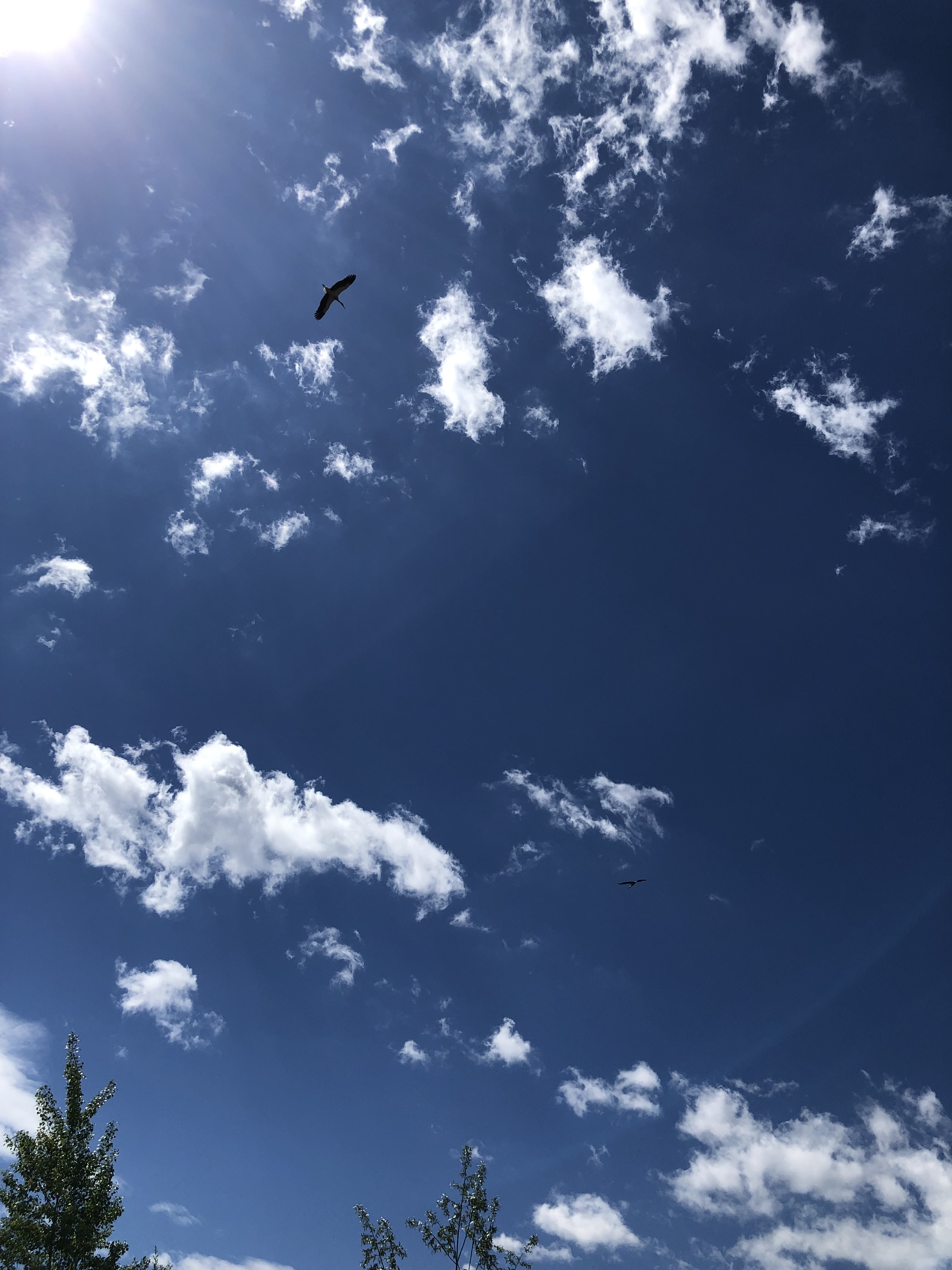
(That’s a stork up there)

Yesterday morning we left Portugal. As I write we are in a town in Spain called Palencia. Leaving was a strange experience. First, the road was narrow and it twisted this way and that as it wound though the mountains. I was twisting this way and that too. It was uncomfortable. I hate leaving.

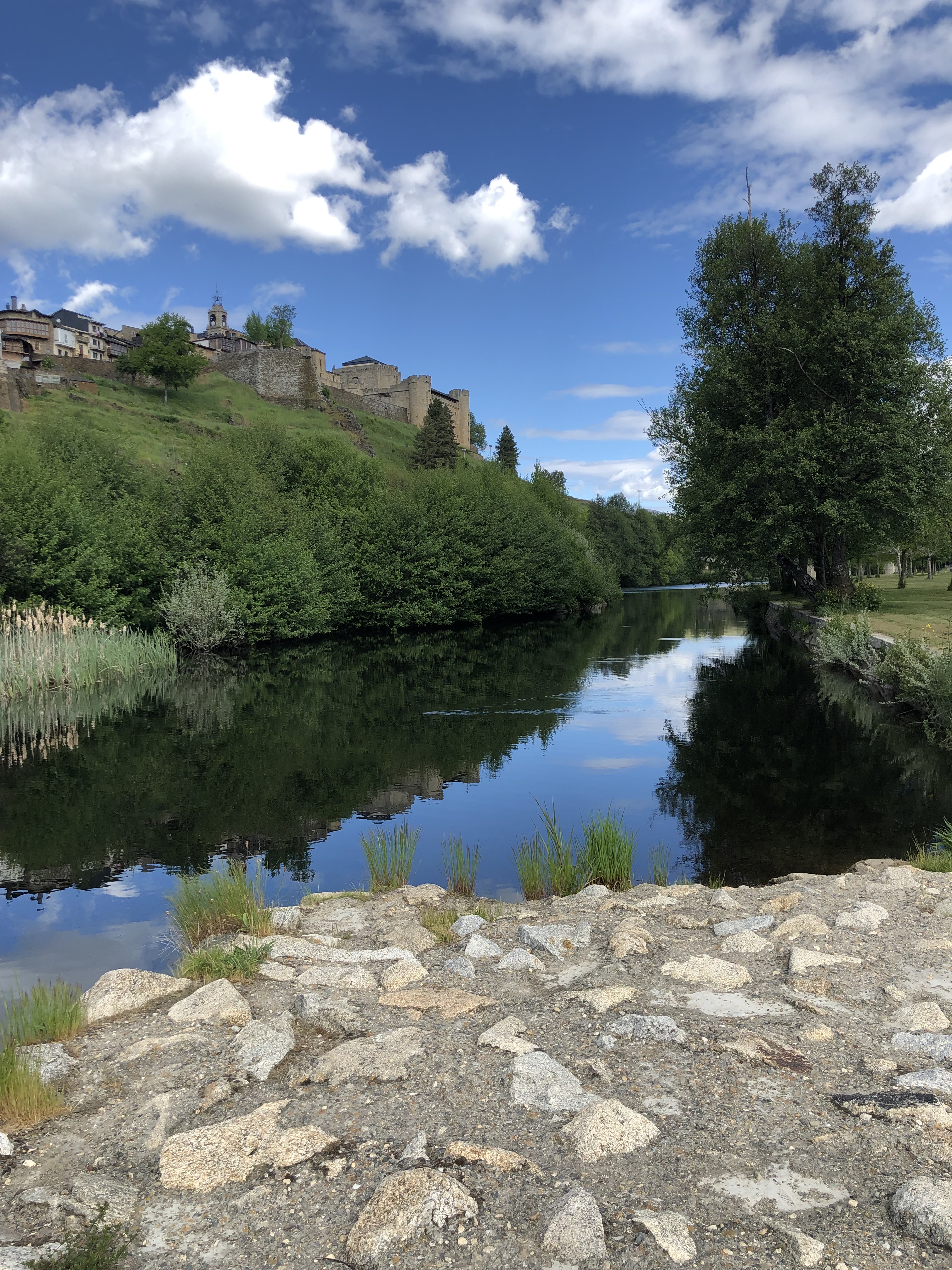
(The town of Puebla de Sanabria, Spain)

Just another characteristic of my human mind. Discomfort makes me crave familiarity. I am discomforted by change. The road signs change. The names of towns are unfamiliar. The possibility of a morning coffee very unlikely. I am a creature of habit breaking a well formed habit and it’s painful.

(River view)

We arrived at our destination for the night, a car park in the town of Puebla de Sanabria. It was hot. There was no shade. I was grumpy. The nearest coffee was up, up, up a steep gradient on the other side of the river. It was getting hotter. There will be no coffee. I leave Denis to park the van while I take my mood to the riverside.

(Can you see her?)

And there she is. Standing waiting for me. How quickly I forget. A stork. Every stork has been reminding me to stay present. Reminding me to drop my expectations, my past losses, my future hopes. Just be here now.

(Just at the last moment… she rises)

I looked across at the other side of the river and it’s beautiful. I hadn’t noticed. I missed something beautifully right in front of me because I was holding on tight to something I didn’t have.

I made tea instead of wishing for coffee. Mairead.

Another Day in Bragança!

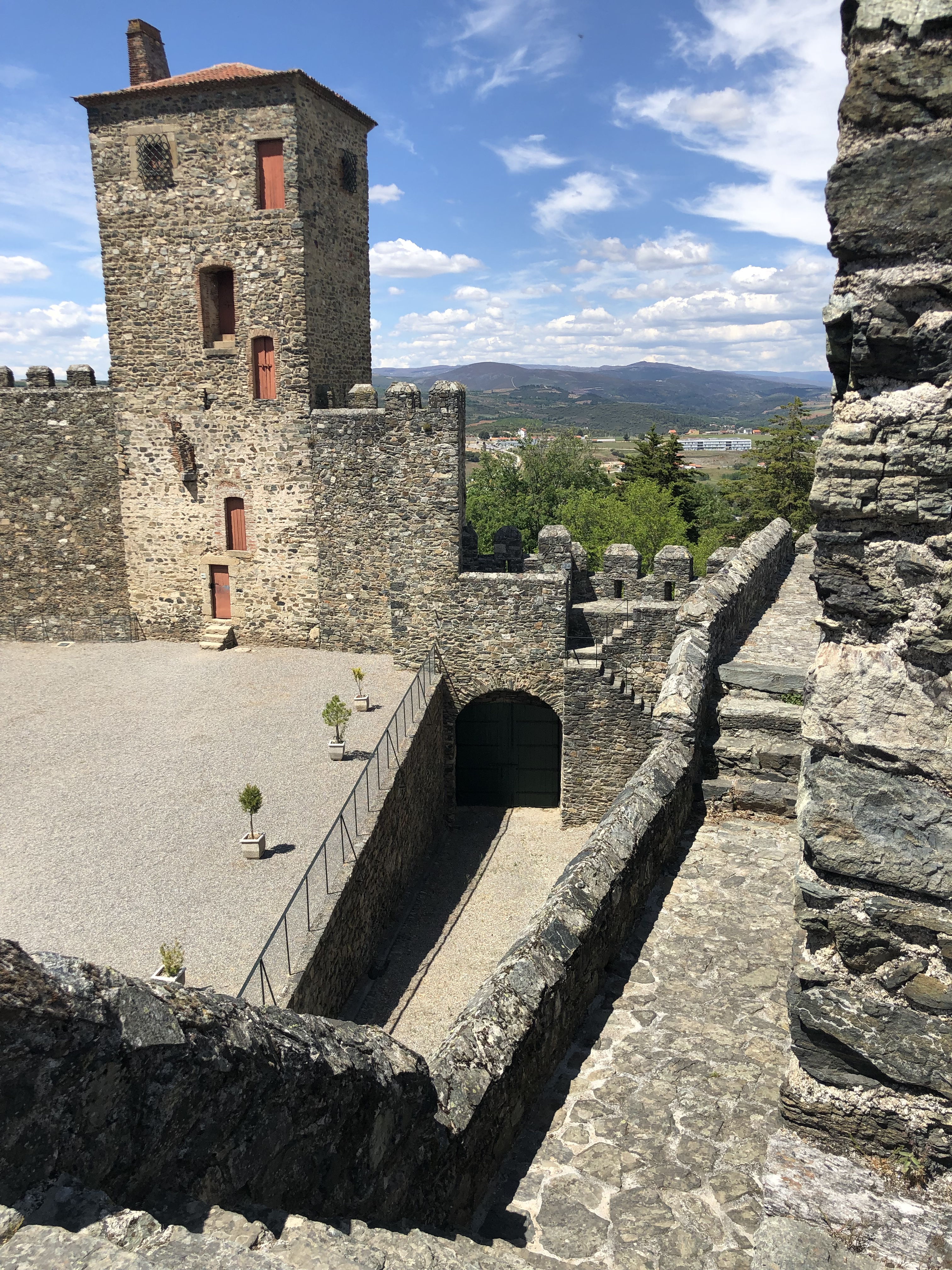
(From the walls of the castle in the old town)

Yesterday was hot in Bragança but as it’s Portugal (thank you, Portugal!) there are numerous picnic tables placed near the camping car parking. As they are all placed strategically under olive trees (not actually trees but that’s a different story) it’s possible to move from one to the other as the sun moves and stay in the shade. That’s what I did.

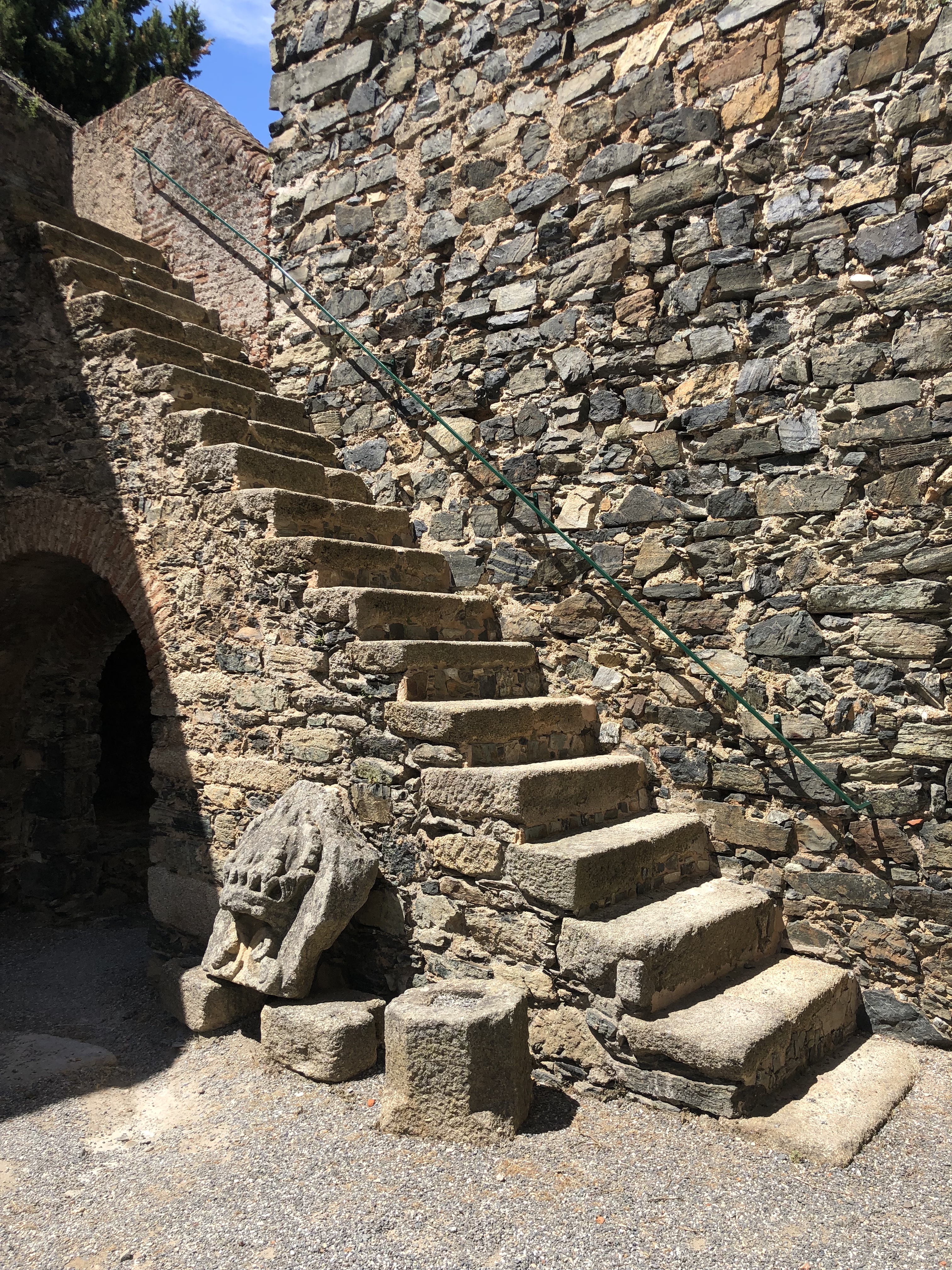
(More scary stairs to climb)

First though, I went to the supermarket, we are down to emergency supplies again. This time not because we weren’t taking every opportunity but because we are moving in the early morning every day and pretty much occupied when we arrive. Also we are staying in small towns and villages. There hasn’t been an opportunity to go to a supermarket. Fortunately, there is a small one just across the junction from here so off I went with my list.

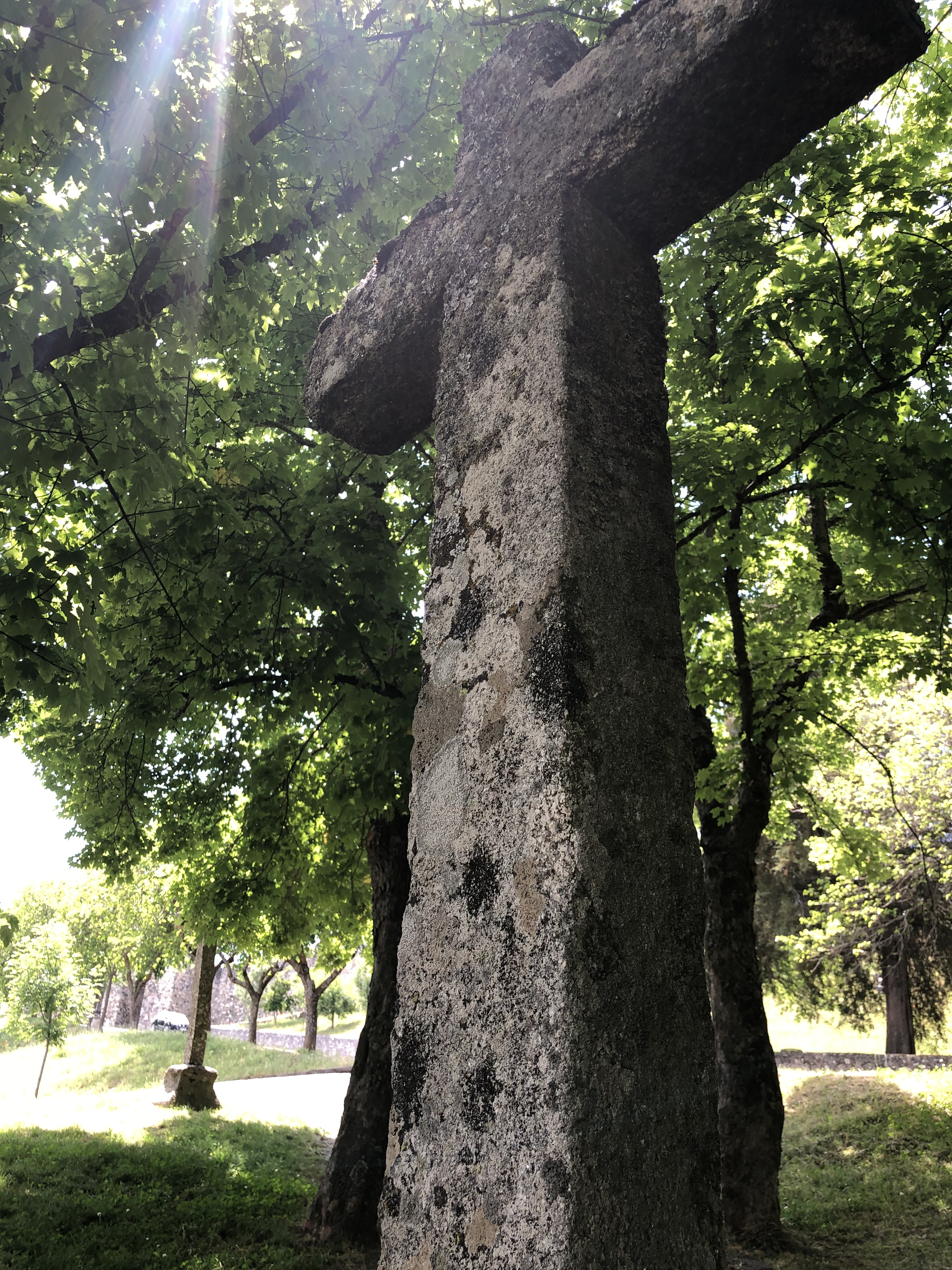
(I counted six old crosses in the short distance between our parking and the old town walls)

When we started travelling one of our favourite things to do was go to the supermarket. Yes, quite strange. (One of my least favourite things to do while at home…) They were interesting, so many odd looking products, so much art on the sardines, so much food we’d never seen before. Then we got used to them. We recognised the food, we became familiar with the layout and we stopped being in awe.

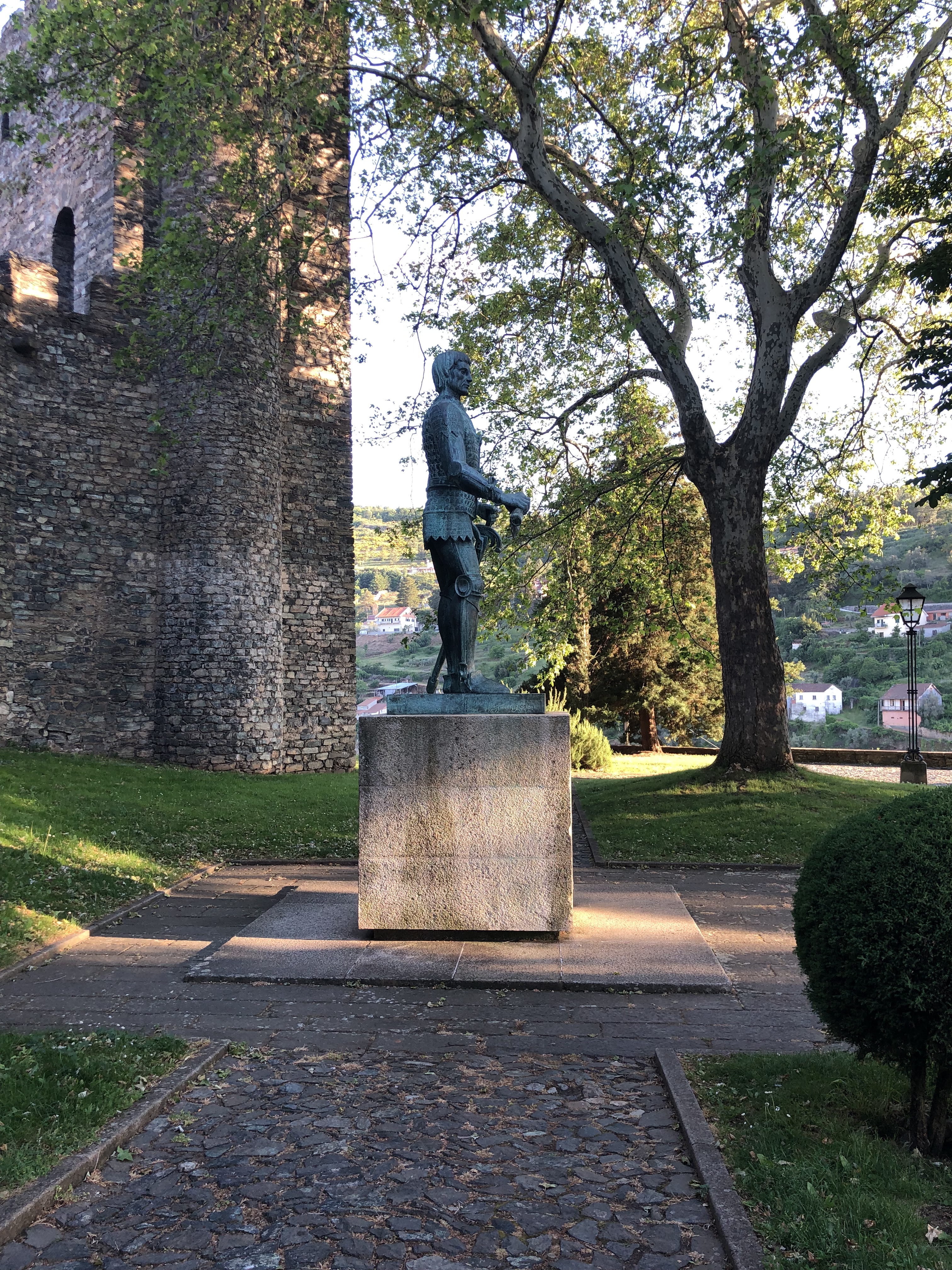
(Statue of D. Fenando outside the walls of the old town)

Except… when we go into small local supermarkets. For one thing they are often in darkness or at least dimly lit, so you have to strain your eyes to see what you’re looking for. It becomes like looking for treasure in a cave or sea glass on the beach. Also, the layout is totally different and it might even span two or three separate rooms. The products are totally different too so you have to pick up more tubs or jars or cans and examine them closely to see if they really are butter or tea (the green tea has finally run out!)

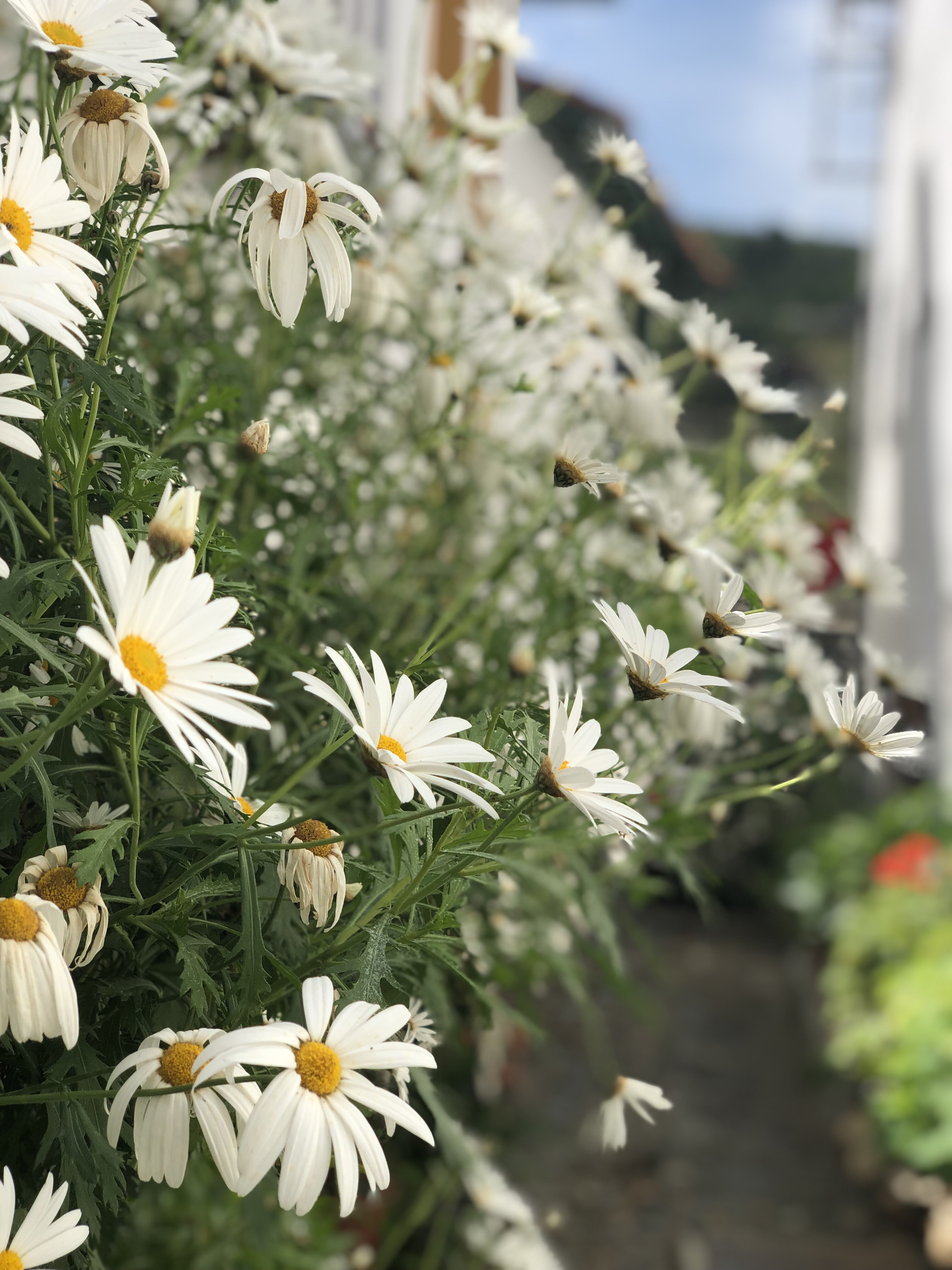
(Flowers in the streets of the old town)

To top it all some of the products are behind the counter and you have to ask for them. This doesn’t happen at the big supermarket. There you can be anonymous and never speak a word until your farewell obrigado as you leave. Here in the small dark supermarket you have to make a stab at communicating. It always turns out well. Mainly because each of us is highly motivated to be understood. I want the food and the shopkeeper wants to sell me the food. It’s a perfect match.

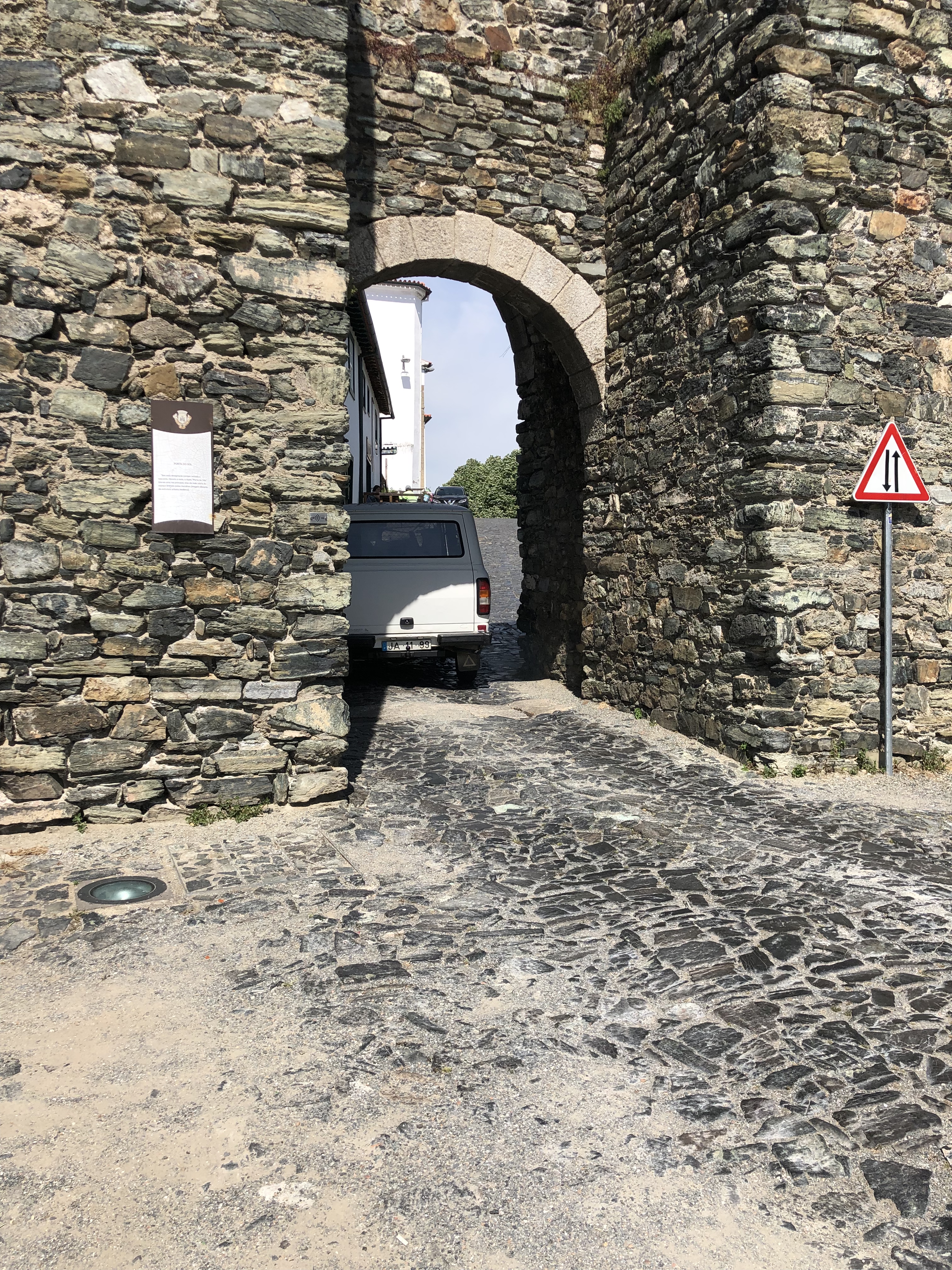
(Narrow gate into the old town)

I got tea, butter, bread rolls, and water all by myself but had to ask for cheese and ham from behind the counter. Way back in Santiago de Compostela (you remember that’s where I got to meet my friend?) in a small shop where everything was behind the counter, I was asking for cheeses but couldn’t make myself understood. I couldn’t see any cheese so pointing wouldn’t work instead I had to look it up on my dictionary app. The shopkeeper took my phone to look at my app because I was doing such a bad job of pronouncing it. Then she taught me how to say cheese in Spanish. I remembered and this is another great thing about Portugal if you know any Spanish the Portuguese will be able to understand you.

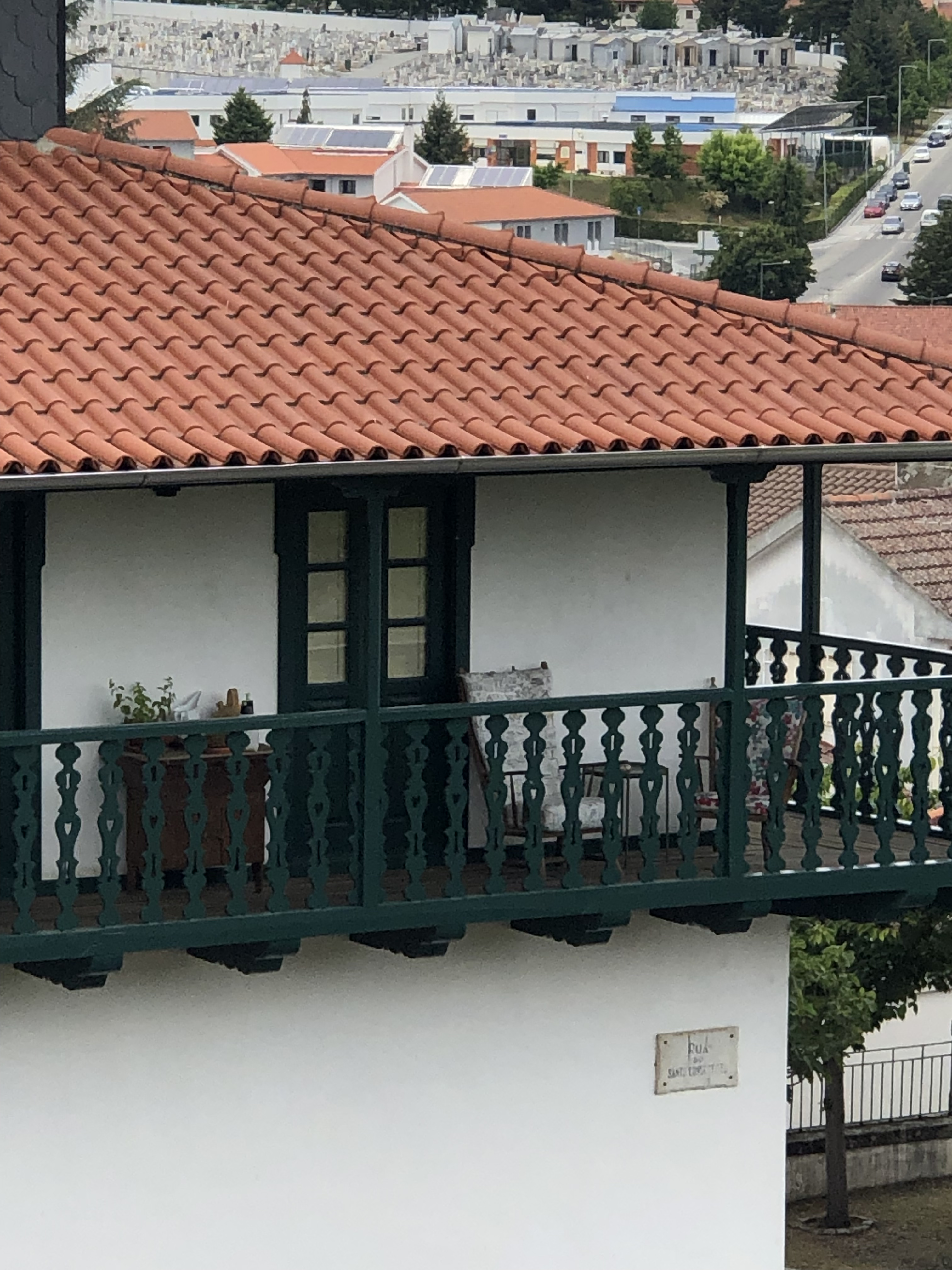
(Imagine. I love this balcony)

Cheese is queso in Spanish, I was pronouncing it queso (qway-sew), it is pronounced kay-zzo. The shopkeeper in Bragança understood me.

Our cupboards are full, Mairead.

(Bragança, free parking, motorhome facilities, toilets nearby, great location near the old town. Great restaurant just inside the walls.)

The Old Town of Bragança

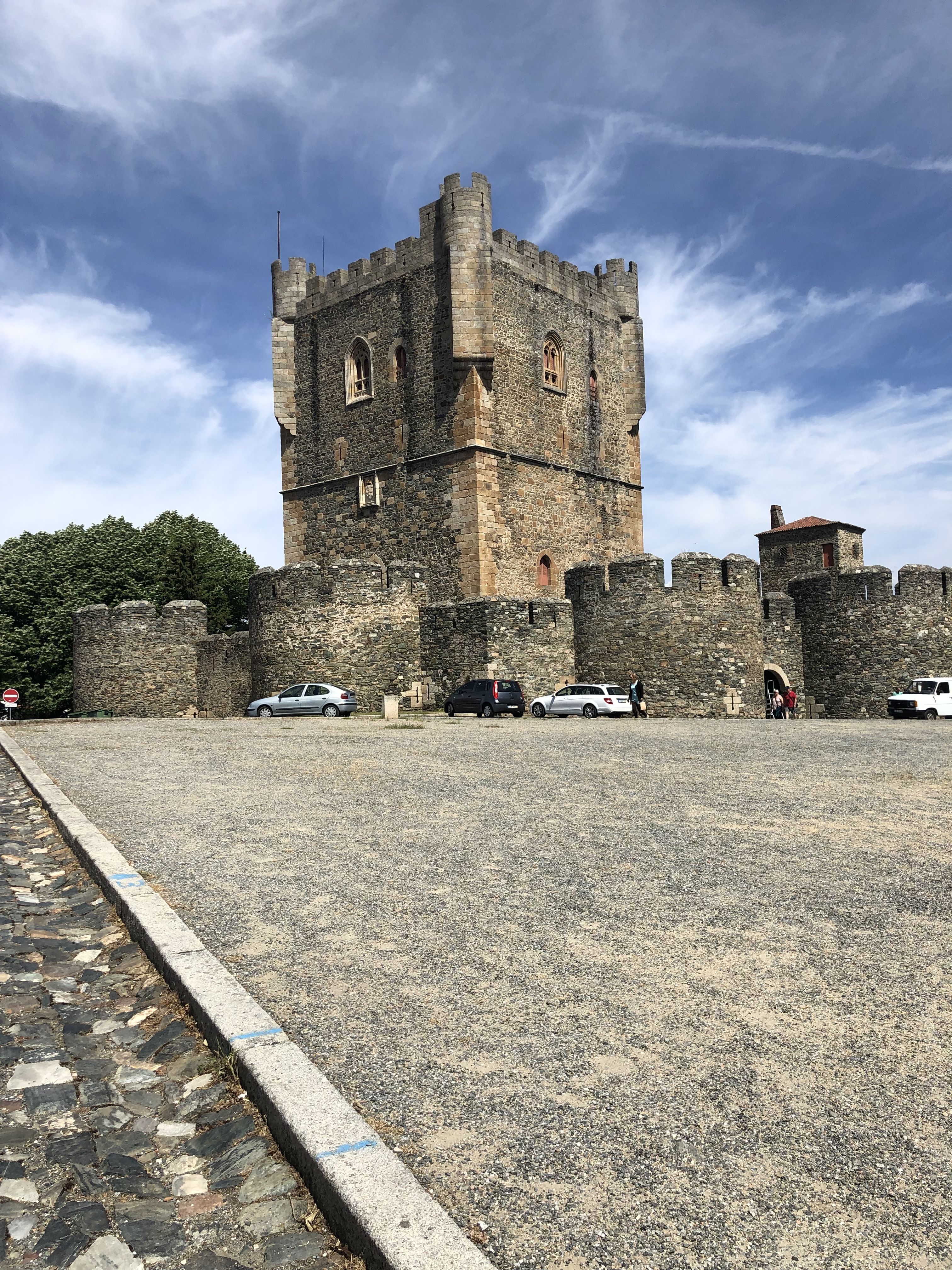
(The castle inside the walls of the old town)

We have arrived at the town of Bragança. We are tired. We have been pushing on to make time for later. We loved this town last year and we promised ourselves we would stay longer this year but this seems unlikely now. So I will enjoy each moment that I am here and perhaps a future visit will be longer.

(Wild flowers flourish nearby)

The weather is warm, the birds are singing and I am sitting on a perfectly placed bench under an olive branch. Fitting… possibly. Behind me is the old town, in front of me the hilly countryside. If I lean a little forward and look left I might see Spain.

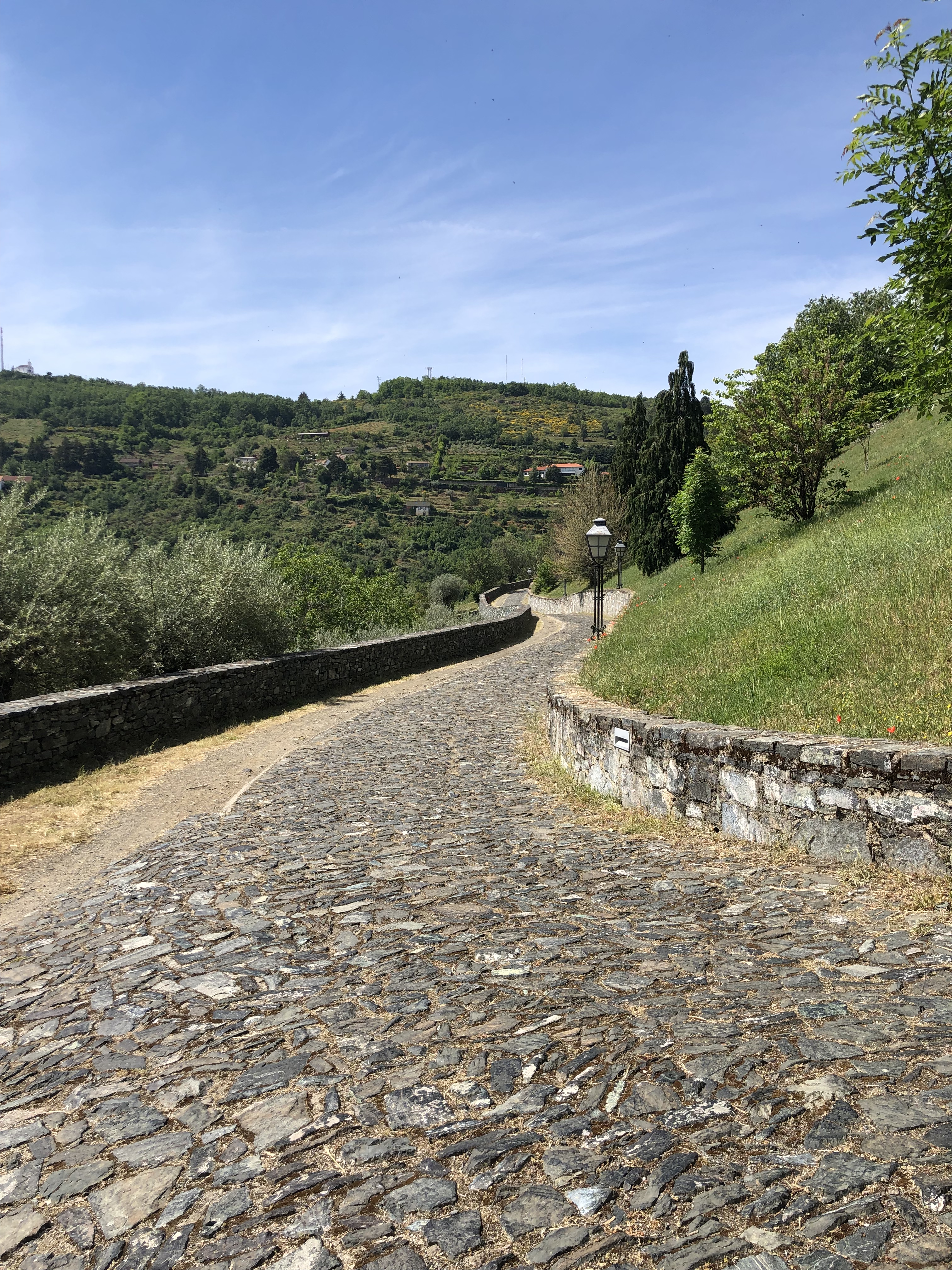
(Winding walking path around the old and new town)

This feels like a perfect moment to be mindful. I might have passed all this by if I didn’t realise it was only here for one day, that it is passing. More like we are passing but this experience in this particular town on this particular day is passing. We are also passing and we are passing through. Maybe we are passing ourselves out.

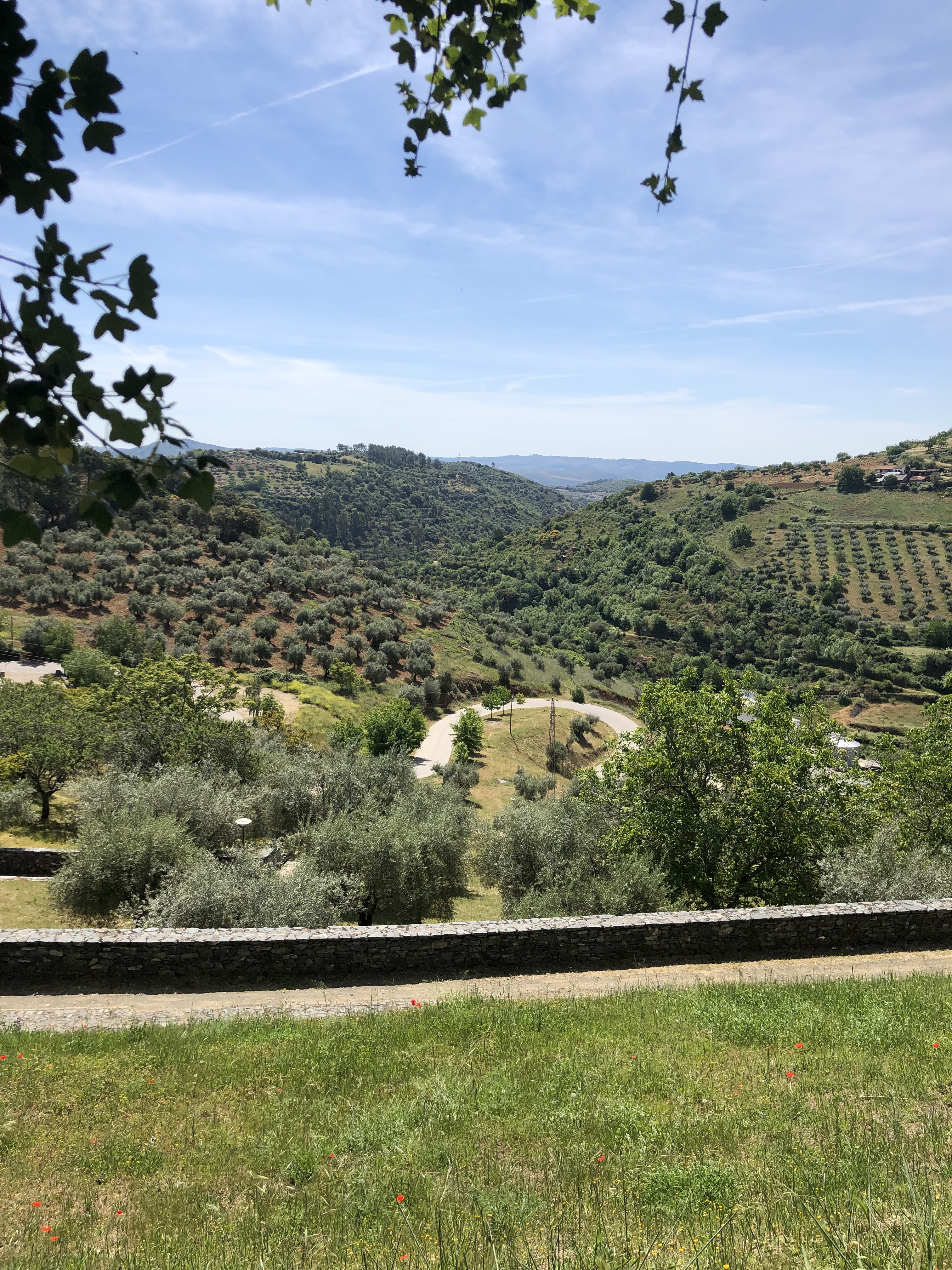
(Farming views)

Every experience changes us or gives us the opportunity to change, the opportunity to do something different or differently. But we do not need to be travelling, seeking foreign lands to have experiences. Every moment is an experience.

(Shady spot inside the town walls)

There’s an opportunity waiting for me here. If I stay awake I will see it. Or hear it. Or feel it.

Don’t pass it by, Mairead.

Optimistic Outlook

(Bad…? Not too bad…?)

The following morning we left early but not before Denis spilled his coffee. Every morning Denis makes a travel mug of coffee and sips it throughout the day.

(Sunset in Torre de Moncorvo from our parking spot)

In the early days he used a Nespresso machine but that won’t work with the solar electricity (I don’t understand why…) so now he uses an AeroPress. It’s become a bit of a ritual with him. He boils the kettle, assembles the parts of the press, measures exactly one scoop of coffee with the special scoop, pours in the boiling water, takes the special stirrer and stirs for a precise time.

(Breakfast with a view)

Then he takes a little circle of filter paper, wets it and places it in its holder, then screws the holder onto the press. Another precise amount of time passes and he inverts the press onto the mug. Pressing firmly on the AeroPress shoots the hot water (now turned into coffee) through the paper filter into the mug. Never a problem… until this morning.

(Can you see the tower? Torre?)
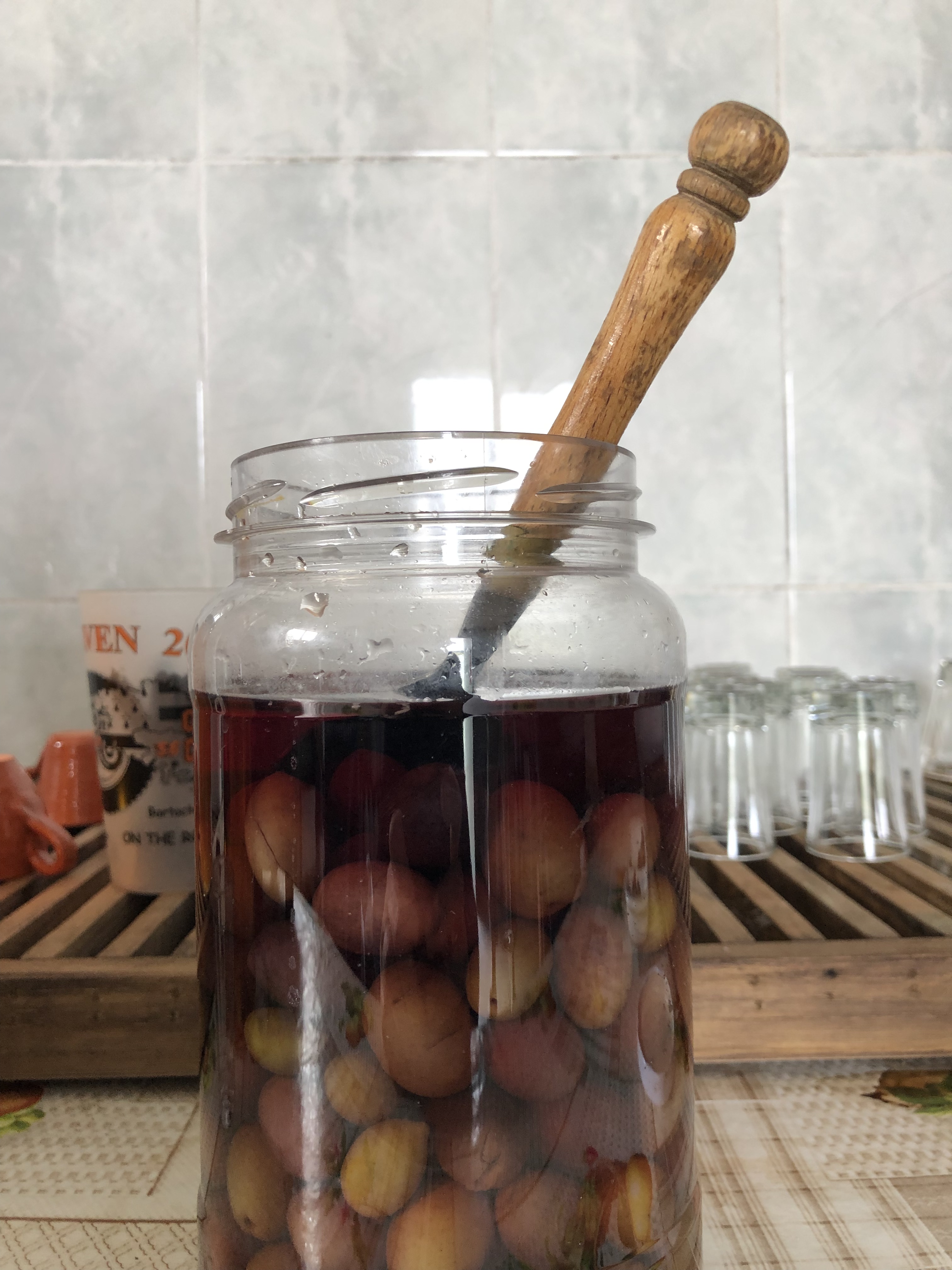
I was alerted by the, oh shit!

Are you ok?

I’m fine, just spilled my coffee.

Oh no, is it a big mess?

No, it doesn’t look too bad.

Yes it did look bad. I think this might be the definition of the difference between an optimist and a pessimist. At least it smelled good.

(Sunset makes everything look soft)

Our next stop for the night was the town of Torre de Moncorvo. They have a lovely camper van stop on a hill overlooking the town. We had planned to eat out that night but I was concerned about the gradient… it looked steep. Downhill all the way to town but uphill on the way back. Besides, we had plenty of pot noodle left in the larder. Denis, on the other hand, was looking forward to dinner out, it’ll be a pleasant 25 minute stroll.

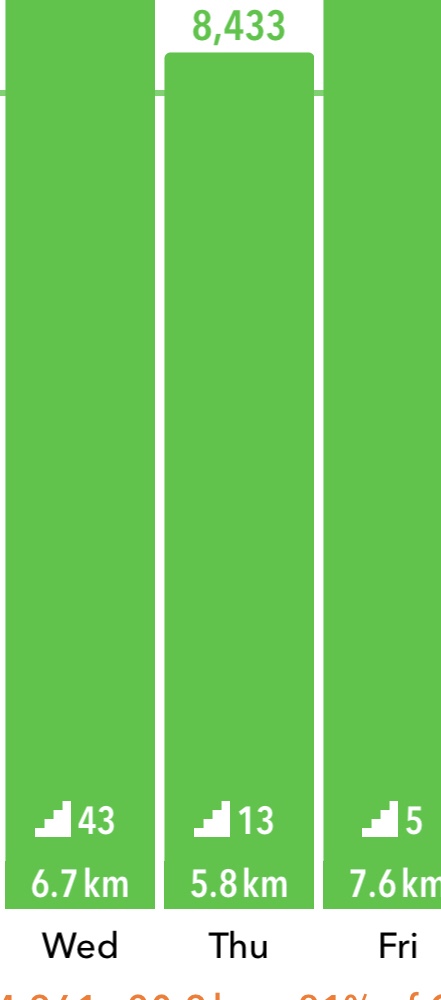
(Forty-three!)

As well as the distance and steps I walk my steps app tells me the number of flights of stairs I climb. Our pleasant stroll was the equivalent of 43 flights of stairs…

I was not wrong about the gradient, Mairead.

(Torre de Moncorvo: Free Parking, toilets, motorhome facilities, picnic tables under shade,. Restaurants a pleasant 25 minute stroll downhill.)

Olive Oil and Wine Tasting

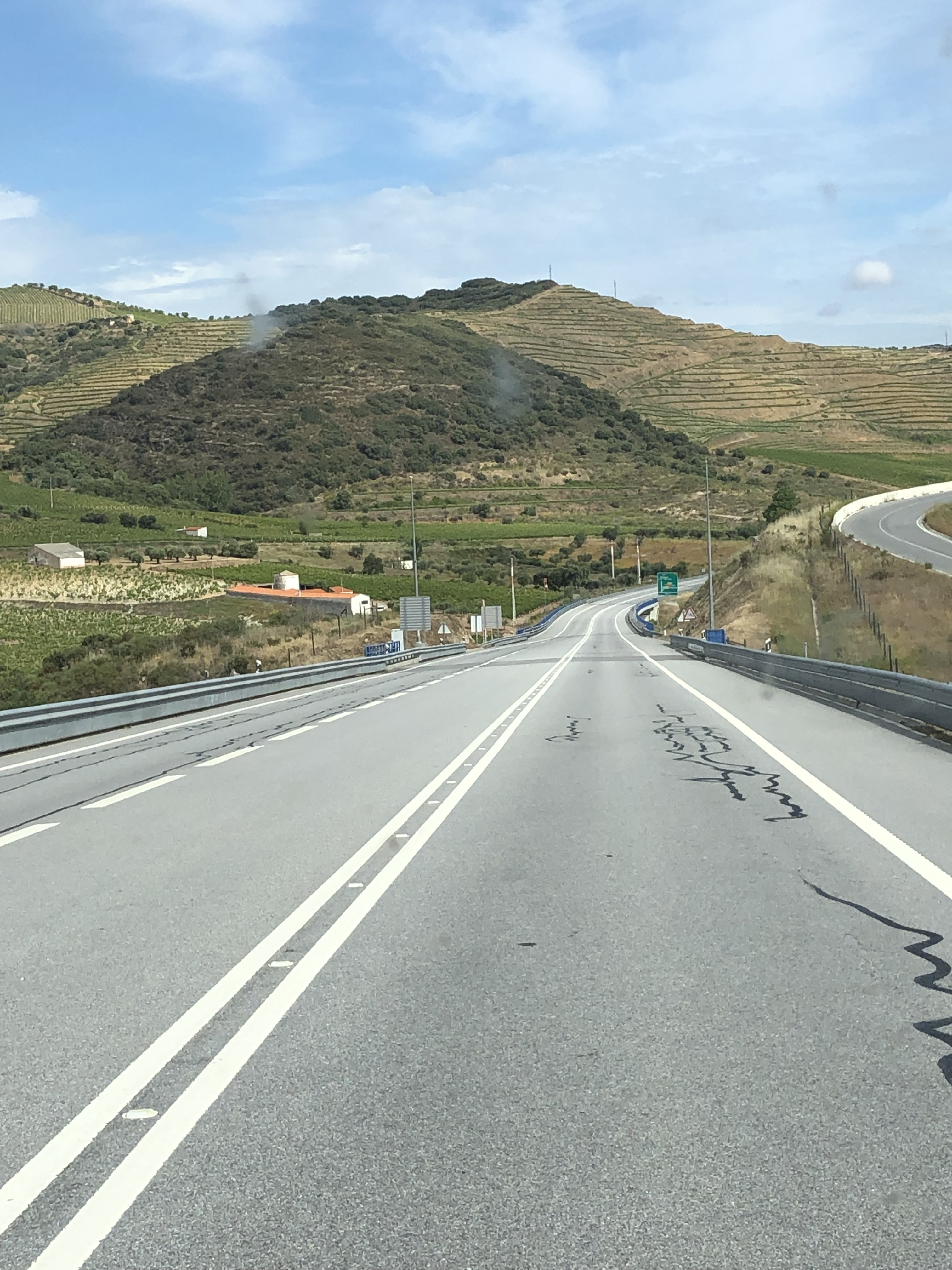
(The road north)

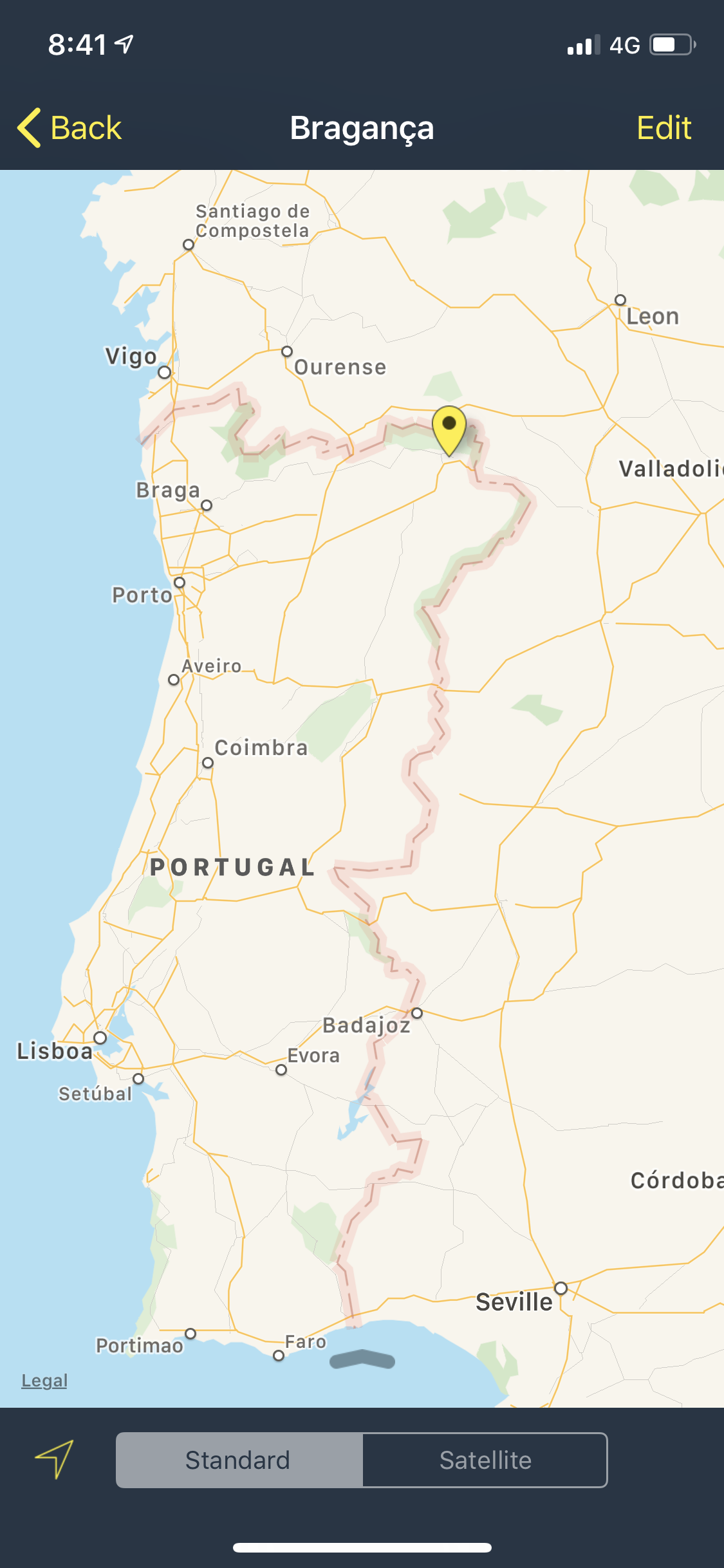
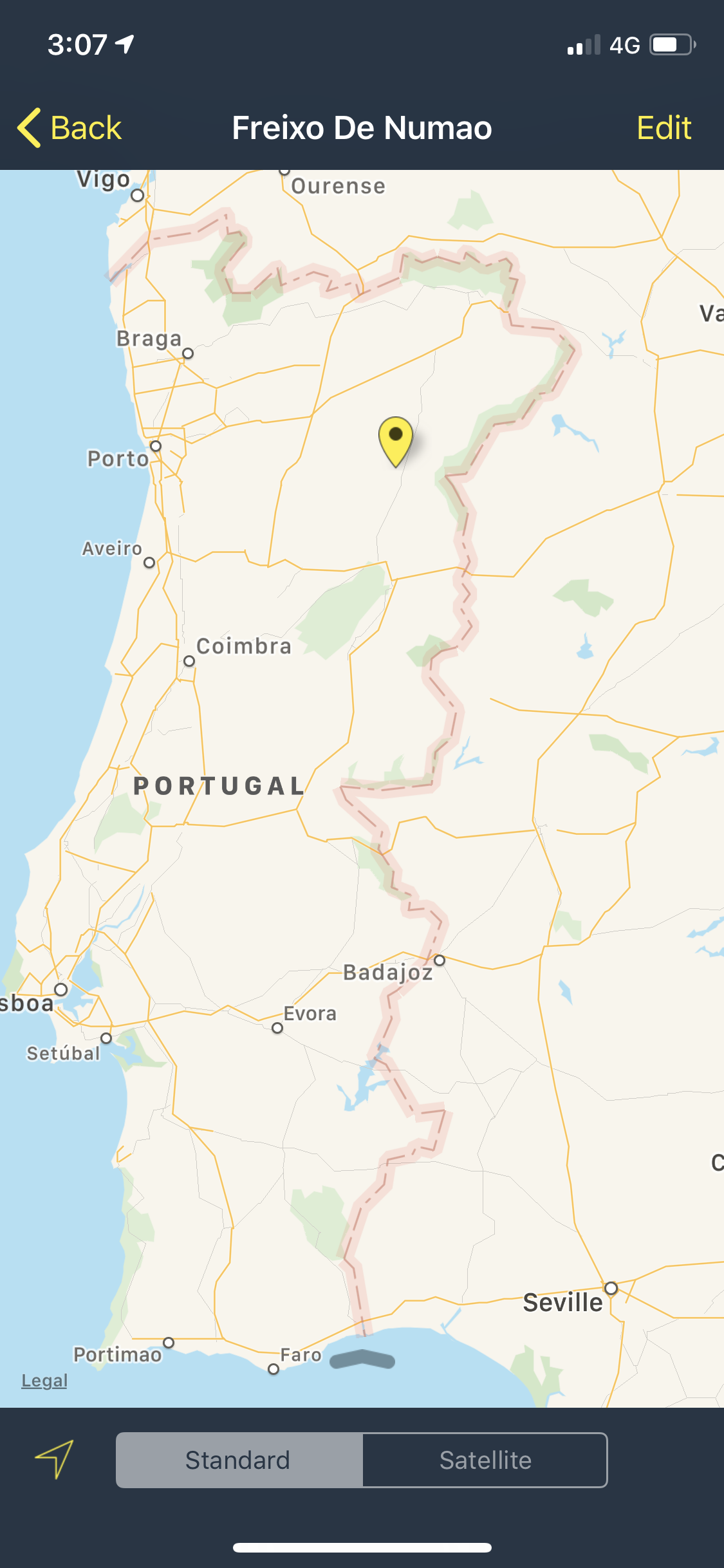
We have travelled a long way since Castro Marim and the Algarve and we’ve seen huge changes in the countryside. This eastern area of Portugal is not as well know as the west or the south but it is truly spectacular. We’ve been speeding through it (not actually breaking any speed limits…) and it deserves much more time and attention.

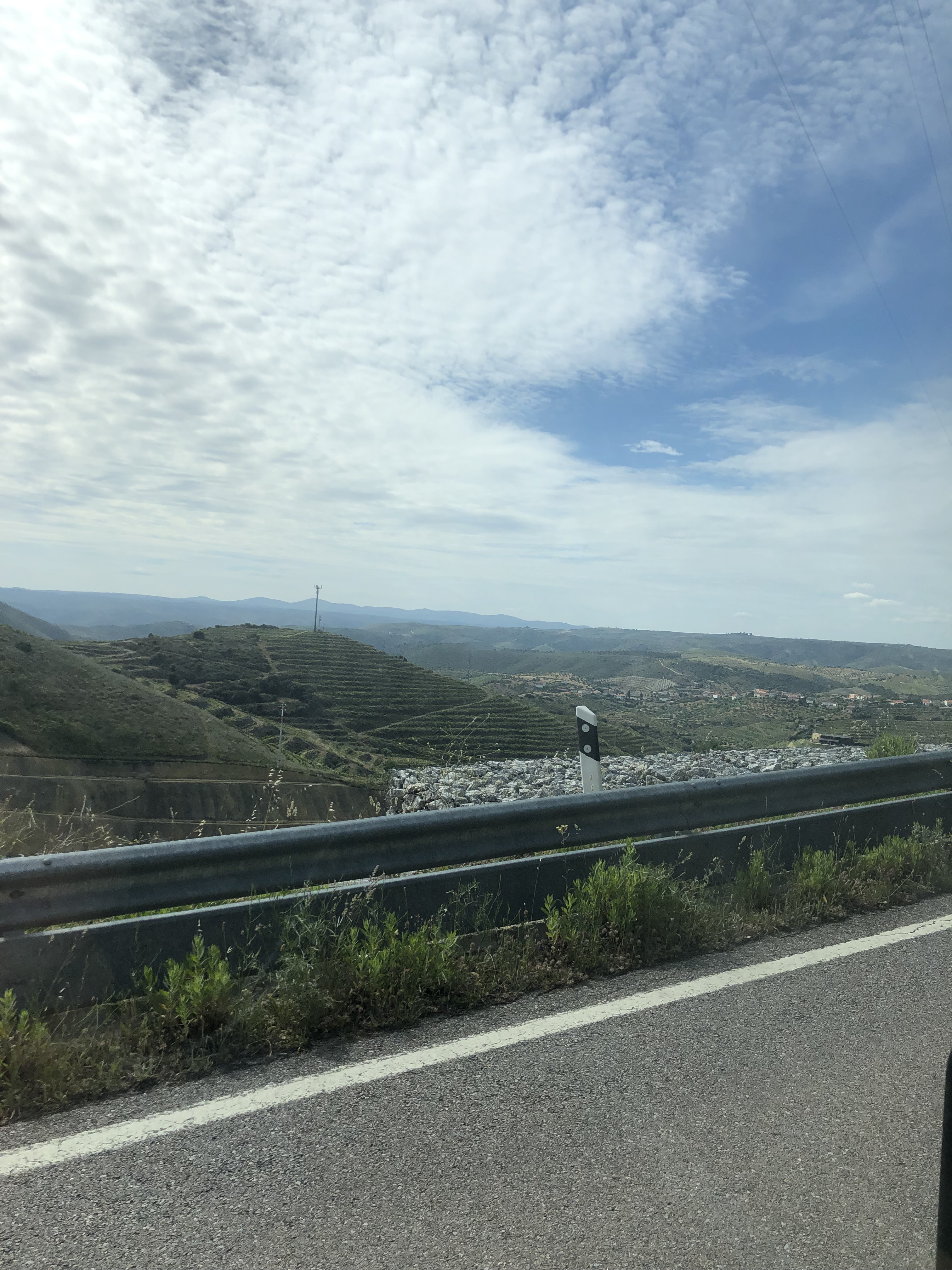
(Getting closer to the clouds)

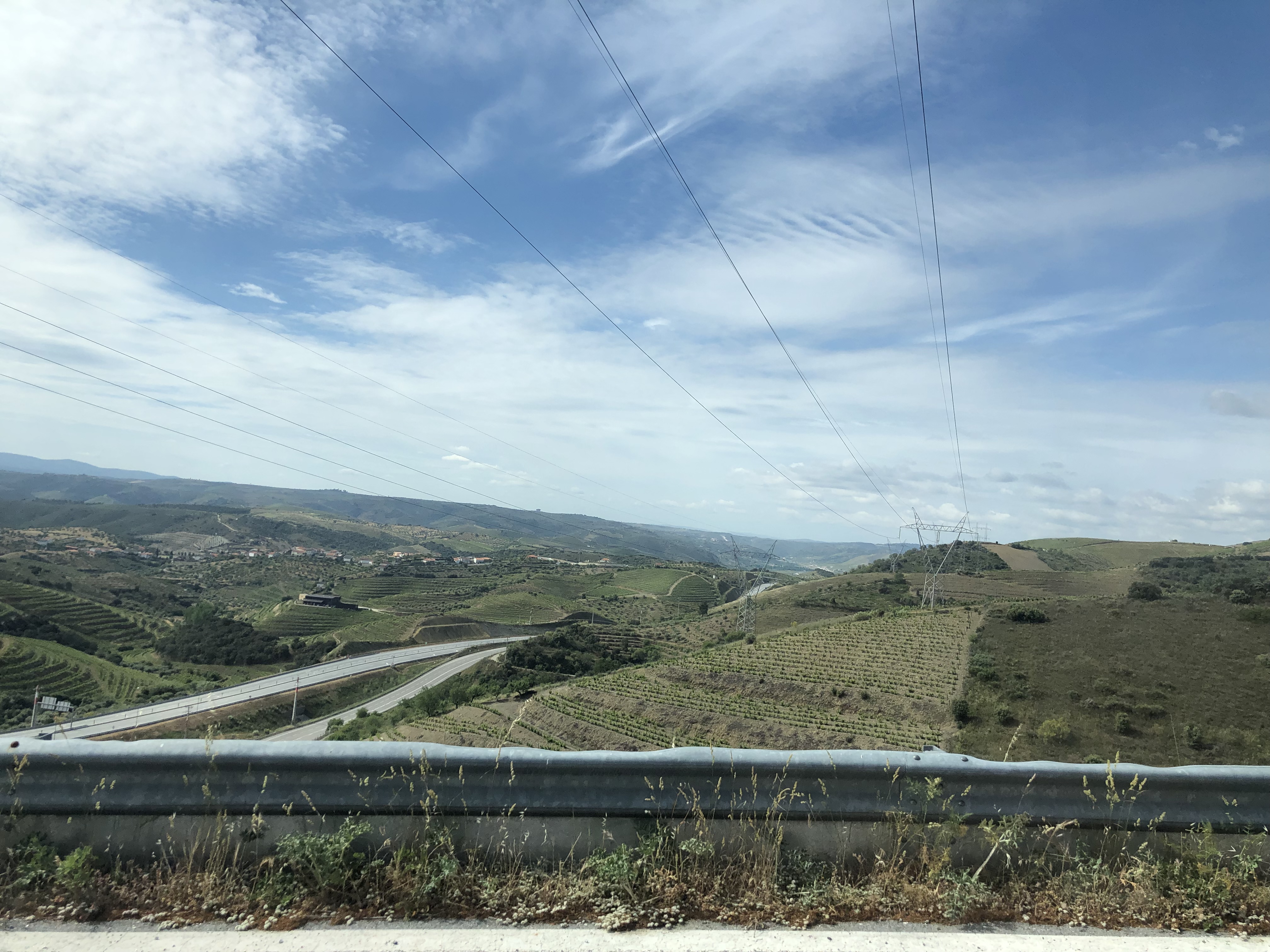
Our next stop was the small town of Freixo da Numão which promised wine tasting and olive oil but no mention of the amazing views on route. The E802 road runs up the east of Portugal and it’s mostly free with amazing countryside views. From time to time you can see little villages or vineyards perched impossibly on a hill side. Or there are enormous rocks like giant’s playthings just strewn around.

(Can you see the road below?)

The sat-nav directed us off the main road with no indication we were about to go up into the clouds. As we wound round and round the hillside we got higher and higher every now and then able to see the road we’d just been on far, far below us. I was torn between awe and frozen fear. Meanwhile the locals thought we were driving too slowly and kept overtaking us on winding bends with sheer drops.

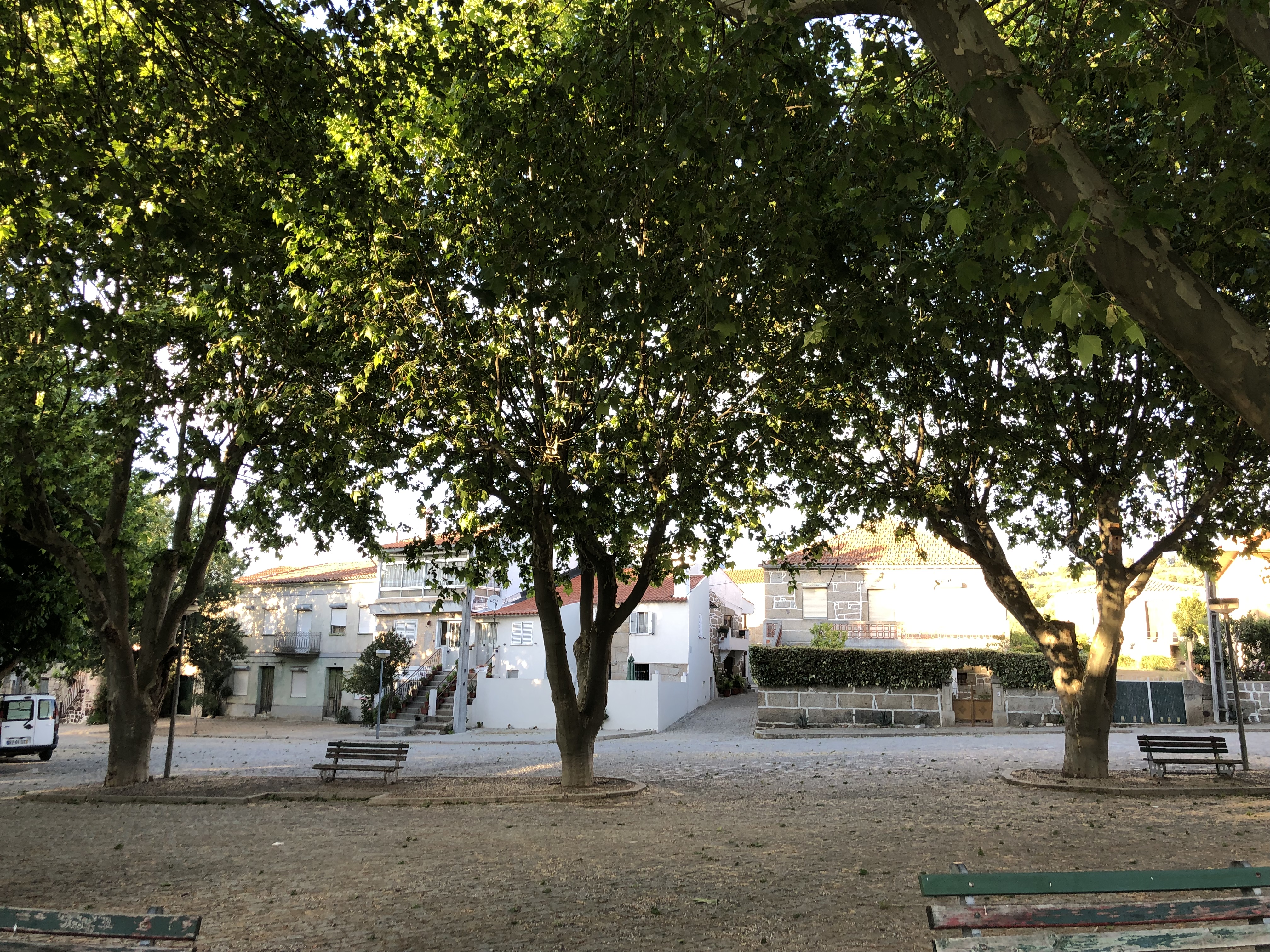
(Shaded seating in the center of Freixo de Numão)

Eventually we reached the top and the town. Parking for the night was beside a sports ground surrounded by wild red poppy plants. Wine tasting would be happening in the evening, there was work to be done first. I had a plan bubbling away inside my head about compiling the trip’s blogs into an ebook and Denis was busy with client work.

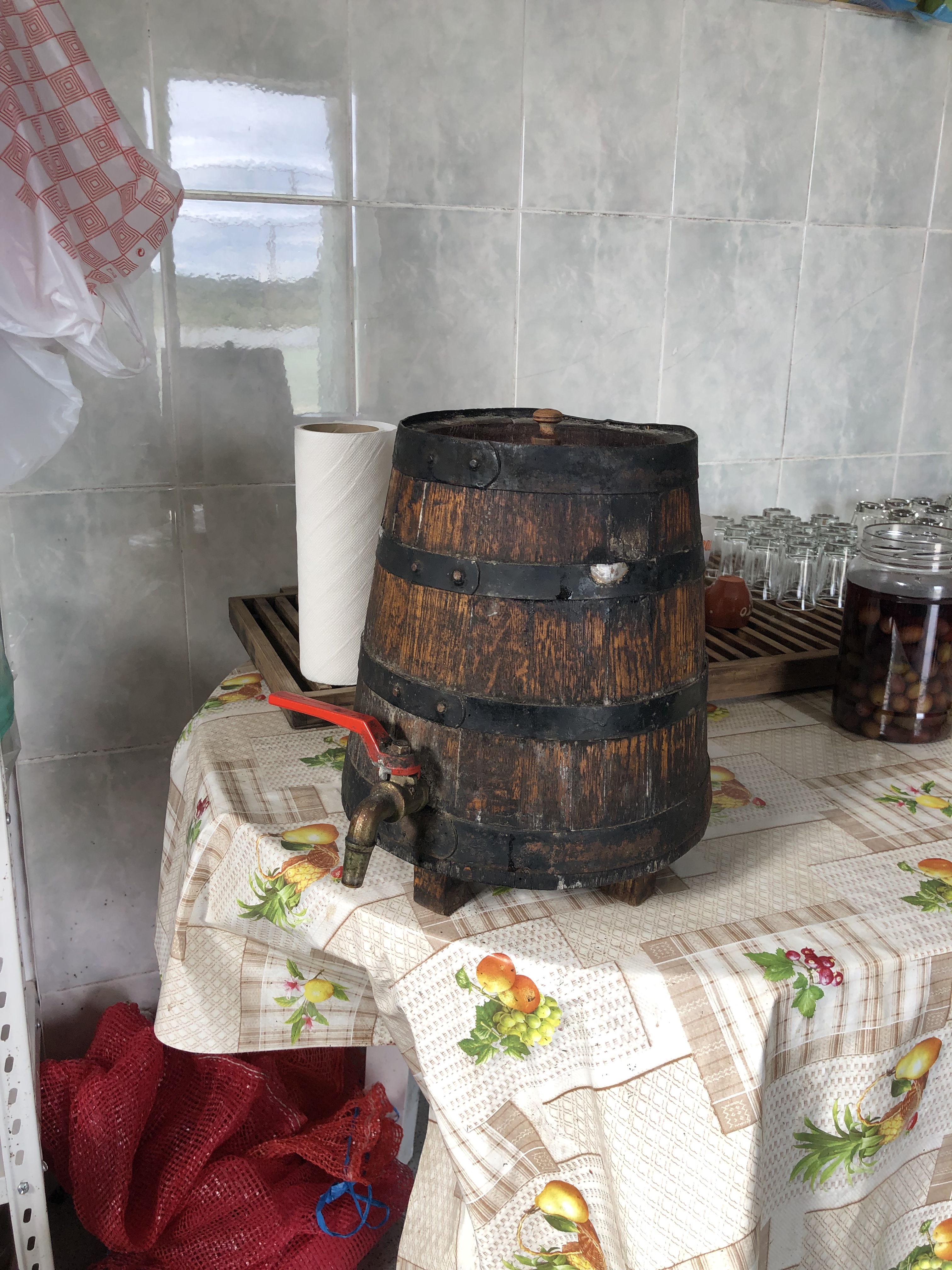
(That’s a barrel of port)

At six-thirty there was noise outside, the time had arrived to taste the wine. We followed the other campers to a shed under the sports stands. Our host had little barrels of port, boxes of wine, olives and olive oil. The other campers were French and Belgian and our host had lived in France for a few years so French was the common language.

(The olives were amazing)

We were a little out of our depth but Denis bravely tried the wine and even the port. I tasted the olives and they were so good I found a way to purchase them in French. I also accidentally purchased 5 litres of olive oil… the precise volume required getting lost in translation.

Anyone for a share in my olive oil barrel? Mairead.

(Freixo de Numão: Parking €5 includes electricity and water. Small shop and bakery about 15 minutes walk down the hill. Wine tasting each evening around 7pm)

Bird Song and Frog Croaks

(Park here… this one’s in Spanish but the picture is always the same)

Sunday is the day we travel the longest so from Évora we travelled three hours to a camper van parking spot called Penamacor in Benquerença which is in the middle of the countryside. We passed through small mountain villages, along narrow roads following parking signposts.

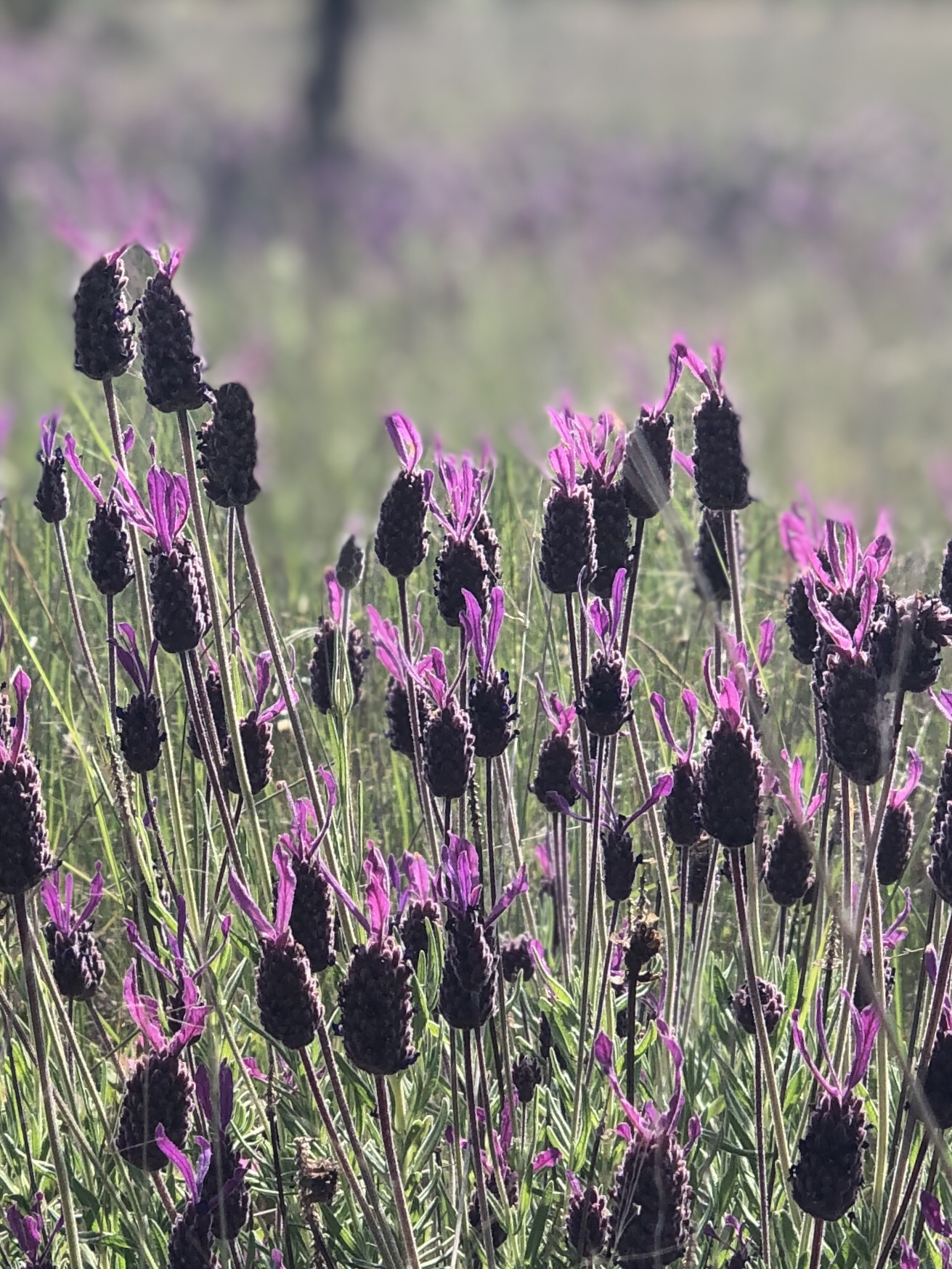
(Lovely lavender growing wild)

When we arrived it was full of camper vans and motor homes and there was a spot for us beside the river. The temperature was high but there was shade. With the solar panels we don’t normally park in shade but as we’d been travelling for hours our battery was full.

(Can you hear the frogs?)

We parked up and went for a walk. There was a little bar on the other side of the river over a foot bridge. I’ll remind you this was in the middle of the country, nearest tiny village probably 5km. In the height of summer the river gets diverted and you can swim here, there’s also a playground. There were plenty of people inside the bar and on the deck outside. The waitress had no English but we managed to be understood.

(Sun-bleached table)

Afterwards we walked along the deserted country road and a dried mud lane to another bridge. This is olive farm land with small holdings and what looks like hand-ploughed fields. The only sounds the birds singing and the frogs croaking.

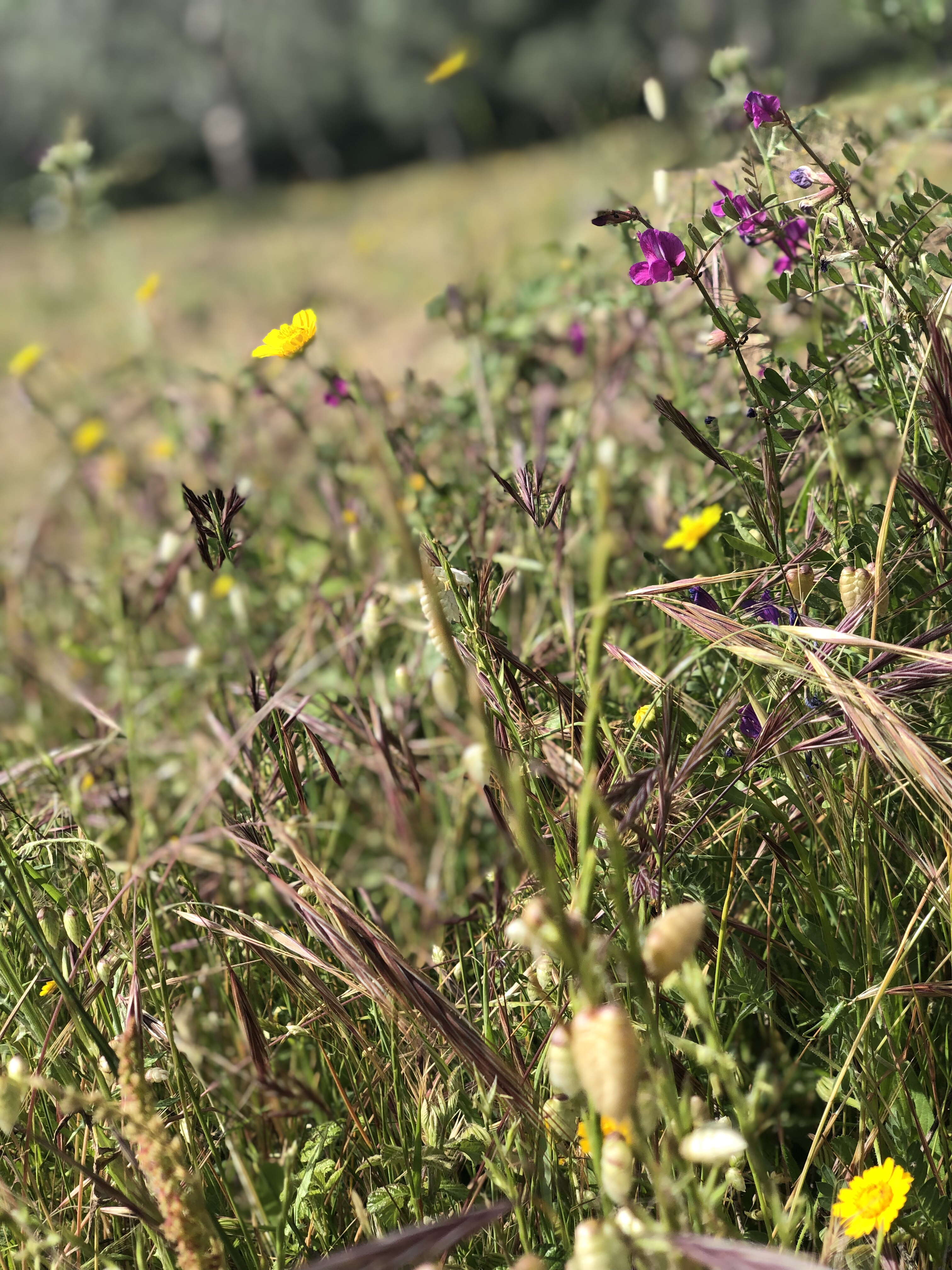
(Wild flowers by the side of the road)

Denis barbecued chicken outside and we were asleep before ten. Next morning we left early.

Note to self: Spend longer here next time. Mairead.

(Free parking, free motorhome facilities, free rustic toilets and shower, near bar.)

Weird chapel in Évora

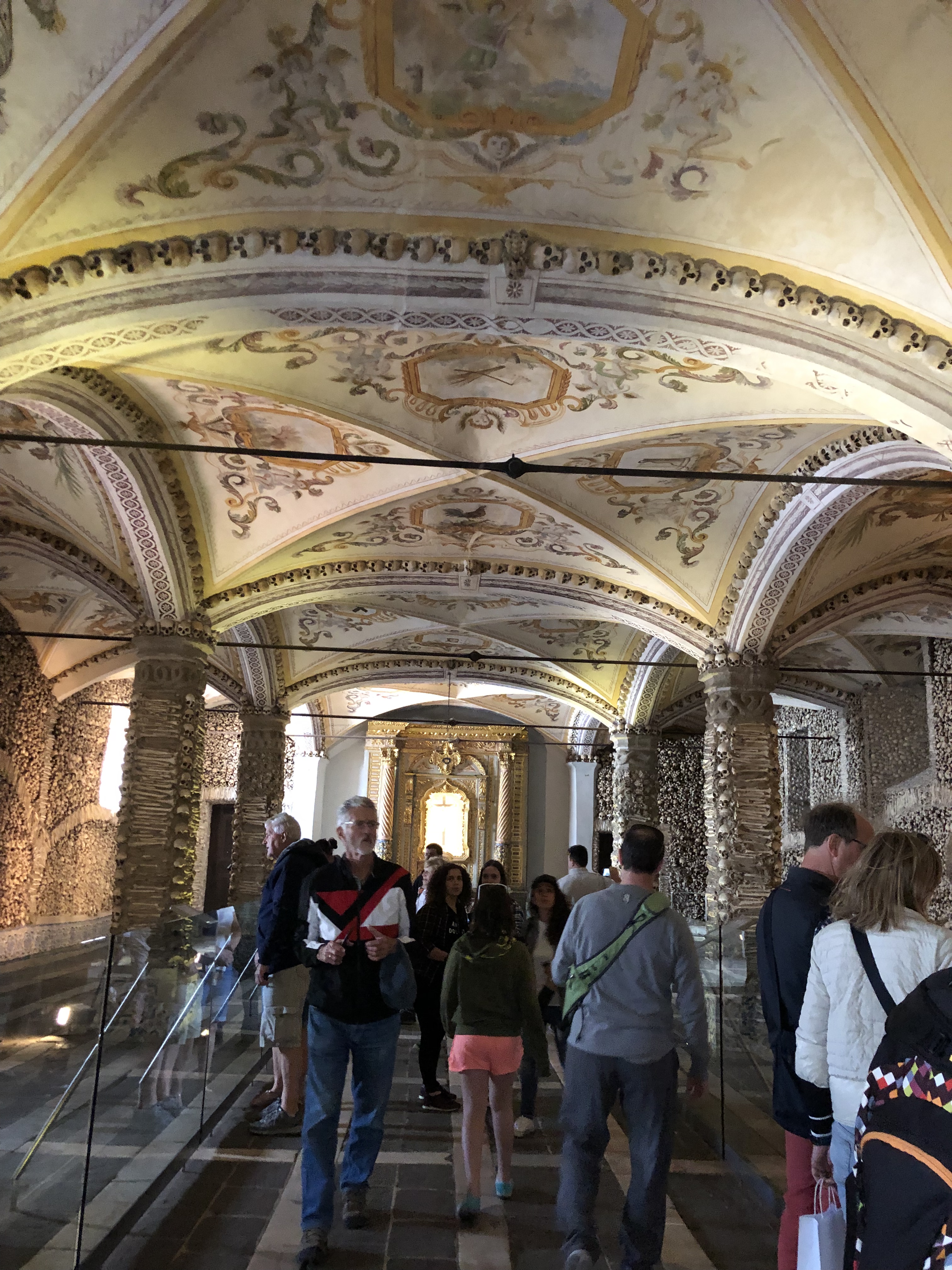
(The Chapel of Bones)

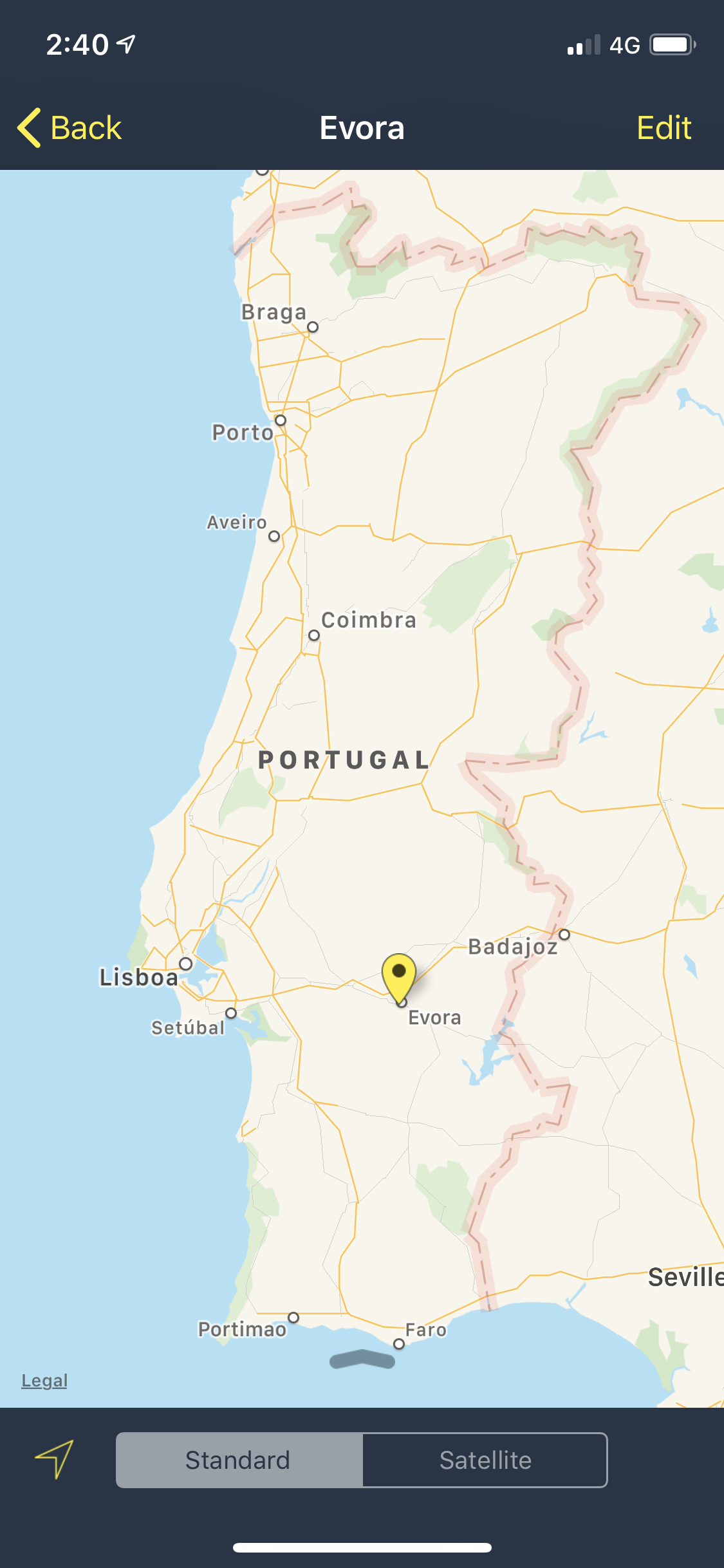
Next morning we drove up the road to Évora. It was a hot dry Sunday and we were on a mission. Two missions really. Denis had heard about the Chapel of Bones and wanted to see it. I wanted to find a souvenir to remind me of storks when I was at home.

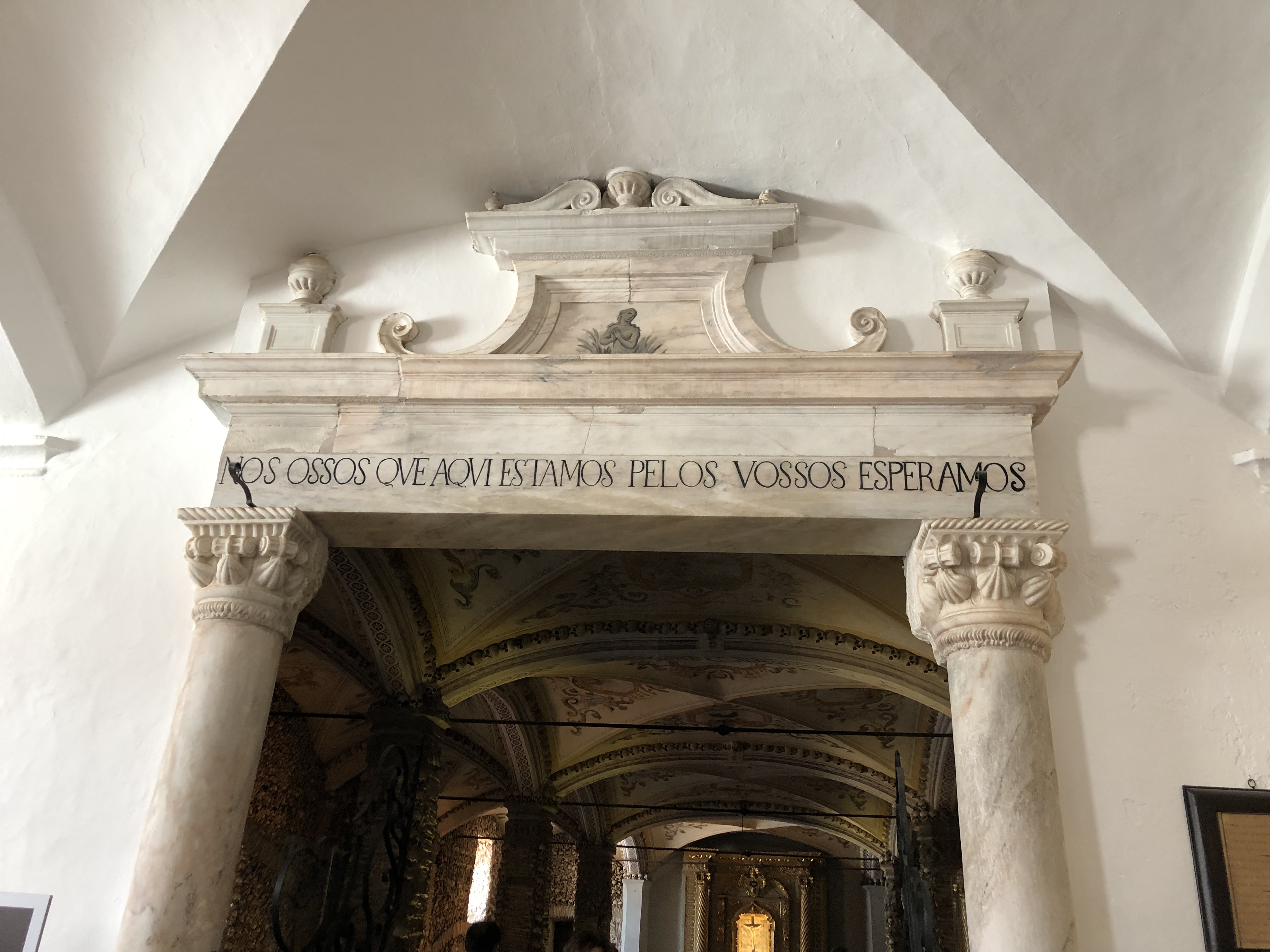
(The words above the door: We bones that are here are waiting for yours...)

First the chapel. Of bones. Yep real bones and skulls. Thousands of them. The chapel was built and decorated in the 1600’s. Seemingly it was a popular thing to remind the living that they would be dead soon. There are words over the entrance that read, We bones that are here are waiting for yours.

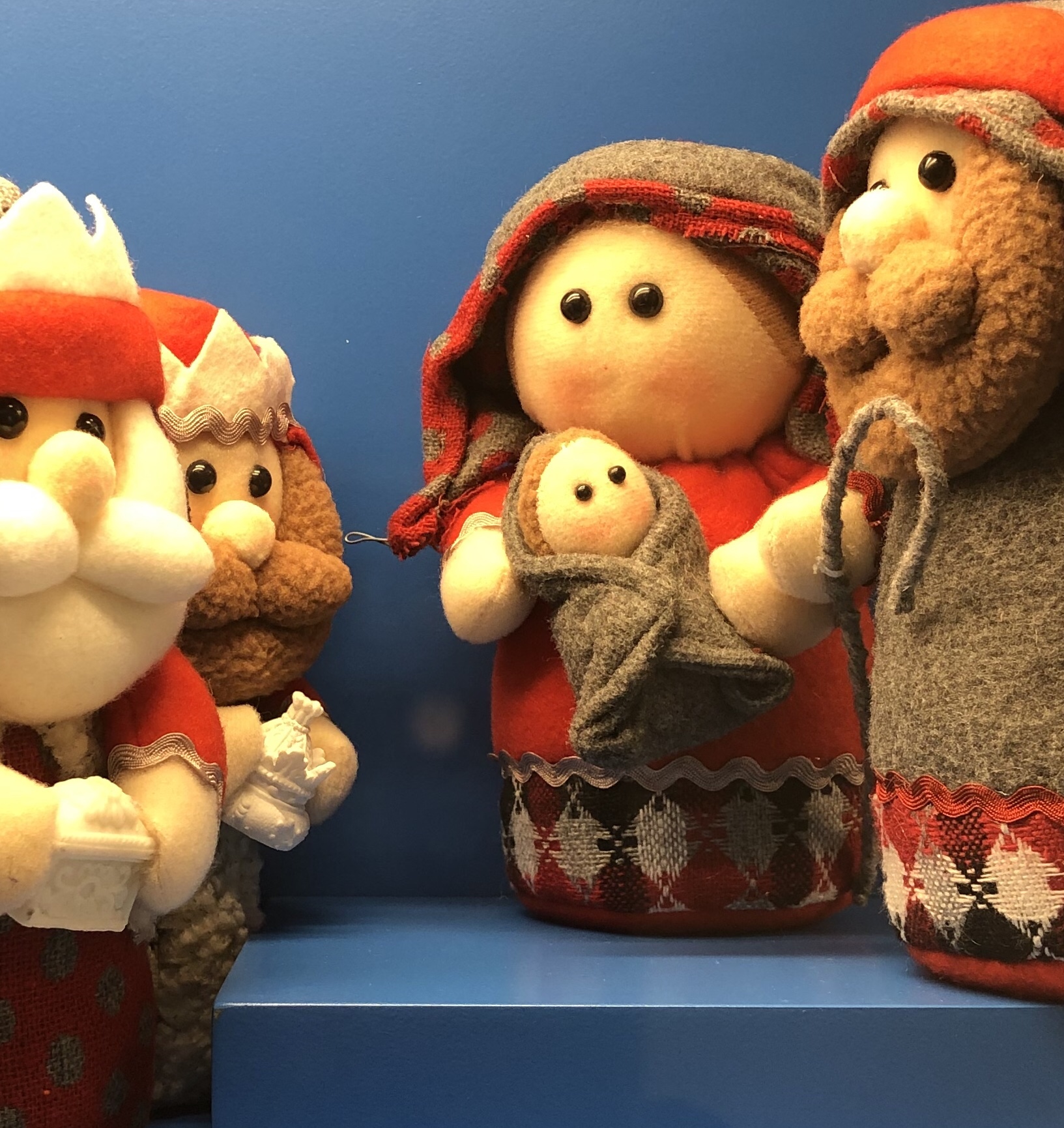
(Cute knitted Christmas scene)

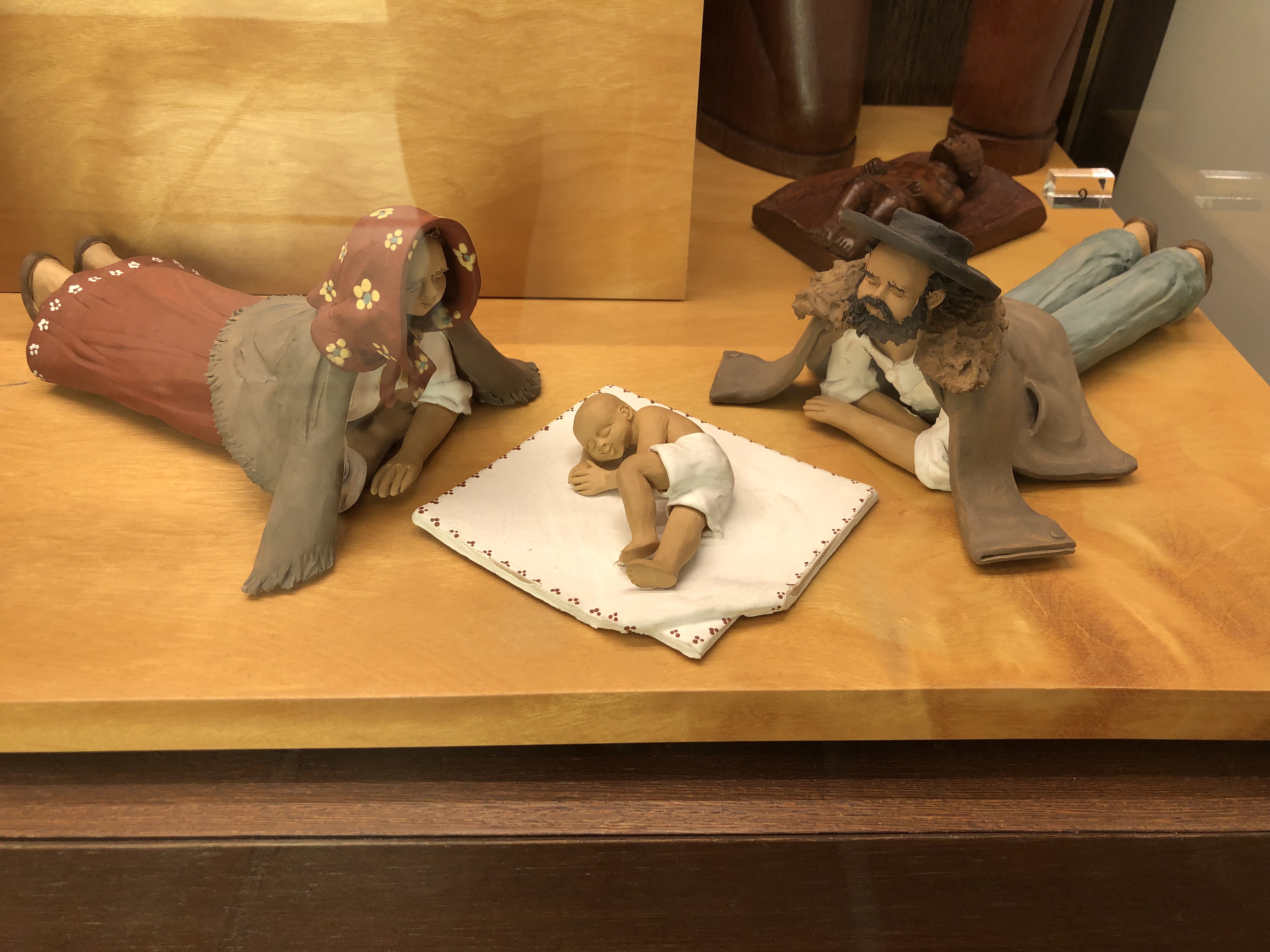
Upstairs is a little more jolly. There’s a huge collection of Christmas cribs from all over the world. Some are adorable. I particularly liked the ceramic ones and the knitted ones. Évora has been a town since Roman times and there a Roman ruin in the center along with plenty more recent cathedrals and churches.

(And a ceramic one. This is my favourite, the parents can’t take their eyes off their baby)

After the bones it was time for my mission… a stork to take home. First of all it was not easy explaining to the various shopkeepers what I wanted as the word stork is not Portuguese and I didn’t know the Portuguese word. Fortunately, I have hundreds (very slight exaggeration) of photos of storks on my phone and I was able to show them pictures. Ah cegonha… (sounded like the actress Sigourney Weaver) they would say, followed by, No.

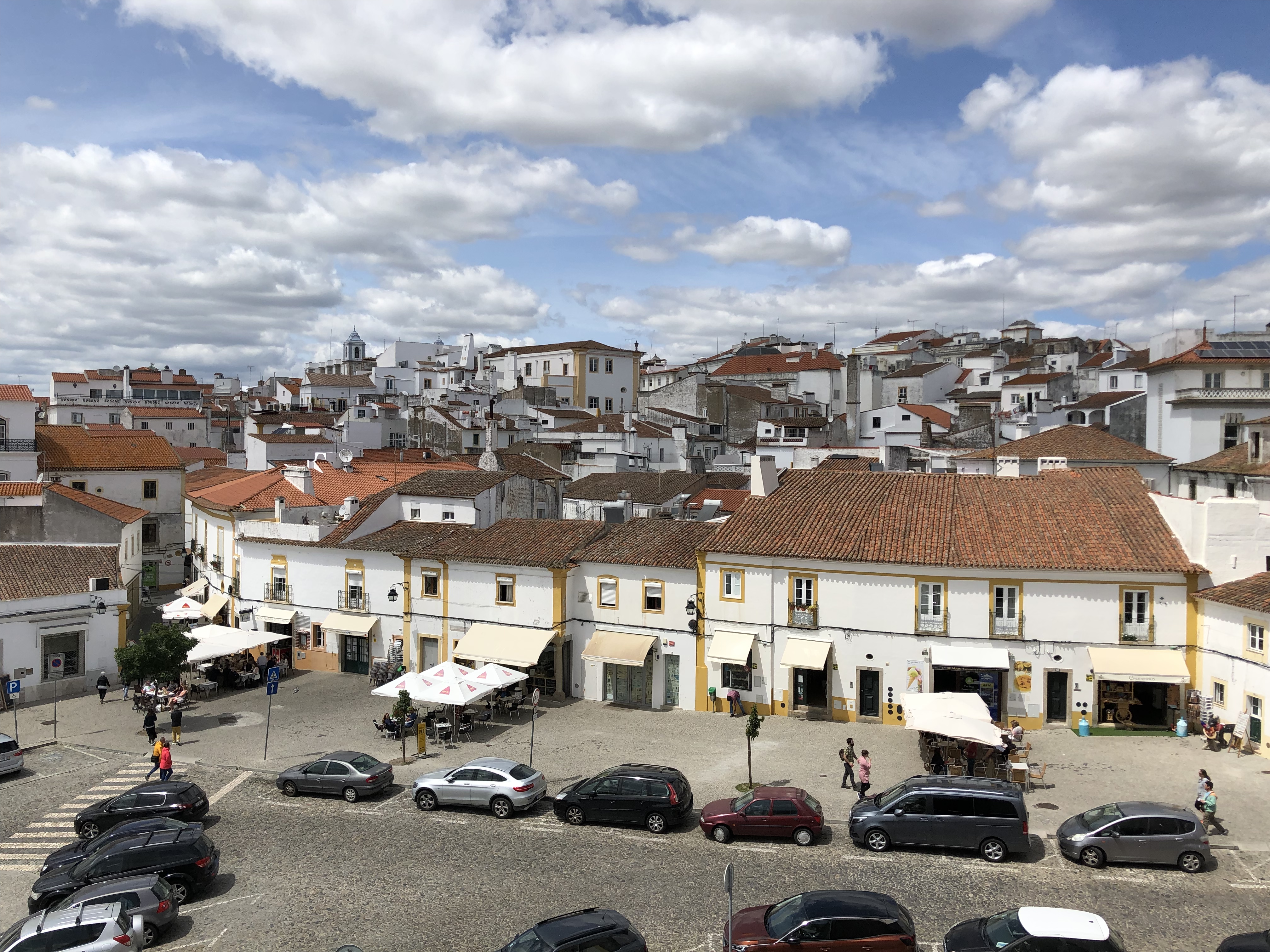
(View of Évora from the roof )

No stork souvenirs. I tried nearly twenty little tourist shops and then gave up. On the way back to our parking spot we stopped for an ice cream and while I was sitting there I noticed a shop I hadn’t tried. Couldn’t leave the last tourist shop unchecked so I went in. They had one! Not entirely attractive. No, let’s be honest, a completely terrible likeness for the beauty that is a stork.

Yes, I bought it. Mairead.

(Évora: free parking, 15 minutes walk to center of town, free water)