
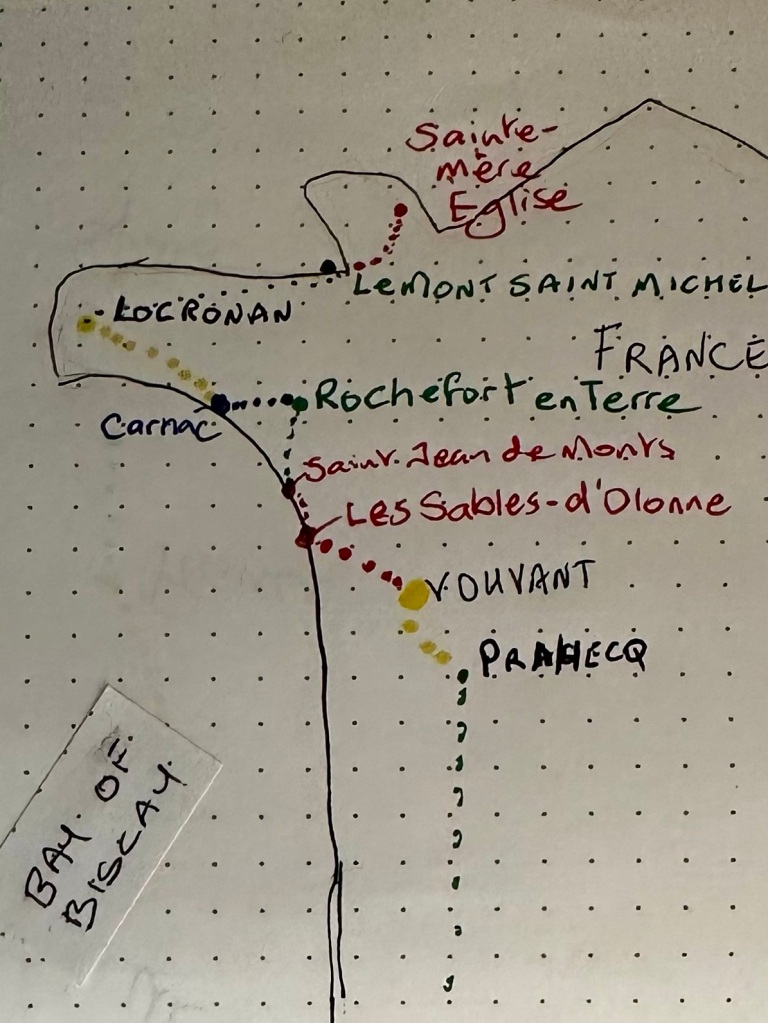
By the time you read this we will be on the ferry home. Everything that begins also ends and our trip has ended. No doubt there will be more journeys, this year or next but for now we are beginning the ending part of the journey.
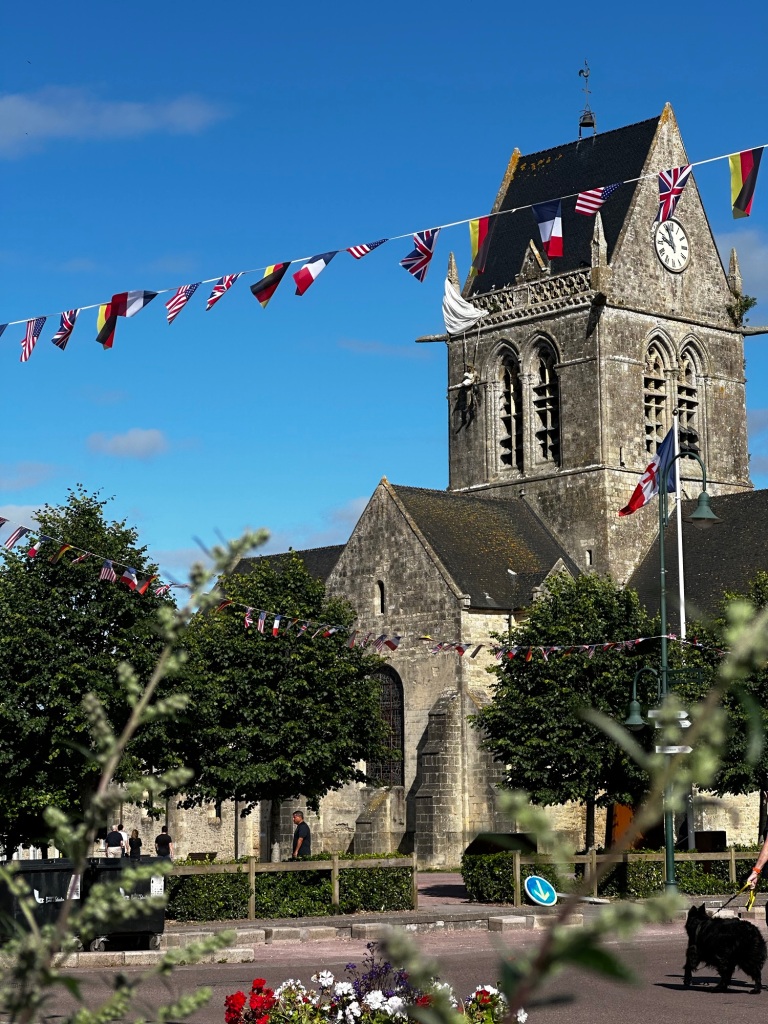
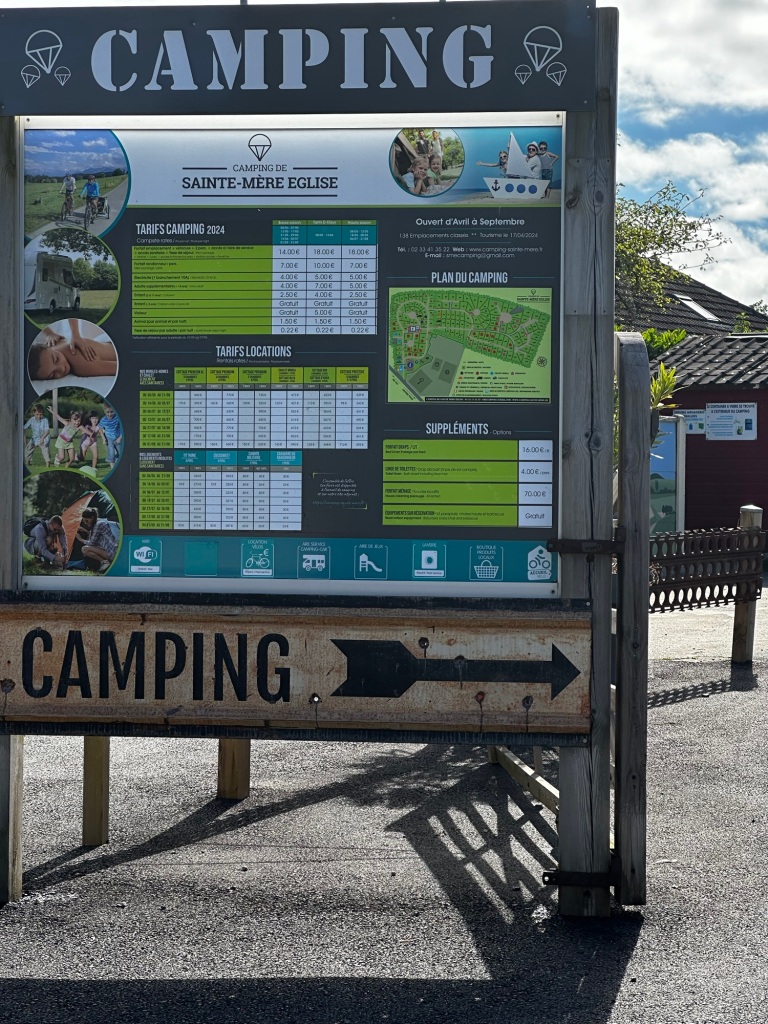
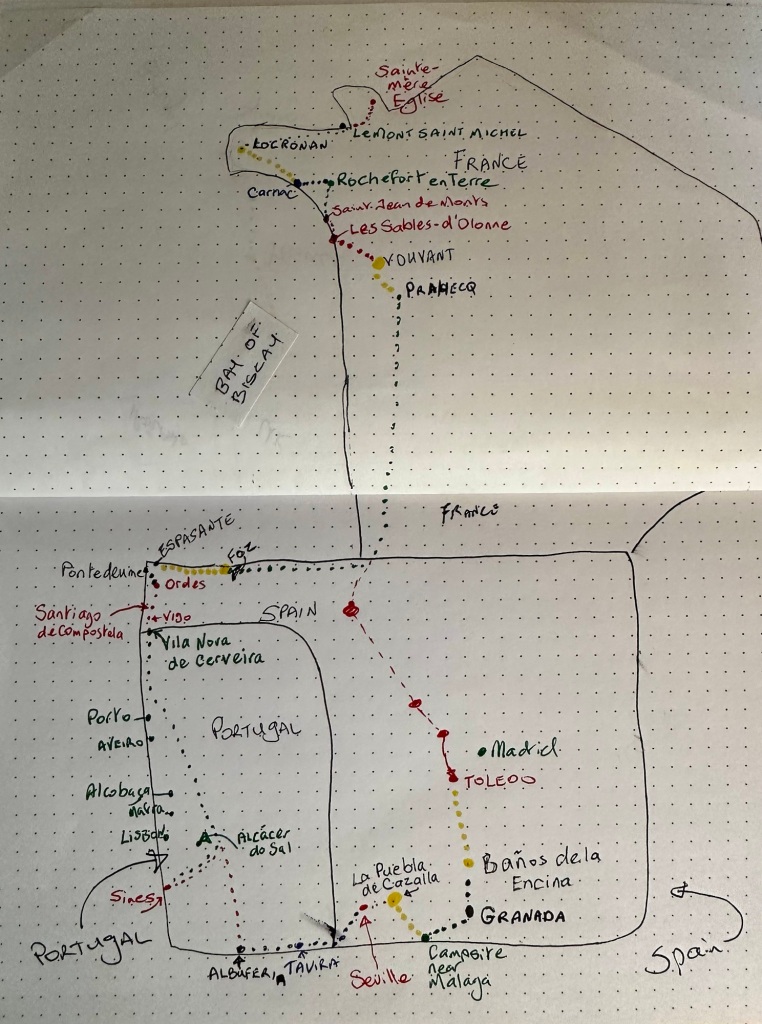
We spent the last few days doing very little at a campsite just an hour from Cherbourg ferry port. The town is called Sainte Mère Èglise. We have stayed here many times and you may remember, from previous trips, it was the first town liberated in the D-Day invasion in 1945.
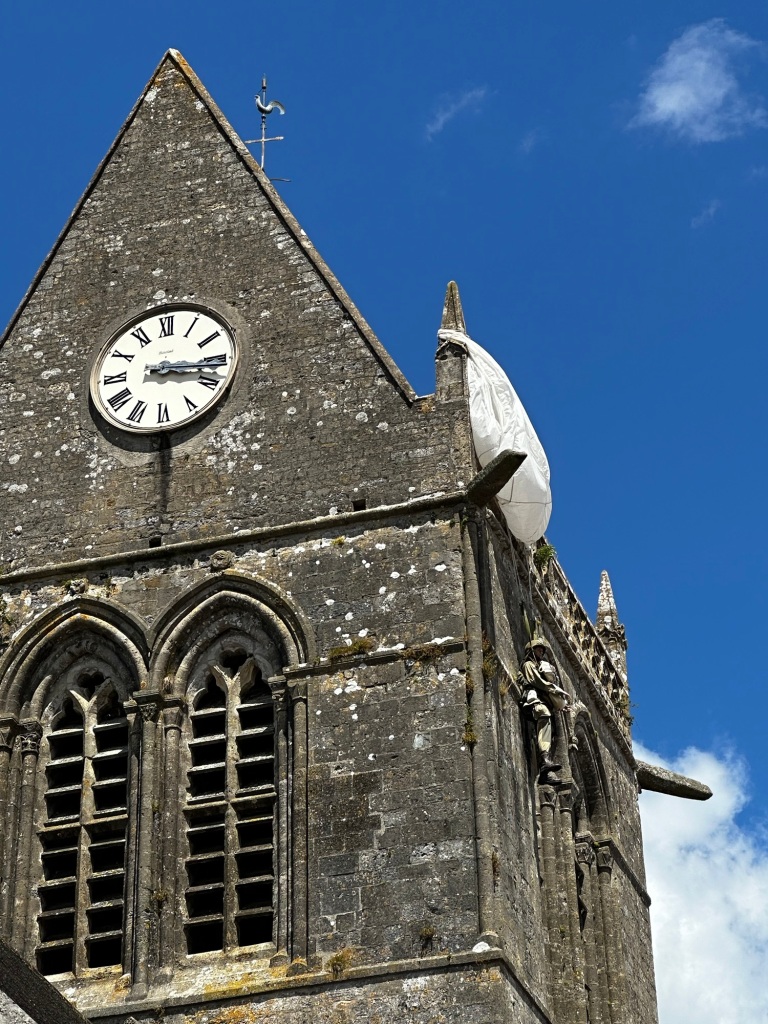
It was American Airborne Division soldiers who landed here and one of them, a paratrooper, hung for hours when his parachute caught on a pinnacle of the church. He was taken as a prisoner of war, he escaped and continued to fight until the town was finally liberated. His name was John Steele. He was 33 years old. He died only 23 years later of throat cancer.
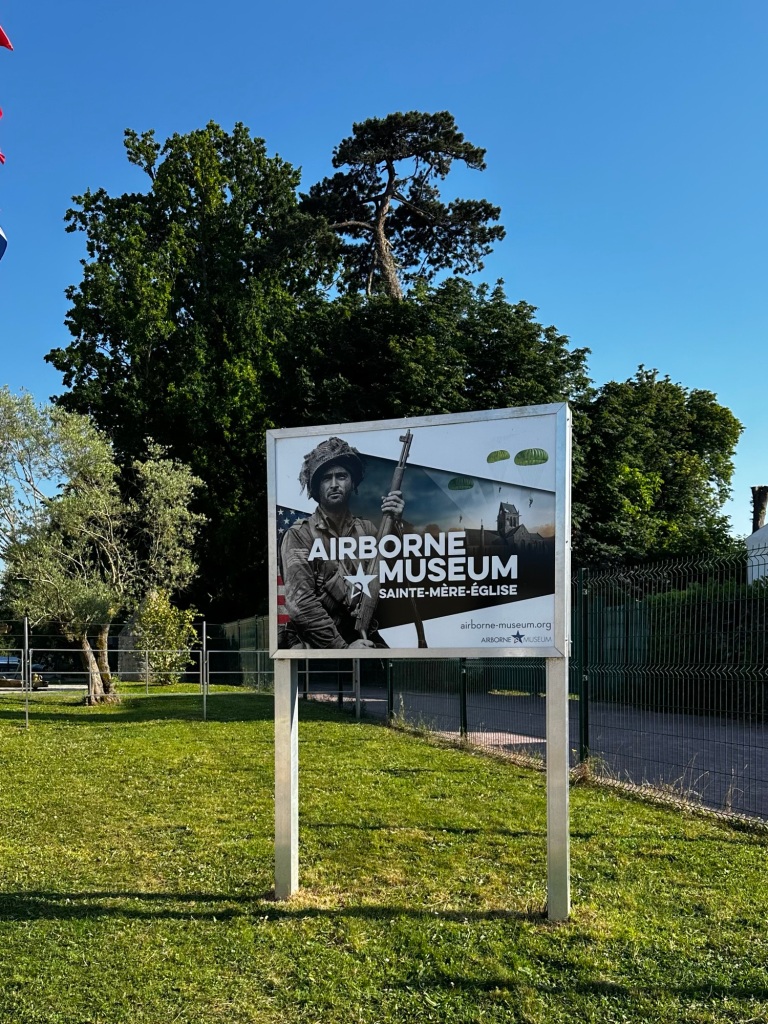
There’s a war museum in the town and we visited it again this year. I wasn’t looking forward to a visit – it’s always very sad. I did consider not going but instead I went looking for happier stories instead of the usual sad stories.
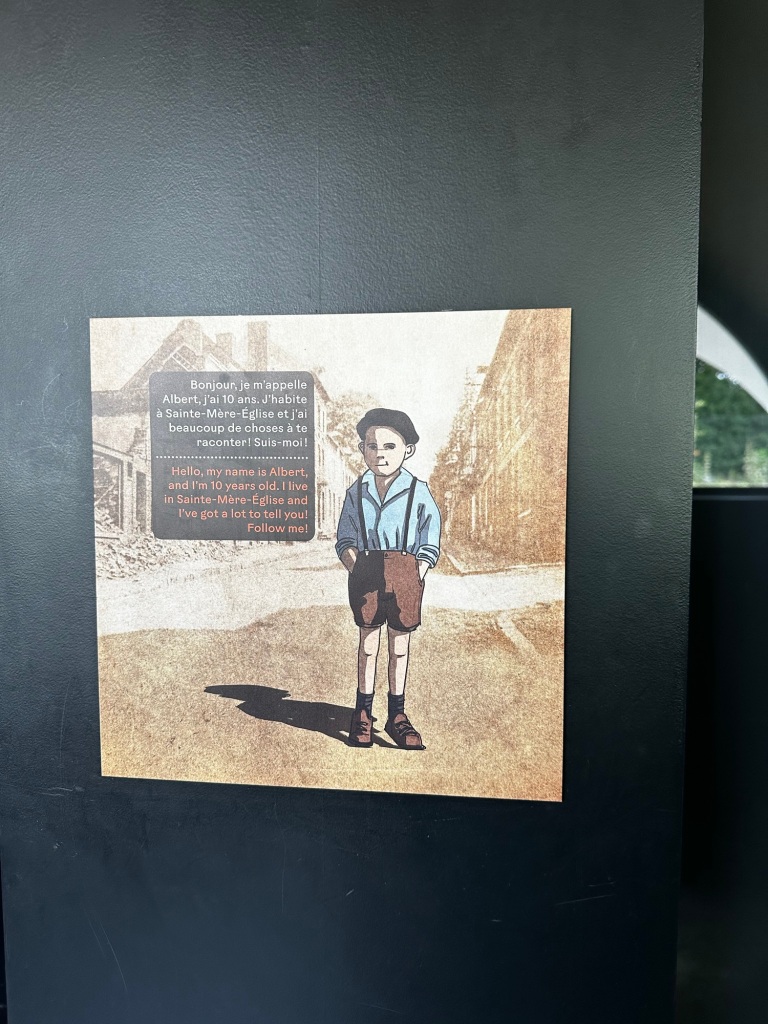
Along with all the usual exhibits and information plaques there were posters lower down for smaller children to read… I took the children’s tour. The first one was introduced by 10 year old Albert who told us he’d been seeing German solders in the town since July 1940. And that he and his family were forbidden to leave their house between 10pm and 6am. He mentions queuing outside the shops for small amounts of food in exchange for a ticket. He says he overheard his mother talking to a friend about the resistance fighters waiting for the D-Day.
Then there was the double agent. Juan Pujol Garcia from Barcelona wanted to be a British spy but he failed the interview. But he was successful in his German spy interview. (I’m really not making this up!) So he went ahead and set up a pretend German spy ring and moved to Portugal (like Ireland, Portugal was neutral during the war) to oversee his spies.

When the British discovered the ring, they thought it was real and became very interested in Juan. Instead of punishing him they offered him a spot as double agent. He had to confess that his spy ring was fake but that seemed to make him all the more spy-worthy.
His big success was telling the Germans that whatever they heard about a D-Day mission in Normandy was fake and the real mission would be at Calais – nearly 500km from Normandy. For that reason (and other army efforts with fake reports and troop movements) the Germans were caught unprepared for the landings in Normandy. After the war Juan faked his own death and went to Venezuela. He died in 1988… or did he?
There was one story I was drawn into before I realised it was sad. The day before D-Day three friends from the Airborne Division made a pact. Ralph Busson, Bill Farmer and Dan Furlong tore a dollar bill into three pieces and promised they would reassemble the pieces after the war.
Bill never made it to the reassembly of the dollar bill. He died in battle on the 8th of July 1944. Ralph and Dan met again at a veteran’s meeting in the US in 1983 and in 1998 Dan brought their story and their pieces of the dollar back to Normandy to the museum.
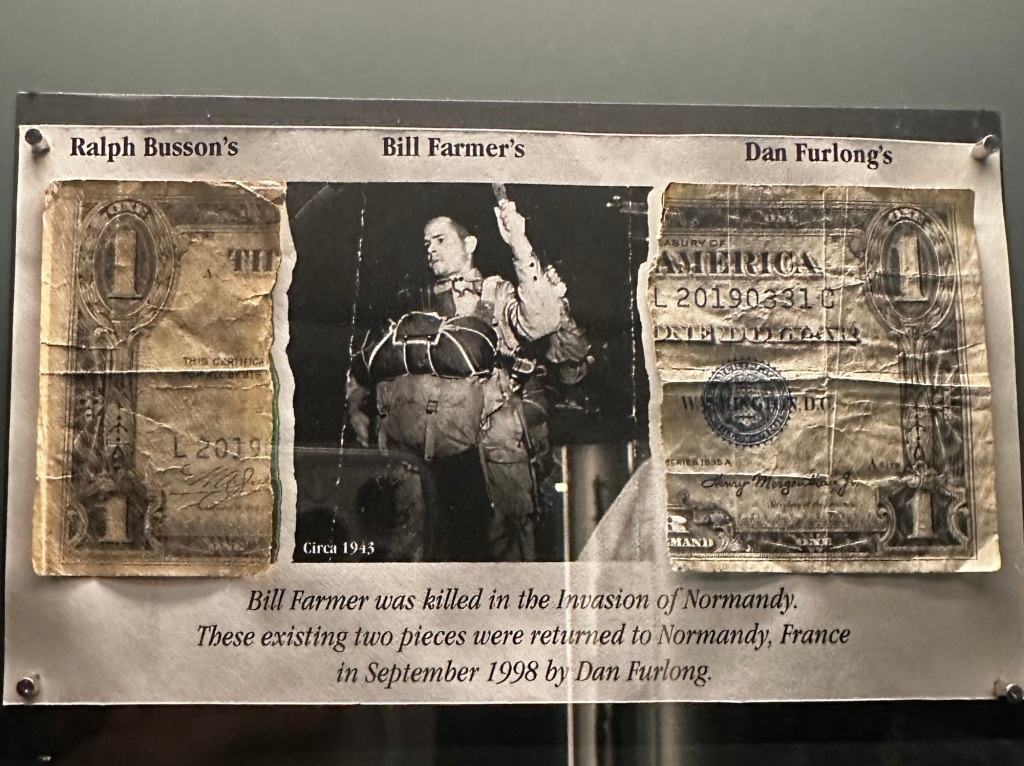
The bit that got me was the display of these pieces along with a picture of Bill… Both Ralph and Dan’s pieces were the edge sections of the dollar bill and were creased and worn. Bill’s section would have been in the middle and was missing, replaced with his photo. And it made me think they were supporting their dead friend, one on either side…
And that’s it! Thank you for supporting our journey up and down the roads and lanes of France, Spain and Portugal through sun, rain and cloud. It’s been a different kind of journey and I suppose no journey is exactly the same. See you next time, in person or on the blog. Big hugs, Mairead.
 (That’s the door of the church)
 (The back of the church)
 (Can you see the replica paratrooper hanging up there?)
 (Can you see the America flag?)
 (That’s a Roman road marker (that little cross on top was added later) the Romans did battle here too)
 Travel stories