Japanese Gardens Co. Kildare

23 8a

(The Bridge of Life)

Yesterday we went to the Japanese Gardens. Our admission included a tour of the National Stud (horses) but we just went for the garden and the food. We arrived around midday and it was busy, tour buses and families. Ok everyone with the tour stand by the wall. As luck would have it there was a torrential rain shower as we got our tickets so we had an early lunch. Back in the garden it as a bit too busy for photographs, each time I lifted the camera to point at something picturesque a little one ran up to it. Look Gran-Mam, look at the stone!  But I got a few.

23 8c

(Couple of swans preening at the lakeside)

The garden symbolises the Life of Man. At the entrance you have the choice between the Easy Path and the Rugged Path. Of course we took the rugged path and before long were slipping and sliding on slick wet stones. Maybe the easy path would have been just fine….. We struggled on through the Cave of Birth – tight fit, the Tunnel of Ignorance – dark and wet, the Hill of Learning – more slipping and arrived at the Engagement Bridge. There’s a gap in the bridge and you have to leap (very small leap) across. On the Honeymoon Path there’s a Difference of Opinion and the path separates…  We bravely climbed the Hill of Ambition and arrived at the Chair of Old age.

23 8b

(Entrance to Fiachra’s Garden)

As the sun was still shining we decide to have a look at the Stud or at least the paddocks with the mares and foals, but it was not to be… another shower had us sheltering in the Beehive Monastic Cells. These are modelled on a monastic site found at Skellig Mhichil, off the west coast. A bit dark but very dry we sheltered with a few of the families. This was Fiachra’s Garden. Fiachra was a 6th century Irish monk who left Ireland and founded a hermitage in France. He encouraged manual labour, gardening and giving to the poor  and is the French patron saint of gardeners. His garden here was designed to make us think of this man (and many more like him) who followed a path of adventure inspired by their passion.

Paths can be slippery – be aware! Mairead.

Keep your eye on the ball!

21 8c

(My Dad’s garage and petrol pumps in the 1960’s)

My Dad had a saying “Keep your eye on the ball.” It probably comes from his days teaching young lads to play hurling, encouraging them to  look at the ball while they raise the hurley to hit it. He used it with us kids to tell us to stay focused on what we were supposed to be doing. Like the customer service competition….

21 8b

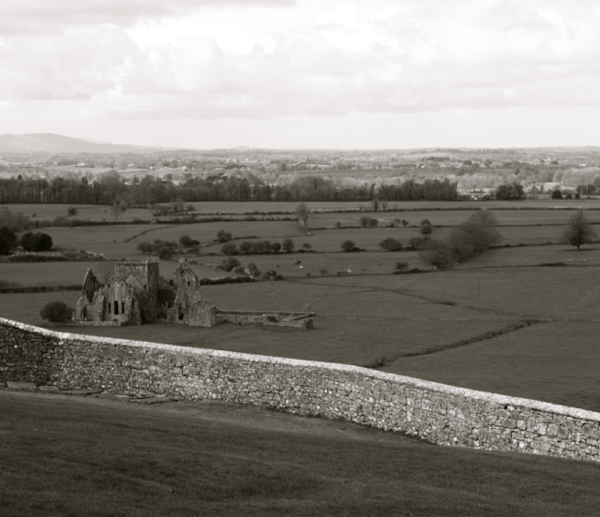
(Hoare Abbey near the Rock of Cashel)

My Dad had a garage and petrol pumps and sometime in the 1960’s or early 1970’s there was a competition between all the Esso garages to find the one with the best customer service. This was a time when there were pump attendants and the customer never needed to even step out on the forecourt to have the tank filled. My brother and I were working on the pumps in the summer time so we were included in the training for the competition. We were trained to give the customer a nice experience. I’m sure Esso had a vision of creating great service in all their garages… my Dad’s vision was to win the competition.


(Our playground as kids)

This week in Ireland petrol prices will top €1.70 per litre, you’ll have to fill your own tank and no one will offer to clean your windscreen. Back then you could fill your tank with £10, pump attendants were the norm and they were friendly by nature. But this competition focussed that natural friendliness. By the end of the training my brother and I had a clear goal – happy customers. It started as soon as we saw a car approach. We guided them to the front-most pump (so that the second pump would be clear for another great customer experience). We smiled and greeted warmly. We talked about the weather, the traffic (only heavy on a GAA match day) we inquired whether they needed help with the route to their destination. But most important we asked if they wanted their oil and water checked or maybe their windscreen washed. Usually they said no thank you but it was clear they were happy to be asked. Happy customer.

For that summer we kids kept our eye on the ball and we won every time we created a happy customer. Our Dad kept his eye on the prize… and he won the competition! In fact I think he won it at least twice!

Keep your attention on what you want, Mairead.

Ps and if you don’t know what you want, keep you attention on discovering what you want…

Hit the nail… not the thumb!

20 8c

(Love my little empty frame)

I was hanging some picture frames on the kitchen wall yesterday. I think it took me two hours but the time flew and my mind wandered to thoughts of “noticing what’s right“, again. Putting my attention on what’s wrong is like hitting my thumb with a hammer…. when what I want to do is hit the nail.


20 8b

(Some of my finished wall… Look Nolene it’s your painting!)

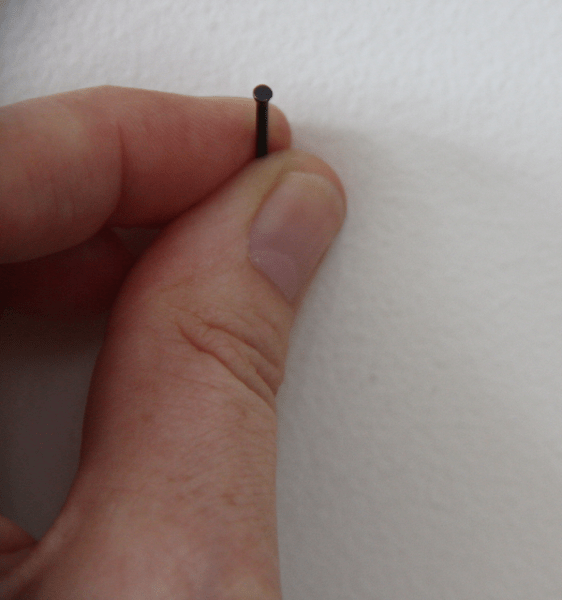
We’ve all had the experience of hammering a nail into a wall. When I was being shown first by my Mum or my Dad, I can imagine I was hyper excited to get the hammer into my hands. It looked so easy and such fun, whacking a bit of metal and making loads of noise. I held the nail in one hand and the hammer in the other and took a big swing… and hit my thumb!


 20 8a

(Hit the nail, hit the nail!)


From that moment on it was no longer fun… I watched my thumb like a hawk and each time I aimed for the nail I was looking at my thumb. Of course I hit it again. After that first lesson it took me a while to go back to hammering a nail and it never seemed as much fun….

20 8d

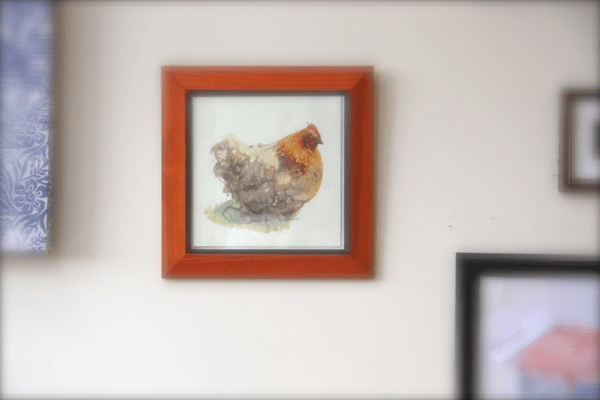
(Hen picture… Look Ciara it’s the charity shop frame!)

Put your attention on the nail – the thing you want to hit! That might be good grades, or good health. It might be a life purpose or employment. It might be a holiday or friendship or even peace. If you continuously worry (i.e. think about) the opposite – bad grades, ill-health, lack of purpose, unemployment, no holiday, no friends, war – then that’s what you’re aiming for.


You don’t want that do you? Mairead.


The Walking Machine…. another gadget or a guru?

16 8a

(Collage)

We have a walking machine, we’ve had it about six months now. Having one doesn’t contribute to good health but using one might… I’ve started using it. It has an added benefit of allowing my mind to drift away and have some interesting non-worrying thoughts. Yesterday I was walking along when something popped into my head about noticing the stuff I do that’s ok.

29 6e

(Notice the pretty patterns… instead of the peeling paint)

Usually when the drift away thoughts come into my head they’re in the form of a big picture concept. Like a collage and it takes a little time to look at all the details in the big picture. After that it’s possible to unravel the concept in order to talk about it. I’m unravelling it this morning. In normal life we have the tendency to notice what’s wrong. With the weather, the newspaper article, the dinner, the artwork. Sometimes in our work it’s necessary to notice what’s not right, in order to fix it, make it right. So when we consider ourselves we use the same logic – notice what’s wrong in order to fix it.

29 6f

(Notice something beautiful about this picture)

Other people help us in this work – they notice what’s wrong and they tell us! But I’m not so sure this works well… Mark Twain said If you always do what you always did, You’ll always get what you always got!  So it might be useful to try something different. My big picture was… What if I began to notice what was right? What if I ignore (for a certain period of time) what’s wrong and notice what’s right?

What’s right with you? Mairead.

We found the perfect rice cooker!

14 8b

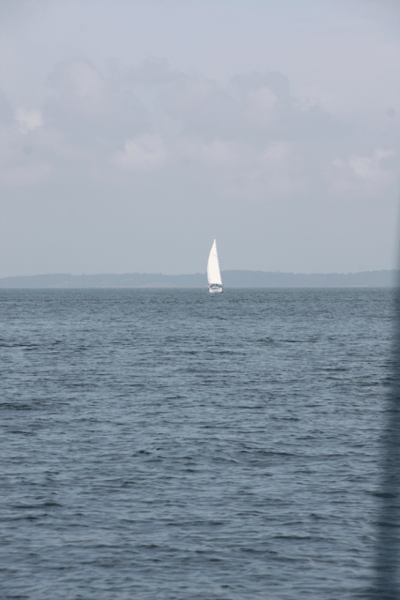
(Sky over Strangford Lough)

From time to time we buy gadgets and I don’t mean the computer type of gadgets, I mean the kitchen ones. For a time these beauties take pride of place on the kitchen counter but eventually one by one they all make their way to the back of the larder. We always have very good reasons to buy them in the first place. They promise to cook food in a healthy way (the steamer and the George Foreman), they promise to help prepare healthy food (the instant shredder/dicer and the food processor), they promise to make a particular yummy food (the bread maker and the smoothie maker). But no matter how excited we are about the potential outcome, the journey to the back of the larder is always their destiny.

14 8d

(View from our boat trip)

The latest to make the journey to the larder spent about eight weeks on the counter, a relative short time when you consider the smoothie maker’s eighteen months. It was the instant shredder/dicer, a beautiful and colourful piece of engineering. In fact it’s attractiveness was probably the reason it remained in view so long, but it had a flaw – it didn’t instantly shred or dice. It squashed and spat. If you’ve ever bought a gadget that didn’t do what it was supposed to then you will know the sinking feeling of regret. Your dreams dashed and yet you have some hope so you keep it on the counter. Until the next gadget finds its way into you home.

14 8e

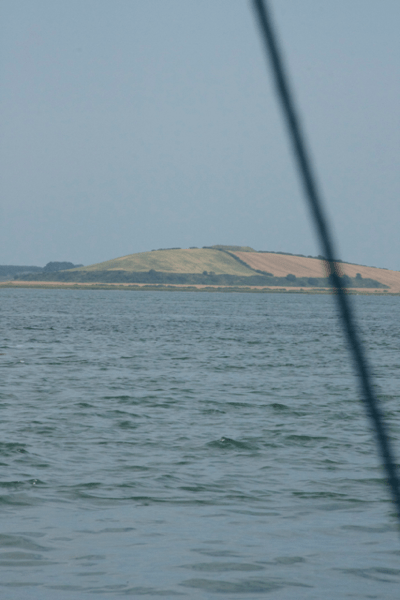
(Island on Strangford Lough)

We were on that cycle again this week but something different happened. We were looking for the next gadget  – a perfect rice cooker. We had begun the research and had visited a kitchen gadget shop. Although their model was attractive we have been fooled by beauty too recently so we took a step back and went home to the internet. Well, there’s a lot to read about rice cookers but mainly they allow for the steaming of rice. Steaming…. a memory floats back into consciousness, don’t we have a steamer in the back of the larder?

15 8a

(Flowers in the garden at Mount Stewart)

We put the beautiful gadget into the larder and pride of place on the kitchen counter goes to… our old steamer and surprise, surprise it steams rice perfectly. Not as pretty as the last occupant but it keeps its promise – to steam.

I think I’ll have another look at the bread maker, Mairead.

Visiting Lord and Lady Londonderry…. well… their house.

14 8bb

(Mount Stewart house and a little of the Italian garden)

Mount Stewart was the home of Lord and Lady Londonderry. It is beside Strangford Lough on the peninsula side and like the fishing village it is also owned by the National Trust. We walked around the gardens – very beautiful – and then went into the house for a tour.

14 8dd

(The lake – not the lough)

As we waiting until the appointed time we had an opportunity to speak with the steward of the house, a very young woman who explained the power of light. I had my camera and she very gently told me I could not use the flash and explained that of all the difficulties of stewarding an old house light damage was probably the most challenging. Fading caused by the sun (or continuous flash photography) can not be un-faded. For this reason, the blinds are mostly closed around the house and artificial light guides our way.

14 8ee

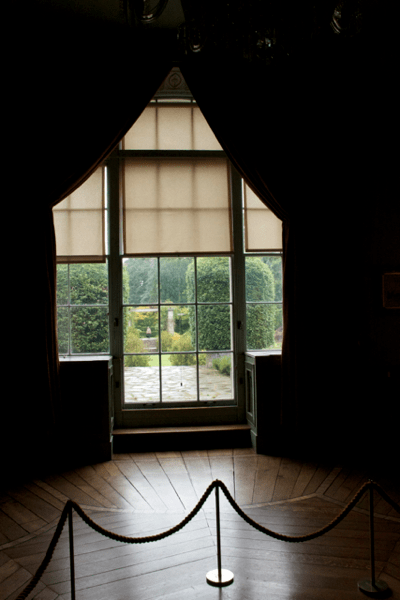
(The former main entrance, now the music room – dark to protect from the light)

The official tour began at noon and we heard lots of interesting information (most of which I’ve forgotten, I’ll be taking notes next time…) Here’s what I do remember…. Women were very important in the fortunes of Mount Stewart. A family called the Stewarts (possibly describing an ancestral occupation of house stewards) moved from Scotland to lands on Lough Swilly near Londonderry (Derry). Later one of the sons moved to this location on Strangford Lough and built the first house here – called Mount Pleasant. He had two sons Alexander and Robert. Alexander was a bit of a ladies man and also a soldier. Anyway, he found a rich wife and then had the money to build on and make his home even more impressive.

14 8cc

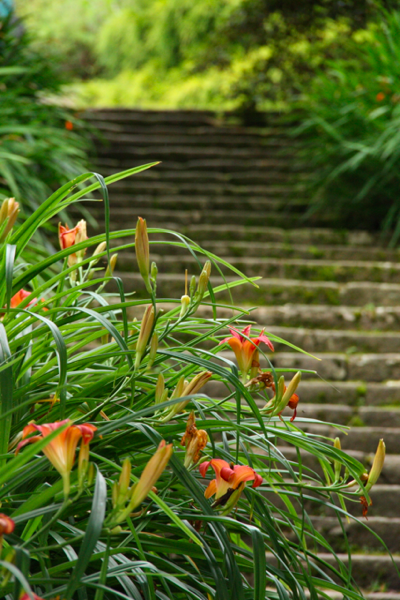
(Steps up to the family burial grounds – called Tir na nOg. In Irish myth residents of Tir na nOg, never age)

Alexander’s brother Robert was a politician and was a good friend of the Duke of Wellington but although he seemed to have had great success in his political career (he was once rewarded with a painting from the pope….) he was not a happy man. Years later another of the Stewarts married a rich wife and the fortunes of the family were secured again. For a time the house was left empty as the sons and grandsons married and moved elsewhere (including one of my favourite coffee places, Powerscourt House, in Co.Wicklow.)

14 8aa

(Tourist map of Mount Stewart)

Eventually, sometime in the 1900’s another descendant moved to Mount Stewart to take up a job as a politician in Northern Ireland. His wife re-decorated the house and created the beautiful gardens. Her daughter, Mairi, lived in the house until her death in 2009. The house is still occupied by a descendant of Mairi’s.

Mount Stewart, testament to the power of women, Mairead.

The Fishing Village.

13 8d

(View from the car park)

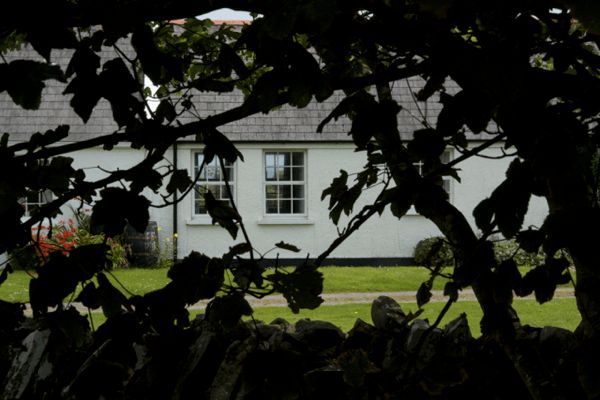
We’re back home but still remembering our visit up north, today it’s the fishing village of Kearney. It’s no longer a fishing village, it is owned and managed by the National Trust (conservation organisation) since 1965. It is extremely pretty, lots of white washed cottages and flower gardens and the sun shone. The brochure says it’s a living village, which means the cottages are still lived it. In fact a google search showed one of the cottages is for sale.

13 8b

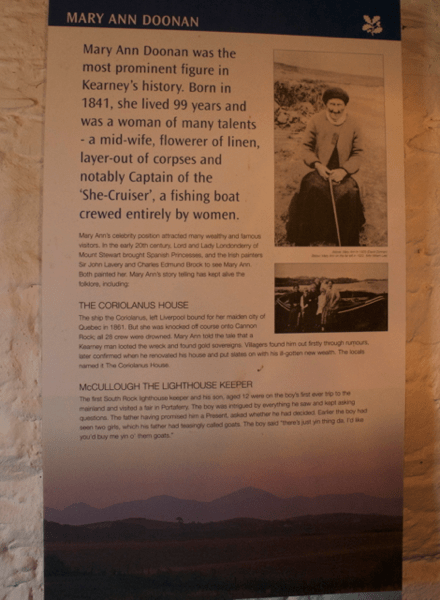
(Mary Ann Doonan)

There are no shops in the village, no pubs, no restaurants but there is an information center with a poster about one of the famous residents, Mary Ann Doonan. Mary Ann was a bit of a celebrity in the early 1900’s and was even painted by Sir John Lavery (famous Irish painter born in Belfast.) She had many roles in the village including being captain of the She-Cruiser, a fishing boat crewed entirely by women. This was in the 1800’s and the google searching could dig up no further information so we’ll have to make it up….

13 8a

(The view from Mary Ann’s cottage)

Maybe her Dad left her his fishing boat in his will… and she wanted to have an independent income… without getting married… Maybe she always dreamed of being a fisherwoman but customs or superstitions prevented her from joining a men’s boat so she needed other women to help her crew her own…. Could be Mary Ann Doonan was a bit of an adventurer and she was willing to break all the rules. Whatever the reason the local important people, Lord and Lady Londonderry (we went to visit them too), were very impressed and brought their famous friends to visit Mary Ann.

More from the peninsula tomorrow, Mairead.