Optimistic Outlook

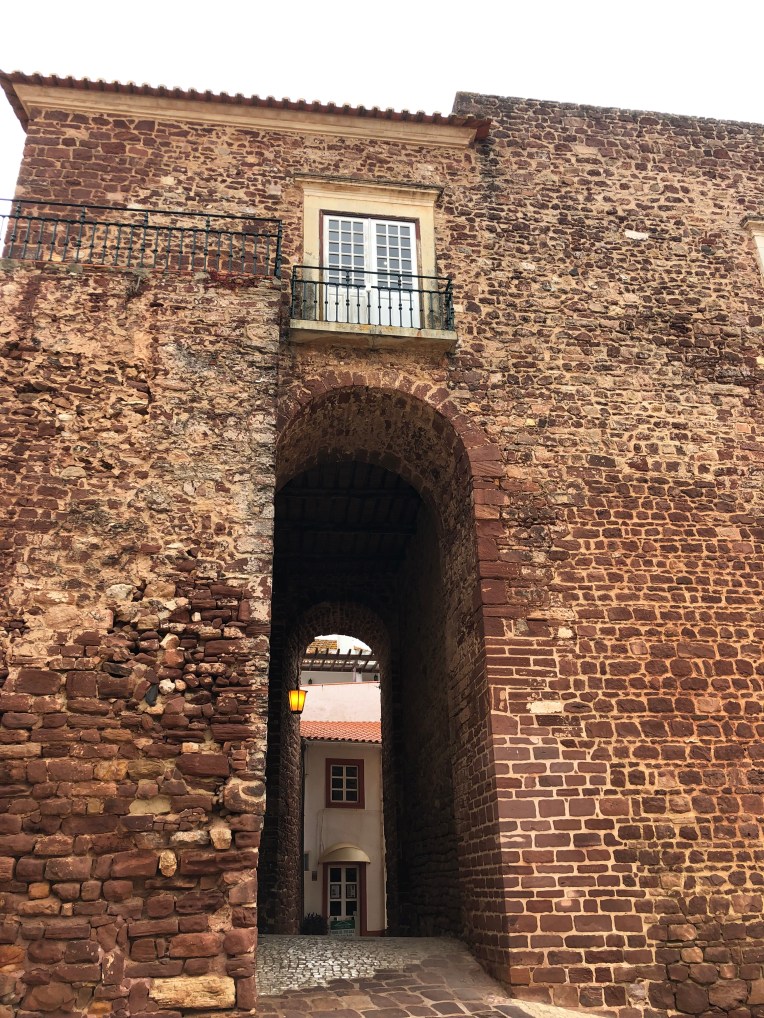
(Bad…? Not too bad…?)

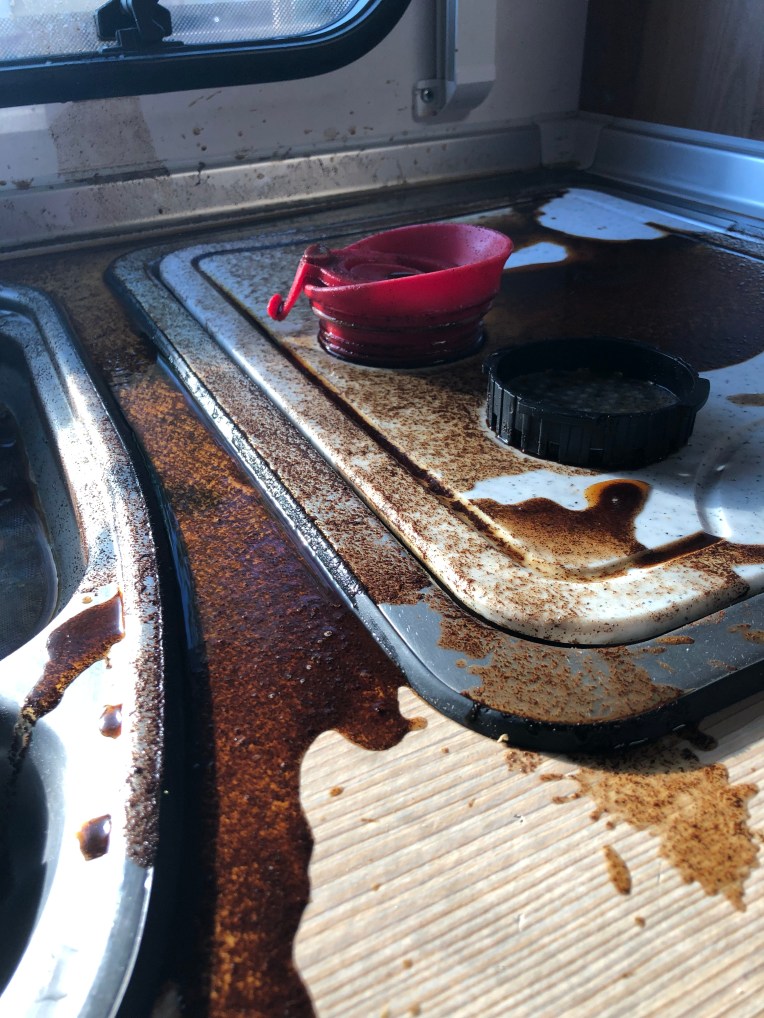
The following morning we left early but not before Denis spilled his coffee. Every morning Denis makes a travel mug of coffee and sips it throughout the day.
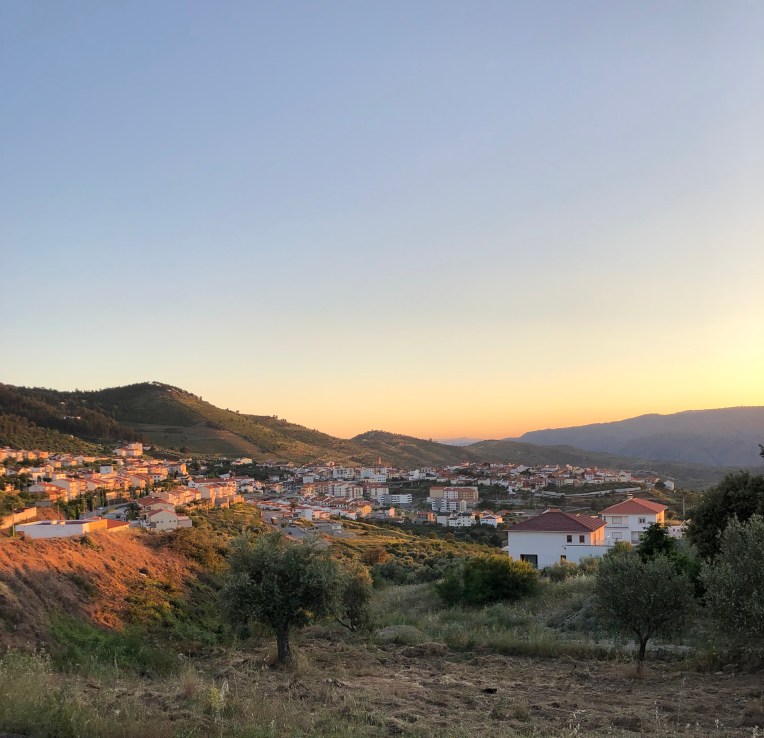
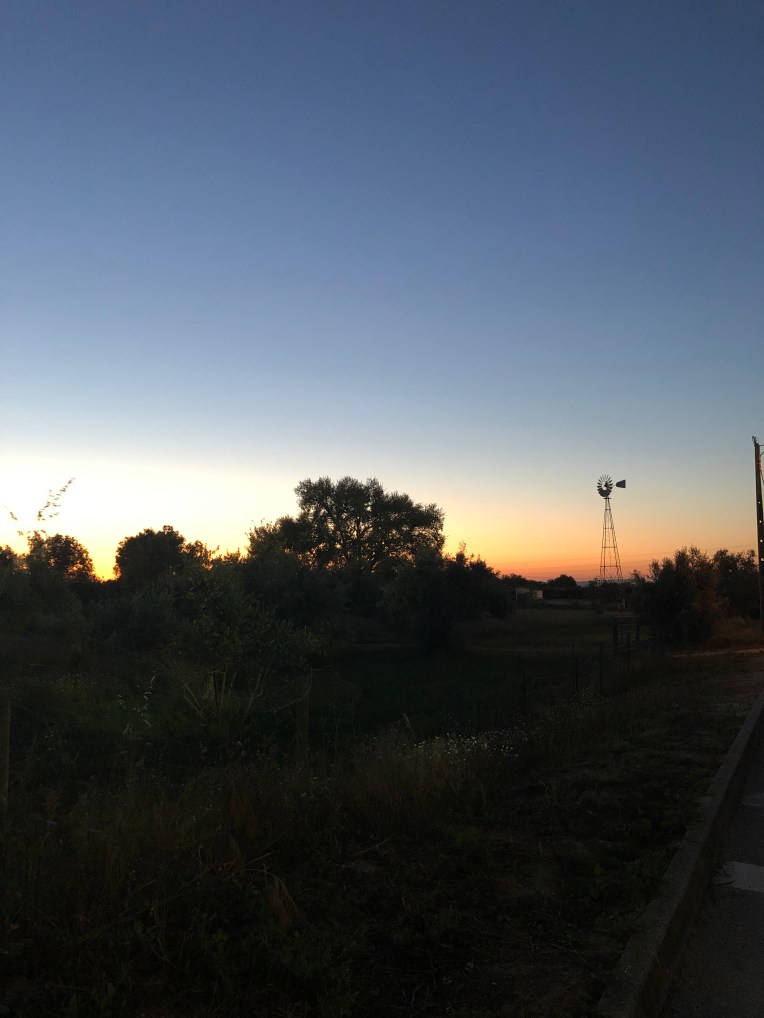
(Sunset in Torre de Moncorvo from our parking spot)

In the early days he used a Nespresso machine but that won’t work with the solar electricity (I don’t understand why…) so now he uses an AeroPress. It’s become a bit of a ritual with him. He boils the kettle, assembles the parts of the press, measures exactly one scoop of coffee with the special scoop, pours in the boiling water, takes the special stirrer and stirs for a precise time.

(Breakfast with a view)

Then he takes a little circle of filter paper, wets it and places it in its holder, then screws the holder onto the press. Another precise amount of time passes and he inverts the press onto the mug. Pressing firmly on the AeroPress shoots the hot water (now turned into coffee) through the paper filter into the mug. Never a problem… until this morning.

(Can you see the tower? Torre?)

I was alerted by the, oh shit!

Are you ok?

I’m fine, just spilled my coffee.

Oh no, is it a big mess?

No, it doesn’t look too bad.

Yes it did look bad. I think this might be the definition of the difference between an optimist and a pessimist. At least it smelled good.

(Sunset makes everything look soft)

Our next stop for the night was the town of Torre de Moncorvo. They have a lovely camper van stop on a hill overlooking the town. We had planned to eat out that night but I was concerned about the gradient… it looked steep. Downhill all the way to town but uphill on the way back. Besides, we had plenty of pot noodle left in the larder. Denis, on the other hand, was looking forward to dinner out, it’ll be a pleasant 25 minute stroll.
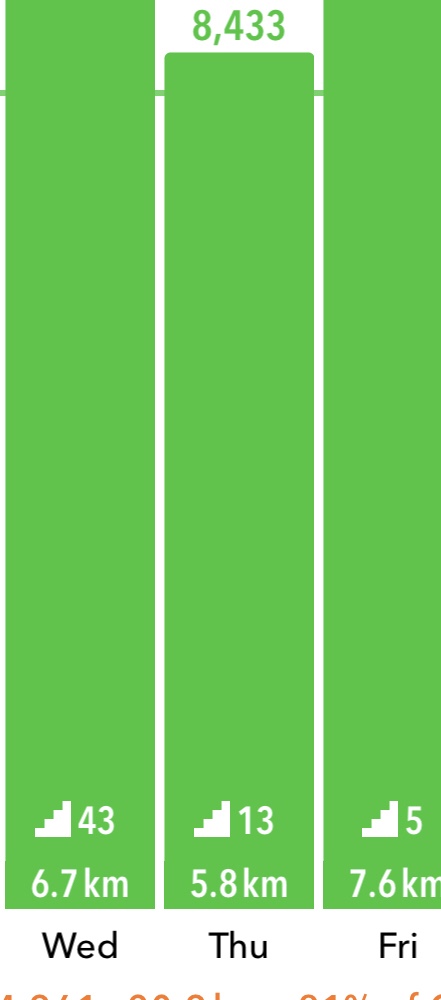
(Forty-three!)

As well as the distance and steps I walk my steps app tells me the number of flights of stairs I climb. Our pleasant stroll was the equivalent of 43 flights of stairs…

I was not wrong about the gradient, Mairead.

(Torre de Moncorvo: Free Parking, toilets, motorhome facilities, picnic tables under shade,. Restaurants a pleasant 25 minute stroll downhill.)
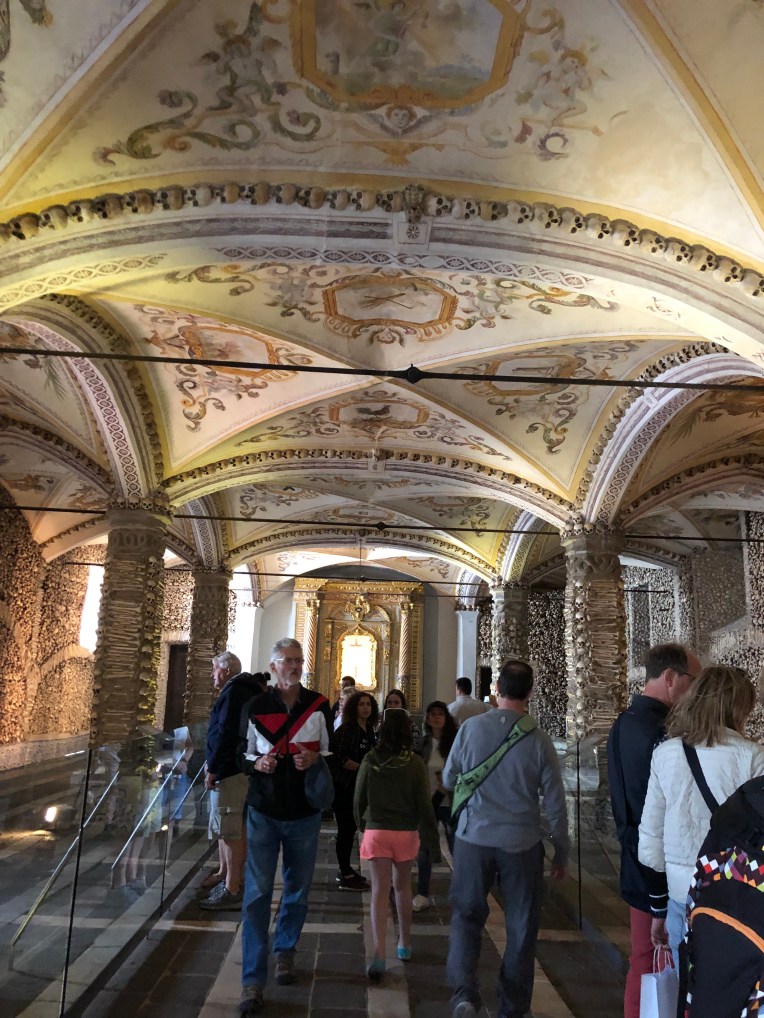
Weird chapel in Évora

(The Chapel of Bones)

Next morning we drove up the road to Évora. It was a hot dry Sunday and we were on a mission. Two missions really. Denis had heard about the Chapel of Bones and wanted to see it. I wanted to find a souvenir to remind me of storks when I was at home.

(The words above the door: We bones that are here are waiting for yours...)

First the chapel. Of bones. Yep real bones and skulls. Thousands of them. The chapel was built and decorated in the 1600’s. Seemingly it was a popular thing to remind the living that they would be dead soon. There are words over the entrance that read, We bones that are here are waiting for yours.

(Cute knitted Christmas scene)

Upstairs is a little more jolly. There’s a huge collection of Christmas cribs from all over the world. Some are adorable. I particularly liked the ceramic ones and the knitted ones. Évora has been a town since Roman times and there a Roman ruin in the center along with plenty more recent cathedrals and churches.

(And a ceramic one. This is my favourite, the parents can’t take their eyes off their baby)

After the bones it was time for my mission… a stork to take home. First of all it was not easy explaining to the various shopkeepers what I wanted as the word stork is not Portuguese and I didn’t know the Portuguese word. Fortunately, I have hundreds (very slight exaggeration) of photos of storks on my phone and I was able to show them pictures. Ah cegonha… (sounded like the actress Sigourney Weaver) they would say, followed by, No.

(View of Évora from the roof )

No stork souvenirs. I tried nearly twenty little tourist shops and then gave up. On the way back to our parking spot we stopped for an ice cream and while I was sitting there I noticed a shop I hadn’t tried. Couldn’t leave the last tourist shop unchecked so I went in. They had one! Not entirely attractive. No, let’s be honest, a completely terrible likeness for the beauty that is a stork.

Yes, I bought it. Mairead.

(Évora: free parking, 15 minutes walk to center of town, free water)

Balancing in Beja

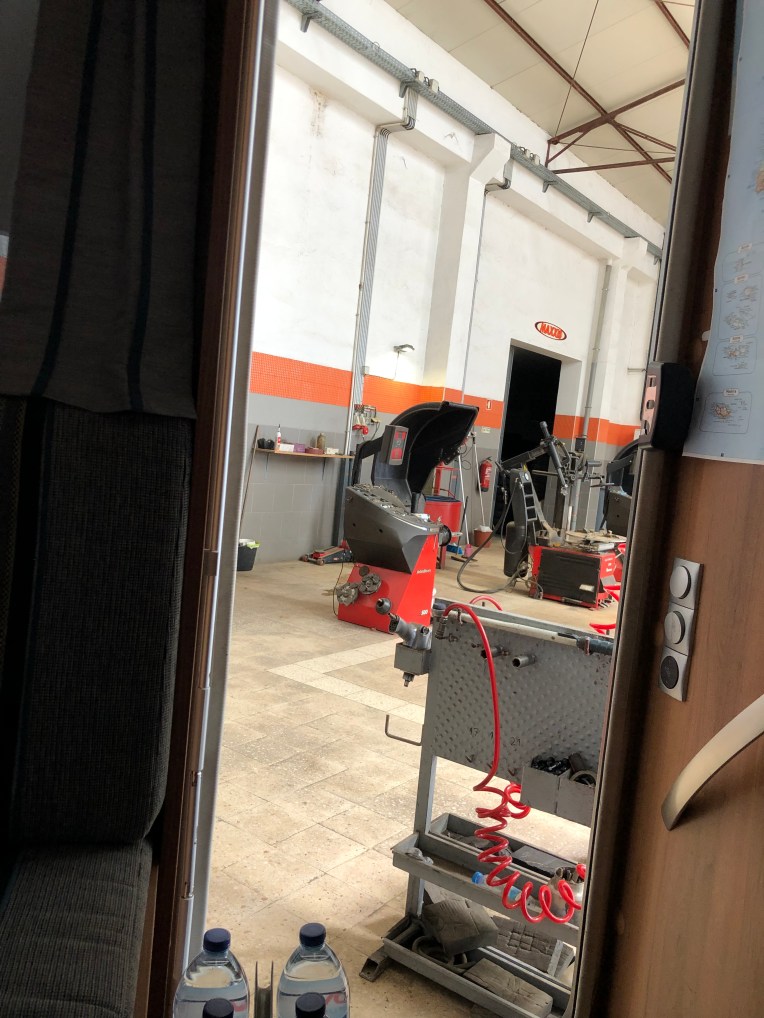
(From inside Ruby inside the garage)

We got to the garage in Beja and Denis talked to the very nice man on the desk. Big and all as the garage was they couldn’t fit us in (maybe to their diary) but he did have a solution. He sent us to another garage to get our wheels balanced.

(The balancing man)

It worked. Ruby is no long shaking, she has found balance. While we waited I was transported back to my childhood. My Dad had a petrol station with a tyre repair garage and I remember watching him or Dick (who worked there) balance wheels. It was labour intensive work. They have fancy machines now in the garage in Beja but it’s still work.

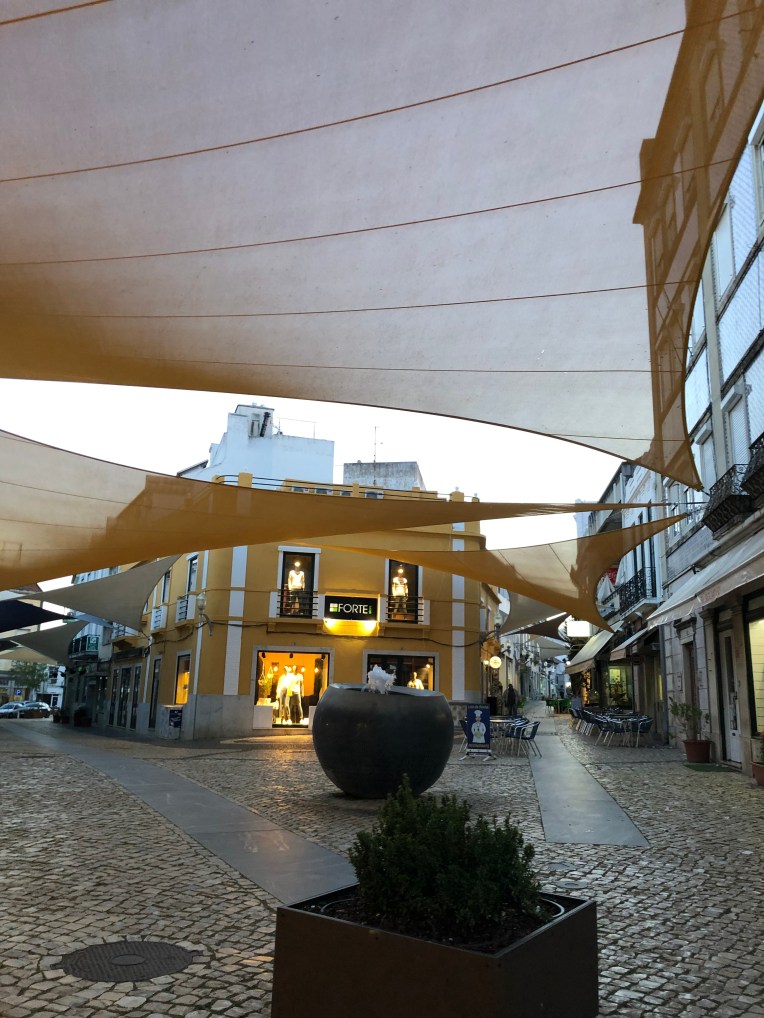
(Bunting over the streets in Beja)

Afterwards we booked into the municipal campsite. I had a fun time bleaching our tea towels before we went on a mission to find dinner. We’d had a lovely meal in a tapas restaurant last year so we went off to relive that. It was closed. We rambled around Beja in the fading light looking for a replacement.

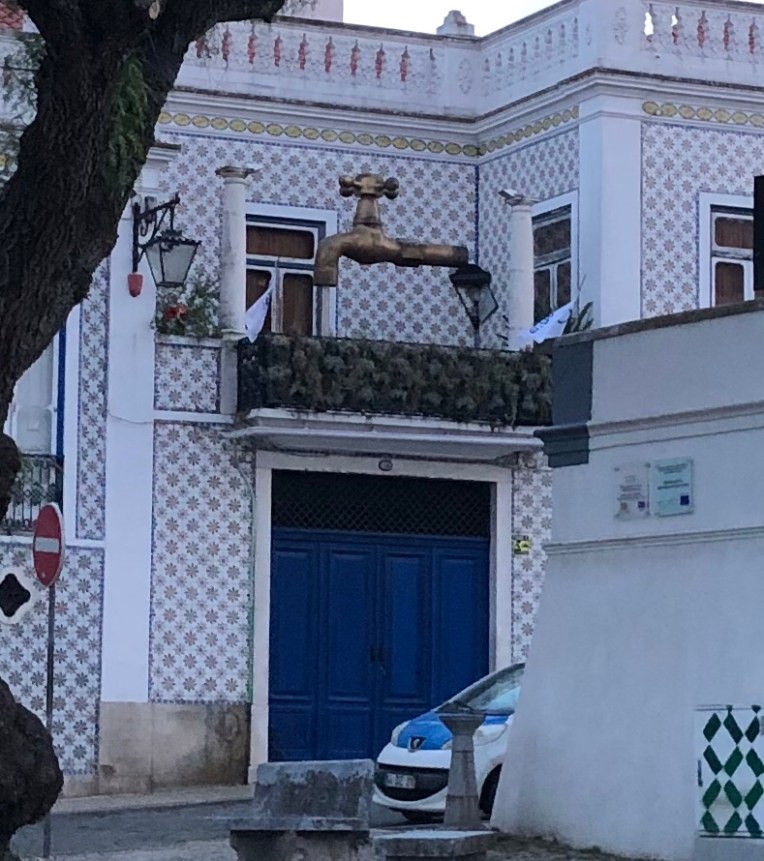
(There’s a tap up there!)

Denis loves Chinese food, especially if it’s an all-you-can-eat buffet. I do not. Not because it’s not yummy. No, it’s because of the temptation of the sweet section and the pancake section. Desert is my favourite meal. Also, I’m too embarrassed to keep going back to the buffet and I never put enough on the plate to begin with. I might be the only person who leaves an all-you-can-eat buffet hungry. We found a Chinese restaurant, it was open, it was not all-you-can-eat. We ate moderately.

Balance in all things, Mairead.

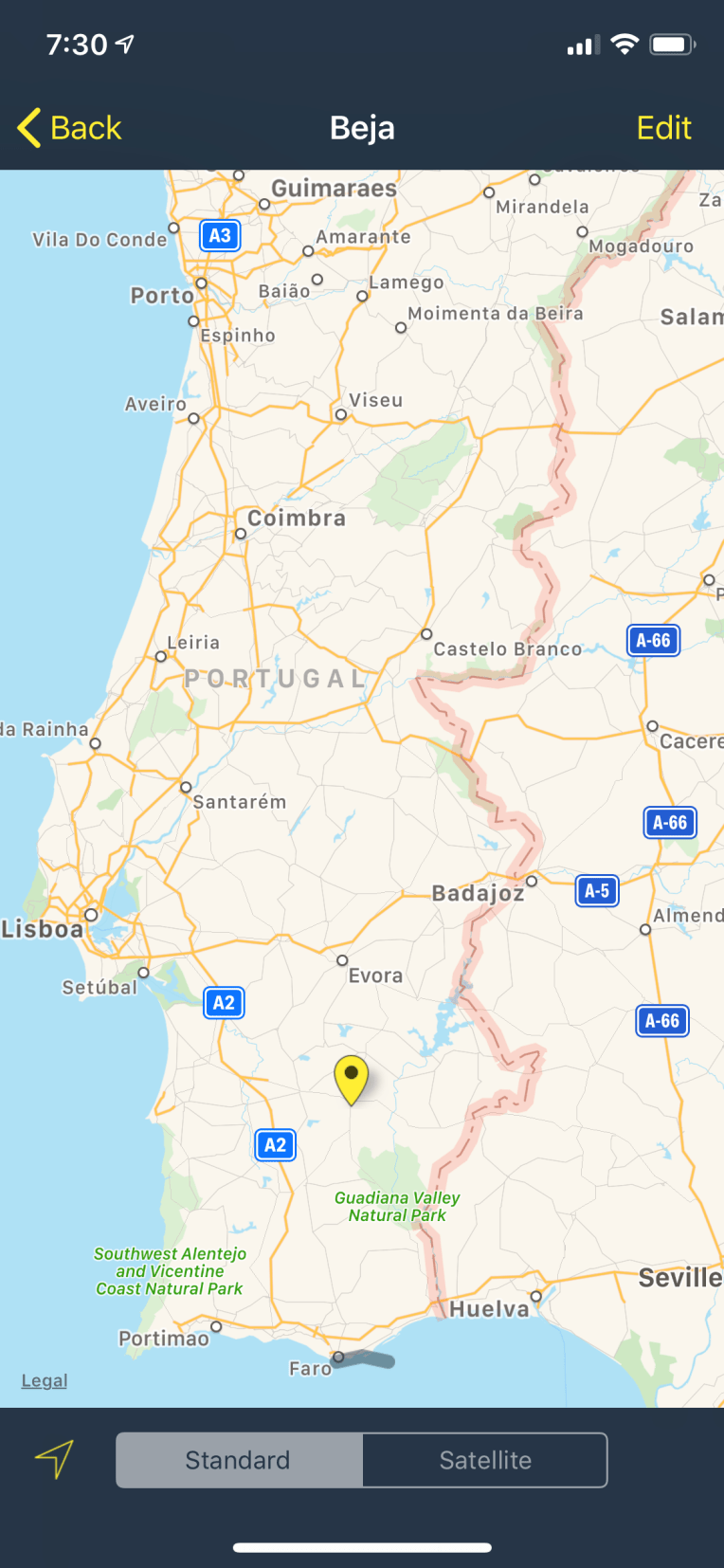
(Beja: Parking, toilets, showers, water €12)

Looking for the Sea Glass

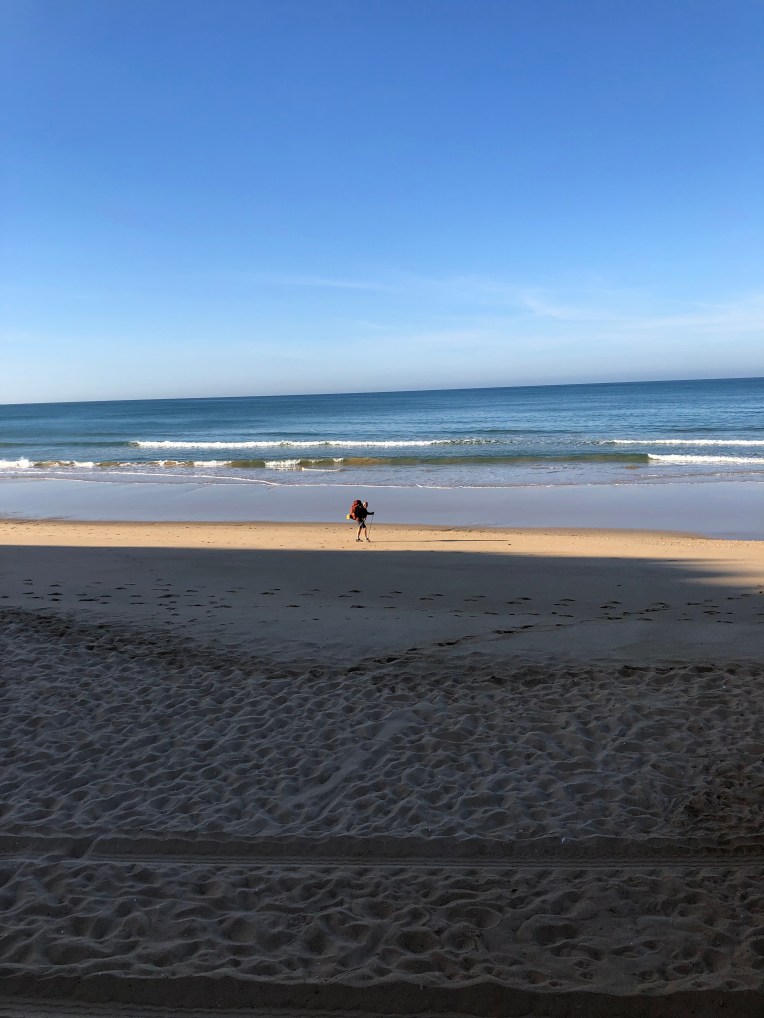
(Early morning pilgrim on Praia da Falésia)

When I wasn’t watching the waves down at the beach I was watching where I walked for interesting treasure. The sea provides plenty of gifts if you keep your eyes open for them.

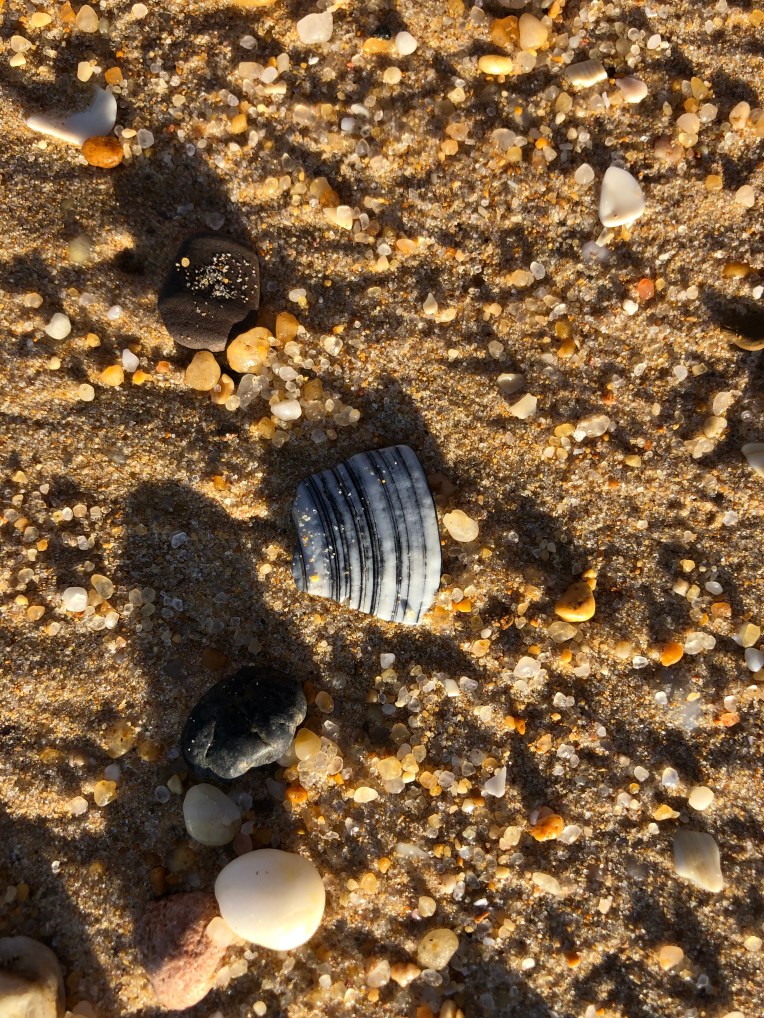
(Sanded piece of shell)

I love broken shells not the sharp edged ones, I like the one that have been in the sea awhile. The ones that have been sanded… by the sand. There are plenty here. Their rough edges are smooth and each one is a different shape.

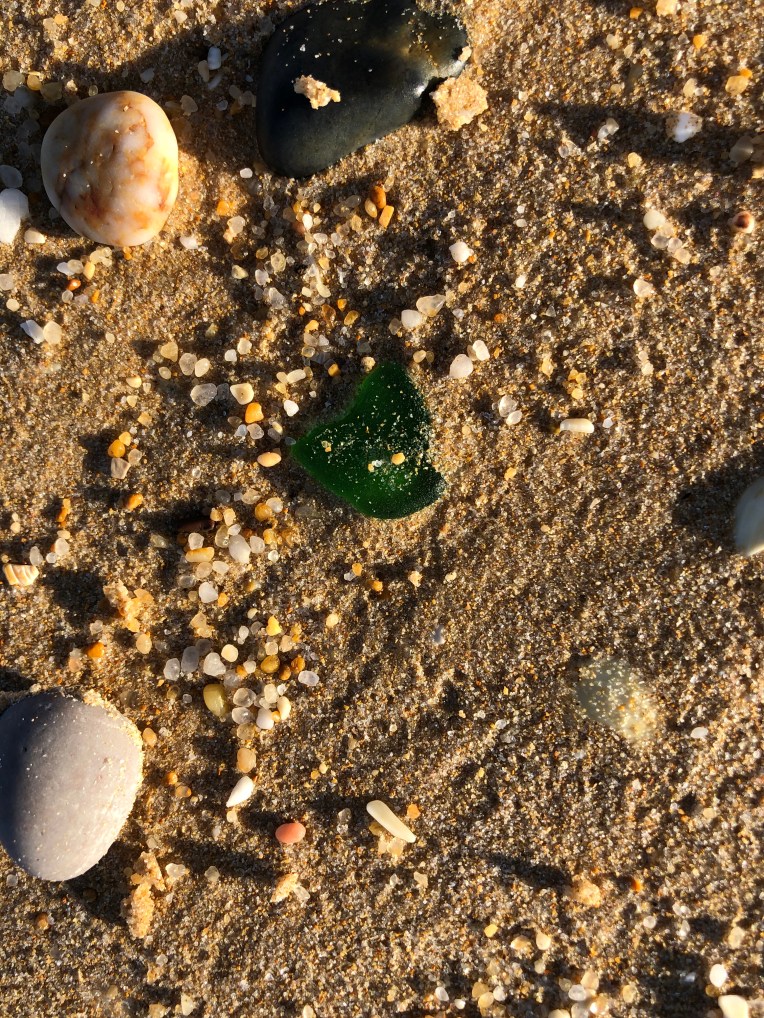
(Can you see the sea glass?)

There are also little pieces of sea glass on this beach. They are harder to spot in the beginning but soon they are very hard to miss. It’s like anything you are interested in. If you like a particular make of car you will see it wherever you go. We notice every motorhome or camper van on the road. I see storks and now I notice sea glass.

(Close up)

I wonder could I use this for contentment? We humans have a tendency to notice what is going badly for us, what we’re not good at, what we should be doing. This is not contentment. Even if we can see the good in others we find it difficult to see the good in ourselves. We tend to notice what we didn’t do on our to do list or if we get 80% in a test we are disappointed about the 20%. Or we wonder why only 6 people liked our photo, instead of being amazed that 6 people took the trouble to tell us they liked our photo. This behaviour does not produce contentment.

(Footprints of contentment)

How about if we looked for only the good in ourselves? Like looking for sea glass. My sea glass looks like an hour of photography or a thousand words of writing or or a nap when I’m tired or time in nature or a tidy kitchen or a 6am start. When I look at my day with eyes only for my sea glass I don’t notice the things I didn’t do. What if contentment was more than enough?

What does your sea glass look like? Mairead.

Silves and Mercy

(Old door on the church needs very big key)

Silves is a lovely town with plenty of cafes and restaurants and two motorhome parks, €6 per night if you spend more than one night here. You might remember we were here last year, I’d been very brave and walked on the walls at the castle.

(Part of the old town wall, Silves)

This year I’m visiting a couple of churches just outside the castle. One of them was very interesting and free. The other not so interesting and cost €1.50, which isn’t a lot to be honest.

(The street of Mercy)

The interesting church began as the hall for a volunteer group called The Misericórdia (the long name, translated, is The Brotherhood of the Invocation to Our Lady of Mercy) that was set up in 1498 in Lisbon by Queen Lenora. She set it up because there was great need to take care of the poor in Lisbon at the time. You might remember this was the time when Portugal was discovering the new world. It was becoming a prosperous country and people were flocking to the capital to make their fortune. Unfortunately, prosperity is never evenly shared and this led to a huge problem with poverty and overcrowding in the city of Lisbon. The brotherhood later spread to towns and cities all over Portugal.

(Close up of the old town wall)

The brotherhood had a list of intentions and there were huge wooden panels depicting them on the back wall of the church. Namely, clothe the naked, give shelter to the pilgrims, give drink to the thirsty, visit the infirm, ransom the captive, feed the hungry, bury the dead. I loved the simplicity. In Silves they built a hospital and now 500 years later it still serves the community. With a crèche, nursery school, day care, nursing home, day center, long term care unit, home care, and a Social Canteen.

(Detail from income and expenditure ledgers, 1700’s)

A funny thing happened in the 20th century, well I suppose it wasn’t that funny… There was a great tradition of people leaving money in their will when they died to the brotherhood at Silves. Unfortunately, they also including some stipulations that regular mass be said for their souls. What’s the problem with that? The brotherhood had to pay for masses to be said and it nearly bankrupted them.

More from Silves soon, Mairead.

The heartbroken Princess

(Setting sun)

Once upon a time there was as a little princess who was magic. She was able to get anything she wanted with her magic.

(Cozy quilt by the sea)

You might think a princess like this was happy or contented. She wasn’t. The first thing she said as soon as she got something was “but I want…” or ” but I need…” followed by what she wanted next. And because she was magic she got the next thing. So again you might think she was happy or contented because she got the next thing. She wasn’t.

(Wide door)

The sad thing was she was heartbroken. Of course she was. You see all she could think about was what she didn’t have. Her mind was full of loss and not enough and not as good as and less than and they have more than… You would be heartbroken too.

(Narrow passageway)

The most sad thing about this little Princess was she had the power to be happy. She could have been happy every single day of her life. She just didn’t know it. And no matter how many times the people around her told her she could not listen because her mind was so full of what she didn’t have.

(Funny statue in Setúbal)

You might ask why didn’t she get happy with her magic? Her magic could only bring her things, bring her places, bring her people. It was her power that could bring her happy. She never used it. There was a way she could have been happy for one day, just one day (or maybe half a day, just half a day) with her magic. By placing one of the things she got by magic in her mind for a full day (or just half a day if a full day was too long.) If she had been able to think of nothing but the joy of receiving the most recent thing she got and think only of that for a full day (or half a day) she would have been happy for that day.

(Lovely view in Alćacer do Sal)

She was never taught this by her parents so she didn’t know. She didn’t know about her power either and that was sad because it was even more powerful (that’s not a surprise is it?) than her magic. Her power was the story she told herself and her story was lack. Her story could so easily have been, plenty. Mine definitely could.

Could yours? Mairead.

Lisbon by Train, Boat, Tram and Scooter – Part 2

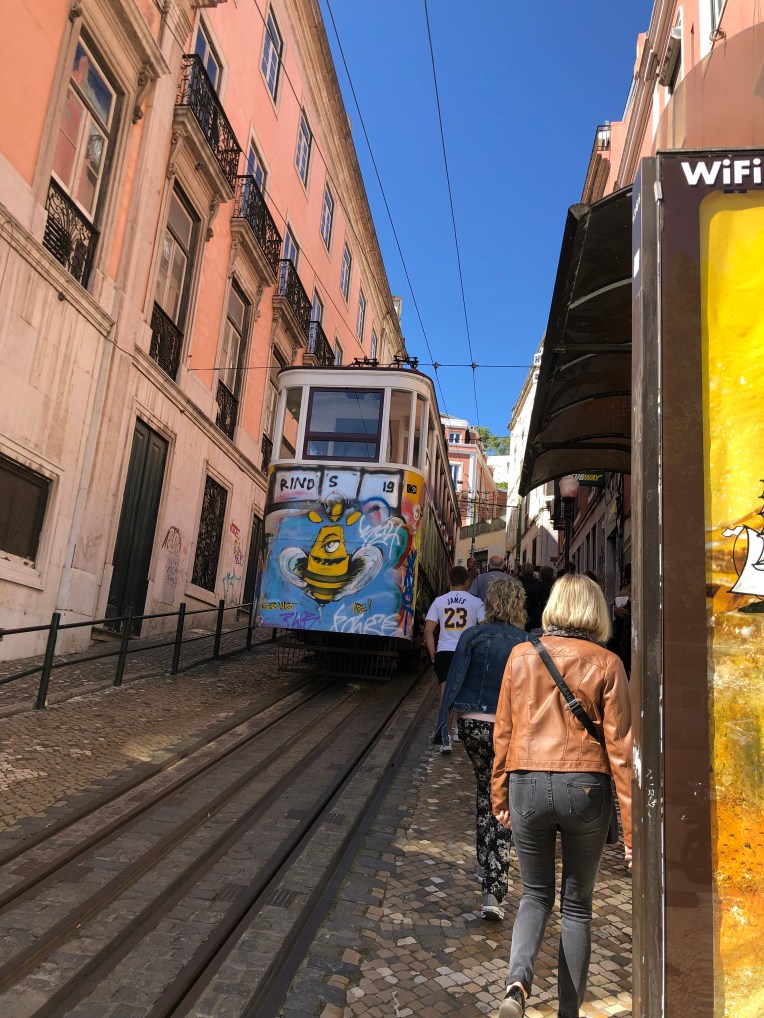
(Long queues to get on Ascenoir da Glória)

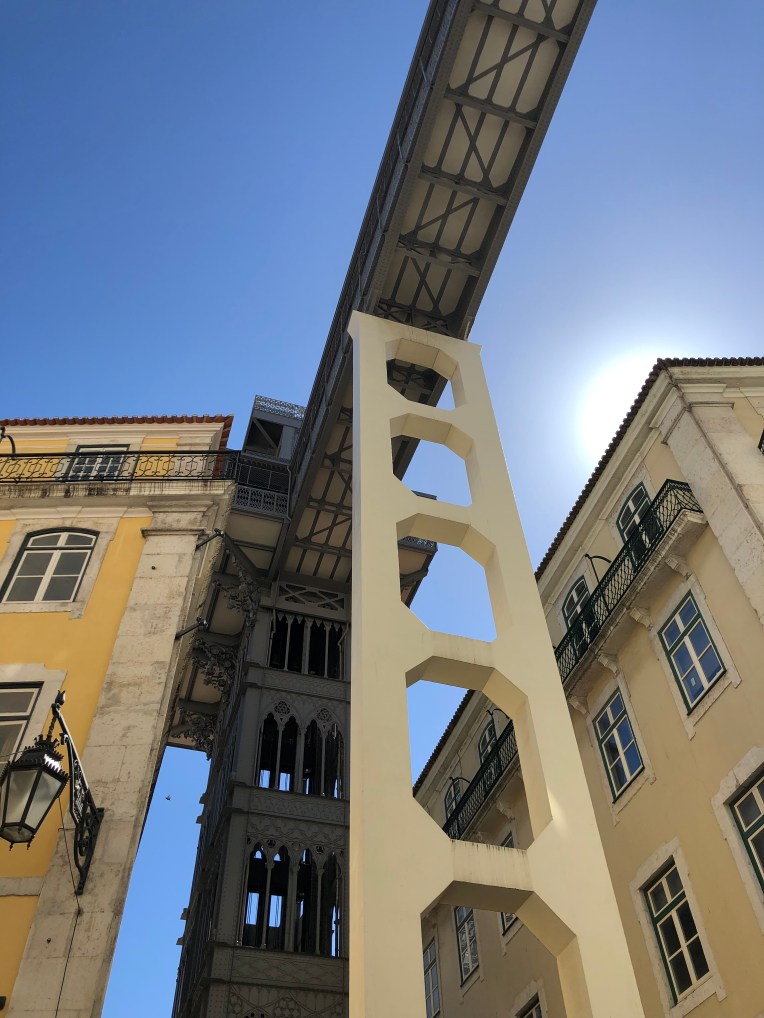
You might be already aware of a transport theme on our tour and as soon as we had descended the Ascenoir da Gloria we went in search of our next vehicle. I was hopeful we would be ascending this time but it was not to be. (Top Guide Tip: Saturday’s are busy, you may encounter long queues, consider moving your tour to a weekday.) Our next stop was the Elevador de Santa Justa. This is a lift and was built in 1899 to take the citizens of Lisbon up the steep hill. It’s still doing that nearly 120 years later.

(Elevador de Santa Justa from the back)

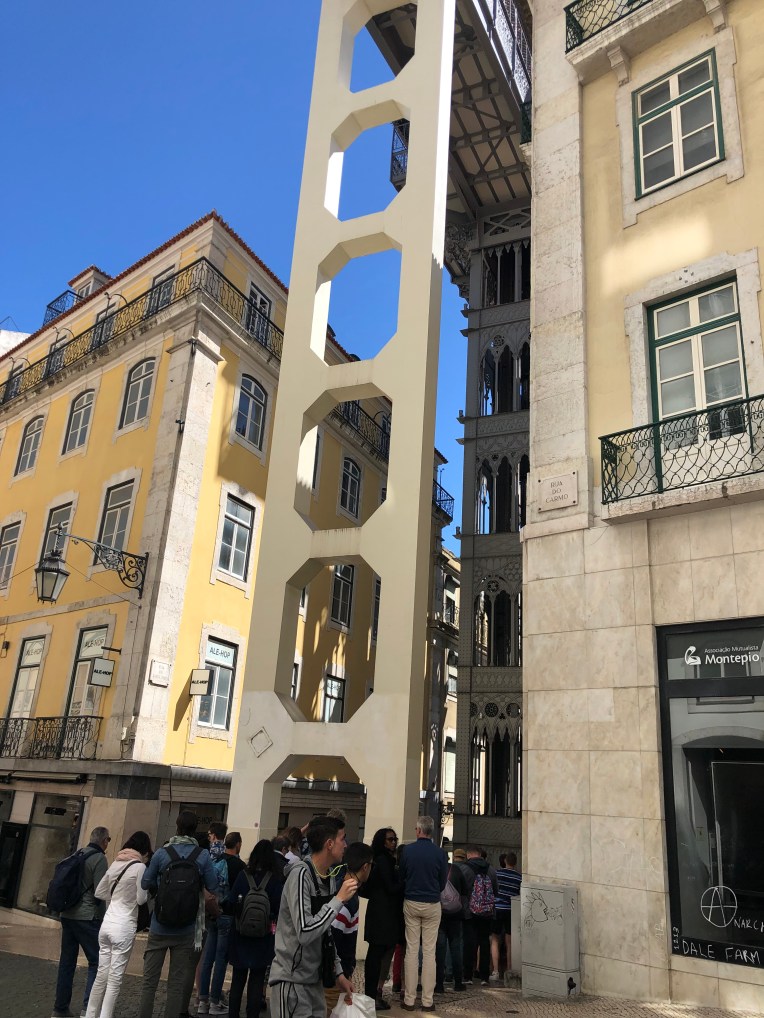
The queue snaked around the lift and up the path. It would be along wait as the lift could only take 29 passengers. My “client” said he was ready for lunch so we moved on.

(Queue to go on the Elevador de Santa Justa)
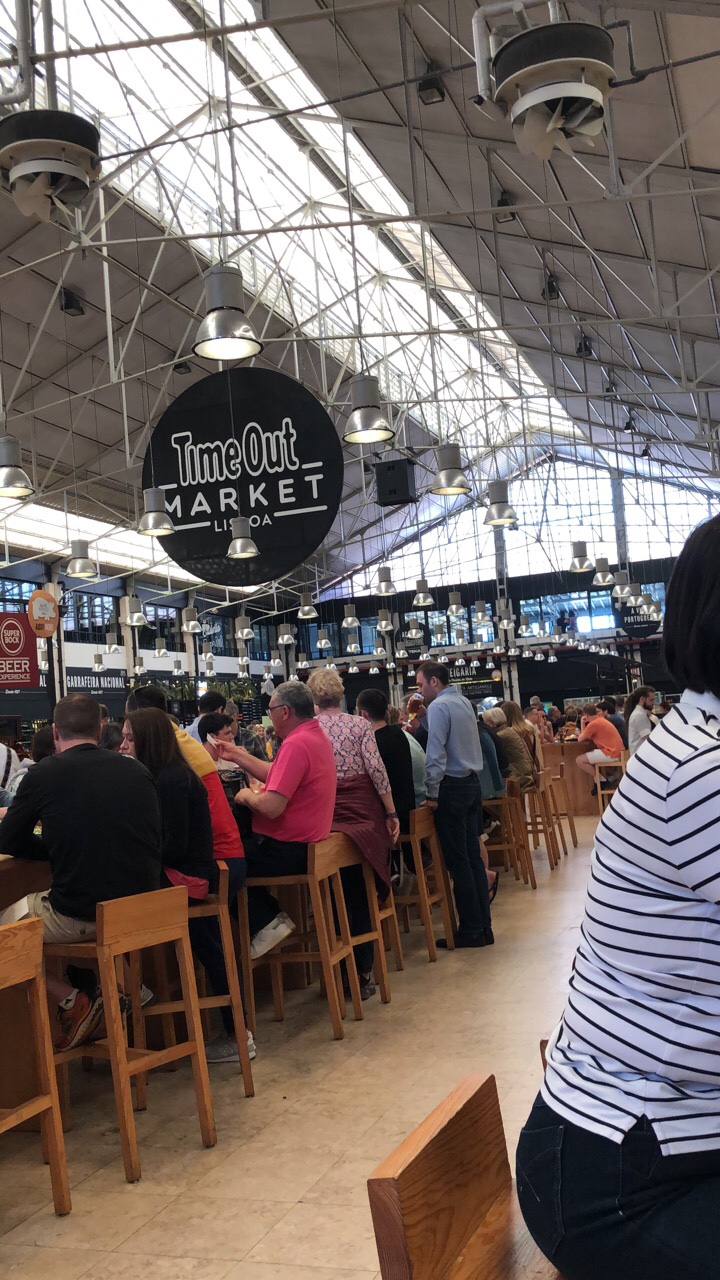
You remember yesterday the Time Out Market was closed when we got there? It would be open now. Again just an 18 minute walk and now we knew it was downhill. There’s a lot to be said for getting things wrong.

(Tables and chairs in the middle…)

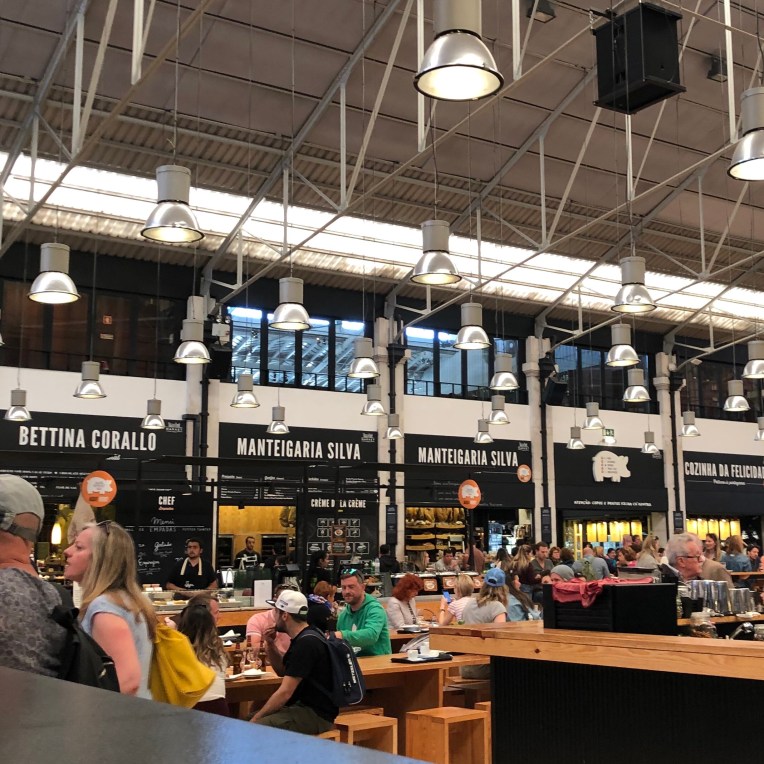
While we were away the place filled up and there was hardly a chair free at the many tables. First things first we had to pick a meal. This involves walking by the many restaurant sections along the walls and checking out their menus. Then you make your decision, queue up, place your order, pay and get a beeper thingy. Then you search for a seat.

(…restaurants along the walls)

It was actually easy enough to find a place as people were coming and going all the time. We found a spot on the edge and settled in. Everything is cooked fresh so it was about twenty minutes before the beeper called us back to collect our food. The food is more expensive than we have paid in Portugal up to this.

(Time Out Market is attached to the old food market called Mercado da Ribeira)

Very soon people were joining our table and we had a lovely  chat with a couple who were originally from Taiwan but now living in California. He’d been to Ireland once for a day. It was a work thing and he’d flown in to Shannon, he couldn’t remember the name of the company but he remembers the cows in the fields. I loved that. It’s exactly what I’d want people to remember from a quick trip to Ireland. His wife was a programmer and Denis and she were conversing in letter groups and pretty words like  C++ and Java, as you do.

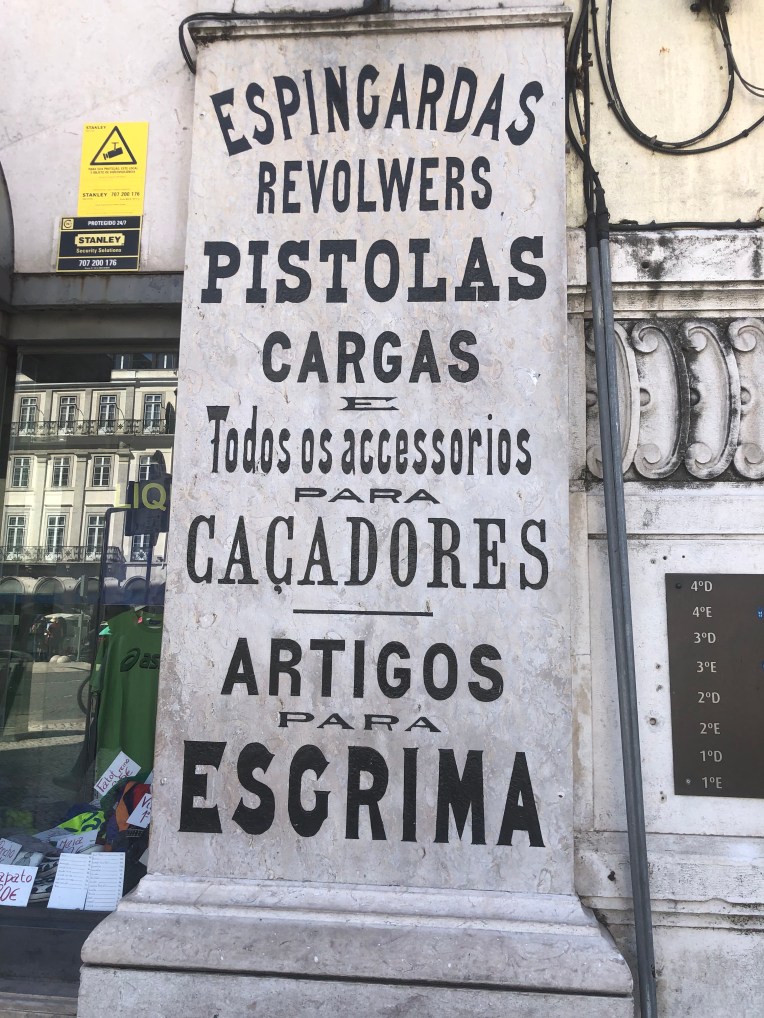
(A gun shop)

The whole guide and client thing broke down a bit after that. (Top Tip: Set your price early so there are no surprises or ill feeling between guide and client.) Denis had spotted something as we were coming through the ferry port in the morning. Scooters. Not the motorbike scooters. Scooters like the ones we had as children, two wheels, handlebars, no seat, one foot on the running board, other foot pushing off the ground to help you scoot along? Remember? Well those but electric… so they go at speed.

(Do not be fooled by how sweet they look.)

Not sure if you have gathered this from me but I’m not fearless. To be clear, I mean I am fearful. More like fear-FULL. There was no way I was going on one of those things. In a city. Maybe, maybe, possibly I would try one inside the walls of a well-padded room. With carpets. But there was no way I was going to get up on one in Lisbon. I had planned the next part of the journey by tram along the coast to Belem. I was going to take the pictures I had promised you of the people queueing for the Pastel de Nata’s from the original bakery near the Jeronimos Monastery where they were invented. It was a good plan. Everyone would have been happy.

Suffice to say, Denis wore me down, Mairead.

Tour Guide for Hire

(Marigolds from Sintra)

We’re going into Lisbon tomorrow and I’ve a great tour organized for Denis. Isabel can’t make it so I’ll be the guide but he doesn’t know that yet. (I used to be a guide on the Rock of Cashel, did I tell you? I did? That many times? Oh right.) There’ll be food and coffee and many different forms of transportation. There’ll be stories, some of them true. There’ll be lots of walking and chances to engage with the locals.

(Twilight in Mafra)

That will be tomorrow, yesterday we parked in a residential area on the other side of the river from Lisbon. We were planning to go into the city but it was Freedom Day so everything was closed. You might remember Freedom Day from last year? We sure do. We were in a small town in the Algarve waiting for Ruby’s clutch to be fixed. Everything was closed.

(Aqueduct on the motorway)

That was last year, today we are happy in the suburbs and we’re getting to know the locals. I discovered (via google) that there is a coffee called um abatanado which is very like an americano so I order it every time now. Unfortunately, something about all the a’s in it gets me mixed up. I say ambatono or abentoto or anando. None of which is correct but because my efforts are always combined with a help-me-out-here pained expression I am generously understood.

(Organic wall, Alcobaça)

One of the things we loved the most about going on tour with Isabel in Porto was connecting with the locals and we sometimes forget we get to do that with every coffee experience. So I’ll definitely be including lots of coffee experiences tomorrow.

Say it with me, Um abat-an-a-do por favor. Mairead.

(There we are south of the river (estuary?) free parking, free water, 10 minutes walk to train or 1 minute walk to bus for Lisbon)

What’s an inverter?

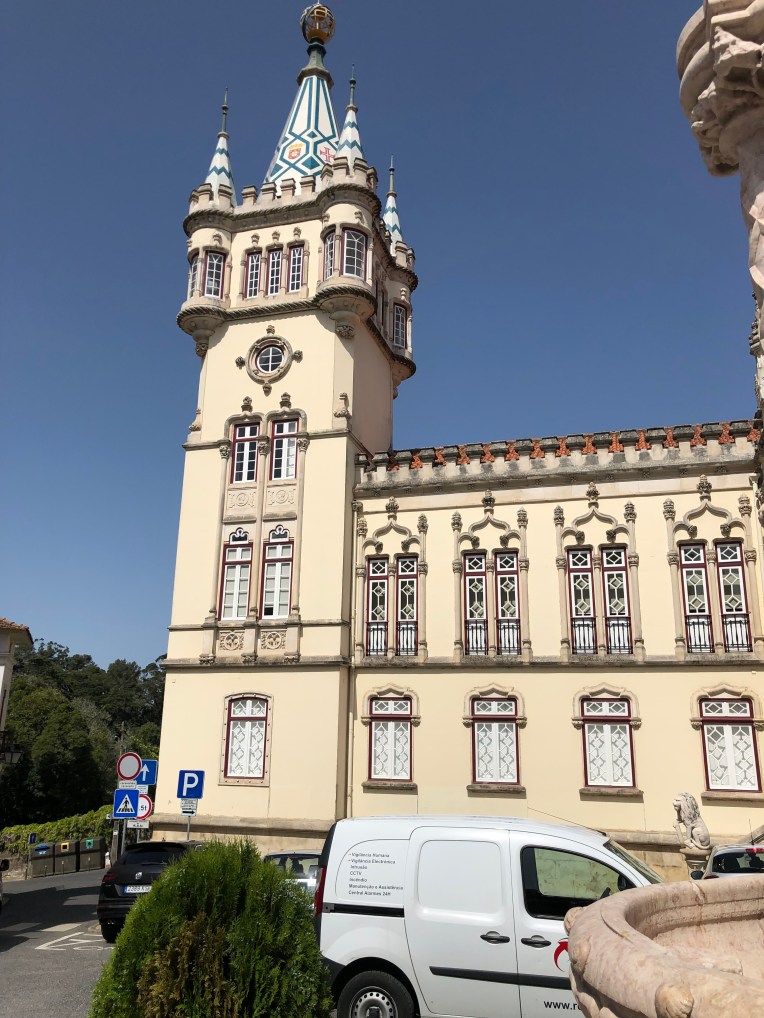
(All the buildings in Sintra were ornate)

Our inverter broke last Thursday. It’s the thing that converts the solar energy into electricity to charge the computers. Usually it has a low pitch hum and drones on in the corner doing its inverter work making me ask regularly, can we turn off the inverter? Well last Thursday it turned itself off for good.

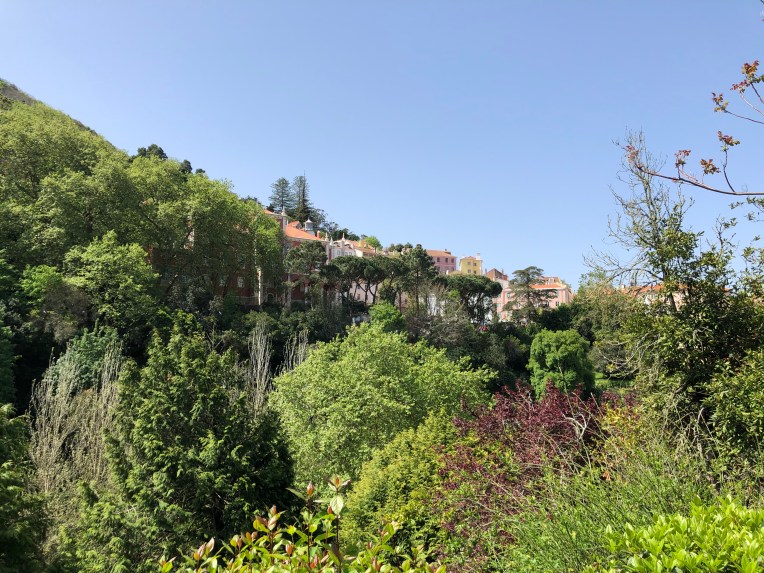
(Lots of green in Sintra)

Not good at all. It’s a big deal and kind of important if you’re using your computer every day. At the time we were in Mafra and there was free electricity so we weren’t stuck but we’d have to leave there sometime… Denis started searching the internet for motor home shops in Portugal and found one in Sintra. Just 20km away.

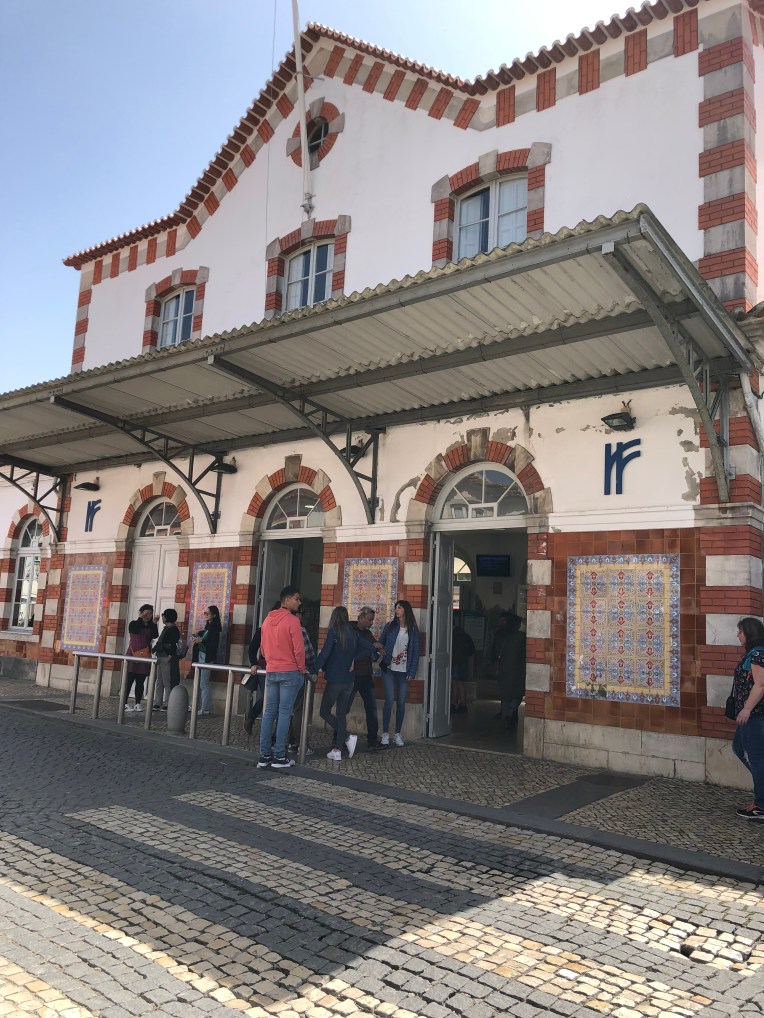
(That’s the train station)

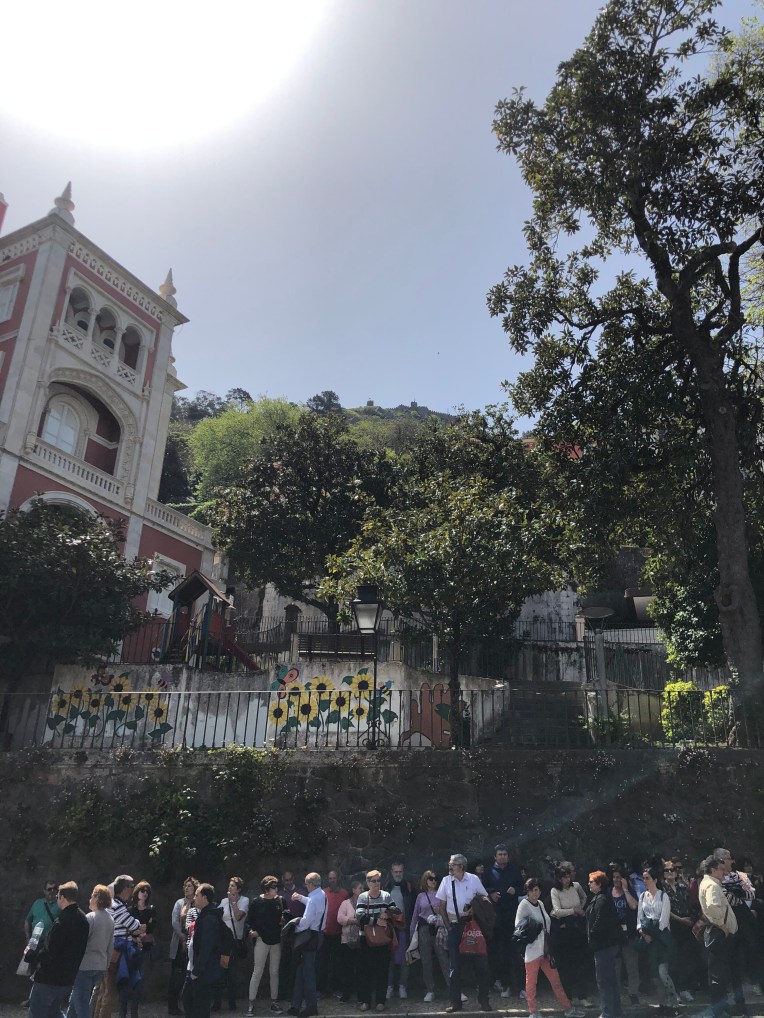
Sintra is beautiful so we could go visit when we were done. But the shop was closed on Friday – Good Friday so we’d have to go on Saturday. We did. We got the inverter! Yaa! Then we found parking at the train station outside Sintra. Now, Sintra is busy at the quietest of times but this was Easter Saturday so not the quietest of times. The place was jammers.

(Various forms of transportation)

We took a break from the crowds at the first cafe we found and celebrated finding the new inverter. We then paid the most we’ve ever paid for coffee and natas in Portugal and it was still about a third of what we would have paid at home. So we celebrated that with a leisurely ramble around Sintra.

(I think that’s a castle up there)

I’m not exactly sure which part is Sintra or maybe it’s all Sintra. If it is then it’s huge. This is where the royalty of Portugal used to come on their holidays. It’s very pretty, lots of hills, trees, old and unusual buildings, old and colorful buildings and people, lots of people. An hour wasn’t going to make a dent but we got the atmosphere and I’m definitely coming back again. I did visit last year but I was with a group of friends and spent most of my time talking and not much time immersing. Sintra requires a long soak.

(Long queues for the busses)

Afterwards we drove to Ericeira where Denis fitted the inverter. We have power. Not for the first time I am reminded of the small things that make life easier but that I forget to appreciate. Sintra is probably one of the most beautiful places in this country but the drone of a working inverter seems just as beautiful at the moment.

What are you forgetting to appreciate? Mairead.