GUERNICA Gernika

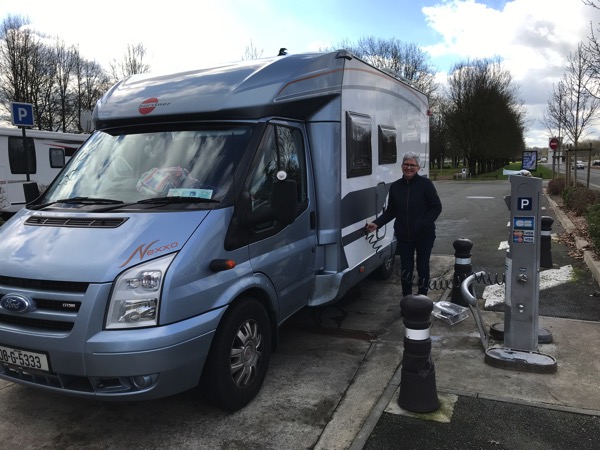
We’re using the app CamperContact as guide

The Guiding App
For the first time ever on a trip we purchased a self guide to help us choose where to stop on our travels. Of course it’s also an app! Usually we just pick a parking spot that sounds interesting. And most of the time we find something interesting nearby. This time we are following a map and picking parking spots nearby. It makes for a different type of experience. The tour starts in the town of Gernika (Guernica is the English, I think) and I’m very excited. I can hardly believe we have passed this town many times travelling to Portugal via northern Spain.

Look at the beautiful red Geraniums!

History is more interesting now
Something you may not know about me – my new interest in history. In school I thought history was too complicated, too much to read and too much to study. I wanted to get a good grade in my leaving certificate (end of school exam, Ireland) but the exam preparation was mainly learning things off by heart therefore any subject with high content was a risky choice. History had a lot of content and my decision to drop it was influenced by that. I am sorry now… and all because of a fiction book. Imagine a really easy to read fiction book being a way to learn about history? What a great idea. I found the book (really three books) by accident. It’s called, The Century Trilogy by Ken Follett and tells the story of the 20th Century from the perspective of fictitious families in Russia, Germany, Austria, America, England, Wales and Spain. It’s also interspersed with real characters like presidents and kings, etc. Hopefully Ken Follett does a lot of research, it seems he does. Now, because of him and his book I understand so much more about the conflicts during the 20th century, which includes World War 1 and 2, fascism, Spanish civil war…. The book has been like an intro for me and I’m ready for more so if you have any recommendations for easy to understand history books please let me know.

This is a photo of a copy of Picasso’s Guernica in the peace Museum

Art History, also interesting
The second thing you may not know about me – in 2012 I attended an art course that included art history. It gave me an appreciation for art, including Picasso, who before that was a complete mystery to me. Anyway, one class included his art piece called Guernica. Picasso started painting Guernica the day after he read reports about a Spanish town that was decimated by German bombs. Men women and children were killed, they still don’t know how many, up to 2000. The actual painting is in a museum in Madrid.
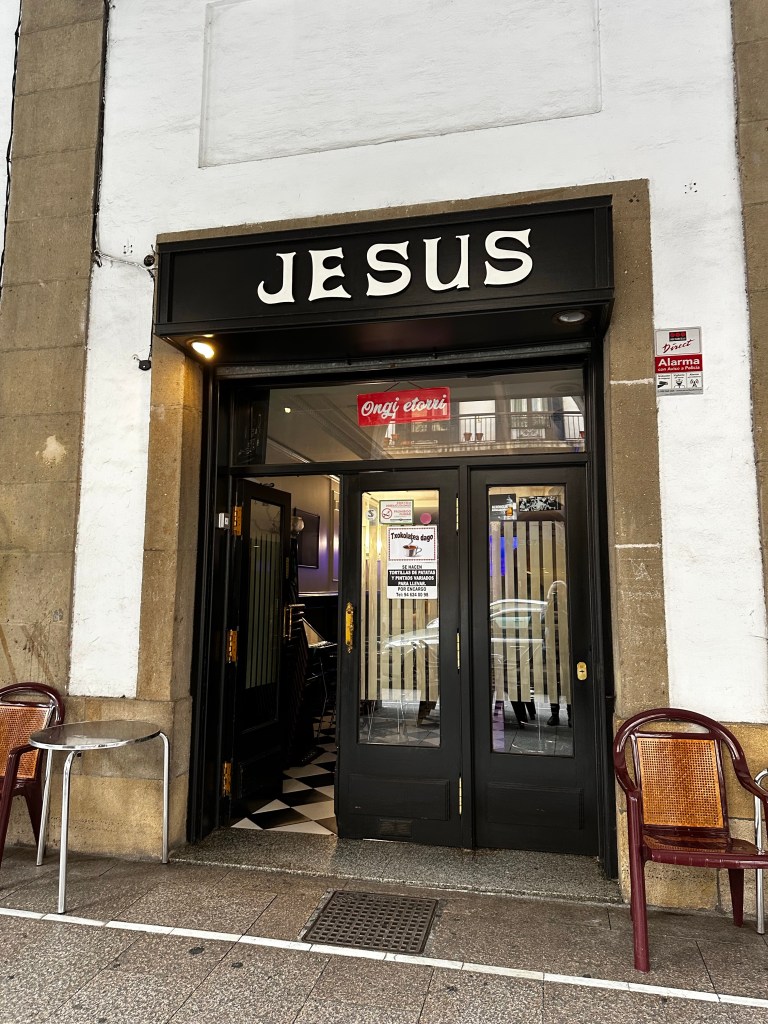
Had coffee here near the peace museum

Visiting the Peace Museum, Gernika
Now here I am in Gernika with a basic understanding of the Spanish Civil War and the art piece Guernica… this will be my simplified version of events which I hope will allow me to tell a close enough approximation of the story, simply and clearly. The Spanish Civil War started in July 1936 and lasted until the Second World War began in 1939.

The Background
On one side there was the Republicans who supported the government of Spain and on the other side was the Nationalists who were military men including General Franco. Spain was a young republic at the start of the civil war. The government was inexperienced. There were many economic problems, poverty, unemployment and the general public were unhappy. Something similar to Germany after the First World War which led to the Second World War and there are similarities today…

Both sides had support from outside Spain. The Republicans were supported by Russia and the Nationalists (with General Franco) were supported by the Nazi government in Germany.
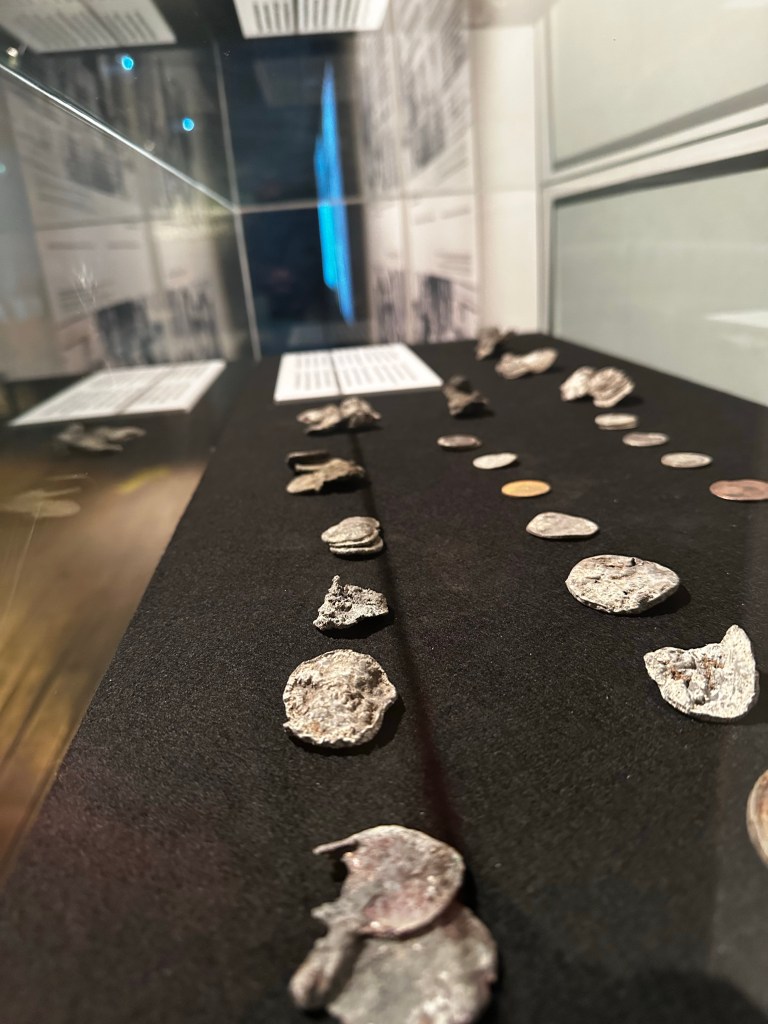
The fires following the bombing were so hot they melted coins

The Day of the Bombing
Monday 26th April, 1937 was market day in Gernika, lots of people and animals on the streets. The planes arrived at 4pm, they dropped bombs and shot civilians until 8pm. The town was completely destroyed. The planes were German. The Nationalists won the civil war and General Franco ruled Spain until his death in November 1975. He was a dictator and until his death there was no investigation of the bombing. When asked, they had to say the planes bombed Gernika… but it was Franco who directed the planes to bomb Gernika.

A page from the information booklet

Hard Peace
The peace museum is an attempt to examine peace, the hard peace. The kind that requires forgiveness. The kind that requires living with neighbours who were on the other side of the civil war. Some people who were Nationalist supporters knew there would be some kind of action in Gernika that day so they left the town. I cannot imagine being able to forgive that and lucky for me I don’t have to. But it inspires me to do my own forgiving, for my own version of civil war. I am inspired to know peace as more than a quiet seat by the river bank, or a meditation alone on a cushion. I am inspired to do my own peace work.

At the Peace Museum in Gernika there’s a informational handout in English. In it there’s a list titled, The Tools Used to Bring Peace. Among the tools are, Honouring Fellow Human Beings, Listening to Different Opinions, Admitting our Mistakes, Looking to the Future.

Even if I knew that tomorrow the world would go to pieces, I would still plant my apple tree.” -Unknown (from the handout)

Peace Rains

Ruby in the rain

We left Rosslare (Ireland) to sail to Cherbourg (France) last night and we’ve arrived. The crossing was grand – not too wavy. We both noticed the staff on the Stena ferry were the friendliest they have ever been and one in particular was very thoughtful.

Rain gushing down as we approach Cherbourg

Denis was set up nicely in the restaurant after breakfast working. He was still there at lunchtime when one (there were two) of the French secondary school tours arrived to eat. He was asked nicely by a Stena manager to move from the restaurant and he came back down to the cabin (where I was sleeping – body clock bit mixed up).

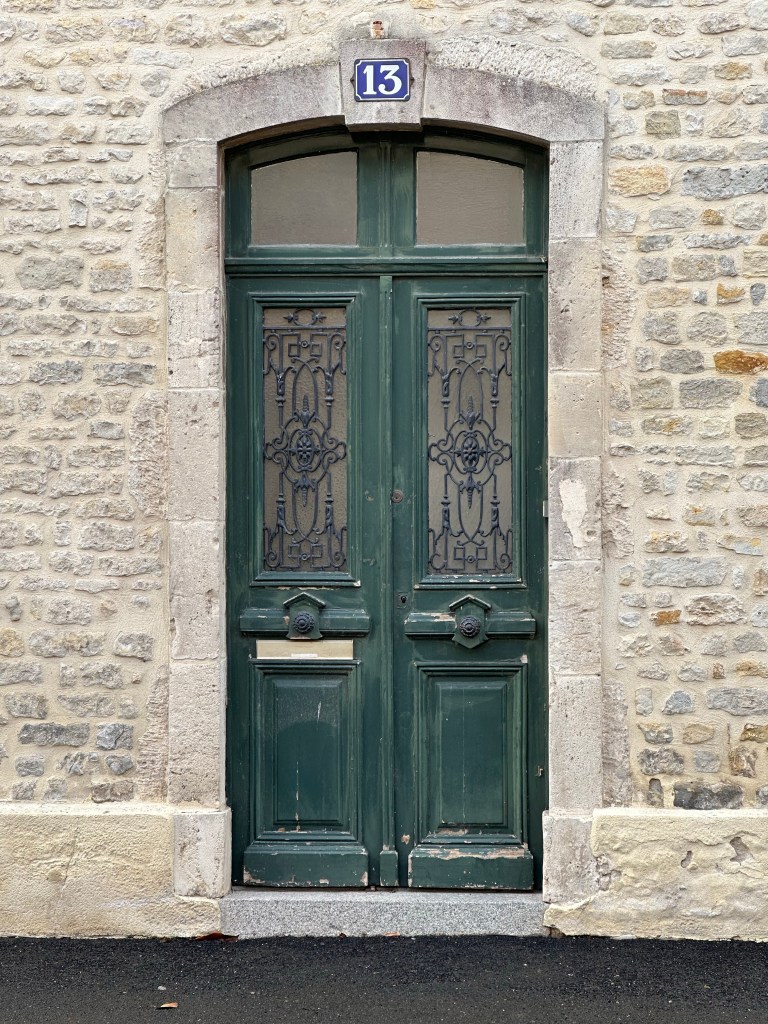
I love French doors!

Anyways, later we were having a very nice toasted sandwich and tea when the manager who had moved Denis came over with two huge muffins. She said she felt really bad and wanted to apologise with cake. We were speechless… which means we didn’t get her name. What a lovely thought. Aside from the cake, the fact that she went out of her way to acknowledge him was a gesture we really appreciated. Plus, I got cake for no reason!

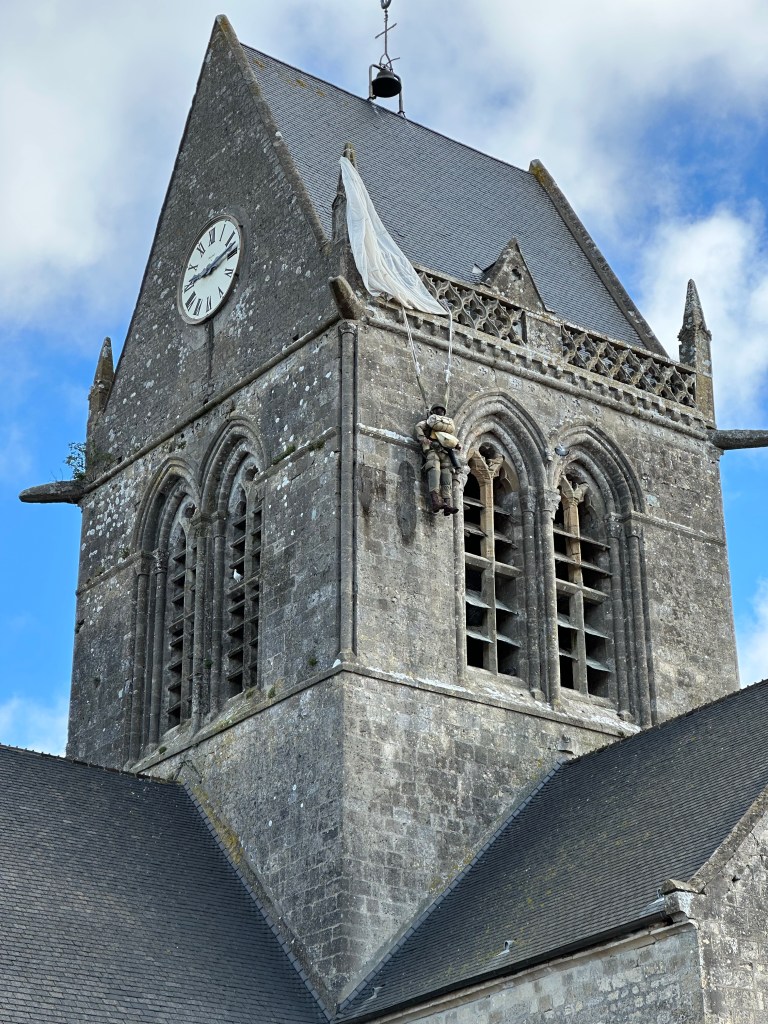
Can’t you see the parachute? And the soldier?

Tonight we are staying in a town about 30 minutes from Cherbourg called Saint Mere Eglise. Earlier I got a text from my friend. She’s healing from two knee replacements (and loves to research while she heals) to tell us it was the first town to be liberated at the end of World War II.

My friend is a research ninja!

There was also a movie made about the American airborne soldier who got stuck on the church spire hanging from his parachute. We have been here many times and I always love the feeling of the place. Yes it’s for the tourists but also it’s for the hopeful ones who want to hear a happy ending. The soldier survived, the war ended and peace returned to the land. Peace, calm, tranquility, quiet, stillness, serenity are the feelings tonight as the rain falls on our roof and we prepare a leftovers dinner with muffins for desert. Living the dream.

Sending a drop of peace to you and yours❤️

Road Trip

2018 4 1

(There was an amazing sky last night)

We went driving around the countryside today. That wasn’t the plan but that’s what happened. We woke early and my plan was to go take pictures at the beach 2km down the road. Off we set at 9.30am and we were still driving at 10am. We missed the turn. We arrived at a golf resort, a very pretty gated community. We eventually did find the beach and I took the pictures and then we returned to the town with the castle, Alcacer do Sal.

2018 5

(The beach at Comporta)

We planned to stop at the free aire in the town but it was closed off, possibly for some festival or market for Easter. We had a coffee by the river to re-group. The coffee I like is an Americano but I have not (until today) known what it’s called in Portugal. I have managed to order it each time using hand gestures and knowing the word for water and milk (with extra nose wrinkling for no milk, thank you) The very happy cafe owner told me, without using any English, it’s called solo. I will need to road test this at another cafe but for now I think it’s correct.

2018 7

(The peaceful barragem)

We found a new place to go. A barragem. That means a dam, seemingly there are lots all over Portugal and they usually allow overnight camping. We drove for about 30 minutes from the town and then pulled off onto a narrow road and arrived at a place in the middle of nowhere, buzzing with camper vans. There was a cafe and even toilets. When Denis turned off the engine and I opened the door the sense of peace was huge. I went off to soak it up and take pictures and Denis started work. When I got back it turned out there was one thing missing… internet.

2018 8

(Pretty flowers at the barragem)

We said goodbye to the neighbours from the Netherlands who had great English (and German and Spanish and probably Dutch…) naturally. We’re in a new town, there’s a castle 20 minutes walk away and a cafe approximately 70 meters away. It’s not as peaceful here but it does have internet.

From Peaceful Portugal, Mairead.

Once upon a time we had no water…

Lots of people ask me how Denis and I can live together, in such a small space, without killing each other. I’m not sure I have ever given an adequate answer, mainly because I don’t know. So I thought it might be interesting to notice on this trip what we do. Today I got some useful information… it’s a long story, bear with me.

2018 1 1

(Our back garden tonight)

As I was saying we planned to be taking the slow journey through France, as long as the weather was kind… and the weather was grand, but we hadn’t taken into account a particular side effect of weather – water pipe safety. Yesterday we travelled for about an hour from the ferry at Cherbourg and arrived in the town of Isigny sur Mer at dusk. We planned to fill up with water and stay for the night. While in Cork the previous Sunday we had filled our drinking water tank but we forgot that there’s a safety thingy in the van that protects against frozen pipes – by dumping all the drinking water! It only happens if the temperature inside the van goes below 8 degrees. Must have gone below 8 degrees while we were on the ferry because when we got off in Cherbourg the tank was empty. We might have left 100 litres of Cork water in the English channel… sorry.

2018 2 1

(Autumn)

Not really a problem, we would get drinking water at the aire in Isigny sur Mer. But we couldn’t! This is a bit of a sweeping statement but it might still be true: in winter the French turn off the drinking water taps at their aires. To be honest we’ve only tried two this morning but two out of two is enough for me to start making sweeping statements. Still, not a huge problem, we do have a couple of two litre bottles of water I bought in Lidl when the whole of Greystones was on a boil water notice. That will keep us going for a bit, but I think we need to reassess, regroup and let go of the original plan.

2018 3 1

(Spotted on our way to the supermarche)

When you decide on a plan and then set it in motion it takes on a life of its own. Every decision that follows fits neatly into the plan and before you know it there’s a machine trundling down the road to get water where none exists. The machine in this case is a camper van plus two humans. When the water at the second tap an hour south of the first tap was also turned off the two humans approached a crossroads (metaphorically). One of them was doing all they could to keep the machine moving with the original plan, i.e. on to a third tap, while the other human was doing all she could to throw out the original plan and come up with a new one.

2018 4

(Here we are)

It turns out we have very different patterns when it comes to finding a solution. Denis focusses on making the present plan work (tenacious). I focus on coming up with a new plan (creative). Even thought this is a metaphorical crossroads it felt exactly like we were pulling in opposite directions and it was very uncomfortable. Discomfort makes me grumpy and blamey (not a real word but I think you know what I mean…?) It wasn’t very peaceful. I’ll spare you the back and forth that went on until silence descended. Not peaceful silence. Then something changed. (Incidentally I would not have understood what changed had I not been writing about it. Thank you, writing, I love you!)

IMG 3003

(We found water!)

But first… Many years ago these two humans were not living peacefully together. They had a lot of hard stuff going on and they were pulling apart at every crossroads. And then they stopped, I actually don’t know why they stopped, probably a combination of things, other people inspiring them, books teaching them, courses educating them. I don’t know, but things changed and they found common ground. One night, I think they were sitting on the sofa watching the telly, they came to an agreement on something… they wanted peace. And they were willing to do hard stuff to have peace.

2018 1 2

(Our first bbq on the road (thank you for teaching us, Moira!) and the orange/metal thing in the park is a game called disc golf – google it)

The thing that changed today was that as soon as we realised we weren’t at peace, we separately (and silently) stopped thinking we were right and the other person was wrong. Then we began to search together (awkwardly) for workable solutions to the problem. Then we drove to a place we knew had water… duh.

We are able to live together, in such a small space, without killing each other because we want peace, Mairead.