What to do if there’s a petrol shortage…

(The front of Alcobaça monastery)

We hadn’t heard of the town of Alcobaça (pronounced Alco-Baza, I think) and I don’t know why. It’s very impressive. To begin with there’s s huge cathedral and monastery in the middle of a very cute town. The motor home parking is less than 5 minutes from shops, restaurants and the monastery. There’s free electricity and the parking is free!

(Inside the cathedral)

We were here when the news hit that the tanker drivers strike was causing shortages of petrol and diesel. We had filled up the previous day, fortuitously, so we safe enough. We had everything we needed (culture, food, drink, electricity, shopping, post office) and Spain was only two and a half hours drive away, if the strike continued. It didn’t continue.

(One of the courtyards)

I have some advice for you if you should ever find yourself in a similar situation…

1. If you can manage it at all, fill up with petrol (or diesel if that’s what your vehicle takes) before the strike starts. 2. Park somewhere with a nice historic monument. 3. Ensure there are grocery shops, cafes and restaurants nearby and some electricity. 4. At all times ensure you are within walking driving distance of another country. 5. Find a local who speaks English and pester ask her for hourly updates on the strike. 6. Go for regular lie downs because you will be feeling very stressed.

(Art piece: metal basket with knitting needles)

For balance here’s Denis’ advice: 1. Carry on as normal.

I’m not sure he took the whole thing seriously enough, Mairead.

(Alcobaça. Free parking, near town, free electricity, €1.50 for water)

What were you thinking?

(Nighttime in the sand dunes of Figueroa da Foz)

Next morning we headed for Figueira da Foz. This town was recommended by a Portuguese Camino walker friend who was here. It is lovely, thank you!

(An adorable statue gifted to the town for their role in world peace)

There’s a huge, gigantic sandy beach and huge sand dunes. Huge in coastline and in distance from land to water. Very impressive. There’s also a cute little old town with plenty of cafes and restaurants and even a casino.

(Wording at the statue)

We were in a restaurant in the old town on Monday night when we saw Notre Dame was in flames. (Did I mention every restaurant has a tv or two playing constantly?) It was a strange moment of disbelief, shock and sadness.

(Our view)

Since then I have been wondering why I was so affected. Yes, I have seen the cathedral in real life. No, I was never inside. No, I have no special memories attached to it. No, I’m not (secretly) French. And yet… I was upset. On top of that I had this intense interest in discovering if it was an accident or an attack.

(There was an old fort across the road with bunting)

It turns out it’s not the cathedral burning that’s upsetting me. It’s the meaning I was applying to the burning of this famous place that’s upsetting me. You can see a hint in the fact that I am so interested to discover if it was an accident or an attack. I have given that meaning too.

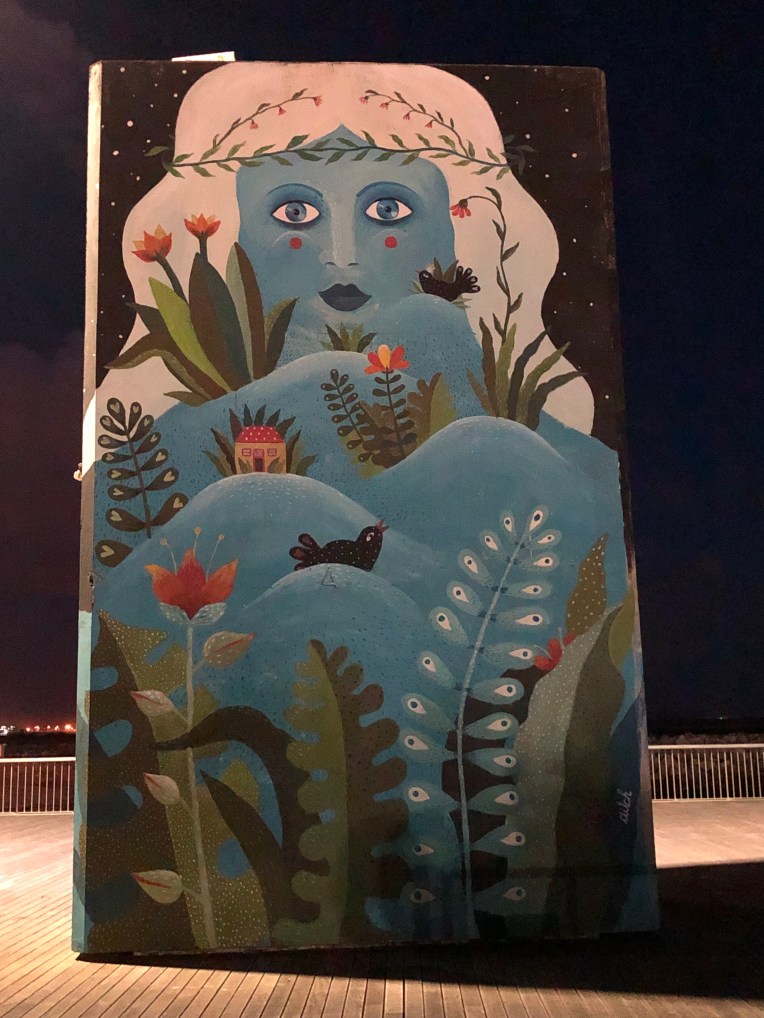
(Huge art piece on the boardwalk)

So what meaning is my mind giving to this situation? My mind thinks that if a huge part of the definition of Paris can be destroyed then nothing is safe. If nothing is safe then I’m not safe. That’s very upsetting indeed to my mind. And what about my interest in the cause of the fire? The difference between an accident and an attack? An accident is less frightening because there are no baddies when it’s an accident. No baddies means no future danger to me, just an accident, all over now.

It definitely upsets me to realise I’m so self-centered, Mairead.

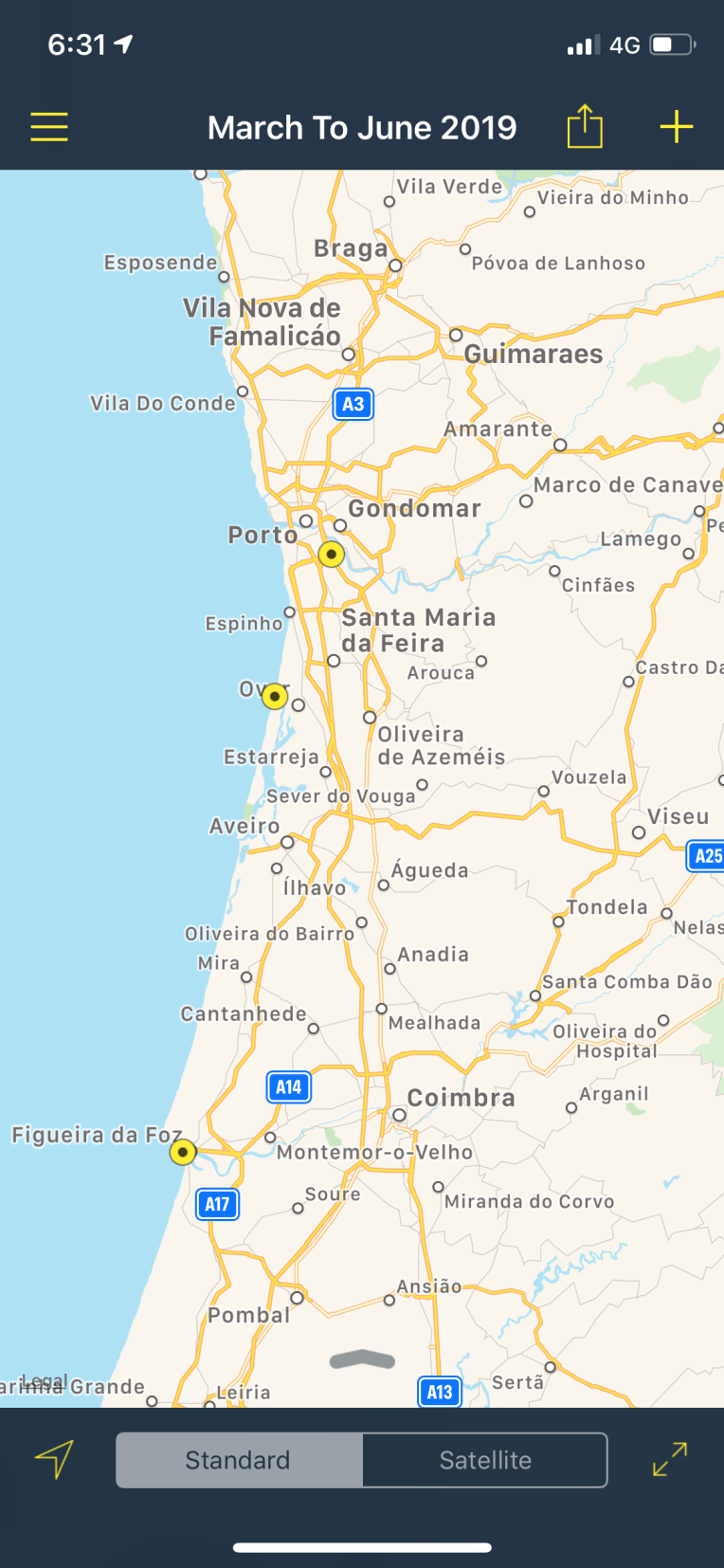
(Here we are on the map. Free parking in the car park near the fort at the beach near the old town)

What to do in Furadouro

(Look at those great clouds)

I’ve finally finished telling you about Porto. That was last Saturday and today is Wednesday and we have some catching up to do. First of all the fuel tanker drivers went back to work. That means there are no more queues at the stations and we won’t have to drive to Spain to top up.

(The Portuguese know how to enjoy nature)

Our next stop after Porto was Furadouro, we’ve been here before, it’s a seaside resort and there’s free parking behind the sand dunes. We arrived on Sunday afternoon and the car park was full but by 8pm most had left. That’s because it’s a weekend destination for Portuguese motor homes and after they have shared a big Sunday lunch and washed up they go back home.

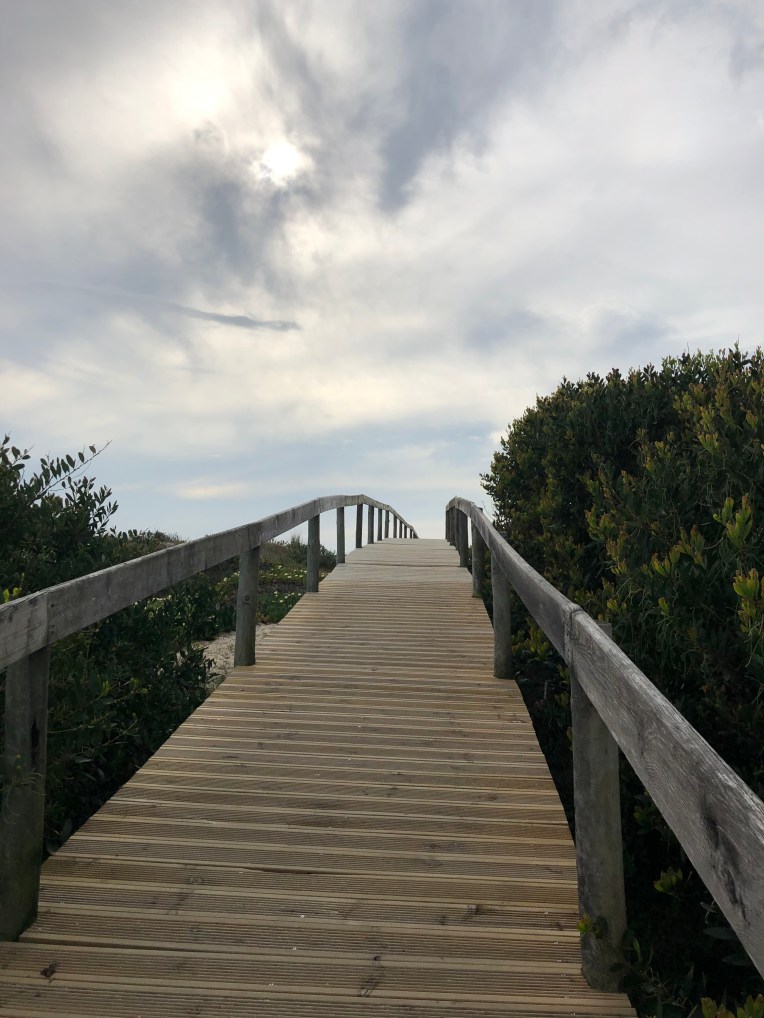
(There’s a boardwalk from the car park to the beach)

There were showers of heavy rain but we managed to get out for a walk in a dry spell. I think that’s something I need to get used to – it rains, more than I expect or want! In the past two weeks it’s probably rained every day but not all day. The other side of the weather is that when it’s hot and dry we attract mosquitoes and they love to bite us. They don’t bite us when it rains… hmm

Starting to appreciate the rainy days, Mairead.

(Furadouro is the yellow dot to the west of Ovar. Parking free, no services but near ocean, restaurants and small supermarket)

A Day in Porto – Part 4

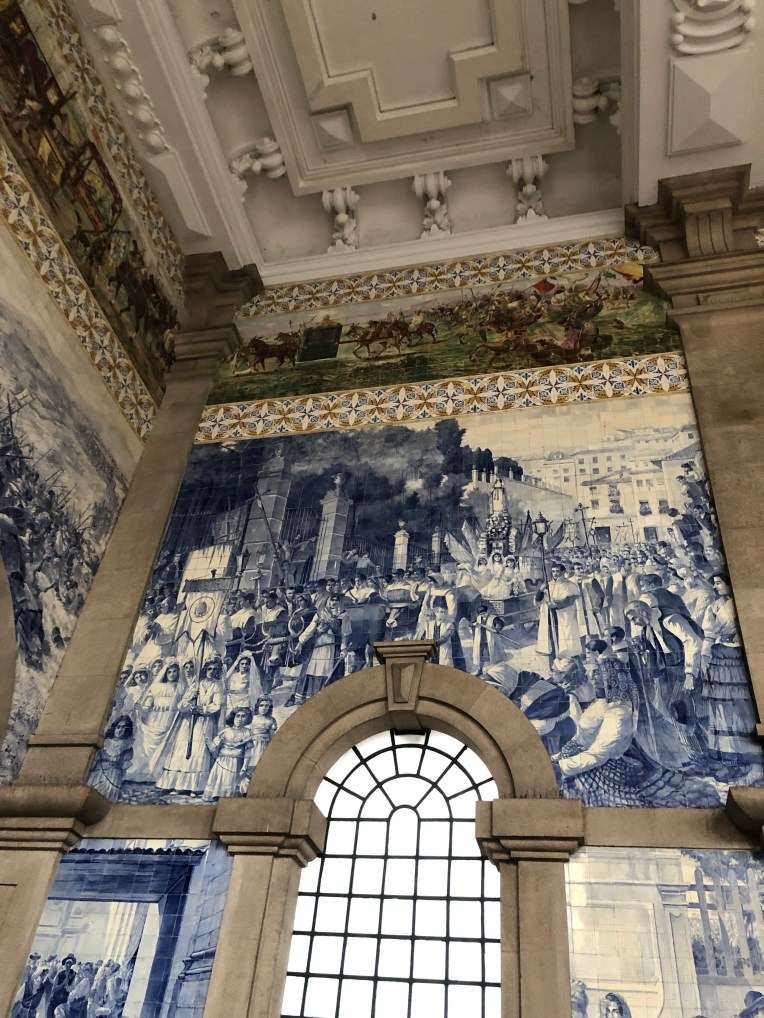
(Tiles at the second Porto train station)

Still talking about Porto although we have moved further south. I am writing in a cafe, the rain is falling outside and there’s a television playing constant breaking news. Although I don’t speak or understand Portuguese it’s amazing what you can pick up from the pictures and the tone of the speakers.

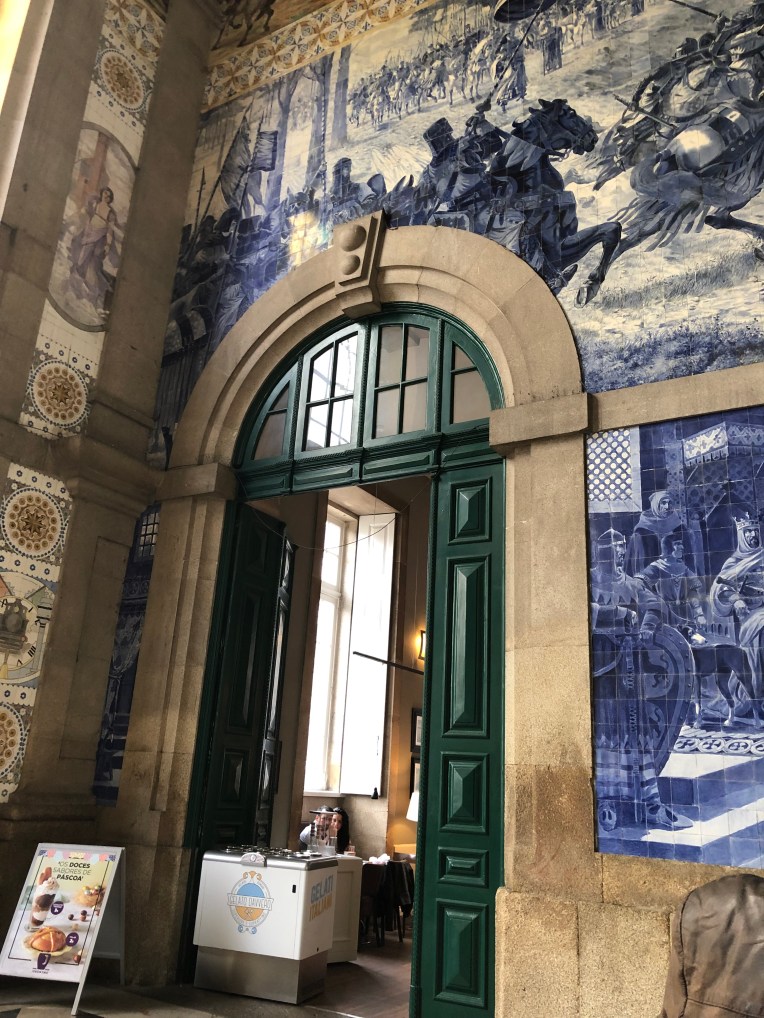
(More tiles)

And indeed the tone of the – up to that moment very quiet – cafe owner as he discussed loudly with a customer, what he was hearing on the tv. So at first it looked like a strike of tanker drivers and I was well able to ignore it but when I looked up and saw cars queuing outside petrol stations I got a bit more interested! At the moment we have plenty of diesel, enough to drive to Spain to get more… So back to Porto…

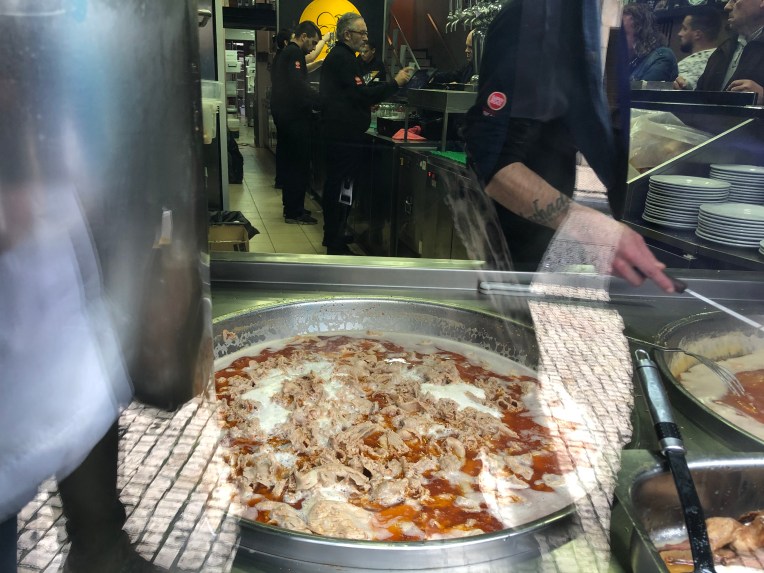
(Looking in the window at the pan of boiling hot spicy sauce in Congo)

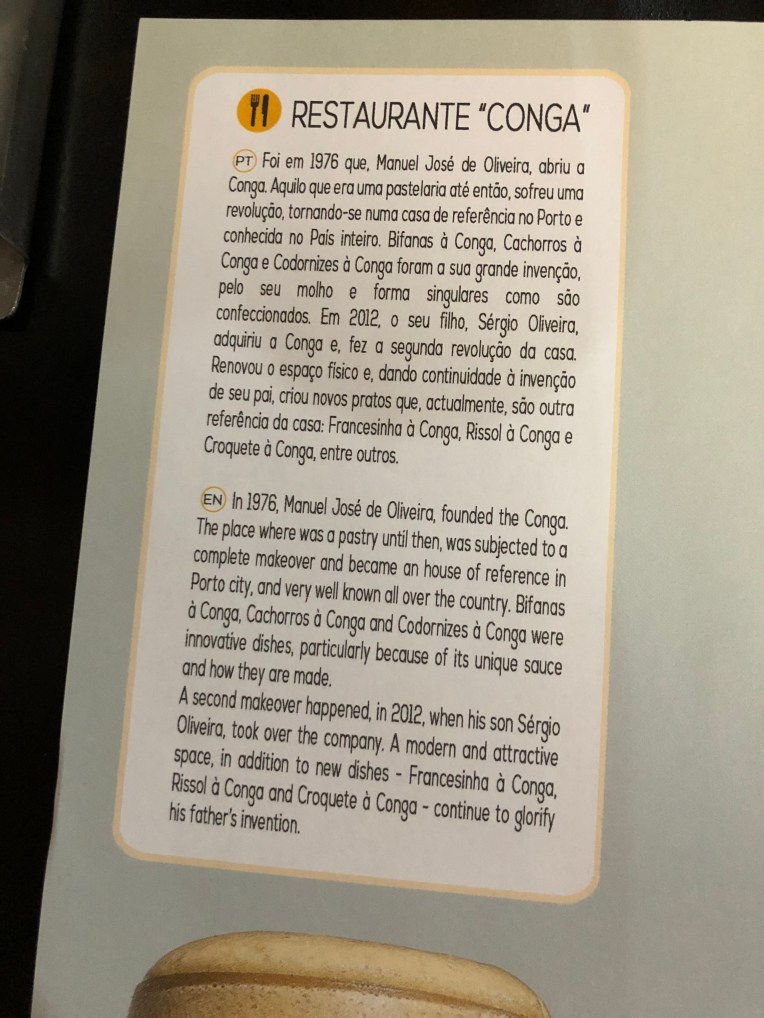
After the fish cakes we went on another walk to a restaurant called Congo. They have been here for decades. They are famous for their spicy pork sandwich. The spicy sauce is called Piri Piri and it’s boiled in huge pans in the front window. Then the raw meat, which had been frozen and sliced with a meat slicer, is added to the boiling sauce. This was served in a bread bun with a glass of beer.

(Congo’s menu tells the story)

Just in case that doesn’t sound very tempting, let me tell you it’s really tasty. Since becoming vintage I am a little concerned about my stomach’s reaction to spicy food. No ill effects to report, this was very good and had the added benefit that the bottled water tasted magnificent!

(View from outside the train station)

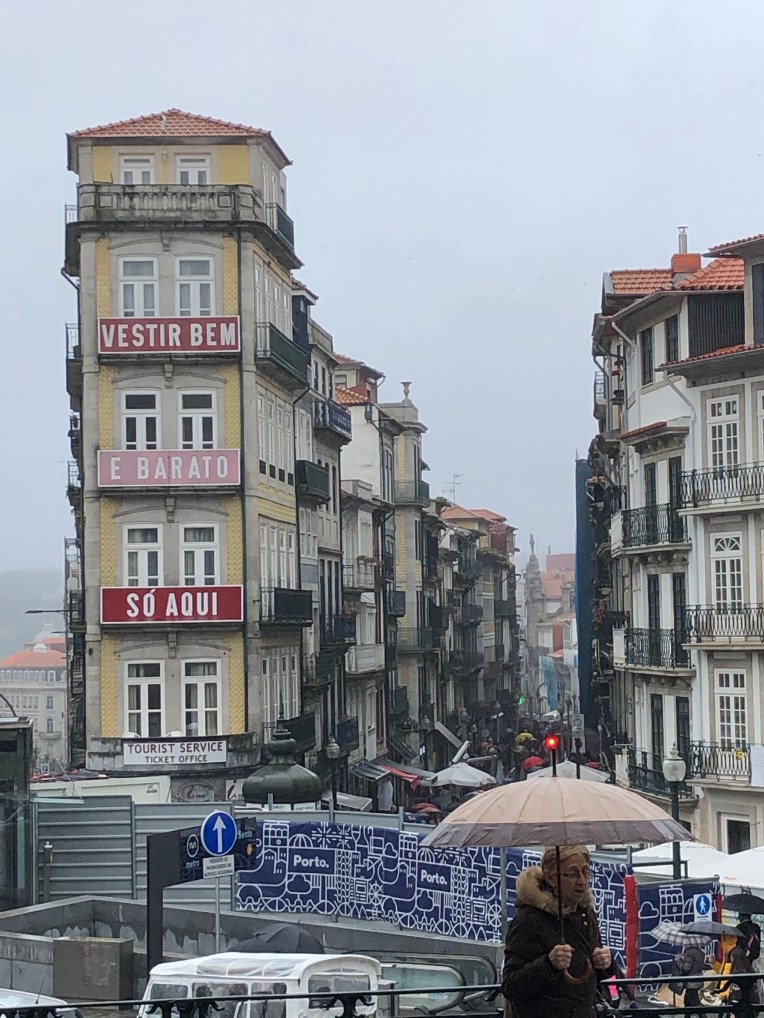
Our group of seven was gelling nicely now and there was even an opportunity for a joke about Brexit but we had a long (not very long) walk ahead so we finished up and headed to the train station. Yes, the (second) train station of Porto is impressive. Tiles, tiles and more tiles with scenes from Portuguese history on every wall. There’s the war with Spain, well, one of the wars with Spain. The one where both sides were fed up losing so many soldiers in battle that they decided to have a competition instead. A kind of jousting competition. Portugal won. Oh and we didn’t take a train.

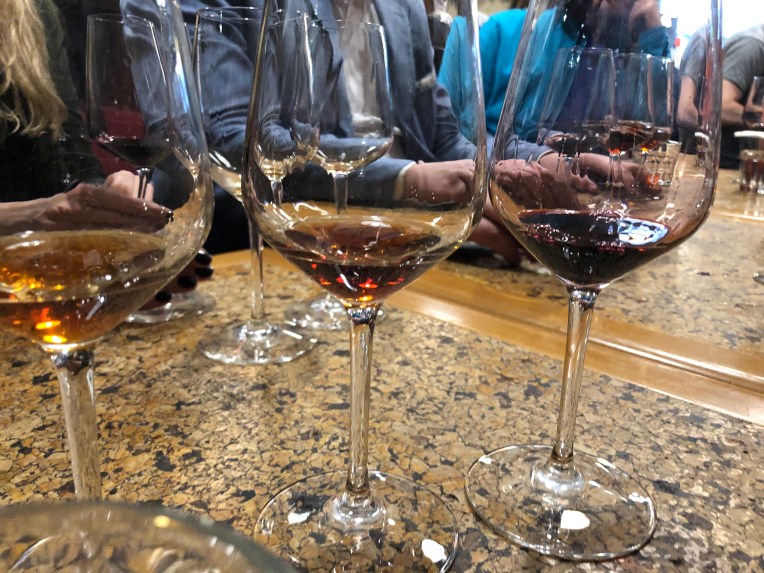
(From the left white port, tawny and port wine)

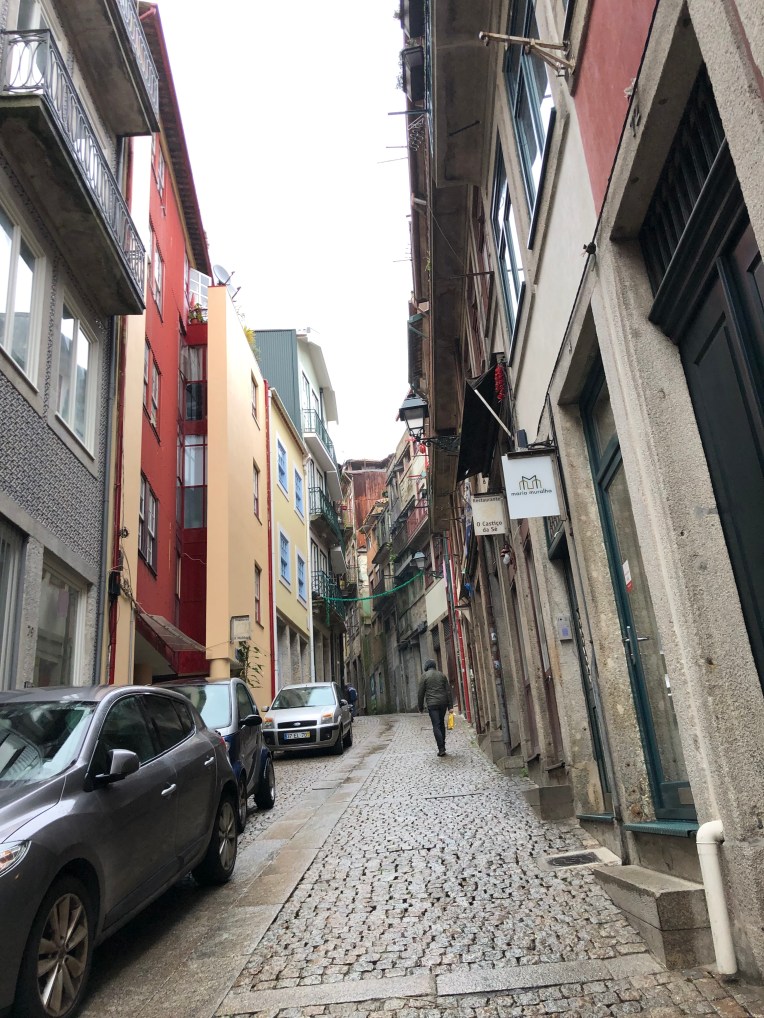
Back outside we walked downhill via jewelry and flowers street towards the river. We were going port tasting at Portologia with explanations about white port (which doesn’t look white), tawny port and port wine. Very interesting. Port is kinda like Champagne in that you can only call it port if the grapes are grown and the port is produced in the Douro valley near Porto city. Also, it tastes different as it ages. The whole vintage thing just gives and gives, doesn’t it?

(Vintage computer spotted in a shop window)

When everyone had finished their three types of port and I had finished my water that was the end of the tour, it had taken three hours and was really enjoyable. Everyone said goodbye to Isabel but not before doing the Portuguese kissing on each cheek. Then she left promising to (and she did) email us tips and recommendations for the rest of our time in Porto.

(Hope this picture gives you a sense of the steep hill we had to navigate)

We walked very slowly back up the steep hill to get the bus home. When we arrived at the gate (via the death defying footbridge) to the Parque Biológico de Gaia it was locked! Denis thought we could definitely scale the fence. Port wine gives you wings, bottled water makes you wise. We walked back down to road level again and made our way to the main gate. It was locked too… again Denis with the scaling. I pushed the invisible bell (invisible to some…) and the nice man let us in.

Thank you, Isabel, we loved our day in Porto, Mairead.

(Can you see the yellow dot? That’s Parque Biológico de Gaia, Porto. Parking, electricity, water, free entry to park €19)

A Day in Porto – Part 2

(Lunch at A cafe called the Garden in Porto. Florentine eggs)

Just in case you were worried, we have managed to top up our toll account online. This was impossible (for me) to do last year and created a mighty challenge to our relationship for an afternoon. They have changed it and all danger to relationships has been averted.
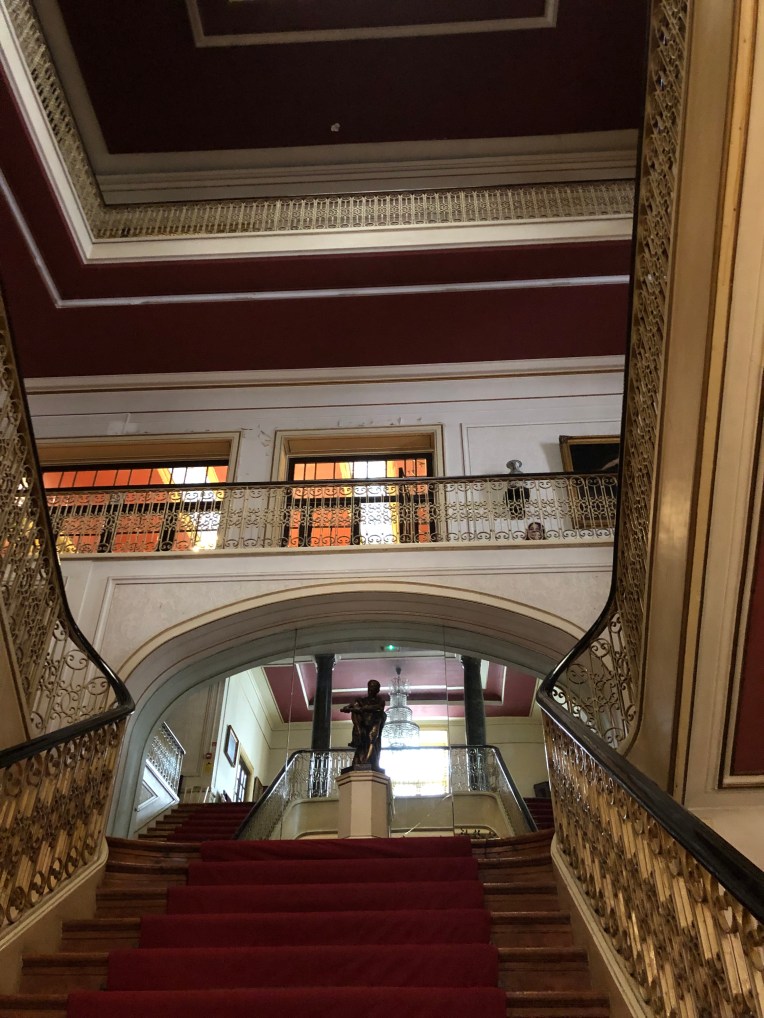
(I snuck over a barrier at the gentleman’s club to get you a picture of the stairs. Not a feminine touch in sight)

So back to Porto. It had been a beautiful morning but after lunch the rain started so we went to the cafe/WiFi location at Fnac. That a French shop selling books, magazines, general stationery, cameras and general electronic goods. We waited until 2.45pm and then went next door to the C’alma Speciality Coffee Room where our tour was to begin.

(An old tram. Fnac is on the left and that’s St. Catarina street in the distance)

There had been an instructions email with our tickets saying we should arrive 15 minutes early. I love following those kind of instructions and would happily have arrived there 20 minutes early. Denis on the other hand likes to arrive “near enough” to the exact time. We compromised… and left Fnac at 2.45pm. When we got to the cafe, two minutes later, our guide was waiting outside. We exchanged names and I said, are we the first? and she said, no the others are waiting inside.
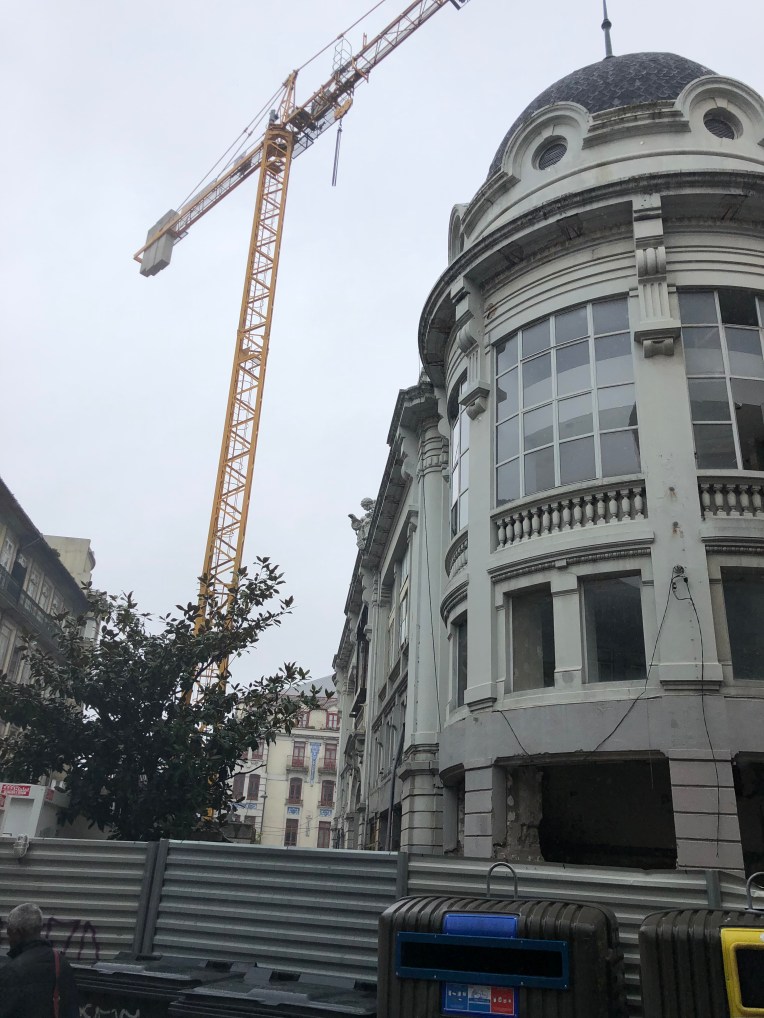
(They are renovating the old market. It’s huge, could take years)

I could not believe it! We were the last! There were five people waiting for us to show up. Five sets of eyes looking up at us. I definitely looked embarrassed. Too embarrassed to give Denis the this is your fault eye.
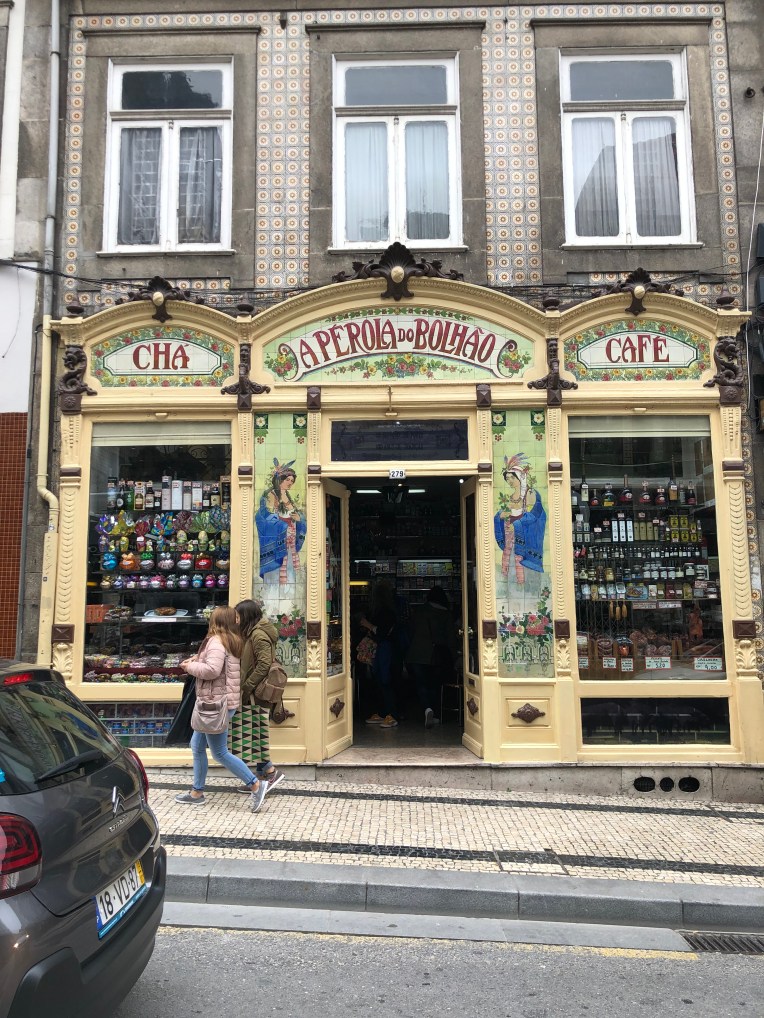
(Beautiful old grocery and cafe)

I forgot to take pictures of the incredibly cute coffee glasses. Oh well… Our guide was lovely, her name was Isabel. She explained that the C’alma cafe was part of an old gentleman’s club and we would be starting our tasting in one of their sitting rooms, with coffee and a Pastel de Nata. I think I mentioned the Nata (everyone calls it nata, which is just as well because I can’t pronounce Pastel) in another post, they are a flaky pastry case base filled with custard and burnt on top. I love them. If you want to try one in Ireland (or in the UK) they sell them at Costa’s cafes – in Greystones anyway.
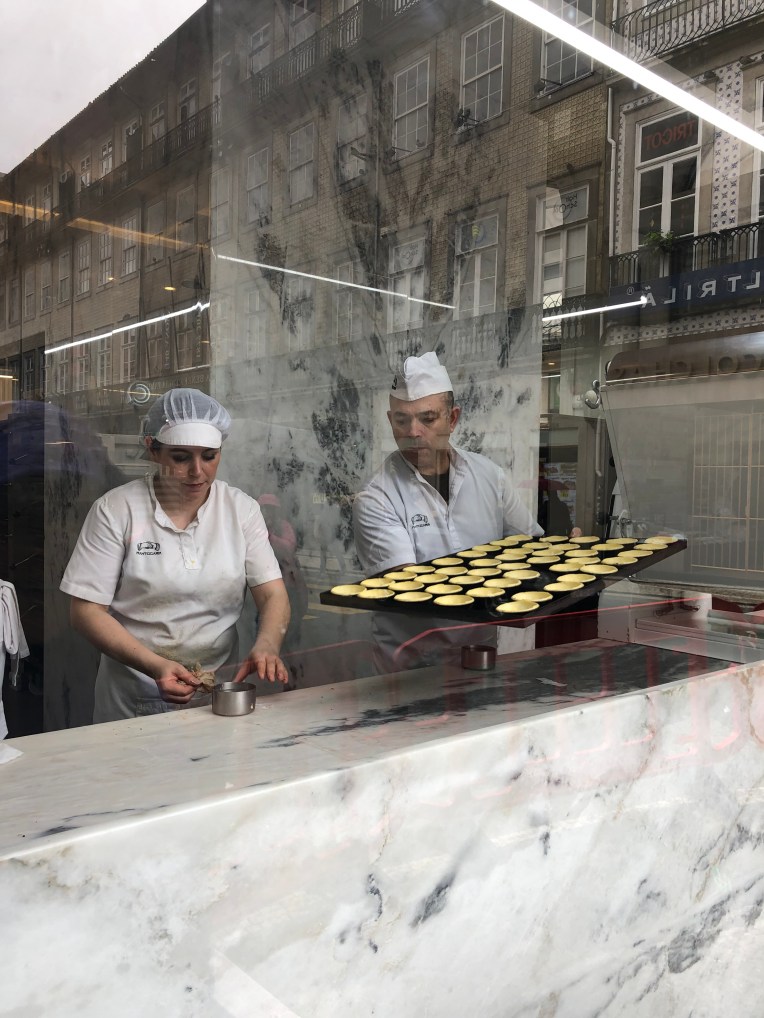
(At the windows of the Fábrica de Nata cafe you can see the bakers making Natas. When a new batch is ready one of the bakers rushes outside ringing a hand bell. You can hear it two streets away!)

Isabel explained that some time in the 1800’s the government of Portugal stopped supporting the monasteries and convents and they had to find ways to make an income. The Jeronimos monastery in Belem, Lisbon created the nata and that’s why there are queues of people at the bakery near the monastery. (I’ll try to get a picture of the queue for you when we get to Lisbon.)
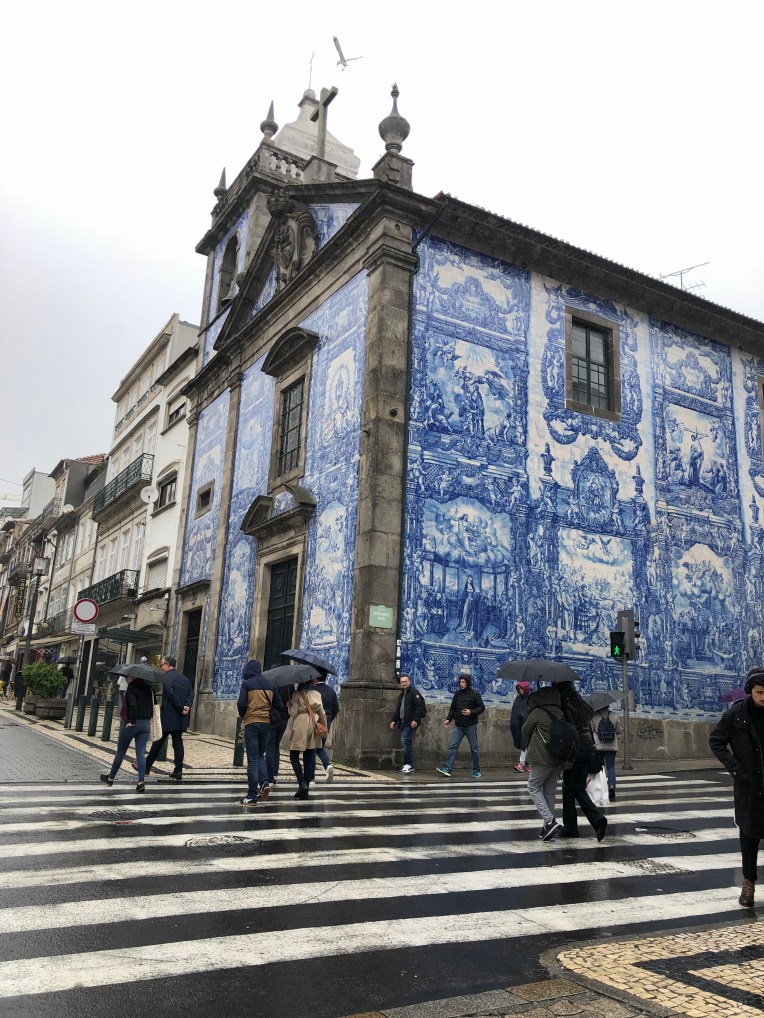
(Saint Catarina’s church. There are 16,000 tiles on the exterior, Isabel said she counted them… or maybe she said she didn’t count them…)

Next we were off to see St. Catarina’s church on St. Catarina’s street, a major shopping street in Porto. Isabel had explained that this tour would be taking us to places not normally frequented by tourists but very popular with the locals. Well we were all thrilled with that because even though we are tourists we prefer being adventurers. Adventurers are almost the first outsider to see an attraction. Once it’s popular with other tourists we are disappointed. (Human nature is nothing if not strange.) Isabel knew we were only human, accepted us and brought us to local haunts. We loved Isabel.
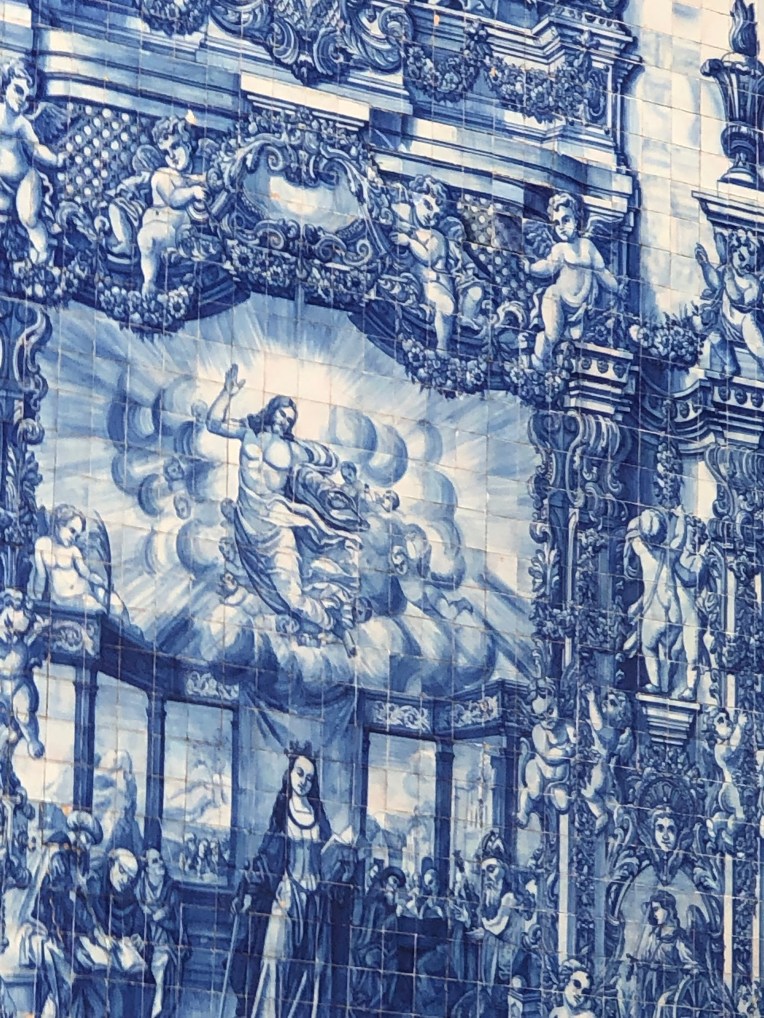
(Close-up of one of the tile scenes on the exterior, telling the life story of St. Catarina. I can’t remember the details but if she’s anything like the other saints it was difficult and had a very sad ending)

Anyways, St. Catarina’s church was popular with the locals because it is the church where they pray for their dead. It’s the only church in Porto where you can light real candles (instead of the electric push button pretend candles) to honour your dead. Unfortunately, it is closed on Saturday afternoons so I couldn’t get a picture of the candles for you.

Sorry about that, Mairead.

A Day in Porto – Part 1

(Tiles are amazing here… even in the free leaflets)

We arrived in Porto on Friday afternoon and drove across the river Douro to Gaia. Yes it’s called Gaia! We were staying at the wildlife park, Parque Biológico de Gaia. We stayed here last year too. The year before we missed out on staying because they were full so now we email them the night before to book a spot.

(Nest building in progress at the park)

The sun was shining so we went for a walk in the park… the charge for the night at the motor home area includes free entry and it’s a lovely place to walk even without all the animals. Afterwards it was still warm and I sat outside surrounded by trees and birdsong writing the blog – first time on this trip.

(Here’s how to keep the vermin away from your corn. The storage shed is balancing on the circular discs so that climbing creatures won’t be able to climb up and eat your corn. A farm exhibit at the park)

On our way here I searched the internet for interesting things to do in Porto. This would be our third time visiting and although I’m happy to just wander and eat and take photos it was time to get to know the place a bit better. So by the time we arrived I had booked and paid for a Porto food and wine tasting tour for Saturday afternoon.

(All done while driving along the road. Note: I wasn’t driving…)

On Saturday morning we left the park at 9.45am via the side gate that led to a death defying footbridge (slight exaggeration) over the main road. The bus came along 4 minutes later and for €2.20 each we travelled to Porto. We had a list of things to do before our tour at 3pm so we got right to it… after coffee.

(People queuing to get into the Majestic Cafe, Porto. There was a queue there all day)

There are two different toll systems in Portugal for the motorways. One with toll booths and one with cameras over the road that read your number plate. If you’re not from Portugal you have to register your number plate. Two years ago we did that at the border. Then last year we realised we had loads of extra credit at the end of the year so this year we have been happily driving on the number plate reader motorways since we arrived on Wednesday.

(More tiles… some missing)

For some reason something was niggling me about it and we decided to check online… our balance is only €6.10! We need to top up. No problem we know you can top up at the post office and we know where the post office is in Porto. The post office has moved! It moved in January. No problem, there was a sign with the addresses of two others. We walked to the closest. It was closed on Saturdays. So was the furthest one. The one at the airport was open… we didn’t go to the airport. We had lunch instead.

(This cafe was called Garden. I was taking a picture of the art but also got a picture of a guy taking a picture of his love… of food)

We did plan on eating nothing after breakfast in preparation for our tour but the stress of possibly becoming outlaws again made me hungry. It’s a weird thing – the number plate reading toll collector – although very efficient at reading our number plate, not so efficient at allowing us to pay.

Next blog may be from a police station… Mairead.

Moving Day

(This way to the deserted village…)

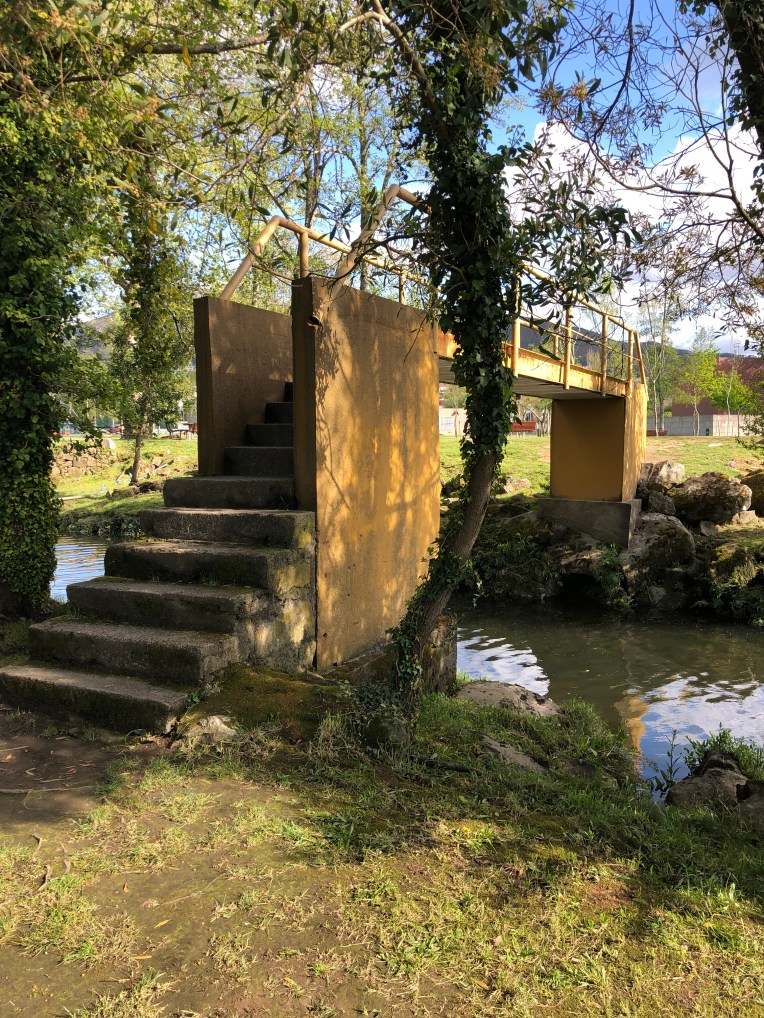
We’re moving on today to Porto or Oporto as the locals call it. First we went for a walk in Vila Nova de Cerveira. I had noticed big green doors leading into a courtyard in the middle of town yesterday but it was locked up.

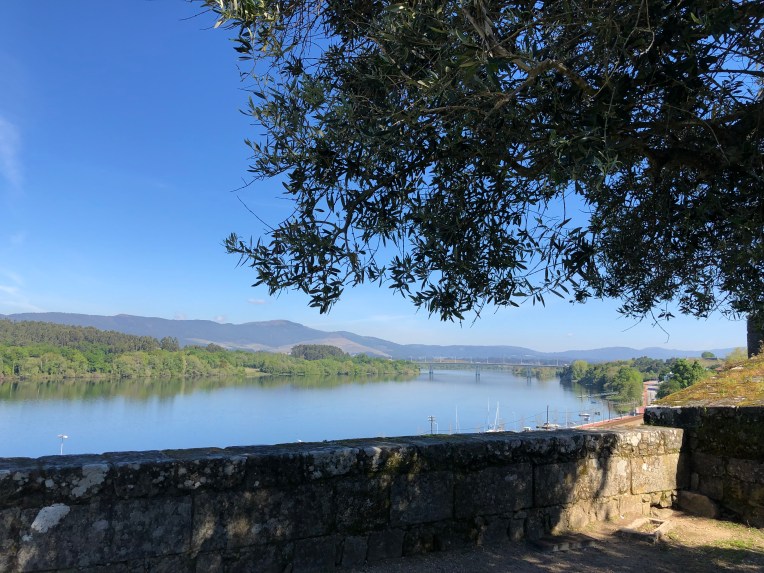
(View of the river from the top)

This morning it was open so I wandered in. Normally I wouldn’t just walk into someone’s property. Yesterday I had noticed old walls behind the adjoining houses so maybe I could assume it was an historical site?

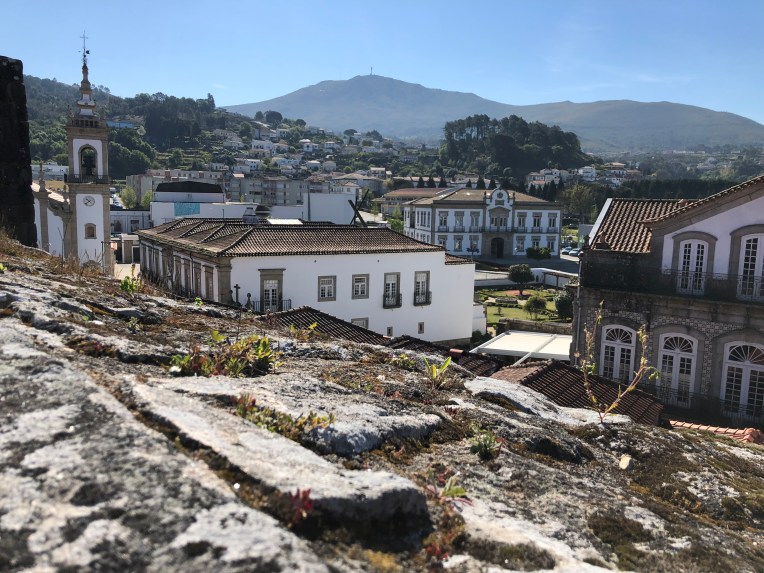
(View of the town from the top)

It was like a little village in there, well a deserted village. Maybe it fills up with tourists in summer but at the moment it’s empty. There was a church building, closed and a restaurant, closed and a pub, closed. All the houses looked empty. The best thing about it was the walkway on top. The worst thing – the steps leading up there.

(The scary staircase)

Although to be honest they were a feat of engineering. Huge stones were attached to the wall at irregular intervals. I was afraid, but in the interest of capturing some photographs for you I was very brave.

I did not die in the attempt, Mairead.

How to find the supermarket

(For when you want some alone time…)

We’ve been in this town before. I don’t remember much about it but when I needed to get some groceries I remembered enough.

(Or there’s a table and chair for writing with a view)

Staying present is a really useful practice if you ever worry. I never worry. Oh I spelled that wrong, the right spelling is: I regularly worry.

(One step at a time)

Anyways, thought it might be useful to get some staying present opportunities so I went off to the supermarket without a map.

(The tables…)

First I remembered I needed to cross the car park and continue on to the square with all the tables. Then I had no clue. But as soon as I arrived at the square I just knew I had to pass the house with the green tiles.

(Green tiles)

When I got to the tiles I knew I had to keep the cafe with the crochet flowers to my right and walk up the incline. Then I came to a complete stop but only until I noticed another cafe with the garden and white walls, I had to go left there. And then I saw the supermarket across the road.

(Lots of crochet in this town)

You can scupper worry by staying present. Looking at what’s straight in front of you. Or listening to the sounds around you. Or tasting the food in your mouth. Or feeling the floor under your feet. Or smelling the roses.

Note to self: Worry isn’t useful, Mairead!

(There we are just over the border in a town called Vila Nova de Cerveira, free camper parking near the old town, the river and park)

Normal Service Resumes

(There’s the border, remember when borders were places you had to stop and show your passport?)

We have arrived in Portugal and the weather has changed! There’s heat! We had decided to go just one hour south from Santiago but our phones both stopped getting service. That’s unusual. Forty five minutes further we were crossing the border and service was back.

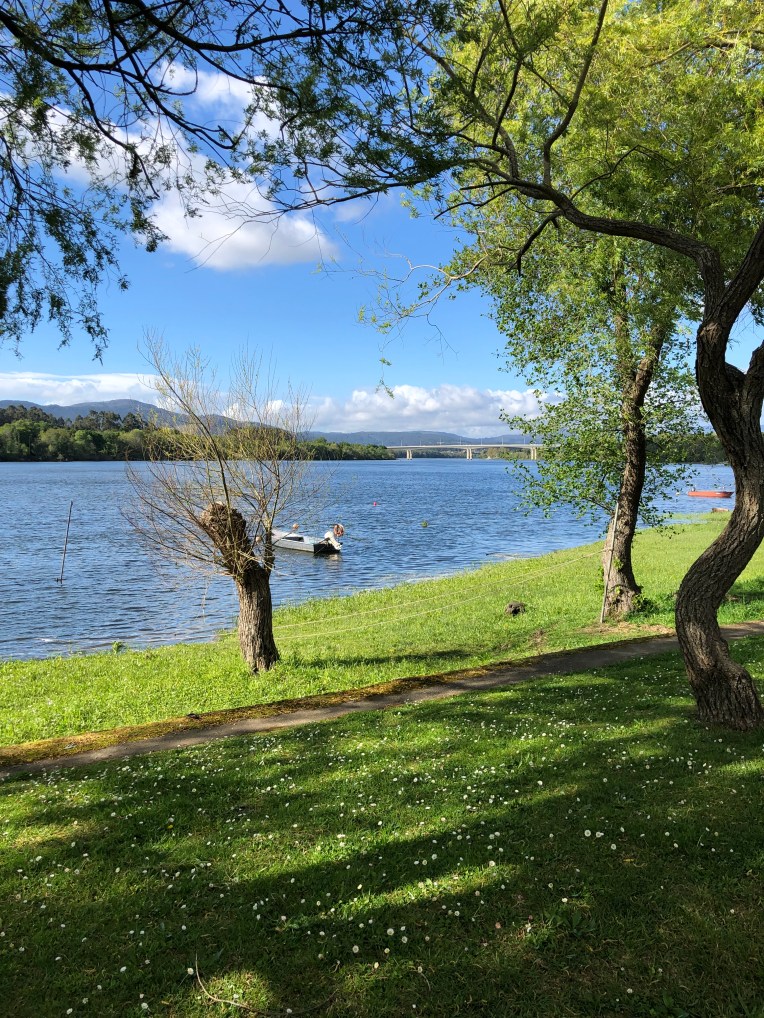
(We are parked beside a park…)

It’s funny how you (we) get used to something. Our phones for example. Of course they are more than phones now. They are weather forecasters. They are parking finders. They are restaurant finders. They are route finders. They are birthday greeting senders, get well message senders, how are you doing? senders.

(That’s Spain over there and the bridge joining the two countries in the distance)

They are notebooks. They are book writing helpers. They are blog message savers. They are newspapers. They are cameras and photocopiers. They are flash lights and alarm bells and reminders. They are books, a library of books. They are exercise monitors. They are music players. They are photo albums. They are offices.

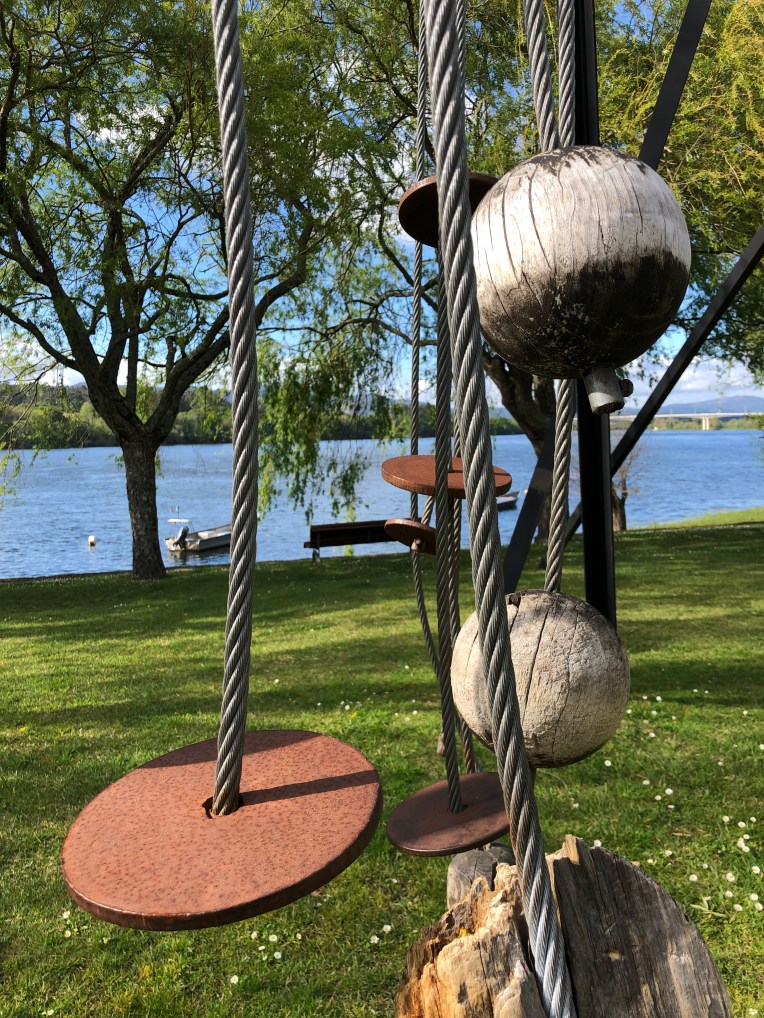
(A little bridge in the park joining us to the island)

They are clocks and calendars and bus timetables. They are televisions and translators. They are recipe books and talking books. They are information holders and sharers… and they are phones.

(The little island)

The phone network issue is making me grateful for my phone. Leaving my friend is making me sad but hugely grateful for friendship. Crossing the border is making me grateful that I am part of this place and sorry that our neighbours are leaving.

We’ll miss them when they’re gone, Mairead.